‘A new identity.’ Young Georgia voters share their views on 2020 presidential election
For the first time since 1992, Georgia is likely to be called for the Democrat in a presidential election, and young voters played a critical role. According to a study by researchers at Tufts University, voters ages 18 to 29 contributed 21% of all votes in Georgia, the highest share of any state in the country.
Georgians under 30 supported former Vice President Joe Biden over President Donald Trump by 17 points, for a split of 57% and 39%, according to the National Election Pool exit poll.
But that trend didn’t hold across youth demographics. Young Black voters split 90-8 for Biden, while young white voters preferred Trump, 62-34.
For many members of Generation Z (people born after 1997), it was the first presidential election in which they could vote. And for many millennials (people born between 1981 and 1996), it felt like a particularly high-stakes race.
What motivated young people to vote this year, and what did it mean to see the state turn purple? Millennial and Gen Z voters from around the state discussed those questions in the interviews below, condensed and edited for clarity.
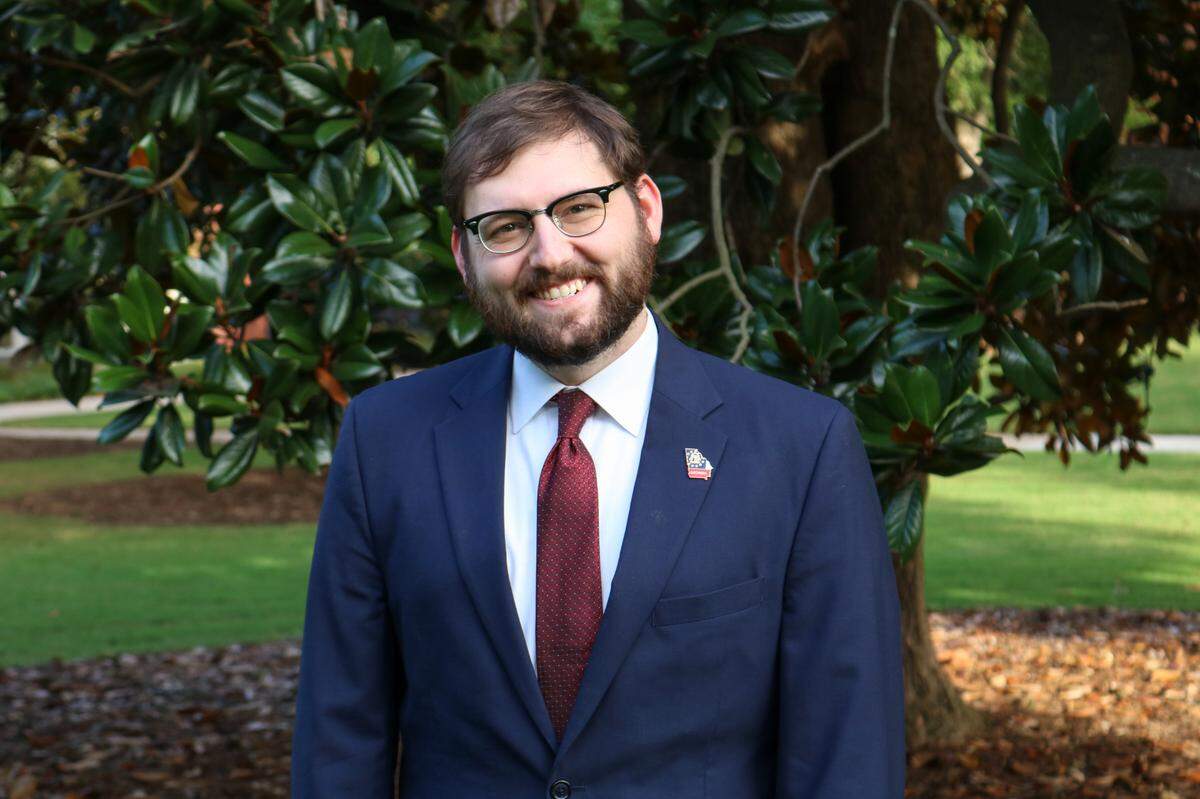
Luke Boggs, 28, Athens
Boggs is a student at UGA Law School and School of Public and International Affairs, former chief strategist for statehouse candidate Jonathan Wallace, and former president of the Young Democrats of Georgia.
“
I think really what’s happening now is that people my age who grew up with Obama but now are old enough to vote are actually starting to vote more. And then there’s a lot of people who were never mobilized who are now actually getting mobilized.
I would say young people are getting more and more engaged. The thing I’ve really been happy and excited to see, from young people especially but also just all age groups, the level of involvement and level of commitment I saw from volunteers this year was exponentially higher than what I saw last year, which was also higher than from 2016.
I really think it has to do with people seeing a lot clearer what the consequences of elections are. … If there was ever an election where there were very, very clear consequences, the 2016 election was one.”
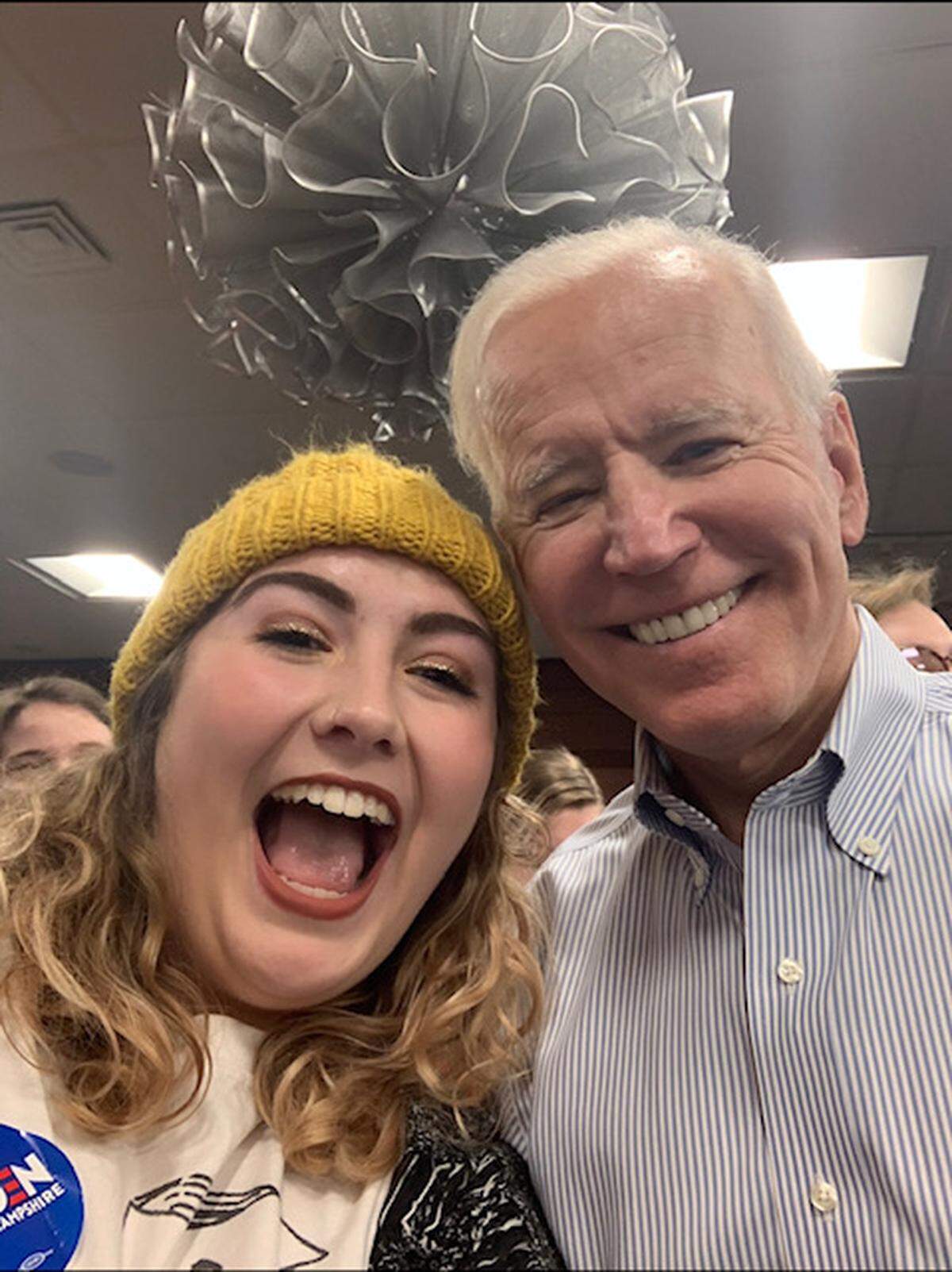
Kylie Brown, 20, Macon
Brown is a junior at Mercer University, triple-majoring in political science, history, and law and public policy. She is president of the Young Democrats of Mercer and worked on Jon Ossoff’s senate campaign this year.
“When I was 7, my mom took me out canvassing for Obama. She had never been involved in politics before and she hasn’t since. … I spent like every single weekend marching in parades, trying to get voters registered. I kind of fell in love with politics then.
I reached out to the College Republicans and Mobilize Mercer, which is the nonpartisan voter activism group on campus. I said, ‘Hey, I know things are going to look different now, but I was wondering if we could team up to have large-scale debate watch events.’ So we ended up getting 300 kids coming out to sit on the lawn at Mercer to watch the debates.
I actually made a bet with someone. I was like, if Georgia flips, I’ll eat a hat. I was like, it’s not gonna happen. No way, no how... But I didn’t let that stop me. I knew if we could get enough people out in the historically blue counties, we did have a chance of at least swaying the election a little bit.
I think we’re the most politically engaged group of young people, incoming voters, that I think the United States has ever seen. I think that stems from just being told that young people don’t vote. Our entire lives, we’ve grown up hearing like, ‘Oh yeah, you don’t know, because young people don’t vote.’ … And I think especially because this election was so tumultuous, you saw young people coming out.
”
Eunice Chon, 18, Macon
Chon is a senior at Macon’s Howard high School. She turned 18 four days before Election Day and voted in person for Joe Biden.
I’ve been dreaming of this moment for years. I wanted to experience the real thing, so I went with a good mask and I went in person. I didn’t vote for false optimism, I voted because I believed it would be a start of a change.
Maria Finocchiario, 29, Atlanta
Finocchario works for the University System of Georgia. She grew up in Savannah and recently moved to Atlanta.
“
I definitely feel like particularly with the millennials and Generation Z [in Georgia], you see people more leaning blue than anything else. Not that the Democrats are perfect but...
I would always vote, I’m always gonna do it. But I always thought, it’s just going to be a wash. I know what the outcome is. For the first time, that’s not the case.
I feel like in the last few years I’ve kind of seen Georgia becoming a little more liberal, a little more open. We’ve had such an influx of people move to our state. This election just drives that home: Georgia is not the same state it was in the 1990s or even in the early 2000s. It’s definitely a new identity.”
Nolan Hendricks, 24, Atlanta
Hendricks is a law student at Georgia State University. He grew up in northwest Georgia, near Cartersville.
“[The future of politics in Georgia] really depends on the momentum of the Democratic Party and what issues they focus on. I think people want good, level-headed reasonable people in government. I think young people want that, too. We’re not as different from our parents as we think.
I really thought Georgia would be competitive [in the presidential election]. I thought it would ultimately go red, that we’d be a lighter shade of red. But I thought Trump was going to win. I’m surprised, and you know, I’m glad that Georgia is a battleground state, because it means Georgia issues get brought to the forefront of a national conversation. It is stressful seeing all the ads and all that, but I’m happy that Georgia issues are getting brought to the forefront of the national conversation.
Georgia’s my home. I love the state if it’s blue, I love the state if it’s red. A lot of Yankees like to think we’re some sort of monolith, but we’re not. This is a diverse state, a lot of opinions, as many beliefs as anywhere in the country. Whichever way the state leans, I respect it and love it.”
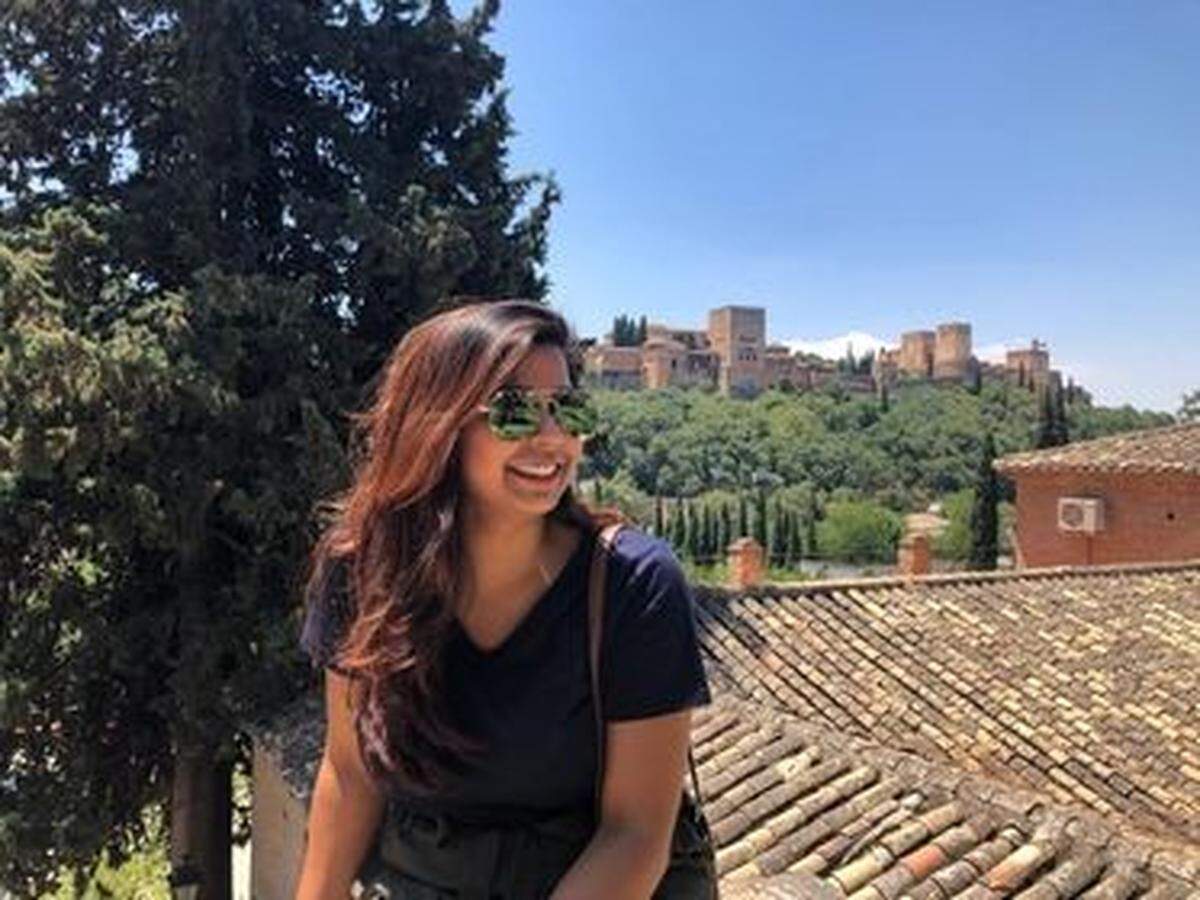
Seher Khader, 27, Marietta
Khader grew up in Marietta and recently moved home after living in Arlington, Virginia for the last few years.
“Marietta was definitely a conservative place [when I was growing up]. My family is Indian and Muslim, and I remember when we were kids, when I was in elementary school I think I was one of only a handful of brown kids in the entire school.
I distinctly remember in 2000, when the Bush-Gore election was going on, they had all the kids do a fake election and I remember Bush won by this landslide... and I sat there being like, “Uhhh really? Because I keep hearing at home that he’s not a good person.” I was really shocked that everyone else had different views than me. That was when I was like OK, my views are different than everyone else’s around here.
Over the last 10 years or so, there’s been a huge amount of new types of people moving into Georgia, because of the film industry and other jobs. There’s so many big companies moving here. A lot of the headquarters have also made it a lot more diverse in general, at least in the metro Atlanta area.
I was really surprised in a really good way that people are starting to be more open minded. And the fact that there is a more diverse population here now, it made me feel a lot safer knowing that, one, there were enough people that cared enough to vote and, two, were voting in what I think is in the interests of society as a whole, not just their own self interests. I feel like I almost feel safer now in Georgia than I have previously.”
.JPG "Janelle Headshot (1).JPG")
Janelle King, 35, Sandy Springs
King, a Connecticut native, is a panelist on the Fox 5 Atlanta Georgia Gang and Republican Party senior advisor.
“In 2016, during that election, what appealed to me was when [Trump] made the statement: what do you got to lose, regarding the Black community. Which I am a part of. To me that showed me that this president was going to remove the Black community from underneath the umbrella of minority just enough to understand the specific concerns that are important to the Black community.
But I think it was most important because it showed that we were getting a president who’s different. The conservative is probably going to get exactly what we needed to move us in the right direction where we’re speaking up for ourselves. I just feel like Republicans typically take all the attacks, especially the attack of being racist. That attack has been directed to the Republican Party for such a long time that we’ve almost gotten used to it, versus fighting back, saying we’re not a racist party, we’re a very diverse party. That’s where we have dropped the ball.
I think young people in Georgia are politically aware. I don’t think I would put them in the engagement category as of yet, because social media can really take the place of reality and the reality of it is that sitting at home, laying in the bed on your phone making memes and comments is not engagement, you know? … I think what it reveals though is that there needs to be more and more of our age group in the leadership of politics.
”
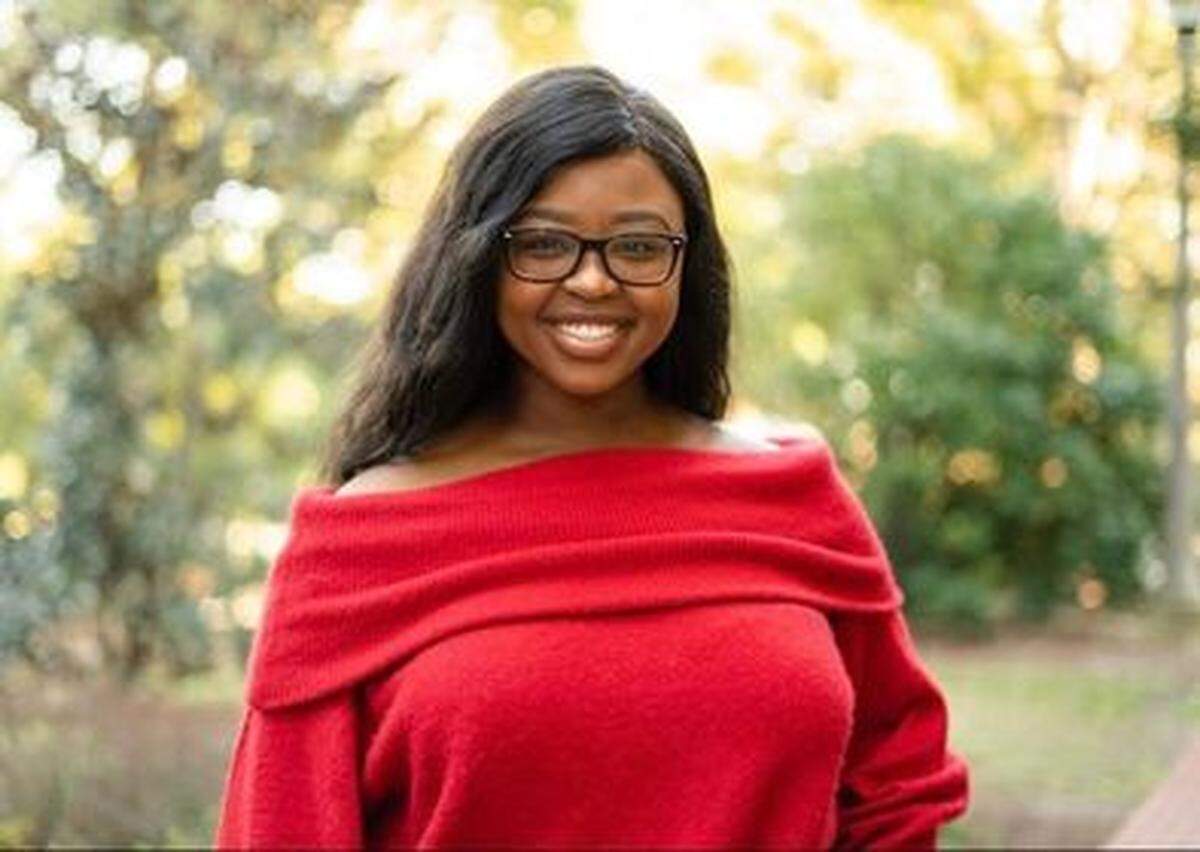
Sheridan King, 19, Macon
King is a junior political science major at Mercer University and programs director for the College Democrats. She grew up in Statesboro.
“In all honesty, [this election] felt like a matter of life or death. I didn’t know if we could do this for another four years. And the pandemic didn’t directly affect me or my family but having friends and other family members who were directly affected by the pandemic, I didn’t want to see them experience worse than what they already had.
I think [young voters] probably had the biggest impact in this election, because a lot of us weren’t able to vote when Donald Trump was running. We realized that we wanted to contribute and we couldn’t, so this is kind of like our time to shine.
I think that young voters will definitely stay engaged. This was my first time voting in an election. I feel like my vote actually mattered. Voting in this election and seeing that our votes really did count will encourage people to continue to vote.”
Brandon Short, 28, Columbus
Short is a software developer born and raised in Columbus.
“Especially for the president, with the electoral college, when you live in a state that’s firmly on one side or the other, if you’re on the other side, it sometimes feels like your vote doesn’t matter, like there’s no reason to vote. When you have a vote that comes down to where it’s thousands of people in the gap, it does reinforce that notion of getting you to go out and vote every time there’s an election.
I do think that as Georgia continues to be a hub for the film and entertainment industry, and as we continue to have all these colleges push out young diverse people who will probably be Democrats as well, it’s totally possible that Georgia could always be a competitive battleground state like it has been this election. It has to be a case of people remembering how valuable their vote was this year, in future elections. Including midterms and off year elections.”
This story was originally published November 10, 2020 at 6:30 AM.