
Georgia Republicans and Democrats will come knocking — a lot — in high-stakes election
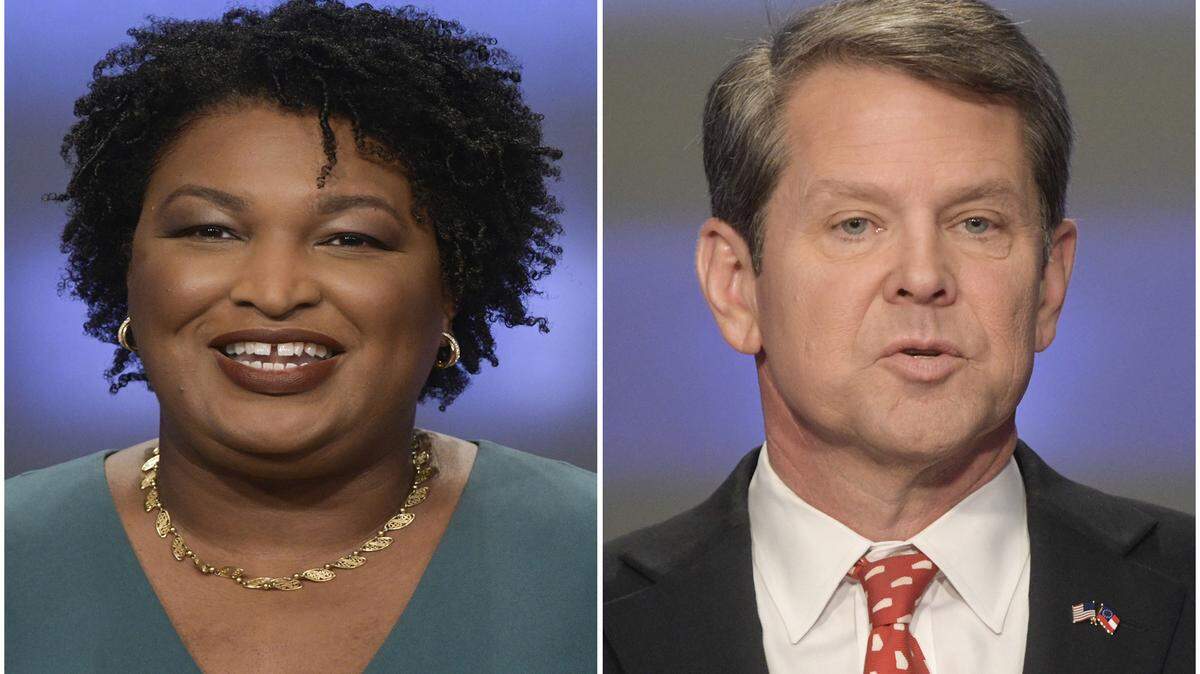
As a brutal campaign season opens for Georgia’s highest offices, Democrats are going to be looking in places like Middle Georgia for the few points worth of votes that they want to turn the state blue, while Republicans who want to defend those offices will look in the same place.
Georgia Democrats are betting their path out of exile and into statewide office is a message around jobs, health care and education, carried beyond the deep blue precincts of metro Atlanta. Democratic gubernatorial nominee Stacey Abrams has campaigned as a progressive whose top priority is expanding Medicaid health insurance to more low-income Georgians.
Thursday morning found her in Savannah, starting a “jobs for Georgia” tour with stops in Macon and Atlanta. She announced a commitment to produce 22,000 apprenticeships in Georgia by 2022.
Democrats are looking to flip other offices, from the U.S. House down to the state’s utility regulation board.
Republicans are just as determined to hold on to those offices. GOP primary runoff voters just chose as their gubernatorial nominee Secretary of State Brian Kemp, whose campaign mocked the left and fired up the right with talk of rounding up people who immigrated to the U.S. illegally, embracing gun ownership and taking a chainsaw to regulations.
Republicans are also looking to turn out voters in smaller cities and rural areas, as they watch Democratic winning margins climb in metro Atlanta and indications of a blue wave rippling outward through the city’s suburbs. At a Thursday night “unity rally,” top Republicans urged a few hundred party leaders and elected officials to muster for conservative values to keep the state red.
One thing that’s giving Democrats hope is a state that Georgians often ridicule: Alabama.
In a 2017 special election, deep-red Alabama sent Democrat Doug Jones to the U.S. Senate.
“The same thing that happened in Alabama, through the middle of the state, had record turnout. You’ll see the same thing in Georgia,” said DuBose Porter, chairman of the Georgia Democratic Party.
Porter said it wasn’t only because Alabama’s Roy Moore was “bad” that the Republican lost.
“But it was because of doing away with peoples’ access to health care, cutting education, cutting job training,” Porter said. “We’ll offer the things families worry about, and show them an alternative that will inspire them to go vote.”
Even for people who don’t use Medicaid, Porter said expansion is important in any community served by a small hospital. One of the things that’s contributed to small hospitals closing is the money they lose on treating uninsured patients. More Medicaid would mean more money for those hospitals.
“You will never attract a business, an industry to a community that can’t provide health care for its employees,” Porter said. “It’s a business issue for Middle Georgia.”
But pollster Brad Coker said Alabama was too unique a circumstance to compare to Georgia’s race.
“I don’t think Abrams is as middle-of-the-road as Jones … and Brian Kemp is not as polarizing as Roy Moore by any stretch of the imagination,” Coker said.
Moore was known as a defiant and conservative leader of the Alabama Supreme Court but also faced reporting during the campaign that unearthed decades-old allegations that he sought relationships with teen girls when he was a man in his 30s.
In this Georgia election, the most important area to watch will be the Atlanta suburbs, said Coker.
Donald Trump failed to break 50 percent in the suburban GOP strongholds of Cobb and Gwinnett counties in the 2016 general election. The loss of those counties spooked some Georgia Republicans.
Republicans won’t concede Atlanta’s suburbs easily, but Democrat gains there are the more reason to make sure GOP supporters outside metro Atlanta vote. Kemp himself often mentions that he’s visited all 159 Georgia counties during the campaign. Vice President Mike Pence went to Macon in endorsement of Kemp.
“We have one mission tonight, and that is to defeat Stacey Abrams and keep Georgia red,” Kemp said at the Thursday night party rally. He said no stone could be left unturned.
Just two nights before, he’d defeated Lt. Gov. Casey Cagle for the GOP gubernatorial nomination. The two men shared the stage and paid each other compliments as the party aimed to show a re-joined front for the general election.
In more than a half-hour of speeches, the messages to the party ranged from U.S. Sen. David Perdue’s defiant pledge that “the march to socialism will not come through the state of Georgia,” to Gov. Nathan Deal’s list of the things he’s proud of, like Georgia’s healthy fiscal state and its popularity with businesses.
Kemp closed with a high-stakes appeal. “This isn’t about me and my big truck, this is about us, this is about fighting for literally … the soul of our state this fall, about our values. It’s going to be about our values and the beliefs that we think make this such a great state to live, work and raise your family.”
If one thing’s for sure, this won’t be like previous elections.
“There’s going to be a much clearer choice here than we’ve had in the past between the parties,” said Alan Abramowitz, a political science professor at Emory University.
It’s not that long ago that the two parties weren’t that far apart: “moderate” Democrats, “conventional business-type” Republicans.
“Now I think with a liberal, African-American Democrat running against a very conservative full-throated Trump supporter, it’s going to be a very polarized choice here in Georgia,” said Abramowitz. “Which is kind of the trend we’re seeing in the country too.”
This story was originally published July 27, 2018 at 9:27 AM.