
Gaming companies want to roll the dice in Georgia
ATLANTA -- The $1 billion that the Georgia lottery aims to raise for education this year would be a record haul, but lottery cash buys less college than it used to.
The gap has state lawmakers’ attention, and some are pushing for allowing casinos and horse racing as a way to prop up HOPE Scholarship funding.
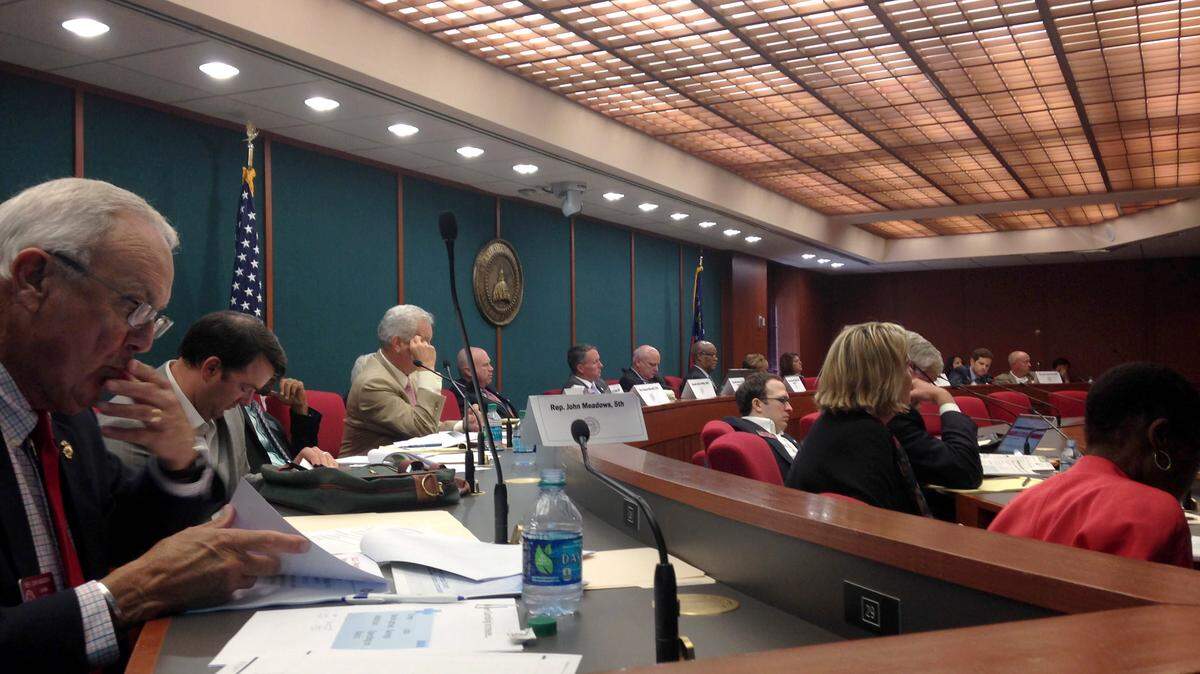
“Our marching orders are pretty simple. It’s to look at those proposals, study the economic and social issues around (casinos and horse racing),” said state Rep. Matt Ramsey, R-Peachtree City, opening two days of state House and Senate committee hearings on gaming and the HOPE Scholarship, which started in Atlanta this week.
If the committee members come up with a consensus, they will make recommendations in time for the legislative session in January. So far, there are two major proposals on the table.
Georgia could issue licenses for up to six casinos, as long as they are spread throughout the state, approved by local voters and pay 12 percent of gross revenue to the state each year, according to language in House Bill 677, a measure brought by state Rep. Ron Stephens, R-Savannah. A Senate committee has approved a separate measure, Senate Resolution 135, by state Rep. Brandon Beach, R-Alpharetta, to allow horse racing and betting.
Neither has yet received a full floor vote. And neither is a sure thing.
Either could be edited, replaced or simply ignored in the state Legislature when it reconvenes in January. Either measure would need approval in a statewide referendum.
But what seems clear so far is that Atlanta and Savannah are probably of more interest to would-be builders than sites in Middle Georgia, and any decision is years off.
“Your population today spends hundreds of millions of dollars in gaming facilities. Unfortunately they’re not here in the state of Georgia,” Jim Murren, chairman and CEO of MGM Resorts International, told state lawmakers. During his presentation, he showed slides of a $1 billion-plus casino resort, complete with theaters, shops and hotel rooms, that his company is building not far outside of Washington, D.C.
Atlanta could easily support a billion-dollar property, he said. Other markets would be smaller, he said, adding that he thinks there’s an opportunity in Savannah to attract South Carolina cash from a state that he thinks is unlikely to approve casinos anytime soon.
Bill Lerner, co-founder of Union Gaming, an investment bank focused on the gaming industry, said that there should be investment in Georgia casinos. He said that besides Atlanta, it would be worth looking at locations in border cities.
That would catch people driving to casinos in other states -- like North Carolina and Alabama -- and head them off with a Georgia offering.
State Sen. Burt Jones, R-Jackson, a member of the study committee, said that when it comes to casino locations and any possibility for one in Middle Georgia, “at the end of the day, you have to look at the markets that could support it.”
But anyway, gaming is just “one idea” among many that might be used to preserve HOPE, he said, noting that tuition is rising.
HOPE Grants and Scholarships used to pay full tuition for students with high enough grades at Georgia’s public universities, colleges or technical colleges. But since 2011, when pressure on lottery dollars got too much, lawmakers started to cut the pie differently. Students with the highest grades still get a full ride while others get a smaller piece, based on available cash from the lottery.
That available cash is not growing fast enough to keep pace with tuition rates, which are set by the University System of Georgia and the Technical College System of Georgia.
“The least increase we’ve had is 13.7 percent. Then it goes to a high of 38 percent at Georgia Tech,” said House Rules Committee Chairman Rep. John Meadows, R-Calhoun, reviewing a list of Georgia’s universities and colleges and their prices per semester between 2011 and now.
Georgia College in Milledgeville is on the low end. Tuition rose by 14 percent to $3,590 between 2011 and 2016.
Technical colleges statewide charge the same tuition, and their price has gone up by 31 percent, according to the price list provided by the Georgia Student Finance Commission.
Jones noted that gaming is not anything that could happen quickly.
“I’m interested to hear other options. Casino gambling, let’s think of the hurdles you’d have to get over,” Jones said.
A bill would need a supermajority vote in the Legislature and majority approval in a public referendum, all before the process could get started for letting licenses, much less building anything. Gov. Nathan Deal’s office has so far suggested the state’s chief executive has no appetite for a casino.
As for horse racing, supporters say it would be a boon not just for the race track community, but for agriculture-related businesses from hay farmers to veterinarians.
Jones said there are spots in his district that would like it, and it could maybe pass the Senate, but he’s not sure about the House.
State Rep. Rusty Kidd, I-Milledgeville, has long been ready for a casino and said Atlanta would be the most profitable site. But he has suggested building at the old Plant Branch or figuring a way to do tribal gaming at Rock Eagle in Putnam County.
Kidd wants to see casino money dedicated to expanding indigent and rural health care.
To contact writer Maggie Lee, e-mail mlee@macon.com.