
Georgia’s ‘hub’ cities band together to promote themselves
ATLANTA -- There’s an old adage in this state’s politics that there are two Georgias: a metro Atlanta that gets money, attention and new residents, and a slower-paced rest of the state.
A group of mayors, including Macon-Bibb County’s Robert Reichert, is banding together and trying to banish that idea.
“It’s not Atlanta versus the rest of the state that comprises the two Georgias,” Reichert said. “It’s the urbanized areas and the rural areas.”
Places like Columbus, Macon and Augusta are what Reichert calls “hub” cities. They offer higher education, culture, health care and other opportunities to their own residents as well as those of nearby cities and counties.
And those hub cities have some common problems, such as competing with metro Atlanta for investment and using roads and railways to better connect with Atlanta and other parts of the state.
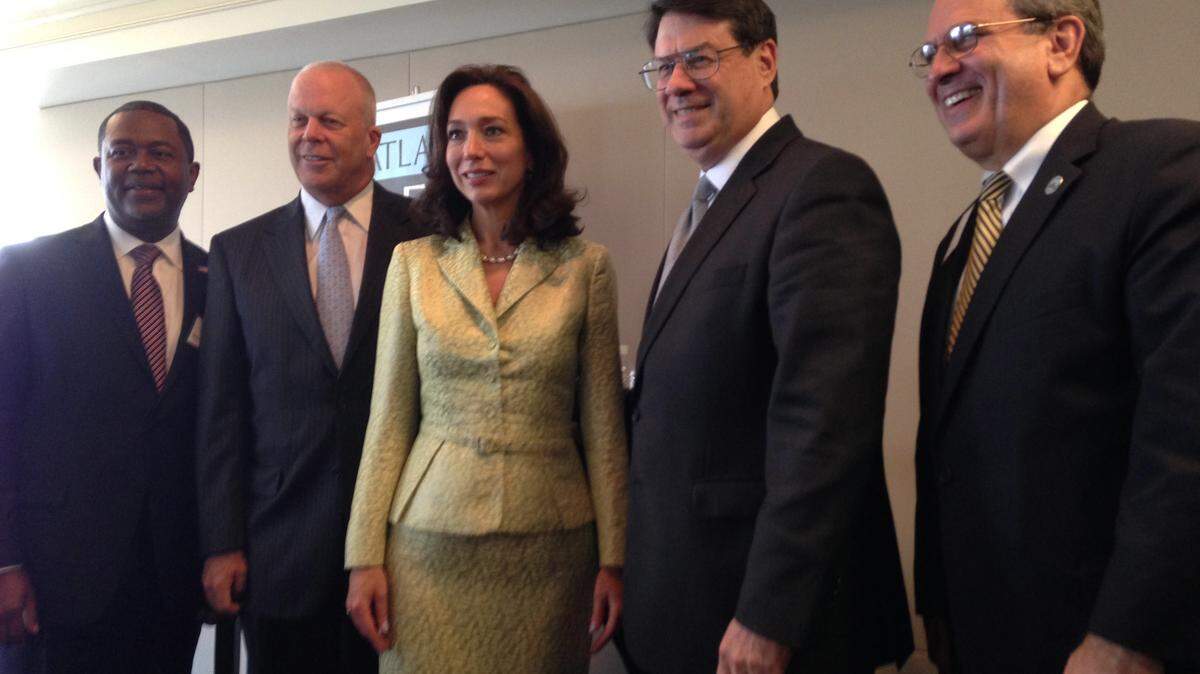
The problems brought the cities together Wednesday, when the mayors of Columbus, Macon, Augusta, Sandy Springs and Dunwoody spoke together at a public forum.
The talk about the two Georgias happened on the 49th floor of an Atlanta high rise, under the auspices of the Georgia Municipal Association.
“People tend to live in the silo of their community,” said Columbus-Muscogee County Mayor Teresa Tomlinson. She said she hopes things like the forum help spread the word about what’s going on in Georgia’s cities.
One of the barriers the non-Atlanta mayors say they face is trying to get what they need from state government. For example, the people who make decisions about expensive roadwork are headquartered in Atlanta. Roads are especially important not only for traffic but also for attracting and growing companies.
State government leaders these days tend to come from metro Atlanta and points northward. Republican Gov. Nathan Deal is from Sandersville but lived as an adult in Hall County, also home to Lt. Gov. Casey Cagle. House Speaker David Ralston is a Blue Ridge Republican. And metro Atlanta’s greater population gives it a louder voice in the state Legislature.
Houston County long made a good stand, as home of former U.S. Sen. Sam Nunn, former Gov. Sonny Perdue and state House leadership such as former state Reps. Larry Walker and Larry O’Neal. But its current bench is relatively young and lower-ranked.
Tomlinson said it’s possible people who live in Atlanta can be unaware of what’s going on in places like Columbus or Macon.
“There are tremendous things going on. ... They are communities of choice,” she said. “People with high levels of education, people who are starting their businesses chose to live in these communities. They’re thriving, they’re vibrant.”
Another thing mayors like Reichert and Tomlinson are doing is meeting together to brainstorm.
Cooperation and information-sharing of that type could mean a lot to cities and their residents, said Mike Bodker, Georgia Municipal Association president and Johns Creek mayor.
“There’s commonality between large cities. It doesn’t matter whether they’re part of a larger metro or ... their own metro. We still face the same common core issues, and we all benefit by having dialogue and continuing to work together to share best practices,” Bodker said.
What should come out of that brainstorming, he said, are a list of problems and a shared set of solutions that all the mayors can carry to places like the Gold Dome in Atlanta.
One thing Reichert supports is a tweak in state law that would let cities on a rail line between Macon and Atlanta decide if they would like to raise money to fund a passenger rail service connecting them.