Data center bills may fall short of protecting customers — especially in Middle Georgia
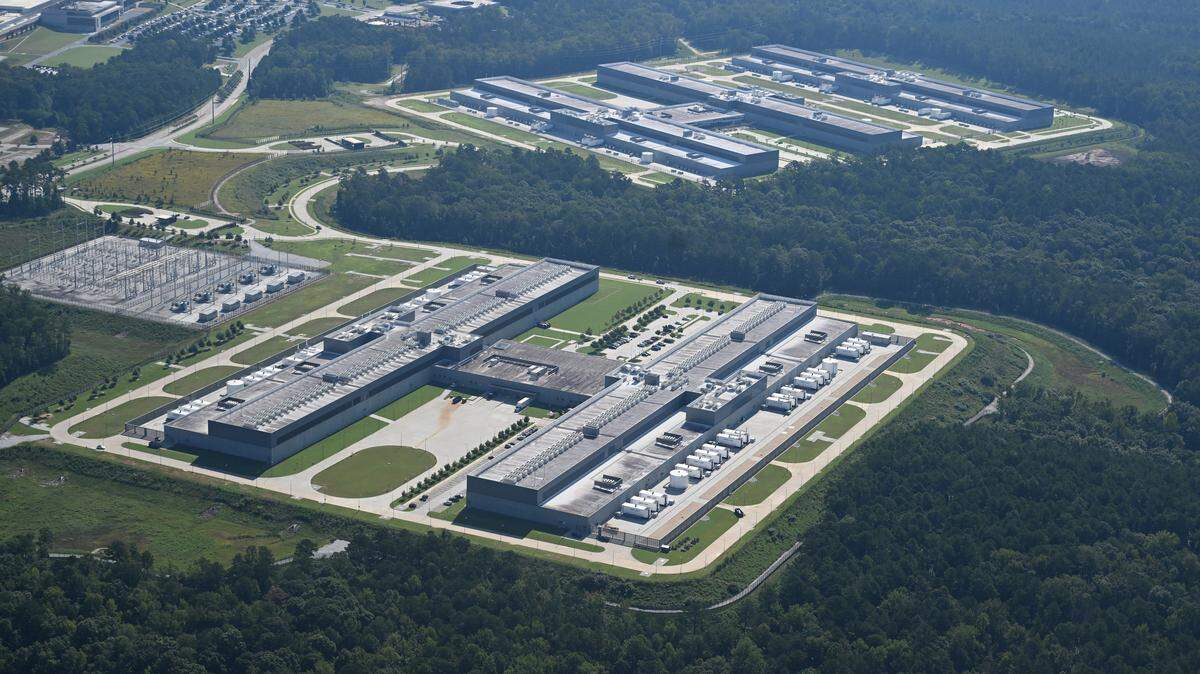
Two bills moving through the Georgia legislature would require data centers to bear the costs of the massive infrastructure they require to operate and end a tax break that cost the state hundreds of millions of dollars last year.
House Bill 1063 and Senate Bill 410 face a critical deadline Friday — the last day legislation can pass its chamber of origin and remain eligible for a full vote before the session ends April 2. Any bill that clears both chambers could then be signed into law by Gov. Brian Kemp.
But utility lawyers and environmental advocates said both bills have significant gaps that could leave ratepayers exposed. And for residents in parts of Middle Georgia, the bills may offer no protection at all.
What the bills do
The bills come as Georgia Power is in the middle of the largest energy expansion in its history.
In December, the state’s Public Service Commission approved 10,000 megawatts of new power generation, largely to serve the influx of data centers moving to the state. These two bills would determine who bears the costs for that power infrastructure — the data centers themselves, or Georgia Power’s residential and small business customers.
H.B. 1063, which has already overwhelmingly passed the House and is now headed to the Senate, would require data centers using 100 megawatts or more of power to pay for the infrastructure built specifically to serve them.
If Georgia Power builds a substation or transmission line for a data center, for example, that data center must pay for it under contracts with the utility.
S.B. 410 does three things.
First, it ends the state’s sales tax exemption for new data centers. Any data center that already holds an exemption certificate keeps it, but no new certificates will be issued after the bill takes effect.
That exemption cost Georgia $474 million in fiscal year 2025, while the state collected only $41 million in tax revenue from the industry, a net loss of $433 million, according to the Georgia Department of Audits and Accounts.
The same audit found the state had dramatically overstated the economic benefits of the exemption, originally claiming data centers created 28,350 construction jobs before revising that figure down to 8,505 with no explanation for the error.
Second, it requires that every contract between a utility and a large data center (defined as any customer using 100 megawatts or more) must include specific financial protections, including a minimum monthly payment even if the data center uses less power than expected, and financial penalties if a data center walks away before its contract expires.
Third, it includes a statement that the legislature intends for data centers to bear their own costs and not pass them to residential customers. However, that statement is not legally enforceable. It is a declaration of intent, not a requirement.
“I think the overall intent of everyone involved was the same and that was to ensure that our residential and retail customers were not bearing the brunt of cost and upgrades for our large load customers, i.e. data centers,” said the primary sponsor of Senate Bill 410, Sen. Matt Brass (R-Newnan), during a Senate Finance Committee hearing Monday.
A concern for rural, Middle Georgia
Many of the counties seeing the heaviest data center development in Middle Georgia are primarily served by electric membership cooperatives, or EMCs, or Oglethorpe Power, rather than Georgia Power.
Under Georgia’s 1973 Territorial Act, data centers are large enough to choose their utility provider when they first begin operating, which means not every data center popping up in the state will be served by Georgia Power.
In fact, Oglethorpe Power is adding capacity in Monroe County, according to Mark Woodall, legislative chair for the Sierra Club. Monroe County also happens to be the location of two large data center projects: the Rumble Road Technology Campus and the Forsyth Technology campus, though neither have publicly confirmed a power provider yet.
Meta chose Walton EMC to serve its data center in Newton County, according to Bob Sherrier, a utility lawyer with the Southern Environmental Law Center who testified before the Senate in support of stronger ratepayer protections this legislative session.
And in a hearing for a data center planned in Twiggs County, developers said the project would likely connect to existing transmission lines through local EMC infrastructure.
Because EMCs and municipalities fall outside the PSC’s regulatory authority, that means neither protections in H.B. 1063 nor S.B. 410 would apply to ratepayers served by those utilities, according to Sherrier.
Unlike Georgia Power, which is regulated by the PSC and answers to shareholders, EMCs are nonprofit cooperatives owned by the customers they serve. Each EMC is governed by a locally elected board of directors, meaning ratepayers have a direct voice in how their cooperative operates. That structure also means individual EMCs can negotiate their own contracts with data centers — and could theoretically impose stricter terms than state law requires.
Last May, the EMCs told the House Special Committee on Resource Management that they do not build new power generation until a contract is signed, unlike Georgia Power, which has moved forward with construction ahead of securing contracts.
“That is a different approach, that is safer than (Georgia Power’s) if you build it, they will come approach,” Sherrier said.
What the bills don’t do
Both bills also leave gaps for Georgia Power customers, Sherrier said. Neither addresses what he called the bigger risk: speculative overbuild.
Georgia Power is already building power plants in anticipation of data centers it hopes will sign contracts, not just for ones that already have. If those data centers don’t materialize, the costs of that infrastructure get added to Georgia Power’s rate base, meaning customer bills.
“That kind of thing is not protected at all” under either bill, Sherrier said.
The contract language in S.B. 410 also concerns Sherrier. The bill requires contracts to include provisions “designed” to protect ratepayers, but he said a utility could argue it designed a contract to protect customers even if it failed to do so in practice.
“Georgia Power can say, ‘well, we designed the contract to protect people, it just didn’t in this situation,’” Sherrier said. “And they would be in compliance.”
Even if the contracts work as intended, there is no guarantee residential rates will reflect that, Sherrier said. Every few years, Georgia Power goes before the PSC to set what customers pay on their monthly bills. Neither bill requires the PSC to account for money already collected from data centers when setting those rates. Essentially, Georgia Power could be collecting millions from data center contracts and still seek a residential rate increase.
“You talk about the mechanics of the contract, but not what happens to the money,” Sherrier said. “You can call it a loophole. It’s a big gap that’s missing.”
A third bill, S.B. 34, would have closed those gaps. No data center costs of any kind could be passed to residential customers, regardless of how those costs arise. This bill appears headed for defeat after Senate leadership blocked it from reaching a floor vote last week, and Friday is the last day a bill originating in the Senate can pass and remain alive for the session, according to Woodall.
“The resounding message from Georgia Power and the data centers is: trust us, we are protecting your power bills, but (these bills) don’t make that enforceable,” Sherrier said.
This story was originally published March 5, 2026 at 4:55 PM.