
Why Forsyth made residents leave a meeting about a data center. Did they break open meeting law?
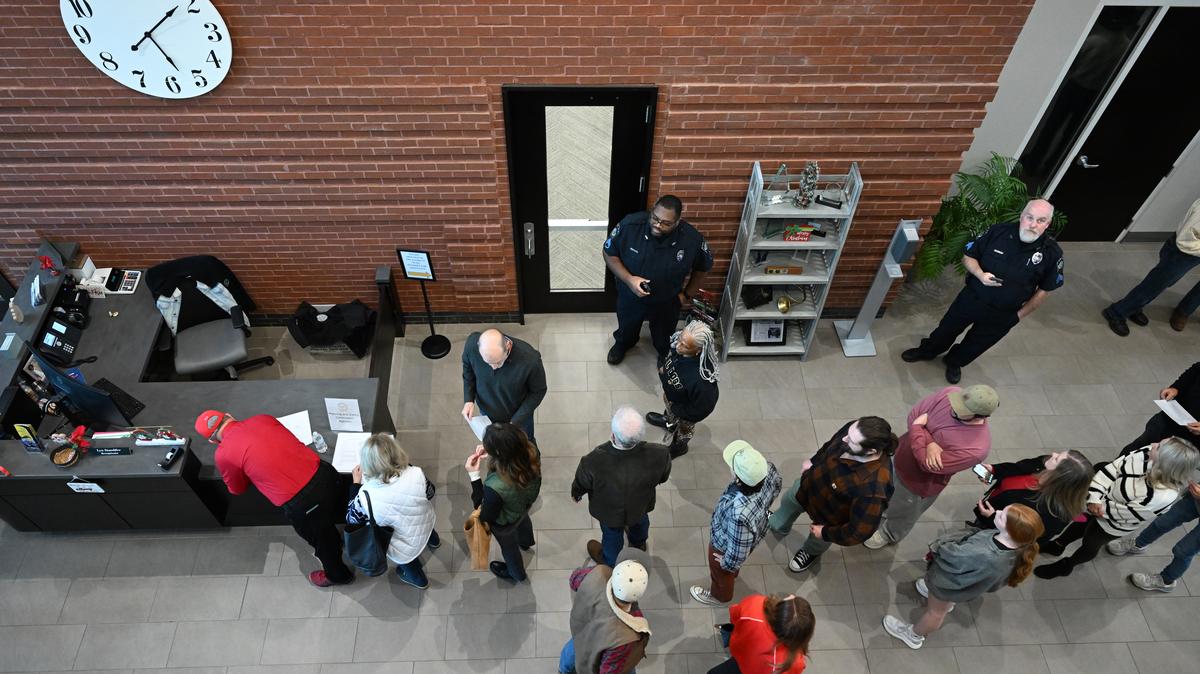
A planning and zoning meeting to discuss a proposed 12-million-square-foot data center in Forsyth was not able to accommodate all the residents who wanted to attend, and local officials may have violated open records laws by keeping dozens of people out of what was supposed to be an open meeting.
The meeting took place Dec. 22 at Forsyth City Hall, and the turnout was more than what the meeting room could hold. Members of the media and around 50 citizens were not allowed to stay in the room and had to stand in the lobby, as the room could not hold more than 68 people due to fire codes.
Just as the meeting started, officials closed the meeting rooms doors, and those who had been asked to leave the room could not see or hear the proceedings. The city did not stream the meeting or offer an alternate means of viewing.
The meeting was of high interest to the community, with officials discussing a data center project pitched by Atlanta-based Trammell Crow Company that, if approved, would be six times the size of Mercedes-Benz Stadium and be the largest data center in Georgia.
A portion of the property is already zoned agricultural — where Forsyth allows data centers as a conditional use — but about 450 of the more than 1,600 acres the developer is looking at need to be rezoned.
Additionally, because data centers are a conditional use, the planning and zoning commission needs to make a recommendation to the city council on whether or not such a use would make sense for that property. The city council will then approve or deny the data center’s conditional use application, taking into account the planning and zoning commission’s recommendation.
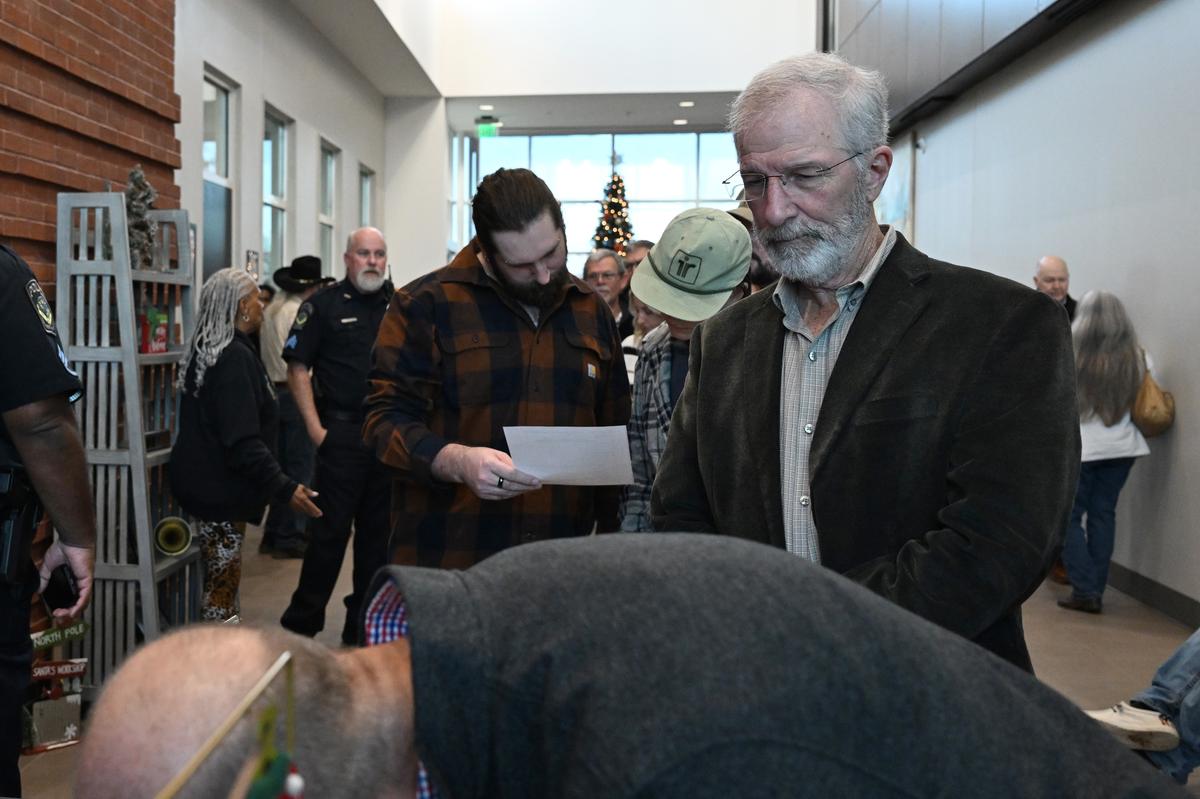
Despite taking place just days before Christmas, the meeting room filled fast. Citizens who were made to stand in the lobby outside the closed doors said they arrived prior to the meeting’s scheduled start time, but were still denied an opportunity to view and hear the proceedings, and to express their concerns.
“To me, the data center is bringing too much pollution,” said Kristie Ivey, a Forsyth resident who lives down the road from the proposed site but was asked to exit the meeting room. “I already have health issues.”
Julie Paul, another resident who did not get to attend the meeting, said she worries for her grandchild.
“I wanted to see what they say,” said Julie Paul, a Forsyth resident who was asked to leave the meeting room. “I have an autistic grandson who doesn’t like fluorescent lights and humming.”
Despite arriving on time, both women were asked to stand outside the closed doors.
Clare R. Norins, clinical associate professor at the University of Georgia School of Law and director of UGA’s First Amendment Clinic, told The Telegraph that closing the doors to the meeting room and not offering an alternate method to view the meeting may conflict with Georgia’s Open Meetings Act.
According to the act, “(t)he public at all times shall be afforded access to meetings declared open to the public” and “(a)ny resolution, rule, regulation, ordinance, or other official action of an agency adopted, taken, or made at a meeting which is not open to the public as required by this chapter shall not be binding.”
Brian Lee Causey, Forsyth’s city attorney who was present at the meeting, said Forsyth did not violate the Georgia Open Meetings Act because the act is primarily concerned with providing “adequate, advance notice” of public meetings.
“All discussion, meetings, votes, and official action took place within the open meeting that day,” Causey said. “While the doors may have been closed, the meeting was not closed, remained open, and was as open as it could have been under the normal circumstances and the notice provided.”
Norins, however, said the primary purpose of the Georgia Open Records Act is to ensure that the public can access and view proceedings.
“The core of the Open Meetings Act is that it requires the ability for members of the public to be present and observe the regularly scheduled meetings of state and local agencies,” Norins said.
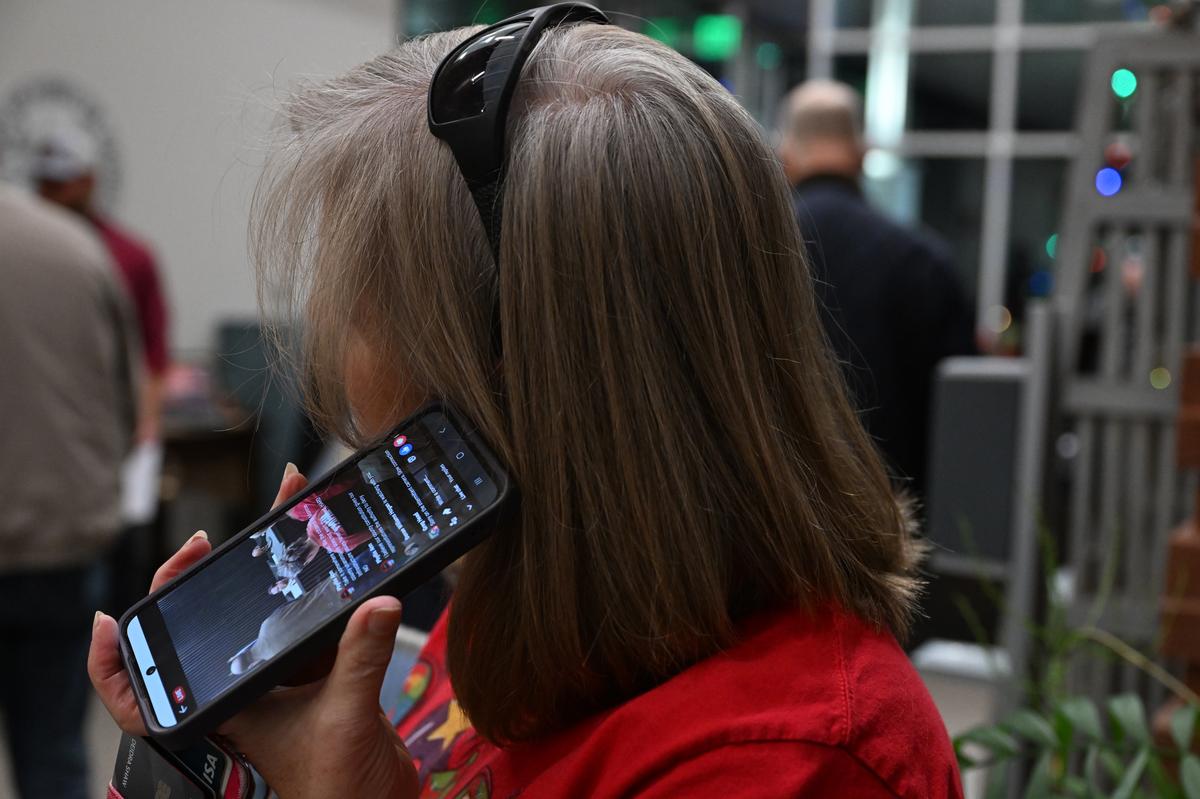
While a private citizen did stream the meeting through their personal Facebook account, the city itself did not offer an alternate method of tuning in.
Causey said he was not aware of any person or media being asked to leave, but “if that occurred, it was due solely to room capacity requirements/reasons.”
Norins said that while localities can manage capacity to follow fire codes, they can’t use those codes to deny citizens access to meetings. Instead, she said officials should offer alternate ways to view the meeting in those situations, such as a live stream, moving the meeting to a bigger space, or just allowing citizens to stand outside the room and look and listen through the door.
“If it’s an open meeting and the room isn’t big enough for everybody who wants to attend to fit, I would think leaving the door open would be kind of the minimum,” Norins said. “Closing the door would not be consistent with providing public access.”
According to officials with the city of Forsyth, planning and zoning recommended the rezoning but tabled discussion on the conditional use application for the data center. Officials will meet again to continue discussion on Jan. 14. The city council will make a final decision on the data center at their Feb. 2 meeting.