
Uncertainty looms among immigrants in Warner Robins after Trump’s previous deportations
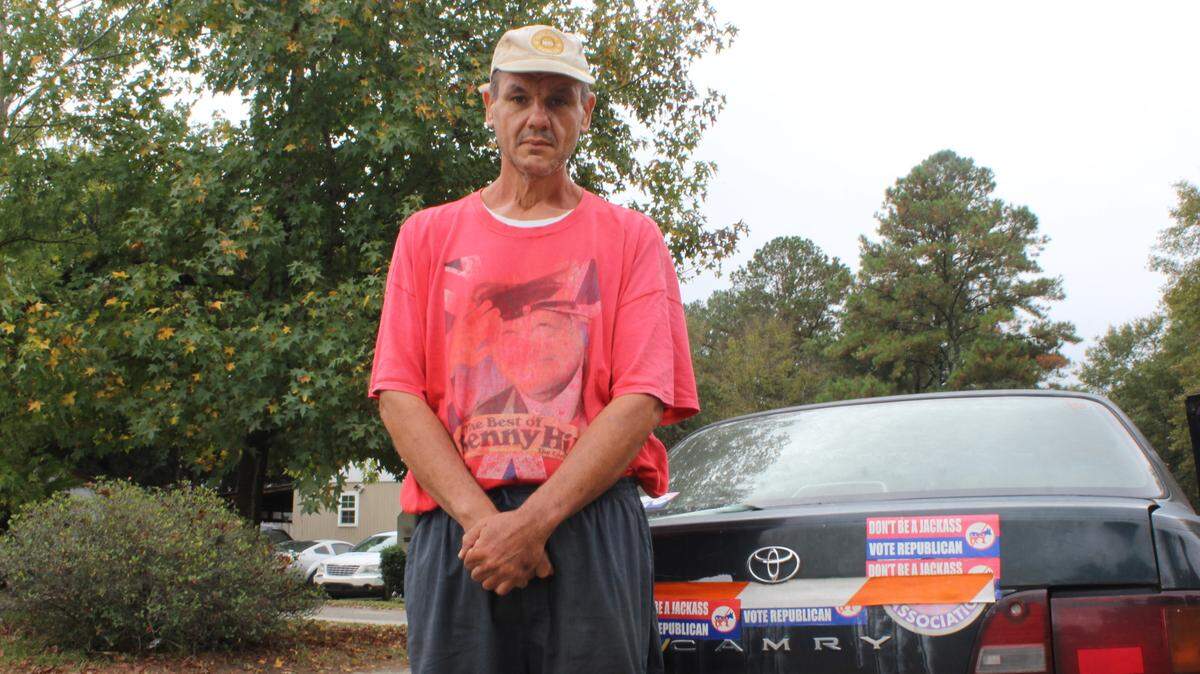
Editor’s note: The Telegraph permitted some sources in this story to speak without being fully identified out of fear of repercussions. Some interviews for this story were translated from Spanish to English.
Just days after Donald Trump was elected the next U.S. president, the largely-immigrant community in Warner Robins’ Red Fox Run mobile home park feared what could happen in a few months’ time.
Trump ran, and won, on a platform that heavily prioritized an immigration crackdown. He has repeatedly promised to carry out mass deportations at a level the U.S. has never seen, and residents in this Warner Robins community say they already were affected by round-ups in Trump’s first term.
With only about a month left until Trump takes office, even immigration experts are scrambling to answer the unknowns of his mass deportation plans.
Several people in the housing community on Nov. 8 were scared to speak about how Trump’s plans could affect them after seeing neighbors affected by deportations in Trump’s first presidential term.
A woman born in Georgia, an older man who immigrated from Italy, a man selling pastries on a corner and a young correctional officer whose father immigrated from Mexico illegally all recalled what some described as inhumane conditions for immigrants in their mobile home community under the Trump administration.
Immigrant family fears being split up
The uncle and father of a correctional officer named Samuel, who lives in the Warner Robins housing community, fear they will be deported soon.
Samuel would be separated from two relatives who pay rent at their home and cover costs for other necessities.
“If they leave, I won’t have anywhere else to go,” he told The Telegraph.
Samuel’s grandfather, who recently died, sold pigs and cows, and grew corn and beans to make ends meet. Samuel’s dad was also “very, very poor,” he said.
“They still don’t make a lot of money, but when they do, everybody around here helps each other out,” Samuel said. “That’s just how the culture works.”
Samuel mentioned his family gave him “a better life than they had” in San Luis Potosí, Mexico – a city devastated by violent crime and kidnappings, and heavily affected by poverty in some areas.
A U.S. travel advisory is in effect to “exercise increased caution” in the city. There are 30 travel advisories in effect for Mexican cities and states.
Samuel’s dad does not have citizenship documents. His uncle does, but he recently received two letters in the mail about his status, which made the family feel unsteady.
Samuel’s dad and uncle declined interviews with The Telegraph.
Samuel said if immigration officials look for them, he hopes it will help that his uncle is a “very reclusive kind of guy.”
‘They don’t care’
Kyra Montgomery, a Georgia native, said she remembered when law enforcement swept through the neighborhood and detained some of her loved ones during Trump’s first term.
“They just go around and send people in their nice f*****g uniforms to knock on people’s doors and rip families apart,” the 22-year-old said. “They don’t care if your kids are watching you. They don’t care if your mom is sitting there dying on the couch and you’re taking care of her.”
Montgomery still keeps in contact with some people who she said came to America for a safer or more sustainable life. Where they would end up after being deported was uncertain.
“You really get dropped off wherever. You have to figure it out,” she told The Telegraph. “Hopefully you can contact your family over here so they can save some money for you to get help.”
How often have people been deported in Middle Georgia?
The exact number of deportations in Middle Georgia during Trump’s first term isn’t clear. U.S. Immigration and Customs Enforcement denied an open records request from The Telegraph seeking to find out how many people were detained in the Red Fox Run neighborhood for allegedly entering the country illegally.
“We do not track removals by county, we do track it by Area of Responsibility,” ICE said in an email. Areas of responsibility are geographical regions overseen by 25 field offices across the country. Atlanta’s office oversees all of Georgia’s ICE Enforcement and Removal Operations.
But available data shows efforts to detain immigrants in Houston County were more intense than other counties in Middle Georgia. That was the case both before and during Trump’s first administration.
Law enforcement officials in Houston County arrested far more people, who were also wanted by ICE, than surrounding counties between 2009 and 2017, The Telegraph previously reported. At least 668 people were booked in the county during that time.
Houston County also had the greatest number of ICE detainers out of all surrounding counties under the first Trump administration, according to TRAC. ICE describes a detainer as a request to a “law enforcement agency to notify ICE before a removable individual is released from custody and to maintain custody of the non-citizen for a brief period of time so that ICE can take custody of that person.”
There were 50% more ICE detainers nationwide under the first Trump administration compared to President Joe Biden’s administration, TRAC reported.
The Biden administration has removed more immigrants than the Trump Administration, POLITICO reported. But most under Biden were detained at the border, not the country’s interior, according to the Migration Policy Institute.
“ICE detainers are often used as one indicator of the intensity of ... interior enforcement in contrast to border enforcement conducted by ICE’s peer agency, U.S. Customs and Border Protection,” TRAC said on their website.
Immigrant voices misunderstood
A man named Juan, who was selling pastries and baked goods on a table near the entrance of Red Fox Run last month, said he has bounced between Georgia, California, Oregon, Washington State, Illinois, Montana and other states since moving from Mexico to the U.S. in 1979.
Juan said he was used to feeling discriminated against by not only those in power, but by Hispanics born in the US.
He added that immigrant voices are normally misunderstood and undermined, and says he believes the social climate may only worsen under Trump’s administration.
“If people happen to look at us badly or think differently than us, well, then it happens,” Juan said. “Even Hispanics look at us differently.”
A day after the presidential election
The first 24 hours after Trump won the presidency were restless for an Atlanta-based immigration lawyer.
It was a familiar feeling for Emily Niklaus Davis, who is also a law professor at Emory University. She focuses on deportation and citizen defense for immigrants in ICE custody, immigration court, marriage-based green cards, naturalization applications and juvenile cases.
“The fear that we had starting in 2016 is sort of back and magnified because of the even more xenophobic and racially-based statements that he’s made throughout the election,” she said.
Trump called immigrants the “most violent people on earth,” “blood thirsty criminals” and “animals,” among other false and discriminatory messaging at his rallies, POLITICO reported.
Who is most at risk?
Davis warned people should believe Trump’s promises, now that he has support from the mostly-Republican Senate and House.
She anticipates he will invest more in the Department of Homeland Security’s enforcement and removal operations. This would allow them to “send agents out looking for people, which is something that they did,” Davis told The Telegraph.
Similarly, ICE’s fugitive operations could arrest someone at a home or neighborhood “when someone has an order or removal, or is somehow otherwise on ICE’s radar from prior criminal history,” Davis said.
The people of Red Fox Run said they witnessed this tactic first-hand.
However, this time there will be “a large rush of enforcement in terms of going out to look for people in a way that we potentially didn’t see in the past,” Davis said.
Local law enforcement agencies that do not enforce Trump’s plans in “full force” could risk the loss of federal funding, Davis said.
Migrants convicted of crimes would be most at risk of deportation because of a partnership known as a 287(g) agreement. State and local law enforcement agencies that sign up for this memorandum then receive training from ICE that allows them to serve and execute warrants, and actively seek people’s citizenship status. It also allows a local jail to serve as a detention facility for immigrants lacking citizenship documents.
“Historically … the federal government deputizes its local law enforcement officers to act as ICE officers,” Davis said. “It essentially creates contacts between local jails and ICE that would allow ICE to pick up undocumented persons from local jails.”
All local law enforcement agencies in Georgia will be mandated to agree to this starting Dec. 31, as per the Criminal Alien Track and Report Act of 2024, or House Bill 1105, which was signed into law on May 1.
Those with birthright citizenship would be next most at risk, followed by lawful permanent residents, or green card holders, Davis explained. This requires some documentation to prove one can reside in the U.S. indefinitely, but someone could face deportation if they commit certain crimes, even a misdemeanor.
Davis described common ways law enforcement found people who lacked proof of citizenship under Trump’s first term.
“A huge way for people to come on ICE’s radar is, for example, if they’re driving without a license,” Davis said.
While Trump has not explicitly discussed how his mass deportation plans would impact green card holders, they can’t be ruled out, Davis said.
“They do have stronger legal protections under the law than undocumented people do, but I wouldn’t go so far to say that they’re fully protected under the Trump Administration,” Davis told The Telegraph.
The American Civil Liberties Union took legal action last month against ICE for allegedly lacking clarity on how its Air Operations division is used. A lawsuit alleged ICE failed to respond to public records requests submitted in August about how its measures could soon expand.
“Little is known about how Trump would carry out (his) mass deportation agenda…,” Eva Bitran, director of immigrants’ rights at ACLU Southern California said in a news release. “The public has a right to know about how its taxpayer dollars could be used to fund deportation flights that would tear apart not only families, but our communities.”
Will Trump keep his promises?
Juri Santacatterina, an Italian native who lives in Red Fox Run, said he did not vote, but he supports Trump because of his tax policies.
Immigration enforcement is partially funded by taxpayer dollars.
While Santacatterina immigrated to the U.S., he was indifferent on immigration because he didn’t think Trump could actually pull off his promised mass deportation plans as soon as Jan. 20, his first day in office.
But Trump has made clear he’ll use whatever resources he can to carry out what he has promised to be the “largest deportation” operation in U.S. history. He posted on Truth Social Monday that he would declare a national emergency and use the military for mass deportations. He has also said he would use local law enforcement, the FBI and other federal agencies to carry this out.
Trump has said he plans to remove all undocumented immigrants from the country and end birthright citizenship.
“The president has influence on whether or not somebody will get deported, but the process will be overall delayed because it has to go through federal judges,” Santacatterina said.
However, Trump would likely issue an executive order to enforce these actions. During his first term, he completed 472 executive actions on immigration, according to the Migration Policy Institute. Only 39 others were proposed but unimplemented.
“It’s not going to be a big deal,” Santacatterina told The Telegraph.