
State lawmakers return to Atlanta, with elections in mind
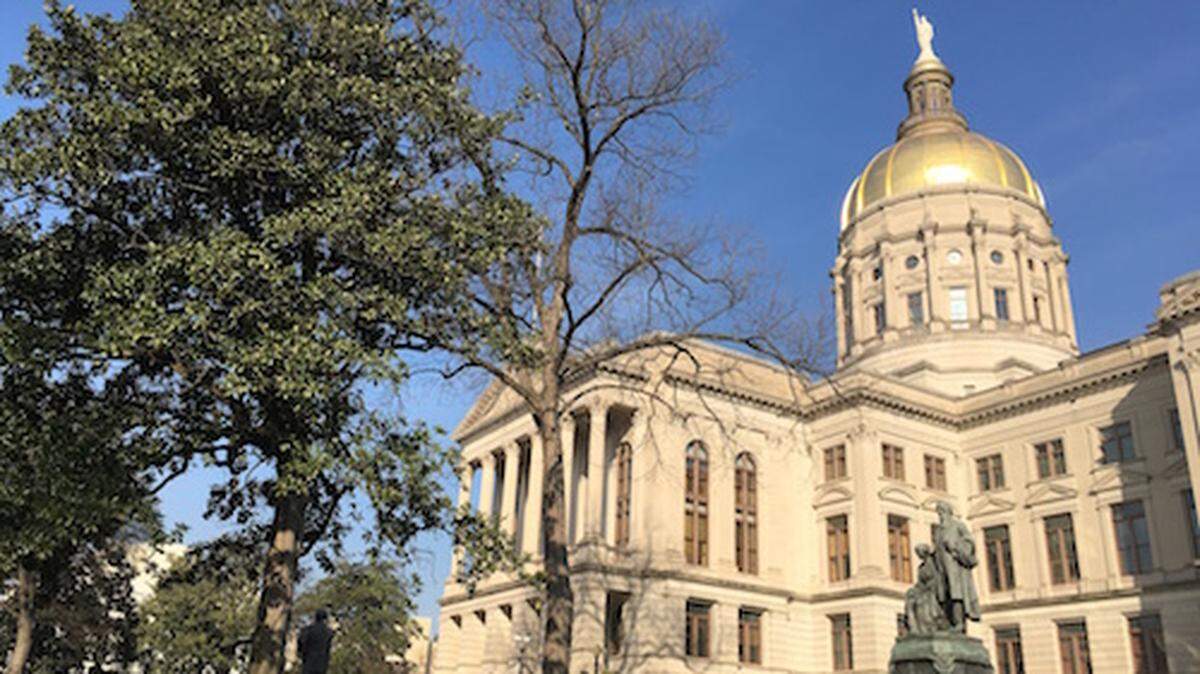
It's with some ambition — and a little bit of stress — that state lawmakers return to the Capitol on Monday.
There's a real appetite to work on jump-starting rural Georgia economies and settle what will be around $25 billion in spending for the next fiscal year. But all of that is going to compete with election-year drama.
The governor's office is opening up as incumbent Nathan Deal finishes his limit of eight years in office. Republican Lt. Gov. Casey Cagle and several others are seeking the top office, emptying their own offices for other claimants. Every legislative seat is also open for election this year, so most everyone running for re-election has an incentive to return home to campaign with a few popular accomplishments in tow.
The state House's top-ranking lawmaker put rural Georgia among his top priorities this year, saying he expects to see draft legislation about speeding up broadband deployment to those areas. Broadband is "at the heart of all to revitalize and bring jobs back to rural Georgia," said state House Speaker David Ralston, R-Blue Ridge. He said fast internet would mean a lot to education, health care and business.
Lawmakers have been putting some thought into the plague of slow or no internet for years. The problem moved up the agenda when Ralston appointed a House Rural Development Council last year and told that panel of lawmakers to figure out ways to help private business grow jobs in rural communities.
The question is how to pay for something that private companies haven't been willing to do. Some ideas that have come out of the council include using a telecommunications tax or cutting fees that companies pay to put their lines in public rights of way.
State Sen. David Lucas, D-Macon, represents all or part of seven mostly rural counties. For several sessions, he's been working on linking rural Georgians to health care in communities where doctors are scarce. He's long said telemedicine — examinations from distant doctors via video streams and internet-connected instruments — is part of the answer.
Rural broadband "is not going to happen if the state doesn't put some impetus into it," said Lucas, who chaired a Senate study committee on rural Georgia.
Another House group is looking at the possibility of state spending on the local agencies that run buses, streetcars and Atlanta's subway. But metro Atlanta is not the only focus, said state Rep. Calvin Smyre, D-Columbus, who sits on the state House Transit Governance and Funding Commission. He said the state has gone without funding transit for too long.
"Our goal is to not only look at … the regional aspect of Atlanta, but also try to provide funding, some mechanism for transit around the state to participate in funding … the Macons, the Augustas, Columbus, Savannah," Smyre said.
The state did make a landmark transit outlay of $75 million in 2016 when it awarded grants to several transit systems, including those in Atlanta, Albany and Athens-Clarke County.
For every new expense, however, legislators either have to bring in more money to pay for it or cut spending on something else.
"I think the budget will be maybe tighter than you might think, with the money we have to put in the teacher retirement system ... (and) we've got to put more money into the Medicaid program," said state Sen. Larry Walker III, R-Perry.
The teacher pension system will reportedly require an increase of $351 million in funding for the year that begins in July. And as for Medicaid, Georgia shares with the federal government the cost of the health insurance program for low-income and disabled people. But state money from a recent civil settlement for Medicaid is spent, and as Georgia gets a little wealthier, the federal government is paying a smaller Medicaid share.
For the past few years, an expanding economy and higher tax take have made budgeting easier than it was just after the recession, when revenues shrank. But Georgia has to pass a balanced budget, and the Republican-dominated Legislature tends to be conservative about spending.
Indeed, there are some proposals out there that have fans — and might get hearings. To pass, though, they would have to overcome lawmaker objections to costs. Military communities tend to like an idea to lure military retirees to the state by trimming the income tax that veterans pay on pensions. While there are several ways to do that, including some kind of tiered system that might be cheaper, it could mean the state forgoes revenue on the order of $100 million annually.
Other lawmakers want to the state to help pay for work done by county sheriffs' departments or even top up deputy pay in some way. Some sheriffs, especially in rural counties, have complained that it's gotten harder to recruit deputies and jailers since the state gave troopers a big raise in 2016. But that's got its detractors because it would be a big expense and a huge shift in responsibility toward the state and away from counties.
Every year, the committees that handle health care are among the busiest. On both sides of the aisle there's broad agreement that opioid addiction is a crisis, and there may be a push for more state funds for addiction treatment.
Rural hospitals continue to struggle to stay open. State Rep. Richard Smith, R-Columbus, is going to renew his efforts with other lawmakers to tackle what's often called "surprise medical billing." A typical example is a patient seeing an emergency room doctor or being sent to a specialist at a hospital, then finding out later that doctor isn't in their insurance network, even if the hospital is. The "surprise" is the huge bill for out-of-network care the patient later receives.
And Macon state Rep. Allen Peake is going to continue a push for tightly regulated in-state cultivation of marijuana for medical purposes. It's already legal for registered Georgians who have one of several diagnoses to possess a liquid made from cannabis, but there's no legal way to buy it here. Peake, a Republican, has made no secret of the fact that he helps Georgians get the liquid from other states, but he doesn't say exactly how.
He said he thinks the chances of passing a cultivation bill grow every day.
"Each of my colleagues has someone in their district who is calling them," said Peake. "They're all going to be hearing from their constituents."
However, any cannabis relaxation attracts a range of critics, from folks who don't believe it's therapeutic to those who see it as the first step to recreational weed, and yet others who are uncomfortable with tolerance of something that federal law bans outright. Peake has had trouble winning over supporters in the state Senate, and Deal has not supported cultivation.
The fact that it's an election year might help move some bills, like an income tax cut. But it may hinder the chances of others, such as legalizing casinos.
Last year, lawmakers discussed licensing two or more casinos, but there wasn't the kind of consensus on where to spend the money to sway skeptics.
And plenty of lawmakers say they get calls from constituents objecting to gaming.
Asked if a casino bill might move, state Rep. Heath Clark, R-Warner Robins, immediately answered no.
The reason? It's not the year for things that might have blowback, he said.
This story was originally published January 5, 2018 at 10:12 AM.