Unexpected discovery of coral reef ‘teeming with life’ reveals thriving ecosystems
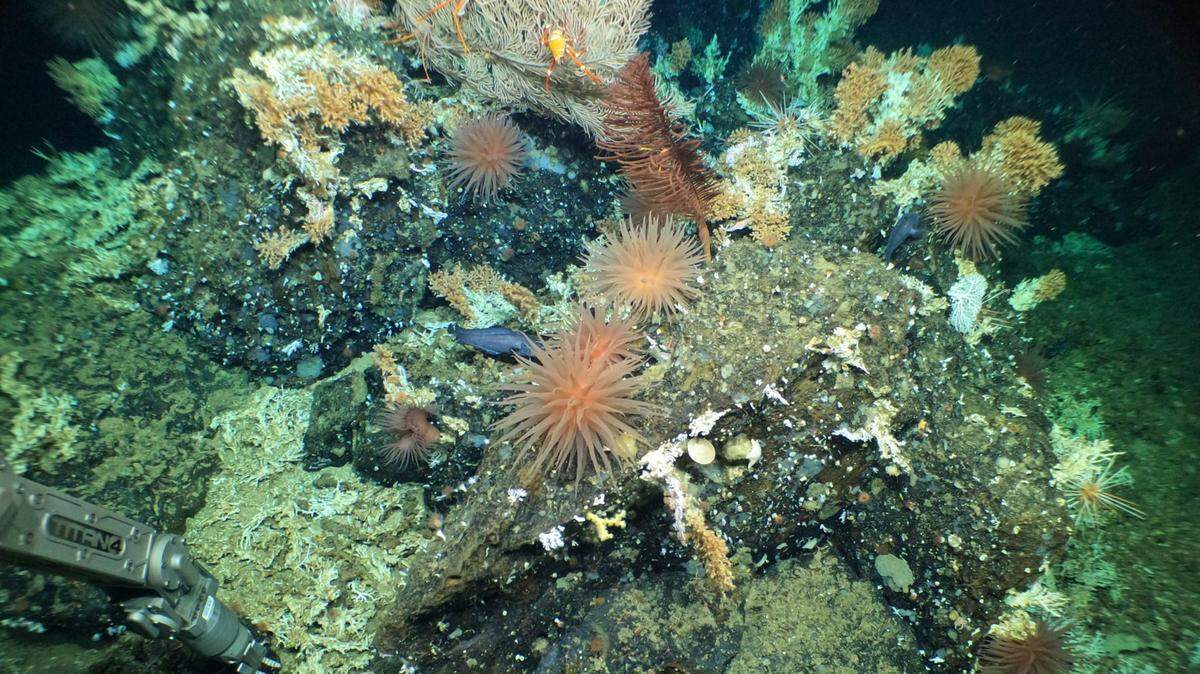
New research in the Galápagos Marine Reserve in Ecuador has discovered an unprecedented finding: a “pristine” deep-sea coral reef.
Using a “human-occupied vehicle,” scientists located the reef in the center of the Galápagos archipelago atop a seamount that hadn’t been mapped before. It was found at a depth of about 1,310 to 1,970 feet, according to an April 17 news release from the Woods Hole Oceanographic Institution.
“The reef is pristine and teeming with life – pink octopus, batfish, squat lobsters and an array of deep-sea fish, sharks, and rays,” Michelle Taylor, co-lead of the expedition and chair of the Deep Sea Society from the University of Essex, said in the release. “This newly discovered reef is potentially an area of global significance – a canary in the mine for other reefs globally – a site we can monitor over time to see how a pristine habitat evolves with our current climate crisis.”
Unlike other reefs around the world, the newly discovered regions are made of 50% to 60% live coral, which is “very rare indeed,” Taylor said. In comparison, deep-sea reefs typically have only about 10% to 20% of live coral cover.
Previously, scientists thought only a few coral reefs still survived in the islands after the impacts of the El Niño weather events in 1982 and 1983, the institution said. The recent discovery indicates that sheltered, deep-sea reefs were not affected and have likely thrived for centuries in the region.
“The captivating thing about these reefs is that they are very old and essentially pristine, unlike those found in many other parts of the world’s oceans,” said Stuart Banks, senior marine researcher at the Charles Darwin Foundation and national observer on the Galápagos Deep 2023 expedition that discovered the reef.
Experts are also hopeful that their findings will lead to a better understanding of changing weather and climate patterns.
“It also helps us reconstruct past ocean environments to understand modern climate change,” Banks said. “It’s very likely there are more reef structures across different depths waiting to be explored.”
This story was originally published April 18, 2023 at 4:50 PM with the headline "Unexpected discovery of coral reef ‘teeming with life’ reveals thriving ecosystems."