
Baby gators are lurking in this photo of an alligator nursery. Can you spot them?
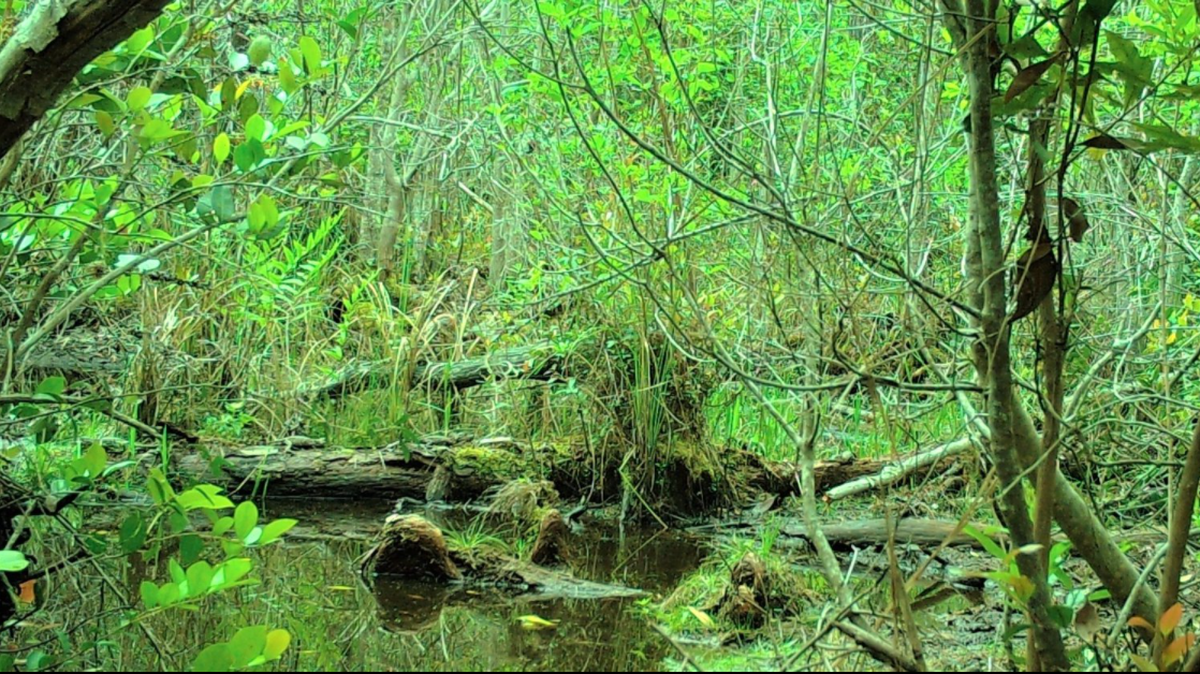
Meeting an alligator in a swamp is bad, but things can easily get worse.
Imagine wading uninvited into a protective mama alligator’s nursery.
That’s something we can do unknowingly, judging from a nondescript nursery photo taken in Georgia’s sprawling Okefenokee Swamp Park.
The creepy image was shared on Facebook by the University of Georgia’s Coastal Ecology Lab, which challenged viewers to count all the baby gators.
What makes the photo unnerving is no babies are easily seen. The lab gave people a week to find them, and not a single person got the number correct.
So how many are there?
Four — and to prove it, the lab circled them in the photo and reposted it online.
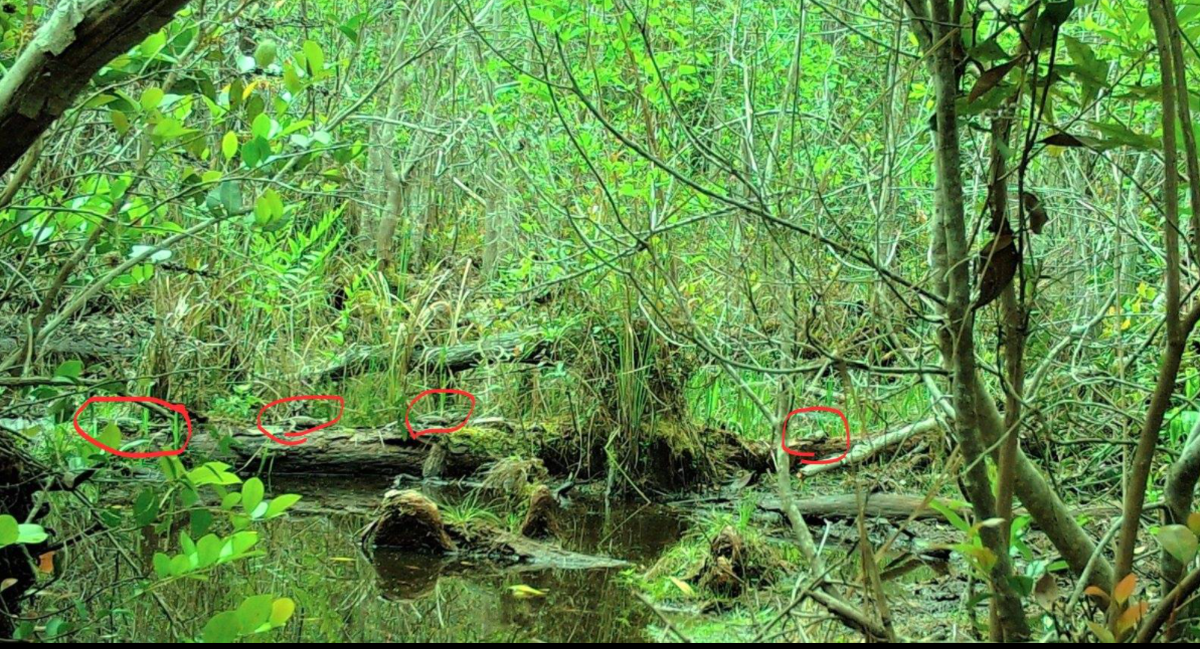
The mother alligator, Sally, is nowhere to be seen, which is yet another reason a nursery might be easily missed — until it’s too late.
“Sally’s nursery consists of dense vegetation to keep larger predators out and multiple, shallow, isolated pools that allow for the alligators to hide. And, of course, a very good mother keeps watch,” the lab wrote. “While Sally is not in this (photo), you can be sure that she is not far from her babies.”
Nurseries are not the same as nests. A nest is where the babies hatch, and the nursery is where they are moved to grow in safer conditions.
“A freshly hatched alligator nest produces a strong smell that is very enticing to predators so it is imperative that the mother alligator moves them somewhere safe,” the lab wrote.
“These safe areas are called nurseries and usually consist of a shallow, secluded body of water where the mother can more easily keep watch and protect her young.”
The lab didn’t provide an explanation for what a gator nest smells like: “It is hard to explain. There really is no equivalent.”
Okefenokee Swamp is 438,000 acres or about 700 square miles, the U.S. Fish and Wildlife Service reports. It’s the largest black water swamp on the continent and home to countless venomous snakes (cottonmouths and rattlesnakes), biting bugs and carnivorous plants.
The Coastal Ecology Lab is studying alligators in the swamp, with the biggest alligator determined to be 11 feet, 5 inches and 400 pounds.