Constipated mummy with grasshopper diet gives inside look at early society, study finds
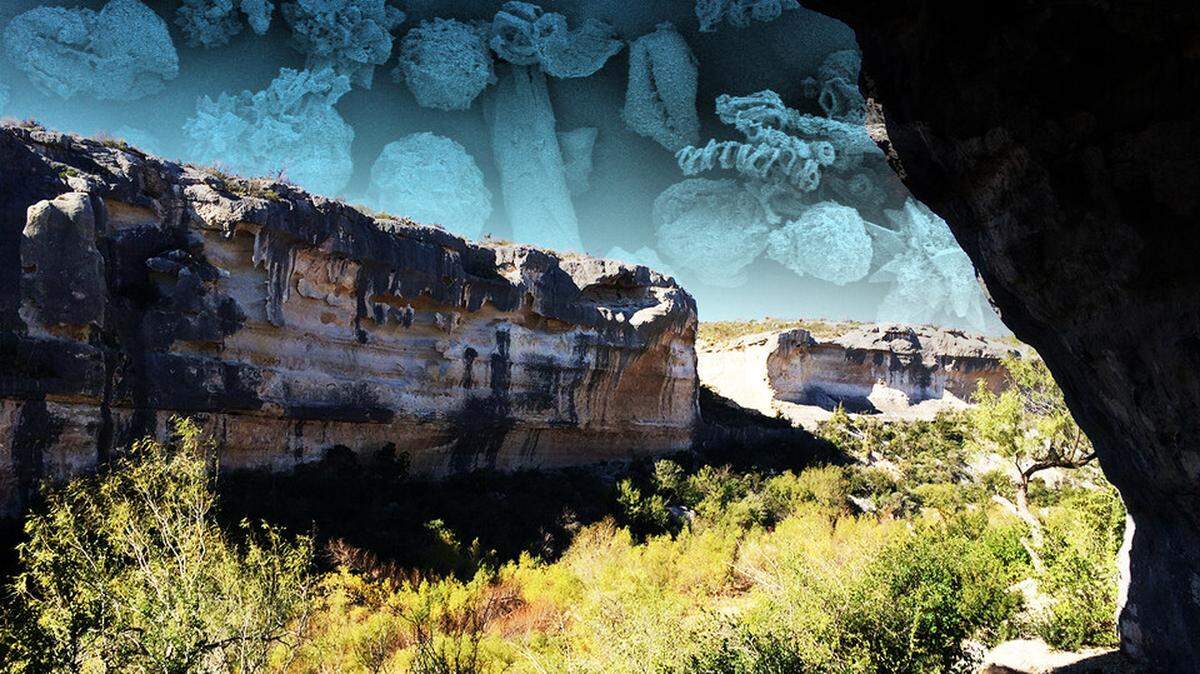
A recently reanalyzed mummy about 1,000 years old reveals the unfortunate tale of a man so constipated his colon swelled so much it killed him.
The man, discovered in 1937 in the Lower Pecos Canyonlands of modern-day Texas, was suffering from Chagas disease, a parasitic illness that caused his colon to inflate six times its normal diameter.
The organ eventually became so full of digested and undigested food that it ballooned enough to push against his spine, according to researchers at the University of Nebraska-Lincoln.
Microscopic views into the intestinal fiasco unveils more than just some clogged pipes, it offers evidence of what could be considered early hospice care.
During the final three months of the man’s life, which were racked with starvation, his community or family fed him mostly grasshoppers — an uncommon source of food among his people, the researchers said in a news release.
But first, they plucked the insects’ legs off.
“So they were giving him mostly the fluid-rich body — the squishable part of the grasshopper,” Karl Reinhard, a forensic science professor at the University of Nebraska–Lincoln and a researcher involved in the case study, said in the release. “In addition to being high in protein, it was pretty high in moisture. So it would have been easier for him to eat in the early stages of his megacolon experience.”
The mummy is one of three case studies to be discussed and published in an upcoming book titled “The Handbook of Mummy Studies.”
A man named Guy Skiles discovered the mummy 83 years ago near the Rio Grande and Pecos Rivers in South Texas, according to Live Science. The body was stored in a “small private museum until 1968 when it was loaned to the Institute of Texan Cultures.”
Scientists studied the mummy throughout the 1970s and ‘80s, but advances in technology have allowed researchers to study the man in more detail.
Using scanning electron microscopy, researcher Julia Russ found phytoliths — tiny structures found within plant tissue — in the mummy’s body, the release said. These structures are known for staying intact even after a plant decays.
But that’s not what the Nebraska team discovered.
“The phytoliths were split open, crushed. And that means there was incredible pressure that was exerted on a microscopic level in this guy’s intestinal system,” Reinhard said. “I think this is unique in the annals of pathology — this level of intestinal blockage and the pressure that’s associated with it.”
Another mummy the team reanalyzed, this time of a child younger than 5, revealed more evidence of early hospice care, the researchers said.
Discovered about 750 years ago in southern Utah, the young mummy and its people usually enjoyed a variety of plants and animals for meals, including a type of “nutritious” ricegrass that was not easy to come by, the researchers said.
Seeds of this plant were found in the child’s intestines.
“Gathering the ricegrass was inefficient from a transactional standpoint — an hour of harvesting would yield just 400 calories worth of the grain — but it may have represented the community’s best hope of nourishing the ill child in early summer, when other edible plants were scarce,” the team said.
“We can look at the experimental archaeology that shows us how difficult it is to collect those seeds. Then we can interpret that there were a lot of people helping this child survive,” Reinhard said.
This story was originally published December 16, 2020 at 4:14 PM with the headline "Constipated mummy with grasshopper diet gives inside look at early society, study finds."