Quietest place in US hammered by military aircraft noise, study says. Why that matters
Nearly 3,000 hours of recorded audio in Washington’s Olympic Peninsula — home to what used to be the quietest place in the U.S. —reveal the tantalizing and even harmful activity behind the stripping of the region’s hushed beauty.
Military aircraft flying out of a U.S. Navy base on Whidbey Island in Puget Sound, north of Seattle, has contributed to 88% of all audible flying noise, causing the most noise pollution over the entire peninsula widely known for its deafening silence.
Researchers from the University of Washington found that aircraft can be heard zooming across the sky for at least 20% of weekday hours, or for about one hour during a six-hour period.
Most of the recorded noise could be compared to a busy office setting or the hum of a household refrigerator, but at times the clamor can reach levels similar to city traffic or leaf blowers, which health officials say not only can cause annoyance, but also hearing damage “after two hours of exposure.”
The sporadic whooshes of aircraft can also cause other harmful consequences for humans and wildlife alike, such as difficulty sleeping and problems finding food, respectively.
What’s more, the Navy started using more powerful aircraft in 2016, study lead author Lauren Kuehne, who completed the work as a research scientist at the University of Washington School of Aquatic and Fishery Sciences, told McClatchy News in an email.
The military group is soon expected to increase electronic warfare activity by 62% and air-to-air training by 13% over the Olympic Peninsula, Kuehne added, “a place that is historically, culturally and ecologically significant.”
Eight American Indian tribes and more than two dozen animal species, many of which are threatened or endangered, call the peninsula home. More than 3 million visitors visit the Olympic National Park, too, the team said, which is a UNESCO World Heritage Site.
The study was published Nov. 25 in the journal Northwest Science.
“I think there is a huge gap between what the Navy is telling people — that its aircraft are not substantially louder and operations haven’t changed — and what people are noticing on the ground,” Kuehne said in a news release. “Our project was designed to try and measure noise in the ways that reflect what people are actually experiencing. This data is very accessible — you can hear and see it, and it’s not rocket science.”
The team planted audio recorders at Third Beach, Hoh Watershed and Hoh River trail, the latter two locations of which reside in the most quiet rainforest and region in the U.S, and one of the quietest places in the world.
Noise was recorded for 10 consecutive days during four seasonal periods between June 2017 and May 2018. Volunteers were then recruited to listen to nearly 3,000 hours of audio.
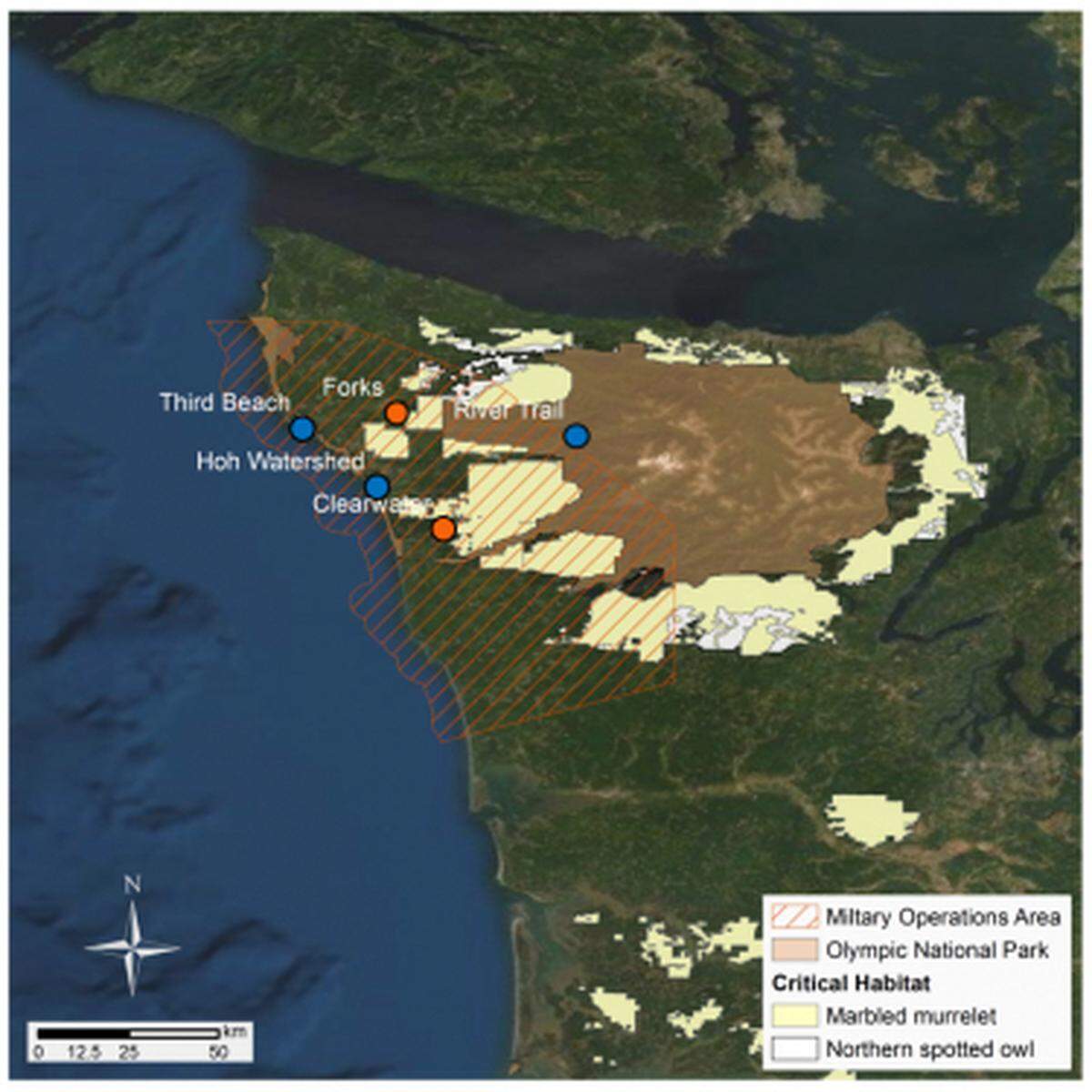
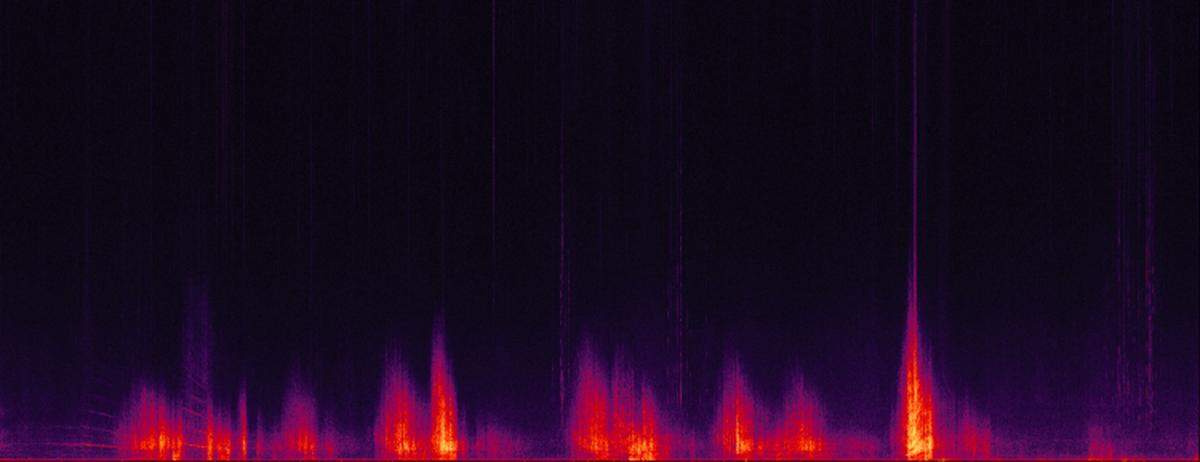
The study revealed nearly 5,800 “flight events” across all monitoring locations and periods; 88% belonged to military aircraft, 6% to propeller planes, 5% to commercial airplanes and less than 1% to helicopters, according to the study.
Three quarters of recorded military-related noise happened between 9 a.m. and 5 p.m. on weekdays, the researchers found, with most coming from Growlers and Boeing EA-18G jets used for electronic warfare.
Noise rang in between 45 and 60 decibels, “which is comparable to the air traffic sounds in Seattle,” Kuehne said in the release. There were times that sound levels registered at 80 decibels or more.
The Centers for Disease Control and Prevention says sound levels at 80-85 decibels can cause “damage to hearing” after two hours of exposure, while noise at 95 decibels, similar to a motorcycle engine, can cause damage after just 50 minutes.
The researchers said that conversations with residents in the Olympic Peninsula revealed “a majority who notice the low-level jet noise. The chronic and unpredictable nature of the noise is especially tiresome for residents, and some report difficulty sleeping, learning in school and even interference with hearing aids.”
Other research has shown that noise disturbances also impact wildlife by triggering physiological stress that affects their ability to successfully reproduce, communicate with other animals and find prey, the study says.
“The deafening sound of anthropogenic noise not only threatens wildlife but may also deter people from visiting in the future,” study co-author Julian Olden, a professor at the UW School of Aquatic and Fishery Sciences, said in the release. “Why travel to the Olympic Peninsula to only experience noise comparable to Seattle?”
The researchers said they hope their study convinces the Navy to consider moving its aircraft training to other military bases in an effort to rid the region of some noise pollution.
This story was originally published December 7, 2020 at 6:04 PM with the headline "Quietest place in US hammered by military aircraft noise, study says. Why that matters."