
‘Strange’ ancient reptile discovered in tiny fossils at Arizona national park
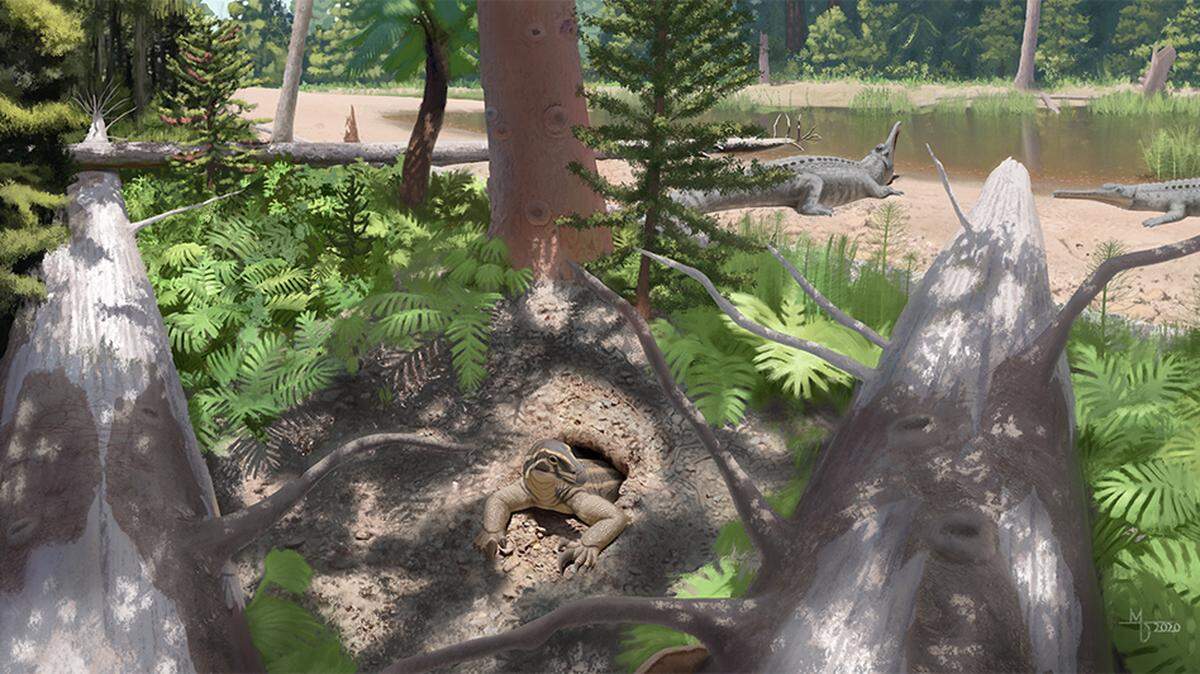
Researchers at Petrified Forest National Park discovered fossils that revealed a new species, which is 220 million years old.
A burrowing reptile called drepanosaur, the new species is named Skybalonyx skapter, the park said in a Wednesday news release.
“Drepanosaurs are a strange group of ancient reptiles known from Triassic rocks of the Northern Hemisphere and possessed an array of strange morphologies including enlarged second claws, bird-like beaks, and tails ending with a claw,” the park said in the news release. “They probably looked like a combination of an anteater and a chameleon, and Skybalonyx may have been even stranger.”
The fossils are small and were difficult to find, the park said. The crew that discovered the fossils used new methods to find them.
“The fossils of Skybalonyx are so small that they are difficult to find using normal paleontological field methods and were fortunately discovered by the PEFO crew using a new method of screen-washing fossiliferous rock, in which rocks are broken down with water through a series of metal screens,” the park said.
The study found that the new species had hand claws similar to other burrowing animals like moles, echidnas and mole rats — but were “much different than other drepanosaurs that have claws suited for climbing and living in trees.”
The discovery was made by a team of researchers from Petrified Forest National Park, Virginia Tech, University of Washington, Arizona State University, Idaho State University, and the Virginia Museum of Natural History.
“This new species was described as a result of the park’s ongoing summer paleontology internships by intern Xavier Jenkins and colleagues,” the park said. “Xavier is now a first-year Ph.D. student at Idaho State University, where he is studying the functional morphology of Permian and Triassic aged tetrapods.”
This story was originally published October 14, 2020 at 8:22 PM with the headline "‘Strange’ ancient reptile discovered in tiny fossils at Arizona national park."