
To all the new kids out there: I’ve been there, and you can do this
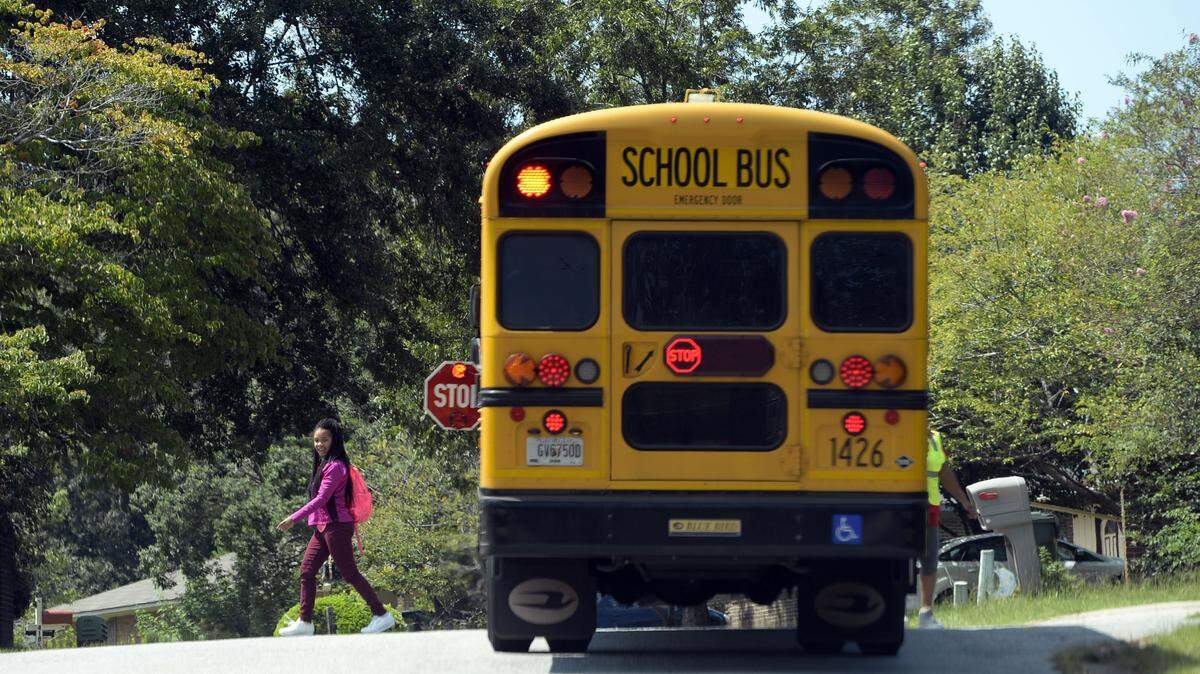
This is the time of year when it comes back to me. I am reminded whenever I see a yellow bus rolling through the neighborhood. My memory is triggered by back-to-school sales on spiral notebooks and No. 2 pencils.
The first day of school takes me to the playground at Churchland Elementary, the maze of hallways at J.E.B. Stuart Junior High and the band room at Ridgeview High School.
My palms are sweating. My lips are trembling. I have a lump in my throat.
I am the new kid at school.
Again.
I have a soft spot in my heart for all the new students this week. I have walked in their shoes. Or, in my case, P.F. Flyers.
When I was 9 years old, my father came in one morning and sat on the edge of my bed. He said he was re-enlisting in the Navy. Our family would be moving to Portsmouth, Virginia, in December.
We had lived in LaGrange since I was a baby. It was like Mayberry. I walked to school every day. LaGrange was a typical small town, the kind of place where you laughed and claimed you never had to use your blinker because everybody already knew where you were going.
Suddenly, my sheltered life was uprooted. I attended six different schools over the next five years and seven schools over the next seven years.
In the fourth grade, I began wearing glasses after my teacher told my parents I was squinting to see the blackboard. We moved to Virginia in the middle of that year. If you’ve ever been called “Four Eyes,’’ you know there are a few tears behind them.
Children can be cruel. Once there is a vulnerability, there is no cease fire. When feels are hurt, kids often pile on.
At my new school, I was teased about the Southern drawl I brought with me from Georgia. On the first day, the principal presented me with a dictionary — a gift to all new students. But what I really needed was a translator. I might have sounded funny to them, but they pronounced “awnt” instead of “aunt” and “hoose” and “oot” instead of “house’’ and “out.’’
At the end of my father’s tour of duty as a physician in Vietnam, we were transferred to Jacksonville, Florida. There I was, trying to learn a new vernacular all over again.
The summer before my eighth-grade year, my dad left the Navy and returned to private medical practice in Atlanta. Even though I was returning to my home state, that proved to be the biggest adjustment and roughest year.
In Florida, most boys wore white socks to school because of the tropical climate. In the Atlanta suburbs of Sandy Springs, I was taunted and labeled as a redneck when I showed up in white socks.
My skinny frame did nothing to help my social standing as the new boy at school. When I was younger, I busted my upper lip in a bicycle accident and had to have stitches. Now, at the awkward age of 13, a few classmates decided it looked like a beak. Soon, they were calling me “Bird Man.” At the end of the year, several wrote it in my yearbook. About the time I lost the “bird” look, the pimples started arriving in full force. (Adolescence offered me no breaks.)
I survived my perennial “new kid” years with the help of teachers who believed in me and classmates who befriended me when no one else would.
It makes me sad, but I’m grateful for these chapters in my life. I believe they made me stronger and thickened my skin.
I now have empathy for every child trying to find his or her way in a strange place on the first day of classes.
Today’s youth have far more challenges and difficulties than my generation did. Nuclear families and traditional homes have been torn apart. Technology and social media have created another level of peer pressure and disconnect. Civility is in steep decline.
Children must be “wired’’ differently, too. I remember hyperactive and unfocused kids, but they rarely were diagnosed for attention disorders and prescribed medication. Although we had our share of bullies, I don’t recall widespread epidemics of “bullying.’’
So, this week I say a prayer for all the new students. I hope they will find their way. And I encourage others to be kind and reach out to them. (It doesn’t take much effort to walk over and meet someone sitting alone in the lunch room.)
It you’re the new kid, hang in there.
If you’re not, this is your chance to make a new friend.
Ed Grisamore teaches journalism at Stratford Academy and is the author of nine books. His column appears on Sundays in The Telegraph.