
Home-school option across Middle Georgia comes with benefits, hurdles
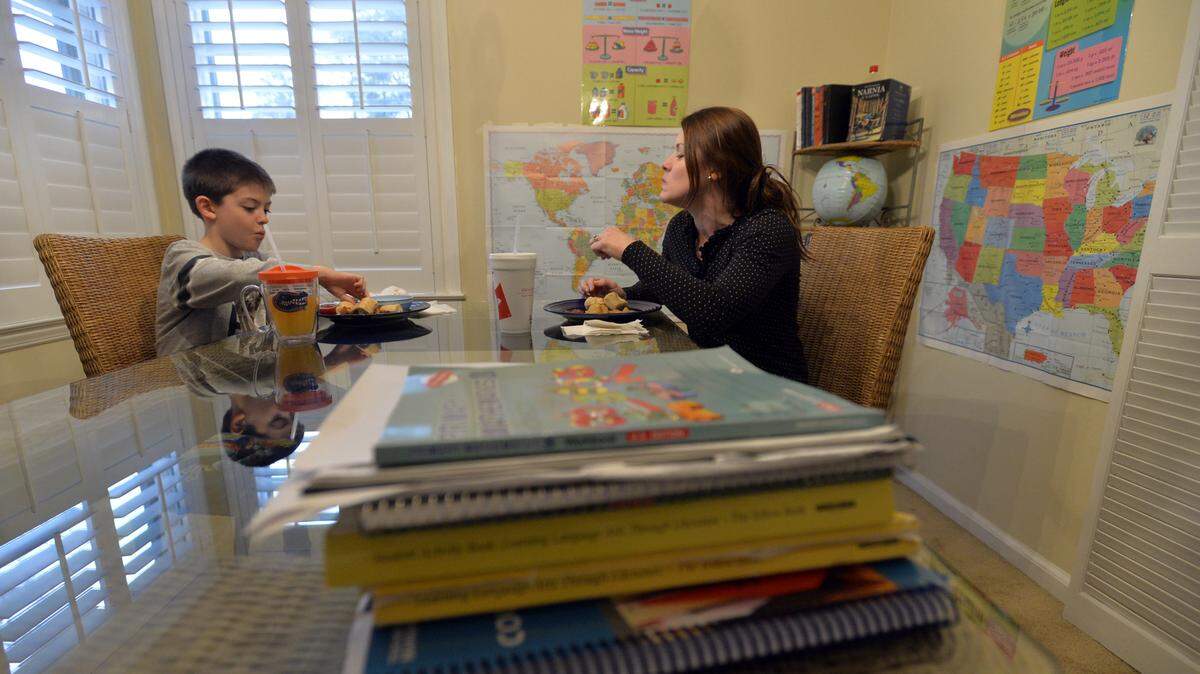
Lots of families across Middle Georgia choose to home-school their children, a decision that can bring both benefits and challenges.
It's National School Choice Week, and Allison Gilmore, an associate dean for Mercer University's Tift College of Education, said the outcome of the home-school choice often comes down to the intent of parents.
"I think what it goes back to is the motive of the parents of why they want to home-school," she said.
For instance, some families choose to keep their children at home for medical or other reasons. In those cases, especially for students with immunodeficiency problems, home-schooling makes the most sense.
"There's a lot of very good reasons for home-schooling," Gilmore said.
In Bibb County, 369 families submitted letters of intent to home-school their children this school year for a total of 656 students learning at home, according to state records. The total in Houston County is 914 students. Home-school families are required to teach students in math, English/language arts, science, social studies and reading, but can offer more.
For Laurie Heiney, who lives in Barnesville but manages a Classical Conversations home-school group in Macon, the decision to take her oldest daughter out of public school related to social behaviors. Allison, now 25, was picking up attitudes at school that Heiney didn't want her children to have.
"The child I got home at the end of the day was not the child I sent in the morning," she said.
Heiney found that she could teach her child more quickly and give her more individualized instruction, allowing her daughter time to go outside and spend more of the day behaving like a child. As a result, Heiney home-schooled her other children -- Abigail, now 21, Dalton, 19, and Emily, 14.
"Just to be able to delight in that learning together, be able to share great books together," she said.
Acela Moreira, who has seven children in the Classical Conversations group, said that tailoring education to meet individual goals and needs was one advantage to home-schooling. There's also the ability to shape learning based on the family's Christian faith, she said, and it reinforces parental involvement.
"What better way to support your kids than to take control of their education?" she asked.
'HAVE ... TO FIND BALANCE'
But home-schooling also presents challenges.
For one, parents who're home-school teachers don't have that time while children are at school for errands, exercise or even cleaning the house. That's a "small sacrifice," Moreira said, but it's one that adds up to the commitment of a full-time job -- or more.
"You just don't get to switch gears, I guess I should say," Moreira said.
That blend of home, work and school life can also cause families to ignore the importance of recreation and just focus on schoolwork, or the reverse in which families don't focus enough on classes because of the comforts of home.
"You have to be very intentional to find balance," said Moreira, who began home-schooling 14 years ago. "Your school is your workplace and is your home."
Also, students who intend to attend college one day could face an adjustment when they're in a larger classroom setting for perhaps the first time.
"That can be a tremendous disadvantage for the home-school child who never has to share the teacher's attention," Gilmore said.
Further, the "socializing experiences" inherent in a traditional school setting are crucial for students. Lessons such as compromising, empathy and respecting the feelings of others are important for child and adolescent development, Gilmore said.
That's not the reality Heiney has experienced, though. She said she's found that home-schooled children get to socialize with a variety of age groups as opposed to just those at their grade levels.
"I think it's exactly the opposite," she said. "I think home-school children can interact because they're not in their peer groups all day."
Further, she said that her daughter Abigail has adapted to the classroom environment at Gordon State College with little trouble.
"It was actually very easy for her," Heiney said. "Home-schoolers are traditionally independent learners, and colleges love them."
There are also groups, activities and teams for home-school families willing to go the extra mile to make sure their children are getting a well-rounded school life.
"There's so many classes, and we have sports teams and all kinds of things," Heiney said.
If that effort isn't made, parents are at risk of raising children who don't know they're "not the center of the universe," Gilmore said. She added that not learning how to interact with peers can have an impact further down the road.
"All of us adults know adults who, unfortunately, never mastered that."
The ease of the Internet has allowed home-school families to connect, even in new communities, in ways that weren't possible 21 years ago, when Heiney began teaching her children from home. Online academies and courses also help parents teach higher-level courses or other material they're not comfortable with.
Heiney said that in itself is something of an indictment against the way children are traditionally educated.
"If we can't teach what we supposedly learned, that doesn't say much for the education we received," she said.
Regardless of which style of education parents choose, having a family that's invested in learning is the key to success, Gilmore said.
"Kids can thrive in any situation if they've got the right kind of parental support," she said.
For more information on National School Choice Week, go to: www.schoolchoiceweek.com.
To contact writer Jeremy Timmerman, call 744-4331 or find him on Twitter
MIDDLE GEORGIA HOME SCHOOL NUMBERS
County Letters of Intent Students
Bibb 369 656
Crawford 71 136
Houston 557 914
Jones 95 142
Monroe 125 213
Peach 94 175
Twiggs 28 40