
Macon residents oppose Bibb County Schools’ proposal to ‘dismantle’ VIP Academy
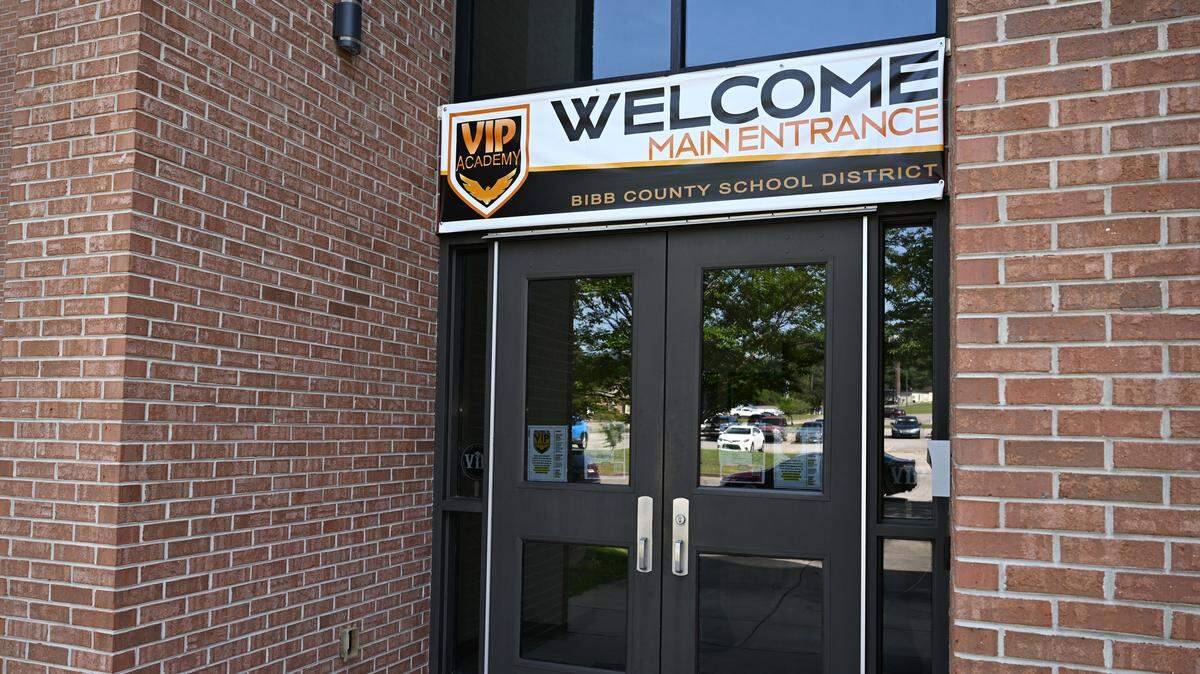
The Bibb County School District is considering major changes to its virtual learning program due to declining enrollment at VIP Academy and overlap with new “flexible options” offered within traditional high schools.
At an April 4 budget session, BCSD Executive Director of Teaching and Learning Brian Butler outlined a reassessment of the district’s virtual education to review options that “would best serve students,” according to presentation materials.
But the proposal has drawn criticism from community members, including parents and former district leaders.
The district launched VIP Academy in 2020 during the COVID-19 pandemic before expanding it into its own program to serve families seeking a permanent, full-time virtual learning option.
However, enrollment for the middle and high school levels has fallen “significantly” from 486 students in 2024 to 248 in 2026, according to the district. The online school no longer serves elementary students, and VIP Academy also did not meet its projected enrollment for this school year.
District leaders proposed integrating VIP Academy with In School Academies, launched this school year at each high school campus. The programs offer full-time virtual instruction and alternative learning spaces for students who may struggle in traditional classrooms, which creates overlap with services already provided by VIP Academy, the district said.
The campus-based programs also provide students with a stronger connection to their home schools and fewer barriers related to transportation, the district added.
Another key factor in the review was a shared use of Edgenuity, the online learning platform for virtual coursework. The presentation showed costs are higher for VIP Academy because it operates as a fully virtual school under a per-student pricing model, totaling $450,600 compared with $193,784 for all of the district’s other high schools.
The discussion comes as district leaders work to address significant financial pressures and outline its FY27 budget.
The district outlined three scenarios:
- Transition VIP Academy students to participate in the In School Academies at their home schools, with VIP Academy staff reassigned to vacant district positions
- Transition VIP Academy students and some VIP Academy teachers to In School Academies, with VIP Academy staff reassigned to vacant district positions
- Maintain VIP Academy, with VIP Academy staff continuing to serve VIP Academy students while providing oversight for virtual components at high schools.
Any decision would take effect during the 2027-28 school year.
The presentation did not any identify any projected cost savings.
Community voices ‘disappointment’ on virtual learning plans
Some community members do not agree with the district’s proposal and are seeking further explanation.
Julia Daniely, the district’s former director of personalized learning and alternative education, said the administration’s plan to “dismantle” the virtual school could push more families out of the school system entirely.
Daniely, who ran the VIP and SOAR academies before retiring in 2024, said the online school was built around response-to-intervention principles that often require a different learning environment. She said a wide range of students, including those who need accommodations for disabilities and children of military families, stand to lose the most if VIP Academy shuts down.
“The parents are doing an amazing job with teaching their children,” Daniely said, adding that the school provides training for parents to serve as learning coaches. “This is all some of them have known.”
After citing VIP Academy’s improved performance on state assessments, Daniely questioned the district’s readiness to run the in-school academies.
“You are going to dismantle something that’s working and put those students in some of your schools that are on the state’s lowest-performing 25% of public schools,” she said
Tia Hall, parent of an 11th grader at VIP Academy, said she was caught off guard after learning the news from a Parent Square message the district sent one day after presenting VIP Academy’s potential closure. She said stakeholders should have been part of early planning.
“I was disappointed because that proposal shouldn’t have even been put in motion,” Hall said. “After I read that first scenario, I kind of went blank ... Did anyone know about this? It felt like they had already decided to close the school before asking us anything.”
Hall’s 18-year-old son, who has autism, enrolled at VIP Academy in middle school after staff at three previous schools failed to follow his individualized education plan, she said. Bullying also contributed to his failing grades.
Hall credits her son’s academic achievements to the consistency and support he received at VIP Academy, both online and in-person, when he needs additional help. The prospect of moving her son from familiar virtual teachers to a new in‑person setting, Hall said, has raised his anxiety.
“These ain’t teachers that come and go. These are teachers who made imprints on these students’ hearts,” Hall said about the VIP Academy staff. “You’re taking these students out of their space. I feel like they’re going to set them up for failure.”
Daniely said the district should provide a cost analysis of the proposed plans.
In June 2025, the Bibb County Board of Education approved the renewal of its Edgenuity contract. District leaders said they continue refining the platform’s use to reduce annual costs, with the 2025-26 proposal reflecting a decrease of more than $1 million since the 2022-23 school year.
Daniely claimed that structural changes drove up costs tied to VIP Academy, pointing to an operational split between VIP and SOAR academies and the separate hiring of administrators in 2025, compared with the smaller team in place before her retirement.
District spokesperson Stephanie Hartley said the administrative roles for both academies were separated this school year to “support the understanding that both are very separate initiatives.”
Daniely said she does not believe the board will support closing VIP Academy.
“I cannot imagine they would support the dismantling of virtual education, and they were the ones that were championing this type of education for our families,” she said.
For now, parents like Hall say they are focused on the immediate fight: urging the district to reconsider altering a program they believe is finally working for their children.
The district held a virtual town hall Monday and will host another May 27.