
Middle GA college embraces AI on campus with $3.9M federal grant. What we know
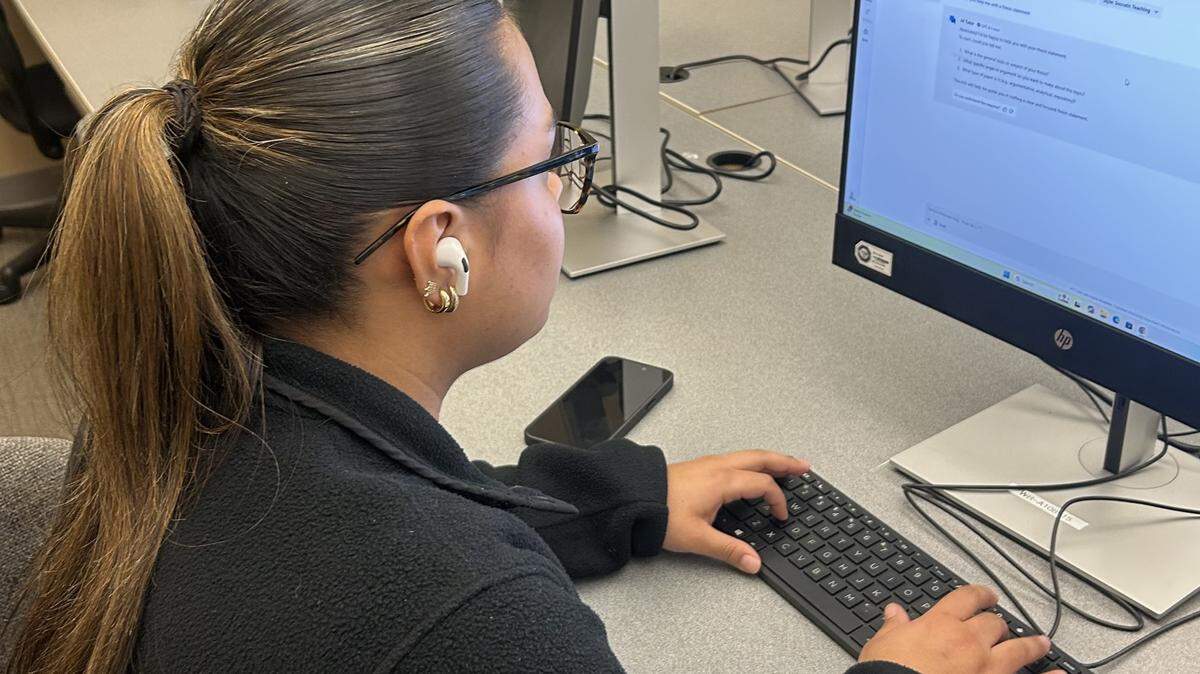
Central Georgia Technical College has been awarded $3.9 million in federal money to support and enhance new artificial intelligence teaching and learning tools on campus, benefiting both students and faculty.
The money comes from the U.S. Department of Education’s Fund for the Improvement of Postsecondary Education, in which Middle Georgia students will be able to use AI for tutoring, help with advising and guidance on college and career choices, according to a news release from the college.
CGTC officials say the institution aims to align its academic programs with the nation’s picture of AI advancement by incorporating AI-supported instructional practices.
“Our Strengthening Technical Education Programs through Artificial Intelligence (STEP-AI) award will advance the understanding and use of artificial intelligence in education through a two-pronged approach: expanding the utilization of generative AI to enhance tutoring, advising, and college/career navigation for undergraduate students, while integrating machine learning into technician education pathways,” Deborah Burks, vice president for institutional effectiveness at CGTC, said in a statement.
Allison Repzynski, executive director of library and academic support at CGTC and the grant’s project director, said the funding will help expand the college’s automated robotic manufacturing program. Students learn to program and repair robots used in industrial systems, which could also have a positive economic impact and meet industry demand.
“If you walk into any of the warehouses or factories manufacturing in Middle Georgia, every robot you see is being programmed to do different tasks, and it needs to be maintained,” Repzynski told The Telegraph. “Middle Georgia is a hub for distribution and warehousing, so it’s definitely needed.”
The federal grant will also fund expanded 24/7 access to generative AI tools, including AI tutor software to provide academic support across all subjects. Repzynski said the grant will support custom, interactive AI chatbots to help students navigate college, complete coursework and prepare for jobs.
Repzynski said the AI tools could be embedded directly into coursework — like a student enrolled in English 1101 this fall may interact with a chatbot modeled after author Virginia Woolf to discuss her literary theories and how her life influenced her writing.
“We want to improve the literacy surrounding generative AI, how to use it effectively and ethically in our day-to-day lives or in the workforce,” she said.
The AI chatbots, in use since fall 2024, have received positive student feedback and increased persistence, with usage peaking in the late afternoon , Repzynski added.
“The feedback has been very positive, and I have found that students feel more comfortable asking the AI certain questions that they wouldn’t feel comfortable asking an instructor,” she said.
Repzynski said the AI platform is monitored by the college’s academic success center. She added that the center can track how students and faculty interact with the AI to identify better ways to tailor literacy training.
Burks added that the college’s two-layered strategy will also prepare both traditional and dual-enrolled high school students, as well as support teacher training.
Faculty in the manufacturing sector will have opportunities to earn professional certifications in AI and robotics, ensuring students are learning from well-equipped educators, she said.
The $3.9 million grant is part of $169 million recently awarded by the Department of Education to higher education institutions across the country to support students throughout their academic journeys, including helping grantees foster diverse viewpoints on campus to supporting colleges build innovative new programs, Assistant Secretary for Postsecondary Education David Barker said in a press release.
The department’s Fund for the Improvement of Postsecondary Education is a grant initiative that supports innovative projects to address urgent national needs in postsecondary education.
“The college is pleased to receive this award, which will allow us to further advance teaching and learning across all disciplines,” Burks said.
Fighting skepticism
Success of this grant will be measured through retention, course success rates and student surveys, with additional checks for issues such as plagiarism, Repzynski said.
She acknowledged public skepticism about AI use in classrooms, as the college works to ensure the online tools will support students rather than do the work for them.
“It is designed … to help the student come to the answer on their own,” she said. “AI is here … what we need to do is learn how to use it effectively. We need to teach people that it is a tool, and that it could try to do the whole job for you, but it’s not a replacement.”
To curb misuse, the AI program will monitor run behind-the-scenes reports that flag behavior consistent with outsourcing assignments—such as copying and pasting multiple-choice items from homework.
When the system detects these patterns, the academic success center will proactively contact students to offer tutoring and support, Repszynski said.
“I’m not any more worried about this type of tool than one would be worried about students Googling and going to the internet for help,” she added.