
Some Middle GA elementary students learn cursive from a new generation of teachers
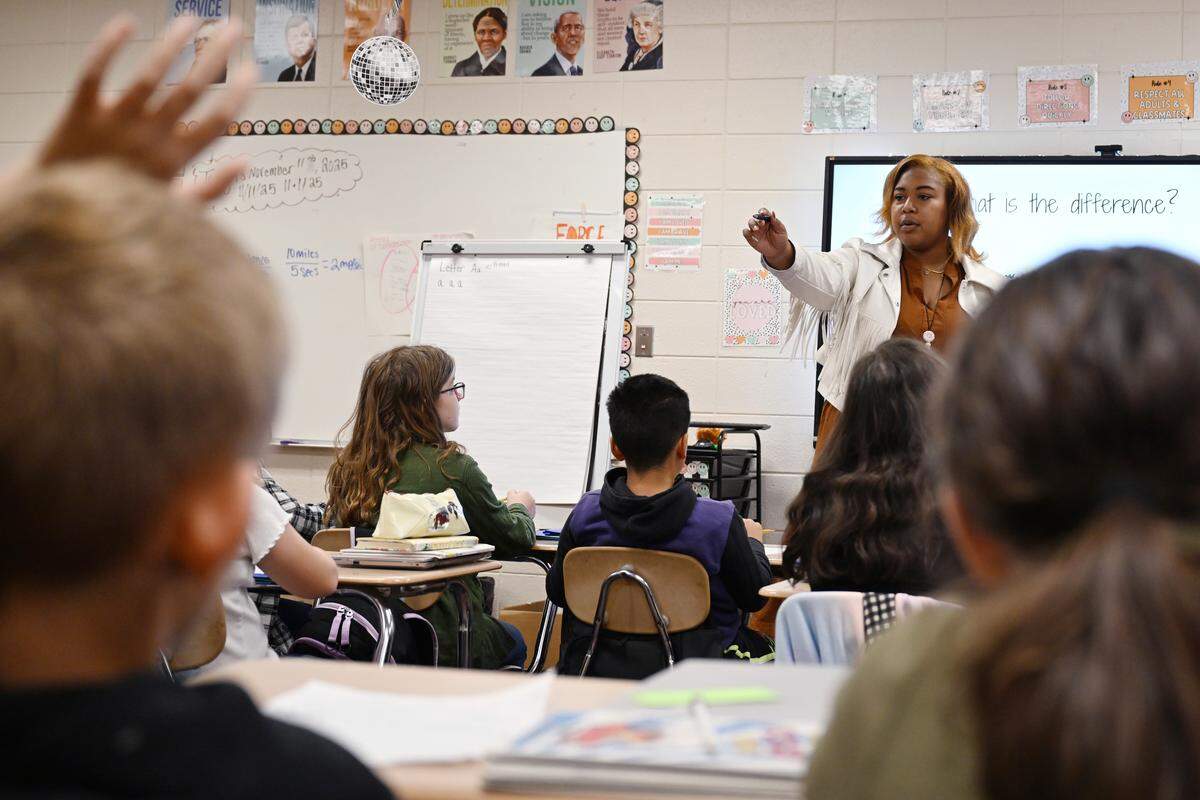
For 30 minutes each day, Mikayla Blalock’s fourth grade students at Samuel E. Hubbard Elementary School in Monroe County focus on what some consider a lost art in the digital age: cursive writing.
Believe it or not, she has students who are eager learn it. Blalock recalled when her students asked for blank sheets of paper during their free time to practice writing their names. When they ran out of space, she said they requested more paper to perfect their curls and loops.
“They were so engaged that they didn’t want to stop,” she said. “It’s just showing us that they are grasping this cursive writing. They are understanding it, and they’re into it.”
Cursive writing isn’t just coming back stronger in Middle Georgia’s public schools — a generation of new teachers is rediscovering it right alongside their students.
Blalock is part of a new wave of Georgia teachers reviving cursive instruction after the state department of education implemented revised curriculum standards for grades three through five, which took effect for the 2025-2026 school year.
Blalock, 23, said returning to teach at her former elementary school feels full circle, and she’s surprised by how intentional cursive instruction has become.
“I remember learning cursive growing up, but seeing it at a different lens of teaching now is mind-boggling,” she said. “When I was a student, it really wasn’t how I’m teaching it now — step by step.”
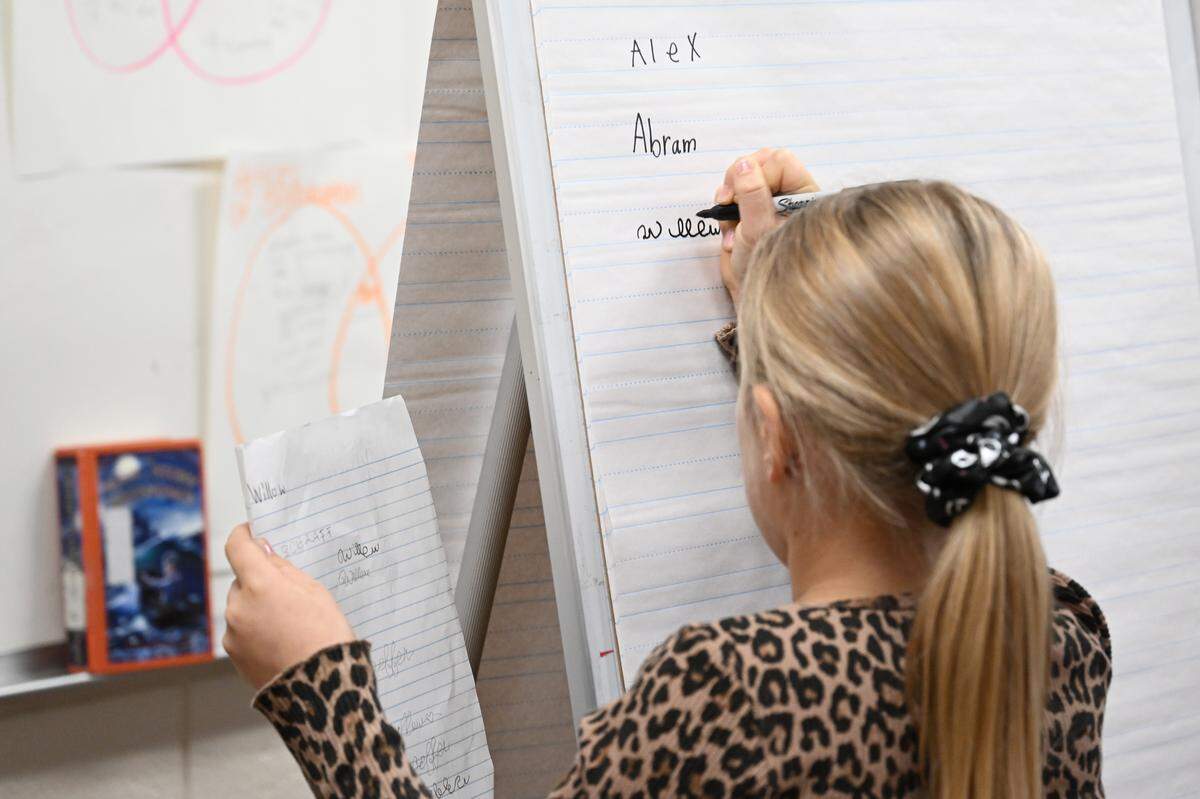
The updated standards include guidance on proper handwriting techniques, from letter formation and posture to paper placement, pencil grip and strategies to assist left-handed students.
Madison Walker, a 24-year-old third grade teacher at Samuel E. Hubbard, recalled moving as an elementary student from a private school that emphasized cursive to a public school where it was optional.
“I remember asking my teacher, ‘Do I need to write in cursive? Do I write in print? What do I do?’” Walker said. “He said whichever was fine, so I just followed what everyone else was doing, which was print.”
Walker said she never lost her cursive skills, though she took time to refresh them before teaching. She’s grateful she learned the art early and even more grateful to pass it on. Now, she weaves cursive into every subject, and her students have fully embraced it.
“A lot of my students tell me, ‘I thought this was going to be hard, but I really enjoy it,’” Walker said.
Last academic year, Samuel E. Hubbard Elementary received the John Hancock Award from the state for demonstrating excellence in cursive instruction, “a skill that builds fine motor strength, enhances literacy, and allows students to engage meaningfully with historical texts in their original form,” the district said.
The school was recognized for 90% of its students being able to write both their name and the Preamble to the U.S. Constitution in cursive.
What’s taught in the classrooms?
The Georgia Department of Education last updated its English language arts standards in 2023.
“As part of this update, the teaching of cursive writing was reaffirmed and strengthened, aligning with the state’s commitment to supporting foundational literacy skills,” said GaDOE spokesperson Meghan Frick.
Frick added that students should be able to read and write in cursive by the end of fifth grade, noting that handwriting plays a vital role in language development, reading and spelling. The implementation comes at a time when about three-quarters of Georgia’s third and fourth graders are reading below grade level.
Under the state’s standards, Walker said teachers receive detailed guidance, online resources and training videos to help students visualize proper letter formation. She said the teachers have received more curriculum training this year compared to last year.
Walker said the curriculum starts with basic letter formations and gradually builds to sentences, using what educators call the “I do, we do, you do” model.
Blalock noted the current curriculum includes advanced guidelines and technology that weren’t available during her own education.
“Back then, we had a printed copy with the words and the lines on it, and we had to trace it or fill it in,” she said. “Now, it’s versatile. You can do so much with cursive, and my students are enjoying learning different types of things.”
Why cursive matters
Veteran teachers have also helped bridge the gap. At Matt Arthur Elementary School in Houston County, another John Hancock Award recipient, third-grade teachers Ykeisha Baker-Green and Corrine Bucholz said cursive never truly disappeared from classrooms in Georgia.
Bucholz said the new standards only place greater emphasis on students’ ability to read and comprehend cursive, which has its unique benefits compared to print.
“When you’re writing in cursive, it’s like a continuous thing,” Baker-Green said. “Students don’t have to take a moment to think which letter comes next. They just continue on with the format of letters.”
Blalock said challenges sometimes arise when students try too hard to make their letters perfect. The key, she said, is keeping cursive instruction enjoyable rather than intimidating and highlighting its introduction to creative freedom.
“Don’t copy me,” Blalock tells her students. “Be your own person. Write your own signature because cursive involves individuality.”
Walker emphasized the importance of cursive for everyday life, from reading handwritten letters to signing important documents.
Blalock echoed that sentiment, noting that even some adults struggle to distinguish between print and cursive.
“The world is a whole different place after you graduate school. I want my students to be as successful as possible,” she said. “I want them to really be able to write their signatures on lines because cursive is an important lifelong skill for every field.”