
SNAP cuts threaten free school meals for Macon students. Why advocates are worried
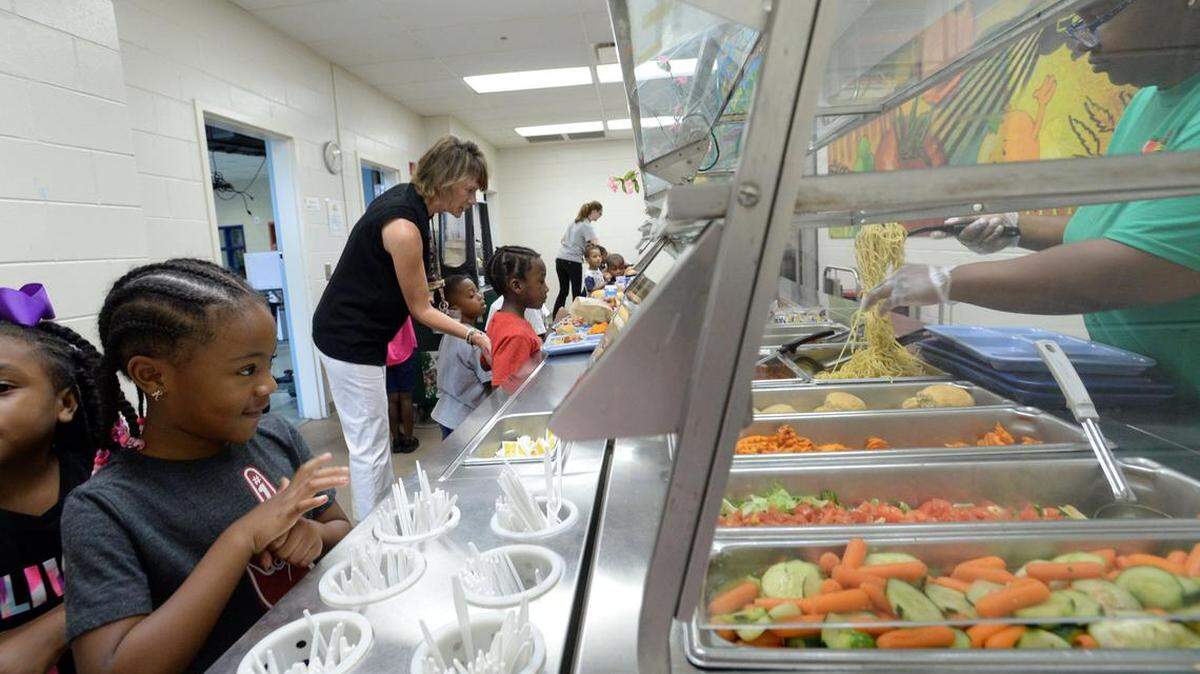
Federal cuts and increased eligibility restrictions to the Supplemental Nutrition Assistance Program, commonly referred to as SNAP, threaten to strip free school meals from Macon public school students who rely on guaranteed access to breakfast and lunch, nutrition advocates say.
The budget reconciliation package known as HR 1, or the “Big, Beautiful Bill Act,” which President Donald Trump signed into law in July, includes SNAP cuts estimated at billions of dollars over the next 10 years, according to the Congressional Budget Office.
The law also shifts some costs for federal programs from the federal government to states, which means Georgia will have to consider cutting other programs or increasing its share of costs.
The cuts target the Community Eligibility Provision, a federal program that allows eligible schools to offer free meals to all students regardless of family income. Families receiving SNAP benefits automatically qualify their children for free and reduced-price meals through direct certification, a key measurement of poverty levels in Georgia.
In fiscal year 2024, more than 1.4 million Georgians — about 13% of the state — received SNAP benefits, with 69% of recipients in families with children, according to the Center on Budget and Policy Priorities.
All Bibb County School District students currently receive free breakfast and lunch under the Community Eligibility Provision, with after-school snacks at participating schools, district spokesperson Stephanie Hartley said.
The Community Eligibility Provision was first implemented in Bibb Schools in 2014, and all district schools are federally designated as Title I schools, indicating high poverty.
Hartley said the district relies on state and Department of Family and Children Services data for direct certification, so families do not need to submit additional paperwork.
As an alternative to the traditional meal application process, “CEP allows the district to support the whole child’s well-being without putting any burden on families.” she said in an email.
For the 2023–24 school year, the average direct certification rate in Georgia districts was nearly 63%, according to the Georgia Office of Student Achievement. Erin Hysom, senior child nutrition policy analyst for the Food Research and Action Center, described the SNAP changes as “devastating” and “unprecedented.” She warned that they may create a negative ripple effect throughout school nutrition programs and communities.
“As fewer children are enrolled in SNAP, fewer schools will be able to offer all students free school meals through community eligibility,” Hysom said. “SNAP provides the direct link between eligible children and free school meals.”
Schools that remain eligible may receive less federal reimbursement, straining their ability to maintain universal free meal programs, Hysom added, noting that SNAP serves as the largest pathway for this automatic eligibility.
Georgia Democrats Sen. Jon Ossoff and Rep. Sanford Bishop opposed HR 1 earlier this year, warning that it could force states to scale back or eliminate health care programs.
Bishop noted new administrative requirements and exceptions for certain states that place additional burdens on Georgia, estimating that millions could lose food assistance and that children’s access to school meals is at risk.
Lisa Morgan, president of the Georgia Association of Educators, previously echoed that without automatic SNAP qualification, paperwork burdens would increase and more students could miss meals.
While Hartley did not address questions about whether Bibb County Schools has observed any impacts to school nutrition, Hysom said most schools were awaiting guidance from the U.S. Department of Agriculture while working to connect eligible children to free school meals in anticipation of the SNAP cuts’ impact.
What are the SNAP changes?
HR 1 makes significant changes to SNAP, such as expanding work requirements for individuals up to age 64, requiring states with high payment error rates to start sharing costs in 2028 and narrowing eligibility for some immigrants, according to the EducationCounsel.
Nutrition advocates warn that food insecurity and administrative hurdles for families are likely to grow under the new provision, especially in areas such as Macon-Bibb, where child hunger data has jumped, according to recent data.
“There’s a multitude of cuts that will reduce families and household SNAP benefit amount,” Hymon said. “They might stop jumping through hurdles to get a SNAP benefit amount that really doesn’t support their needs, particularly at a time of rising food costs.” Hymon added that the expanded work requirements could cause food resources to decrease and children will become more dependent on school meals.
What are GA officials doing?
During a called meeting on Sept. 4, the Georgia Department of Human Services discussed amendments to budget requests for the 2026 and 2027 fiscal years to mitigate the impact of federal funding changes.
The GDHS allocates about $300 million in federally funded benefits to low-income families via EBT cards, Deputy Commissioner Demetrius Taylor told DHS board members.
.png "Screenshot (16).png")
Taylor noted that currently, the federal government and states split those costs evenly. But under the new legislation, states will cover 75% starting in the fall of 2026.
“In order to continue to administer the SNAP program, we’re requesting state general funds to meet our 75% obligation starting in October of 2026,” Taylor said.
The Telegraph asked the Georgia Department of Human Services what specific changes in federal SNAP policy will require the a shift of costs onto the state government
Ellen Brown, spokesperson for DHS, said state officials are constantly examining ways in which they can better serve constituents and streamline protocols.
“In regard to the specific provisions of this bill, we continue to review how it will impact the agency and our operations as those provisions go into effect across the next several years,” Brown said in an email. “We are assessing to figure out what those changes will be to ensure the department has time to work through them.”
Brown referred all questions about student eligibility for free school meals through SNAP to the state department of education.
“Agencies work with OPB and the Governor’s Office throughout the year to discuss needs, and the Department of Human Services will continue to do so throughout the fall as the Governor puts together his budget for release in January,” Brown said.
This story was originally published September 30, 2025 at 3:36 PM.