
‘Stunning betrayal.’ Nearly $1M at risk for after-school programs in central GA
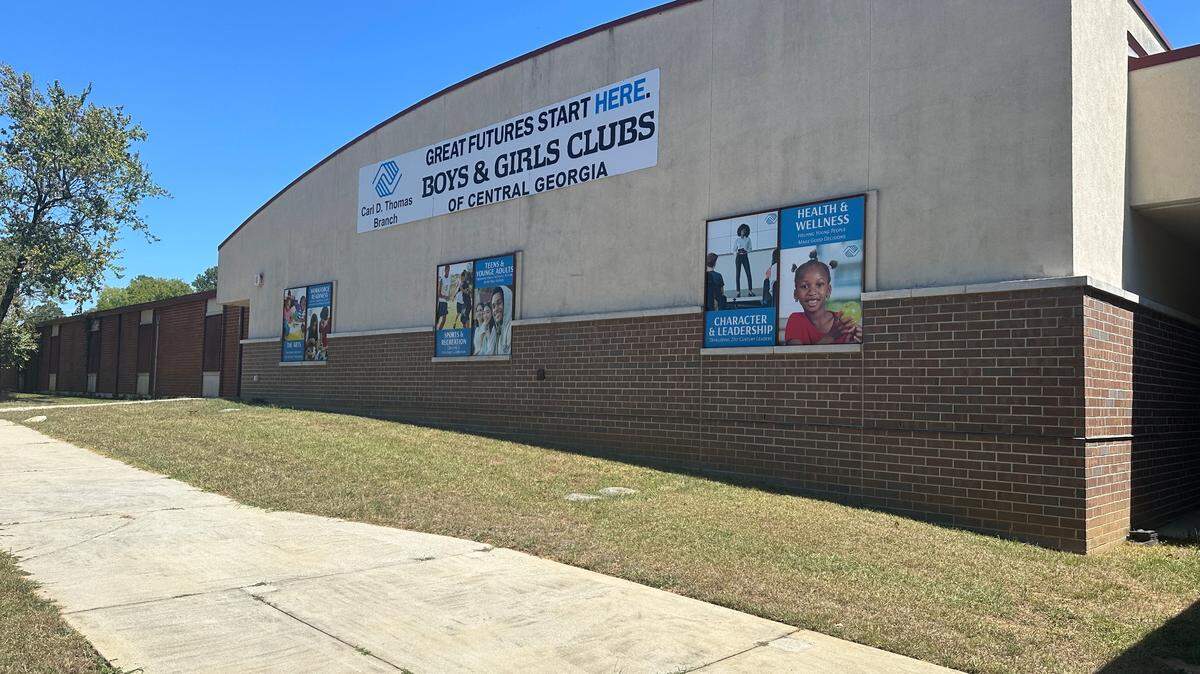
A delay in the release of more than $201 million in federal funds for Georgia could jeopardize after-school and summer programs serving tens of thousands of children and families across Central Georgia, according to the Boys & Girls Clubs of Central Georgia.
Despite already being approved by Congress, fiscal year 2025 U.S. Department of Education money — including the money allocated to 21st Century Community Learning Centers — was not released by the expected July 1 deadline, affecting school programs in Georgia and other states just weeks before the upcoming school year begins.
States have been notified that the funding will be withheld indefinitely, raising concerns among education and youth service leaders.
Phillip Bryant, president and CEO of the Boys & Girls Clubs of Central Georgia, said the federal decision threatens roughly $864,621 in funding for the organization, as well as the tens of thousands of children and hardworking families who rely on its services.
“The indefinite withholding of 21 CCLC funding, coupled with the recent passage of federal legislation, which includes significant cuts to the U.S. Department of Education and its programs are unprecedented,” Bryant said in a statement.
Georgia’s grant allocation for Title IV-B , which funds 21st CCLC, was over $47.1 million, according to data provided by the Georgia Department of Education.
The money given to 21st CCLC supports programs run by local school districts, Boys & Girls Clubs, and other agencies in central Georgia, Bryant said.
Bryant said the lack of the essential funds disrupts invaluable after-school, summer programs and college access programs throughout Central Georgia. This includes homework help, college access, summer day camps, meals, mentoring and workforce readiness.
He added that a prolonged delay in the organization’s vital investment in youth development will “surely have a far-reaching impact” that may potentially lead to the closures of club sites and day camps.
The Boys & Girls Clubs of Central Georgia operates six locations across the region, including three in Macon — where the labor force participation rate is 58%, according to the latest United for ALICE data.
Without the funding, many working parents may lose access to consistent, supervised care during critical hours.
“Families that rely on these programs now face uncertain care options, leaving children without essential safety nets,” Bryant said. “Families will lose access to necessary support, including healthy meals, caring mentors, and secure spaces during the most vulnerable hours of the day. This situation could also result in the loss of hundreds of jobs across the region.”
‘I call on federal funds to be released’
At the state level, Georgia leaders are also voicing concern. The Georgia Department of Education notified superintendents and appropriate school leaders via email last week that it would keep a close eye on the matter.
“I deeply believe in fiscal responsibility, which means evaluating the use of funds and seeking out efficiencies, but also means being responsible – releasing funds already approved by Congress and signed by President (Donald) Trump,” Georgia State School Superintendent Richard Woods said in a July 7 statement. “In Georgia, we’re getting ready to start the school year, so I call on federal funds to be released so we can ensure the success of our students.”
Jodi Grant, executive director of the nonprofit organization Afterschool Alliance, called the fund freeze a “stunning betrayal” that will cause lasting harm to more than just students, and will also affect the nation’s workforce and economy.
“If these funds are not released very soon, we will quickly see more children and youth unsupervised at risk, more academic failures, more hungry kids, more chronic absenteeism, higher dropout rates, more parents forced out of their jobs and a less STEM-ready and successful workforce as our child care crisis worsens dramatically,” Grant said in a statement.
The 21st CCLC program has shown strong outcomes, with 70% of participants completing more homework and nearly half overcoming chronic absenteeism, according to the Boys & Girls Clubs organization.
Bryant also highlighted the broader community impact, citing that communities experience an average return of $10 for every $1 invested in Boys & Girls Clubs.
Bryant urged local residents and leaders to press for federal action.
“I am calling on every community leader and community advocate to join our urgent push. Contact your members of Congress TODAY and urge them to release these funds immediately!” he said.
Grant is also urging parents, educators and supporters of afterschool and summer learning to reject the Trump administration’s fiscal year 2026 proposed budget, which zeroed out funding for 21st CCLC into a the K-12 Simplified Funding Plan that goes to local school districts.
This means that existing grantees that are nonprofits, faith-based organizations, universities, park and recreation departments, libraries, museums, and other non-school providers would be shut off from grants, according to the Afterschool Alliance organization.
“Afterschool and summer learning programs keep kids safe, inspire them to learn, and give working families peace of mind that their kids are safe, supervised and learning when schools are out. Our country will be much better off it we continue investing in afterschool and summer learning through 21st CCLC,” Grant said.