
Private school vouchers will apply to most Bibb County Schools on GA low-performing list
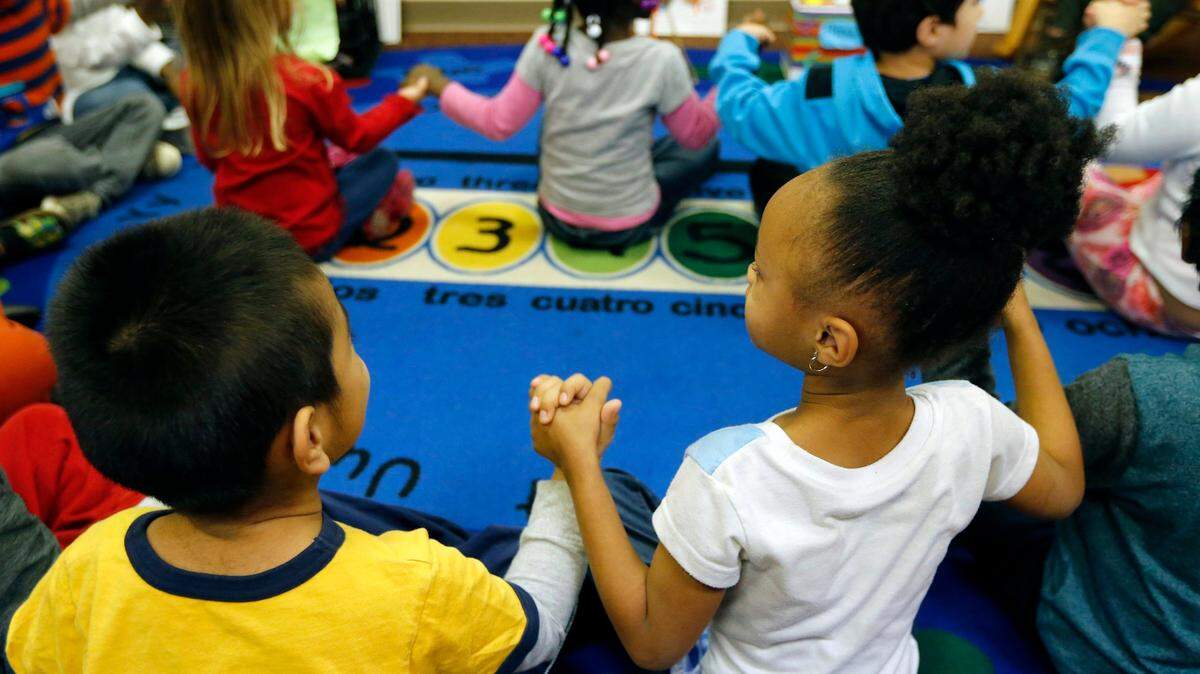
Time inches closer for families to apply for the Georgia Promise Scholarship, which will provide up to $6,500 for eligible K-12 students in underperforming districts to use public funds for private school or homeschooling expenses.
Central Georgia residents and officials have weighed in on the controversial Senate Bill 233, which was signed into law in April and is intended to give public school students greater choice on where they can enroll.
The scholarship program is for students who reside in the attendance zone of a public school listed on the Governor’s Office of Student Achievement’s lowest performing 25% in the state. Over half of the 38 schools in the Bibb County School District were identified on the list, which was revised on Tuesday.
The Georgia Education Savings Authority, which will administer the new scholarship program, said the money will “empower families to pursue exceptional educational programs.” The program can serve an estimated 22,000 students in the state.
But some local officials, such as Bibb County Representative-elect Tangie Herring, disagree. Herring said officials should be focused on improving outcomes at public schools, “not siphoning resources away.” Public schools in Macon currently face reduced funding, potential school consolidations and declining student enrollment.
“As a 28-year classroom teacher, I am committed to doing everything possible to support our public schools,” Herring said in an email. “Let me be clear - the status quo is not acceptable. We can and must do more to ensure that every child has the opportunity to receive an excellent education that prepares them for college and/or careers. This ‘scholarship,’ however, is not an answer.”
Herring referred to the scholarships as school vouchers, which she said can drain public funds and send tax dollars to private entities that have zero accountability to taxpayers. It’s different than public schools, where test scores are public record, she added.
District 142 Rep. Miriam Paris (D) also rejected the measure, according to the Georgia Legislative Scorecard website. Opponents of SB 233 voted that “All government money comes with strings attached,” saying school vouchers expand government involvement and can potentially affect rules and curriculum.
The scholarship will cover a variety of fees at private schools, including tuition, tutoring, transportation and more.
The measure also allows students to attend a public school outside of their resident system without needing the approval of said system, according to a press release from Gov. Brian Kemp’s office.
Shalandra Parker, founder of Seal Inc. and executive director of Seal Preparatory Academy, said she believes the vouchers will benefit youth, especially in Macon.
“Many times children don’t get what they need in public schools, where they mostly operate under a one-size-fits-all model,” said Parker, who has over 20 years of experience in education. “The voucher will give more access to more personalized learning and academic support.”
Parker called for any opponents to review how helpful the scholarship can be, noting that it can advance neurodivergent learners and students in special education.
Seal Inc. is a nonprofit that providing holistic support programs and services for at risk youth and families in Bibb County. Parker said the organization will help interested families with completing scholarship applications.
Bibb County School District said it wouldn’t comment on the issue until more information was clear about the program’s application process and impacts, said spokesperson Stephanie Hartley.
St. Peter Claver Catholic School, a private school in Macon, will co-host an informational meeting on Dec. 10 about the new scholarship program for families who are interested. School officials at the catholic school declined to speak with The Telegraph before the event.
Bibb County schools on low-performing list
- Appling Middle School
- Ballard Hudson Middle School
- Bernd Elementary School
- Bruce Elementary School
- Central High School
- Hartley Elementary School
- Heritage Elementary School
- Howard Middle School
- Ingram/Pye Elementary School
- John Robert Lewis Elementary School
- Northeast High School
- Porter Elementary School
- Rosa Taylor Elementary School
- Rutland High School
- Rutland Middle School
- Southfield Elementary School
- Southwest High School
- Union Elementary School
- Veterans Elementary School
- Weaver Middle School
- Westside High School
- Williams Elementary School
More eligibility requirements for voucher
GESA is developing an online platform for families to apply for and make payments to eligible providers and vendors from an individual student’s Georgia Promise Scholarship account.
Eligible students may apply for the scholarship in early 2025, with money slated to first be distributed quarterly in July 2025, state officials said. The scholarship is slated to end in 10 years, unless a future legislative body chooses to extend it. Funding for the voucher program will be separate from public school funding.
Here are some additional requirements for students to receive funds:
- Parents must be Georgia residents for at least one year (exception for active-duty military)
- Students must have been continuously enrolled in a Georgia public school for at least two consecutive semesters (one year) or be a rising kindergarten student for the 2025-2026 academic year
- Students must reside in an attendance zone of a public school on the list of the lower performing public schools issued by GOSA. If a student resides in the attendance zone of at least one school on the list, they will meet the attendance zone eligibility requirement
- Students cannot be the recipient of the Georgia Special Needs Scholarship, or a scholarship from the Georgia Student Scholarship Organization
Visit the Georgia Promise Scholarship website for more eligibility and timeline information.
This story was originally published December 4, 2024 at 6:00 AM.