
One struggling Bibb County school takes the first steps to turnaround
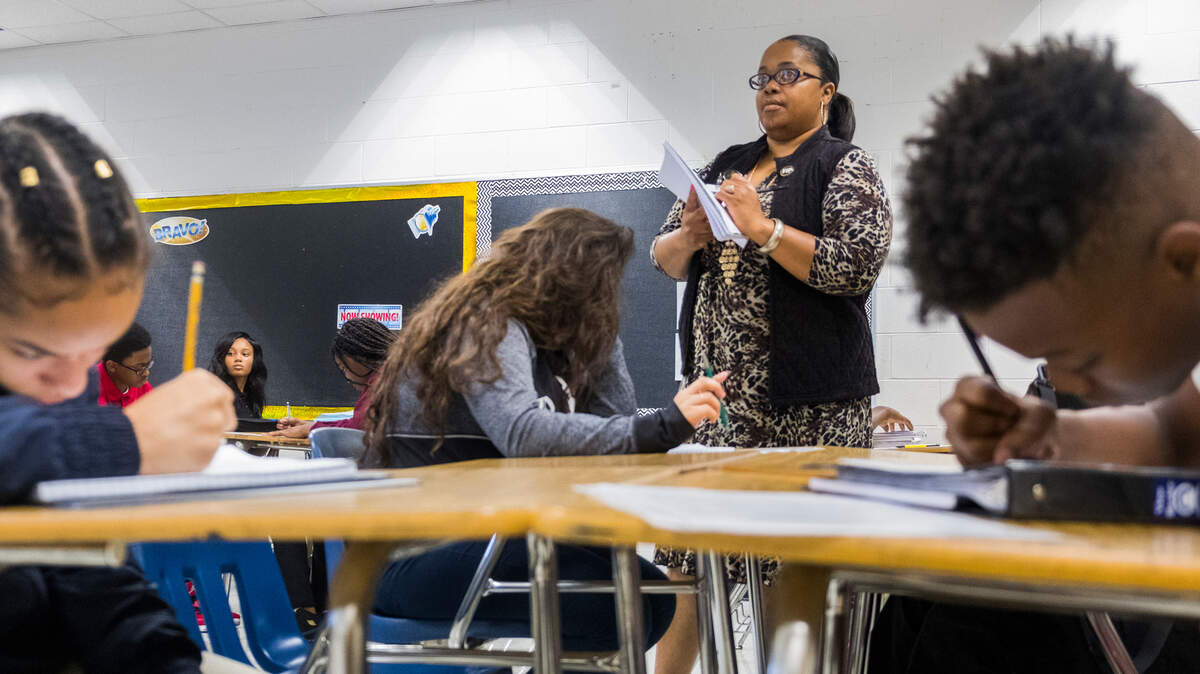
One morning during the second week of the school year, Principal Shandrina Griffin-Stewart was about to walk the halls of Appling Middle School. She had just stepped outside her door when she saw a class of rambunctious sixth-graders. She quickly got them in line.
“Raider Pride!” she intoned.
The students responded immediately, if less than enthusiastically.
“Gear up, work hard and do right,” they said in a loose unison. Griffin-Stewart tried again.
“Raider Pride!”
This time the kids hit it with some volume.
“Gear up! Work hard! Do right!”
“All right ... You can keep doing what you’re doing,” the principal said in parting.
Griffin-Stewart was going on her regular rounds of this school on the east side of Macon, a school she attended while growing up in the Kings Park Neighborhood on the road to Jeffersonville.
This is her first year at Appling Middle. She had been at L.H. Williams Elementary School in the heart of Macon where she got a reputation for leading that school out of academic danger and into safer waters.
Now she is tasked with doing the same at Appling Middle. As she takes that on, she will be one of 18 principals in the state working with the new chief turnaround officer.
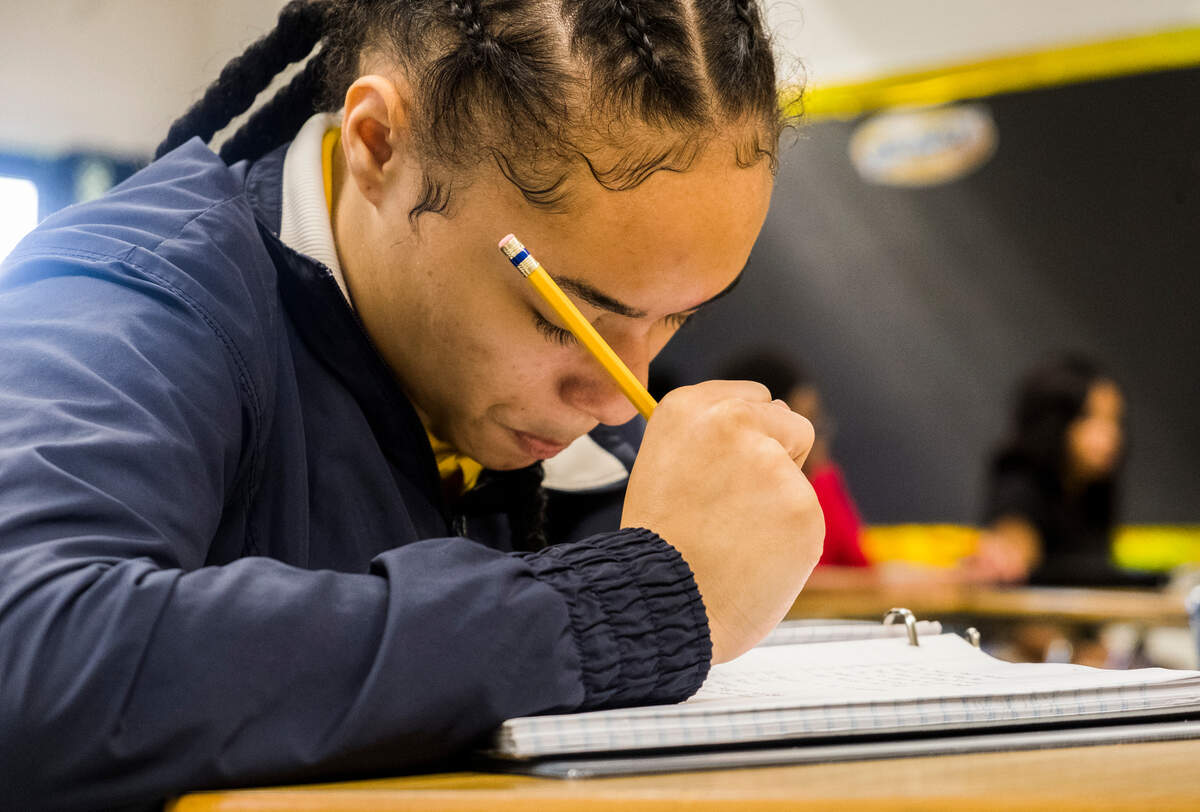
The chief turnaround officer is a position created after a failure at the state level to give the governor the power to takeover schools deemed to be struggling.
The turnaround office is a compromise.
Appointed by the state board of education, the chief turnaround officer is meant to offer everything from academic support to social services in the schools in which it works while still allowing the school its autonomy. What isn’t yet clear is what might happen when a turnaround school doesn’t improve under the turnaround officer’s wing.
The sound of cicadas punctuated the walk from the main building to the eighth-grade wing. There, Griffin-Stewart dropped in on a math class where a young teacher was cruising through a lesson on exponents with an easy tone and comfortable demeanor.
“I wish we could keep her so badly,” Griffin-Stewart later said. The math teacher was a long-term substitute.
When the chief turnaround officer initially picked Appling Middle for intervention, he passed over another school in the county, Ballard-Hudson Middle School, that by many measures has more ground to make up than Appling Middle. But in the end, Bibb County schools got the turnaround office to agree to work in Ballard-Hudson Middle, too.
Four goals at Appling Middle
Griffin-Stewart sat down at a conference table behind her office for one of her regular meetings with Betty Jones. Jones is from the turnaround office. She’s what they call a transformation specialist. She came with highlighters and stacks of data, some from the past and some to be met in the future.
Jones stressed that she and her office are at Appling Middle for partnership, not a takeover. Back in the summer, Bibb schools officials and turnaround staff got together to list the trouble spots at Appling. Because lists like that can quickly become intimidating, Griffin-Stewart said they pared it down to four distinct goals.
The first two goals are purely academic. They are to get kids on grade level in math and reading. Appling Middle’s eighth-grade reading scores are in the bottom 5 percent of Georgia middle schools.
Griffin-Stewart called the third goal cultural. It’s about getting teachers on the same page in terms of creating a positive environment in school for students and for each other.
Then there’s the fourth goal, which arguably underpins all the others. For students here to focus, they first have to cope with their lives outside the school walls. Even though Griffin-Stewart grew up on this side of town, she said she has a hard time wrapping her head around the stresses her students experience.
“They’ve experienced murders. They’ve experienced parents die, you know, just, just situations, you know, outside of school that impacts them from being focused and learning,” she explained.
Dealing with that kind of trauma is beyond the capability of most guidance counselors. This is why the turnaround office is placing a social worker who will be at school every day. That person has been hired and now is conducting surveys to get a more fine grained understanding of what counseling help students may need. The turnaround office is prepared to help make that happen in the other schools with the help of other partners like the Communities in Schools organization. Griffin-Stewart calls this the social and emotional piece of the plan.
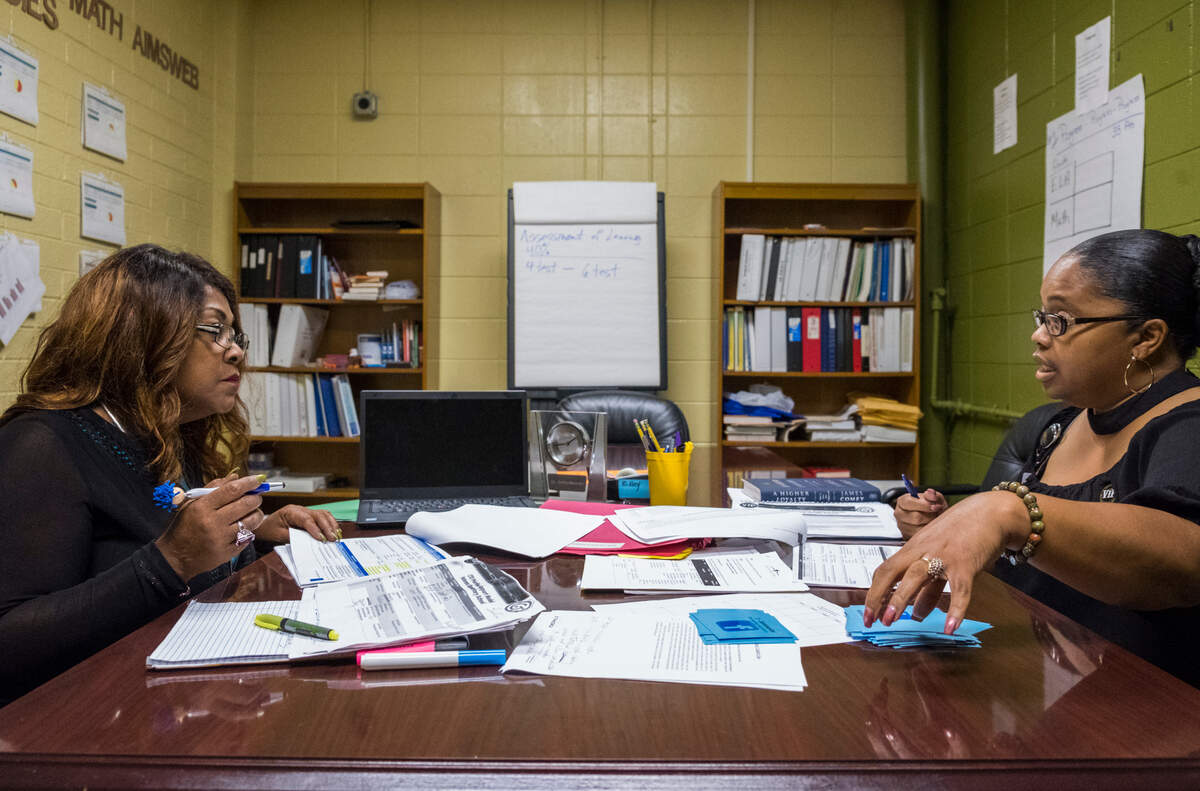
How well any of this works will be judged by check ups every 90 days. That’s why Betty Jones has that stack of highlighters. She’ll be taking meticulous notes and keeping track of everything.
“Everything that we do is predicated on this plan,” Betty Jones said. “We wanted it to be streamlined but we want it to be impactful.”
What isn’t not clear, though, is what happens another 90 days down the road, or at the end of the year, if there isn’t progress. It’s not something anyone in the room is planning on.
Back at the conference table, Jones and Griffin-Stewart are were talking data when there was a commotion in the hall. It was a student, apparently struggling with an adult.
“Let go of me!” the boy shouted. A man’s voice told other students to keep moving down the hall.
Principal Griffin-Stewart excused herself as she quickly got to the hall to see what was the matter. When she came back a few minutes later, she used the moment to punctuate a piece of her turnaround plan.
“It comes down to social and emotional,” she said. “That’s what it all comes down to.”
The social worker on campus will be begin working with students in a few weeks. Griffin-Stewart said she will take her teachers on a tour of their students’ neighborhoods.