
Teresa Fargason requests DNA testing from 1991 slaying in Macon
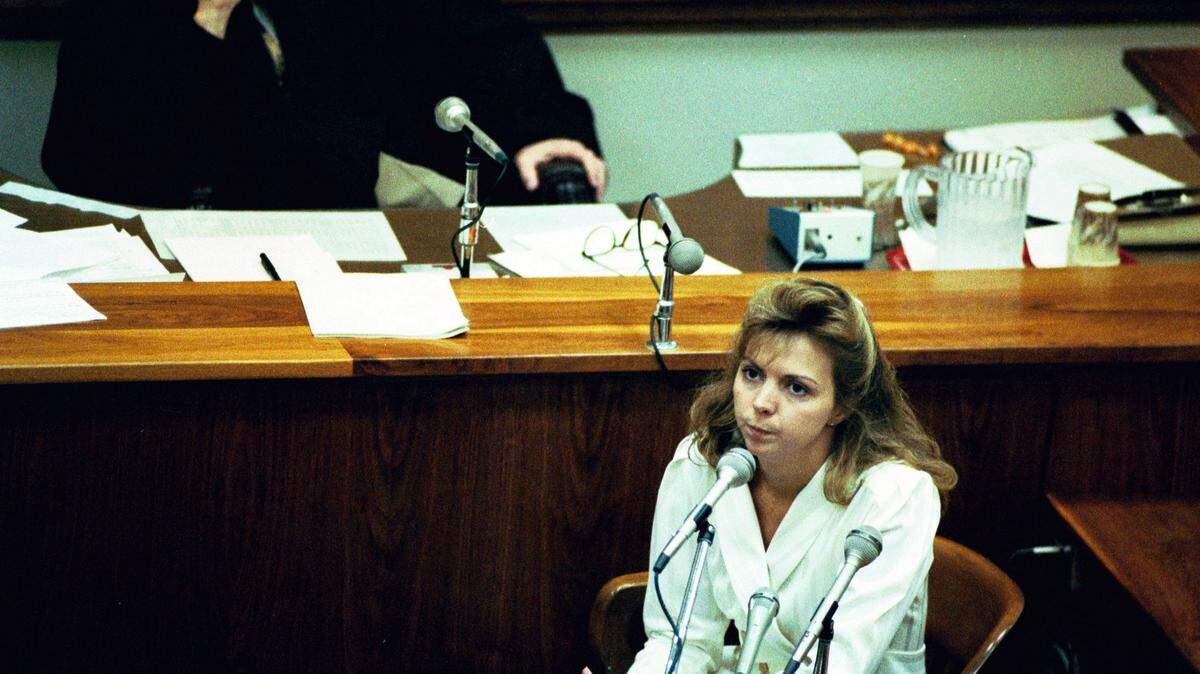
When she was an inmate serving a life sentence for her daughter’s 1991 slaying, Teresa Bowman Fargason penned a letter Jan. 13, 2003, to the Georgia Innocence Project.
In January of this year when Fargason was paroled, Aimee Maxwell, the nonprofit agency’s executive director, asked if Fargason wanted the group to stop work on her case.
“She said, ‘No, I need the answer. I need to know,’ ’’ Maxwell said.
Maxwell and six other lawyers filed a motion earlier this summer seeking to have evidence from 6-year-old Taylor Fargason’s homicide case tested for DNA and to have a new trial based on any new DNA evidence.
“The truth is on those items,” Maxwell said. “It’s either going to have nothing, or it’s going to have DNA that doesn’t mean anything in the long run ... or it’s going to give us the answer.”
The Bibb County District Attorney’s Office has filed a written response opposing Fargason’s request, saying the evidence she wants tested has been contaminated.
They also argue testing on the evidence -- including DNA comparisons -- was available when the case was tried in 1993 and that testing wouldn’t have a “material effect on the outcome of the trial.”
District Attorney David Cooke said a request such as Fargason’s is “extremely uncommon,” the first he’s aware of in his nearly 19 years as a prosecutor.
Maxwell said it’s the first filed by the Georgia Innocence Project, which has been around since 2002.
The group uses a stringent vetting process in choosing cases from the 5,500 letters it has received from inmates, having taken on just 60 cases, she said.
Fargason’s letter was the 152nd letter received.
Maxwell said the group -- which depends in large part on lawyer volunteers and law students for work on cases -- has helped exonerate five people and identify the real perpetrators in four of those cases.
CONVICTED OF MURDER
Taylor was found dead on the side of a stretch of Interstate Parkway near Interstate 475 on June 9, 1991. Her mother was arrested Dec. 29, 1992, and convicted of murder about nine months later.
Fargason claimed Taylor disappeared on a shopping trip at the Kroger on Forsyth Road.
Evidence at the trial showed hair found in Taylor’s left hand was “consistent with” her own hair and a single hair in her right hand was “consistent with” her mother’s. Sixty-seven hairs found on her nightgown, body and the sheet her body was wrapped in at the scene were consistent with Taylor’s own hair, according to prosecutors’ response to Fargason’s motion.
At trial, prosecutors alleged Fargason suffocated her daughter with a blanket in her bed because her boyfriend didn’t want to marry a woman with a child.
They argued that she put Taylor’s body and blanket in her car, dumped her on the side of the road and went to Kroger to establish a false kidnapping story to cover her tracks, according to the response.
Evidence at trial also showed the tire print on the girl’s arm matched her mother’s tires.
Specifically, Fargason and her lawyers want to test Taylor’s nightgown and a tennis shoe, found beside her body, for contact DNA from her assailant.
Contact DNA is left behind when someone touches something and is a type of DNA that labs weren’t testing for until about 2006 or 2008 due to the small sample size, Maxwell said.
Fargason also wants hair evidence from the case tested for DNA. Her lawyers argue the hairs were only examined by microscope prior to the trial and since then, that form of testing “has been proven to be an unscientific analysis,” according to the motion.
Despite the prosecution’s argument that some of the evidence may have been contaminated, Maxwell said additional tests can be performed if contact DNA is found on the items.
Elimination samples -- known samples of DNA from people who touched the items -- can be compared to any DNA profiles found.
Taylor’s fingernail clippings from her autopsy -- which could include trace amounts of the girl’s assailant’s skin or blood -- also are on the list for requested testing.
The District Attorney’s Office, in its response, said the clippings aren’t available for testing because they can’t be located.
‘BEGINNING TO GET HER LIFE BACK TOGETHER’
Now working a factory job and living with family in the Tuscaloosa, Alabama, area, Fargason, 54, is “beginning to get her life back together,” Maxwell said.
At the time when Fargason was sentenced to life in prison, inmates with such a sentence could be parole-eligible after seven years. Today, the minimum is 30 years.
She was considered for parole in 2000 and 2008 before being released Jan. 28, 2015.
Although she was released from confinement, she will remain under a parole officer’s supervision until she dies.
A special condition of Fargason’s parole bans her from Bibb and Houston counties.
“She is reporting and following instructions as required,” said Steve Hayes, spokesman for the State Board of Pardons and Paroles. “There have been no issues with her while she’s been on parole.”
Maxwell said exoneration wouldn’t change Fargason’s life that much.
While on parole, she must keep a job, stay drug-free and not associate with known felons -- things she’d be doing anyway, Maxwell said.
A judge is required by law to consider Fargason’s request for DNA testing, and if there’s enough merit, hold a hearing within 90 days. Based on the June 16 filing of the request, the deadline for the hearing is in mid-September.
If a hearing is held, the judge would consider evidence and arguments to decide whether any evidence will be tested.
No hearing date had been set as of Friday.
Information from Telegraph archives was used in this report. To contact writer Amy Leigh Womack, call 744-4398 or find her on Twitter @awomackmacon.
This story was originally published August 21, 2015 at 11:48 PM with the headline "Teresa Fargason requests DNA testing from 1991 slaying in Macon ."