
Dozens of Macon homicide cases have gone cold. New unit hopes to solve them
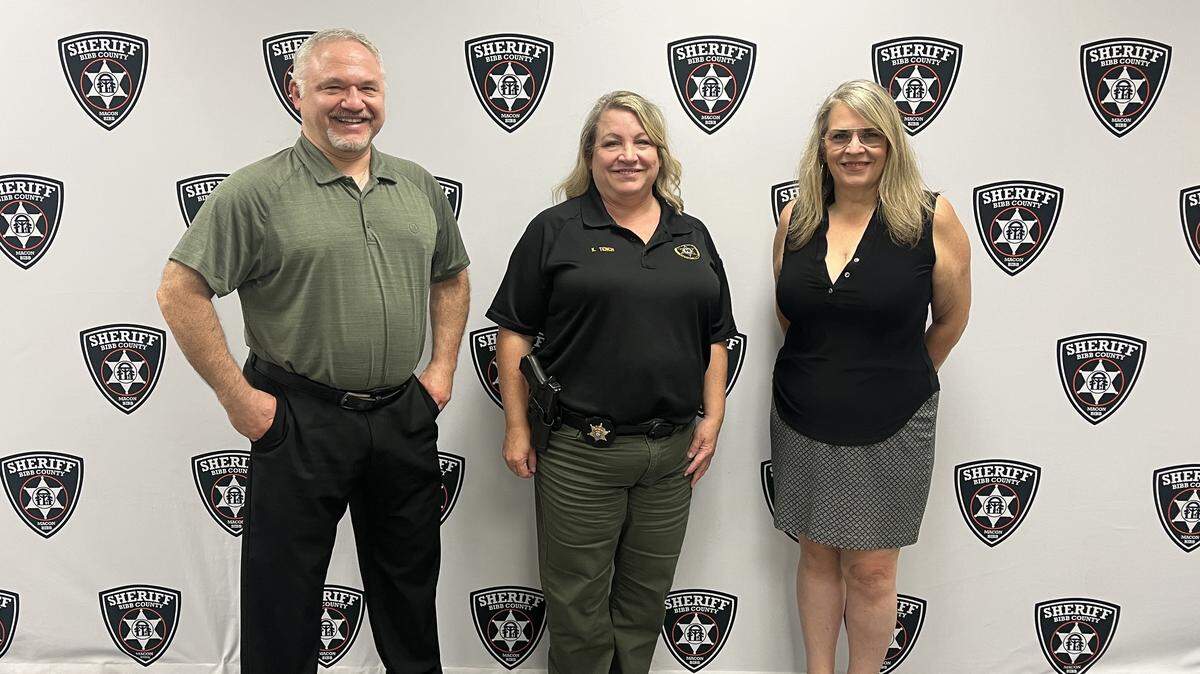
A new cold case unit in Macon hopes to solve dozens of unsolved homicides as old as over 50 years ago.
The Bibb County Sheriff’s Office Cold Case Unit, established on July 1 at the start of the county’s new fiscal year, focuses on homicides that mostly involved sexual assault, gangs and robberies.
Investigations into these cases have largely been paused since around 2014, when Macon-Bibb County consolidated its city and county, and transformed the Macon Police Department into the Bibb County Sheriff’s Office.
The sheriff’s office lacked the resources to make a dent in the cases until now. It received $58.1 million from the annual county budget, some of which went toward the Cold Case Unit. County funds for the new unit were unclear. It also partnered with a federal grant program.
Two investigators at the sheriff’s office, including Kristina Tench and Jack Côté, are picking up where the police department left off.
“I’m not going to say they just put them on a shelf and never looked back at them, but realistically, our investigators are overwhelmed with the number of violent death cases that we have,” Tench said. “Do they have the time to dedicate to them? No.”
Two more investigators are expected to join soon, Tench said. And a federally-funded program for sexual assault victims is aiding with some of the cases.
Law enforcement agencies in Georgia are not required to have cold case units or victim advocates. Each is common in metropolitan areas, but there are fewer in medium-sized jurisdictions, and it’s rare in smaller areas, Tench said.
However, the Coleman-Baker Act, which was enacted in 2023, mandates agencies to review and potentially investigate cold cases upon request, according to the Georgia Bureau of Investigation.
Tench works part-time for the sheriff’s office and full time as chief of personnel and mission management at the Robins Air Force Base in Warner Robins.
She chose five out of the dozens of cold cases to focus on for now, based on which have yielded the most evidence, testimonies and likelihood of progression. She wasn’t sure of the exact number of cold cases the sheriff’s office has.
“As I work on one case and I’m waiting for something to happen on this one, I’ll jump on another,” Tench said. “Sometimes, you have to go through these cases four or five times… It’s like watching a movie, like, ‘Oh, I didn’t see that the first time.’”
Sexually-motivated homicides with no arrests
Three of the five cold cases Tench is investigating were sexually-motivated homicides. One is a missing persons case, and another involves unidentified human remains, she told The Telegraph.
The Cold Case Unit is collaborating with the Sexual Assault Kit Initiative Task Force led by the Georgia Criminal Justice Coordinating Council, a state grant-funded program that supports law enforcement and sexual assault survivors.
Task force leaders met with Tench for the first time on Aug. 29. Amy Christine Hutsell is the program director of the Human Trafficking, Child Abuse and Sexual Assault Unit at the Georgia Criminal Justice Coordinating Council. Jay Eisner is the coordinator of Georgia’s Sexual Assault Kit Initiative Task Force.
Hutsell said the local sheriff’s office works intentionally to support victims with a trauma- and victim-informed approach.
“That’s one of the philosophies that we operate under, that we put the victim and their family at the center of everything we’re doing,” she said. “It’s considered best practice.”
The Sexual Assault Kit Initiative Task Force offers resources to the sheriff’s office, including advanced investigative technology, additional investigators from the state and victim advocates.
Victim advocates are trained to connect victims with resources and “help minimize the trauma associated with navigating the criminal justice system,” Eisner said. They usually have a background in sociology or social work, and can get certified through the National Organization for Victim Advocates.
“We start with, ‘Where are you at? What do you need? How can we help?’” Eisner said. “By the time we’re getting to prosecution, usually we have a couple years of relationship with the victims. This is always going to be traumatizing, but we try and soften that.”
Identifying the victim of a serial killer in the past
Hutsell said the cold case initiative is a renewed partnership with the sheriff’s office. Their first collaboration, from 2018 to 2023, helped identify Yvonne Pless as a murder victim dubbed “Macon Jane Doe” by The Telegraph. She was killed by “the nation’s most prolific serial killer,” the FBI said.
Hutsell previously helped investigate cold cases with Bibb County investigators Capt. Charmaine Jones and Maj. Eric Woodford.
“It’s really a great example of a state and local partnership, and how we’re able to get justice and answers for families,” Hutsell said.
Challenges of solving cold cases
In just two months since the Cold Case Unit was established, Tench quickly learned how hard it is to move old cases forward due to limited DNA samples and witnesses’ faded memories — if witnesses and family members are even still alive.
Most of her role entails tracking people down to get statements, which she tries to do by calling around.
“One of the challenges, especially in this day and age where every phone call is a scam, nobody wants to pick up the phone,” Tench said.
She also travels and knocks on doors to find witnesses, but the sheriff’s office needs more vehicles, she said.
“We’re looking at trying to get more grant money to help pay for some of the tools we need to help us work more efficiently,” Tench said.
The district attorney for the Macon Judicial Circuit has set high standards for what’s considered valuable evidence to take before a grand jury, Tench said.
“Those standards just keep getting higher and higher,” she said. “DNA has become the gold standard of everything.”
DNA, however, degrades over time, depending on its environment and how well it was preserved. Whether DNA was even sampled at all is another major issue.
“A lot of these cases, especially the ones I’m working on right now, were pre-DNA or just right on the cusp of coming out with new technology,” Tench said. “It was very primitive at the time.”
The sheriff’s office’s crime lab first processes evidence from a scene. If the local technology cannot test the evidence, it may be turned over to the GBI Crime Lab. If it needs further testing, the samples may be sent to private labs such as Othram, which specializes in forensic genetic genealogy, and Parabon NanoLabs, which specializes in phenotyping.
“A lot of private companies have carved out a niche of their specialty that we wouldn’t necessarily be able to do even at the state level,” Tench said.
Tench, Eisner and Hutsell said the public’s tips can bring closure and justice to victims’ families, and hold offenders accountable. The public can call the sheriff’s office at 478-751-7500, or Macon Regional Crimestoppers at 1-877-68CRIME.
“We haven’t even scraped the surface with all these cases,” Tench said.
The Telegraph is investigating local cold cases. If you or someone you know wants to talk to us, email reporter Jesse Fraga at jfraga@macon.com.
This story was originally published September 10, 2025 at 6:00 AM.