
Life without parole: How Anitra Gunn’s killer helped seal his own fate
The intricate, grim details of once-mysterious circumstances in the disappearance and murder of Fort Valley State University student Anitra Gunn grew clearer and yet more troubling by the hour.
On Tuesday, the trial of the boyfriend accused of strangling Gunn and disposing of her dead body in a pine thicket just north of here on Valentine’s Day 2020 stretched into its eighth and final day.
Then that boyfriend took the witness stand.
Demarcus Devantae Little, an Army sergeant who grew up in Peach and Houston counties, testified that he did not kill the 22-year-old Gunn.
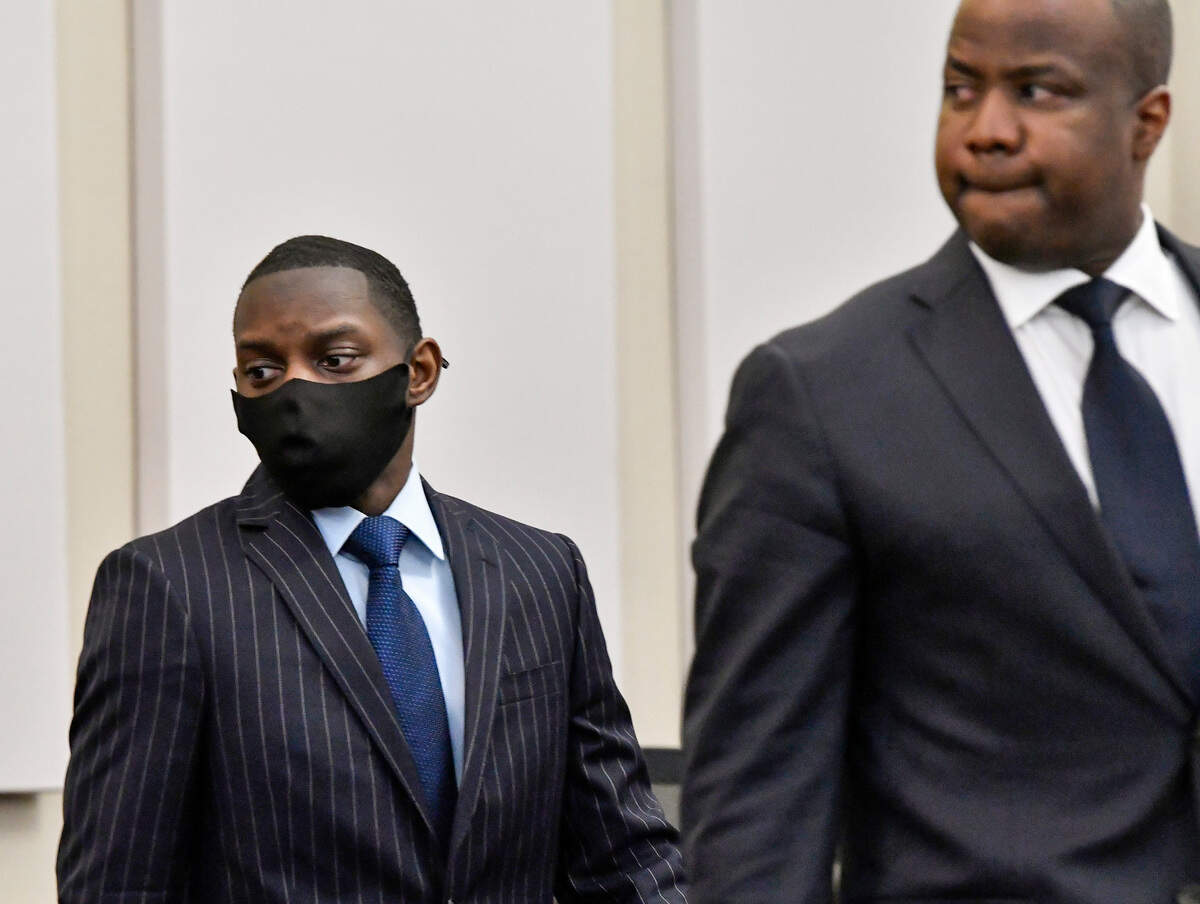
Little, 5-foot-4 and muscular, had sat in court for days, staring dead-ahead, ramrod stiff like a soldier, which in fact he was. Now 24, he had been stationed at Fort Gordon near Augusta when, at age 22, he was charged with murder a week after Gunn went missing. He had been in jail ever since.
In the service for five years, Little had at one point been deployed to Poland. He and Gunn met and later dated when he returned home to Middle Georgia. Little’s aunt lived here on the north side of town. Little, who attended Warner Robins High School, had his own bedroom at his aunt’s place.
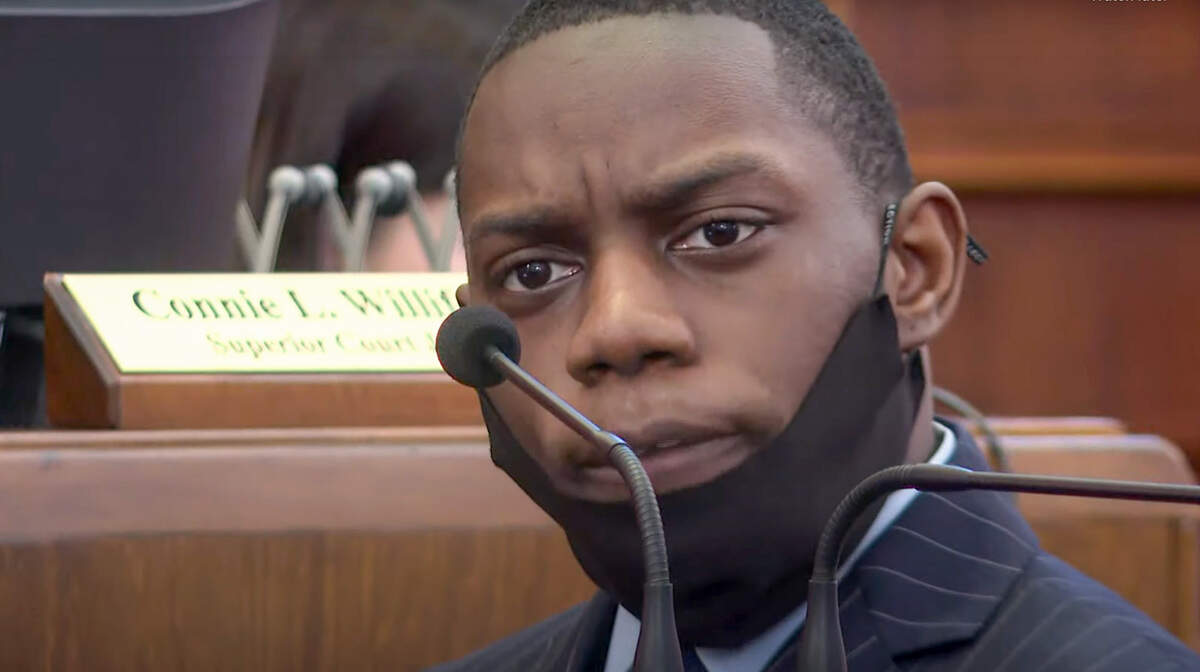
On the witness stand Tuesday morning in Peach County Superior Court, Little lowered to his chin the face covering he had worn throughout the trial. When his defense attorney asked what Gunn had meant to him, Little said she was “my soulmate.”
“My lifeline,” Little said. “She meant everything to me.”
Three days earlier, prosecutors had read to jurors hundreds if not thousands of tumult-laden text messages between the pair. The messages included a conversation in which Little threatened to kill himself, blaming Gunn for his despair.
Even though they were not dating exclusively and after Gunn had told Little repeatedly that she was done with him, he threatened to have a house shot up because she was seeing someone else. He told Gunn he had “eyes on” her, to watch out.
Though it came as a surprise to some, as evidence mounted toward the end of the trial, Little apparently decided he needed to take the stand, to tell his side.
In doing so, trying to brush aside his oft-fury-filled messages to Gunn, he said they were part of the ups and downs of any relationship.
Little’s lawyer, Benjamin Davis, of Atlanta, asked Little point-blank if he killed Gunn.
“No, sir,” Little said.
Little’s own attorney’s examination of him had lasted all of two-and-a-half minutes.
If Little harbored hopes that his testimony would soon be over, he was mistaken.
‘The hurricane’
Judge Connie L. Williford asked the state’s attorneys if they had any questions for Little.
Prosecutor Dawn M. Baskin rose in a flash.
“Oh, yeah,” she said.
Baskin, who recently left the Ocmulgee Judicial Circuit to work in the neighboring Macon circuit, has swiftly become a go-to prosecutor in high-profile trials.
A veteran criminal-trial brawler, one who was instrumental in the conviction in the deadly attack on two correctional officers aboard a prison bus in Putnam County, Baskin teamed up on the Little case with co-counsel Neil A. Halvorson. The pair packed an effective and, as it turned out, crushing one-two punch.
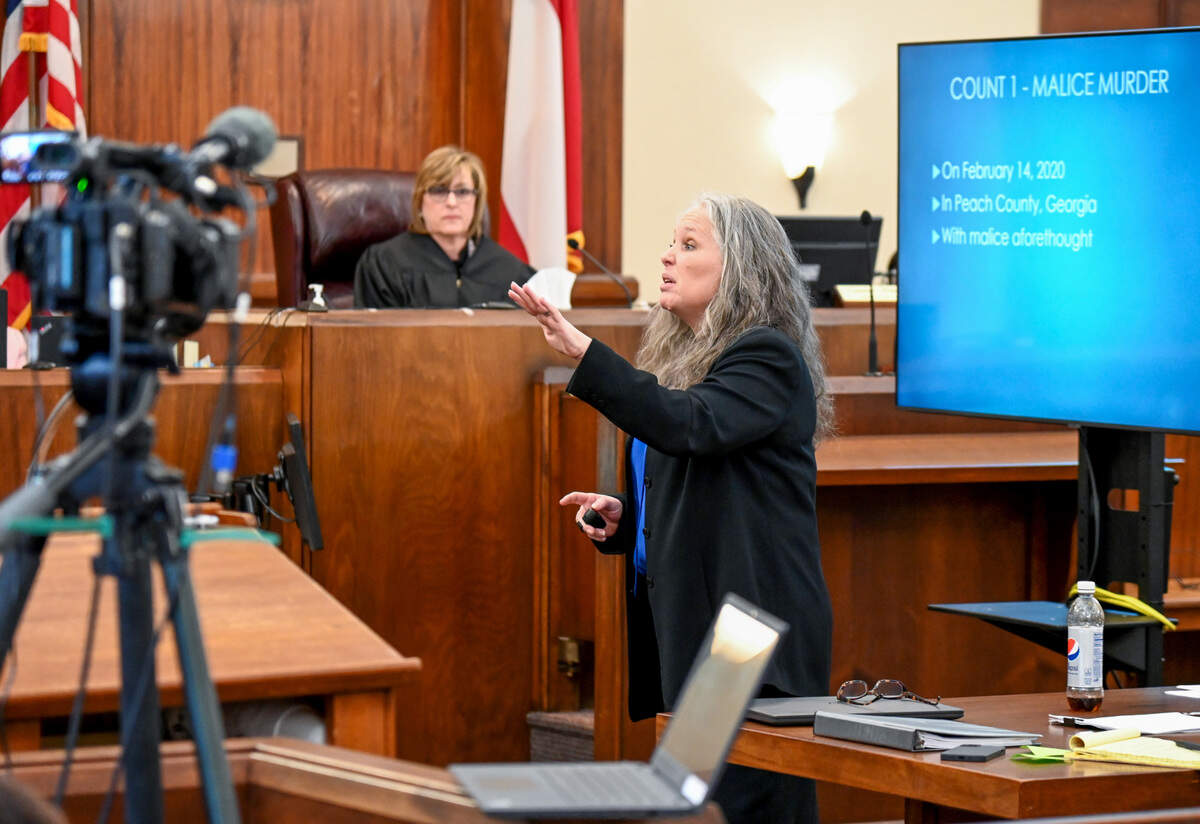
One courtroom observer close to Gunn’s family nicknamed Halvorson “the quiet storm.”
Baskin was dubbed “the hurricane.”
In her hourlong cross-examination of Little, Baskin chipped away at Little’s version of events.
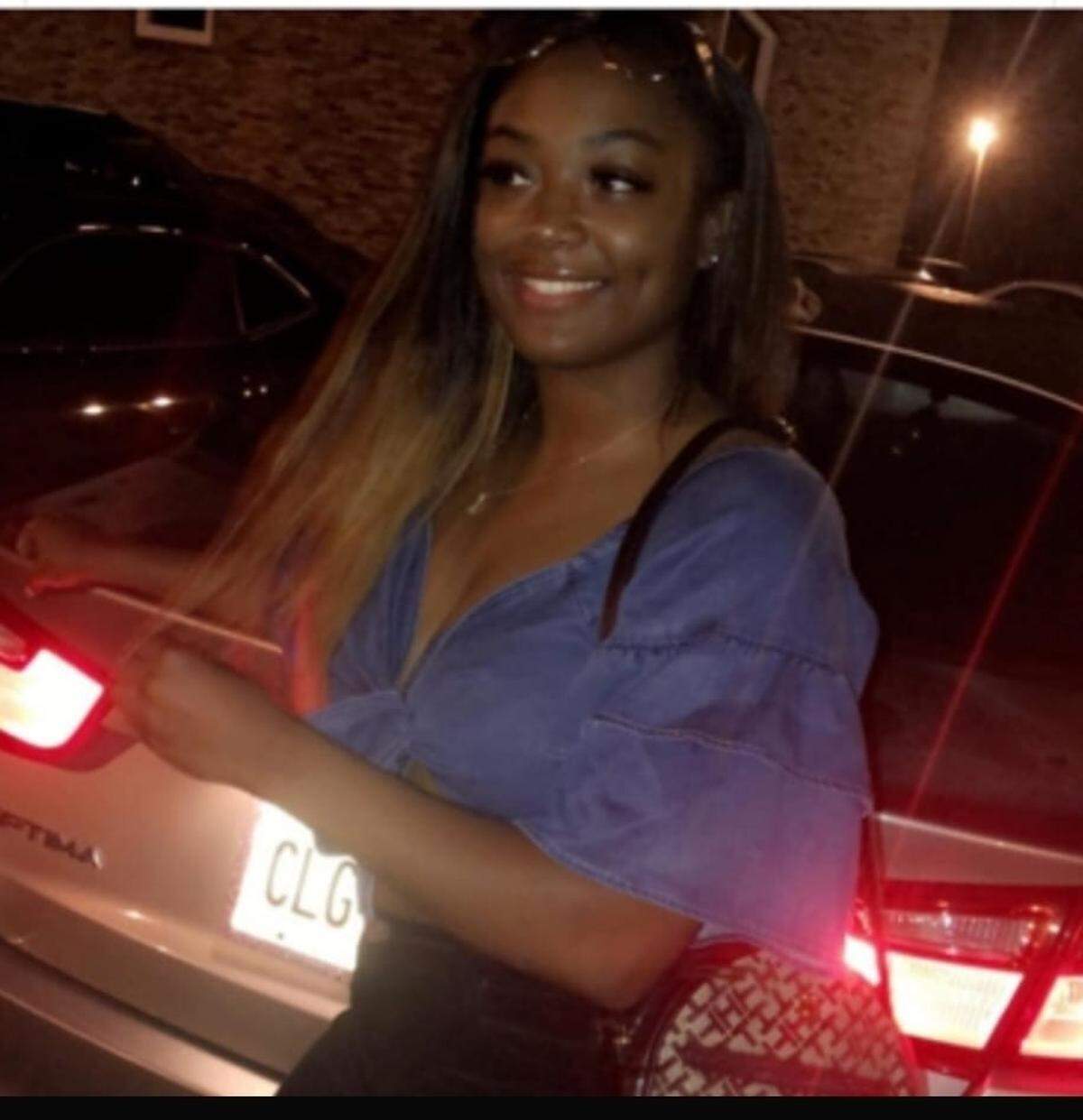
She reminded Little of his incendiary relationship with Gunn, an agriculture major from Atlanta who had worked as a waitress at a Fort Valley restaurant.
“That was your soul mate?” Baskin asked.
“Yes, ma’am.”
“You slashed your soul mate’s tires? ... You broke your soul mate’s window? ... You threatened to shoot up a man that your soul mate was going out with?” Baskin said. “You told her that you were committing suicide and that it was her fault? ... She repeatedly told you to stop coming back (to see her)? ... She told you that your relationship was toxic and that you couldn’t be together? Correct?”
“Yes, ma’am,” Little said.
“And every time you talked her back in to the two of you being back together, didn’t you?” Baskin said.
“No, ma’am,” Little said, though his sometimes-all-night-long text message exchanges with Gunn suggested otherwise.
Baskin reminded Little of his seeming willingness to resort to violence, or threaten it, in messages to Gunn in the weeks before her death.
“So which Demarcus Little should we believe?” Baskin asked. “The one today or the one that threatened to kill before?”
“I’m the same person,” he said.
“That’s right,” Baskin said, emphasizing, “you’re the same person.”
“I’m not the person that you’re trying to make me out to be,” Little replied.
He said the threatening texts were his words when he and Gunn were going through “a difficult time.”
“I wasn’t thinking. ... We always made it work, regardless of what we was going through,” Little said. “So I’m not the person that you’re trying to make me out to be, like I’m a monster. Because if I was a monster, she’d have left me a long time ago.”
Baskin asked about the times Gunn texted Little and told him he was “evil, manipulative, a narcissistic person.” Little said such remarks from Gunn were “bad by her.”
Jurors had sat through a more than a week of testimony, much of it procedural, dry. However, not even the trial’s most compelling witness to that point — Little’s close friend who on Friday testified that Little confessed to killing Gunn in a blind rage after she spurned him in the predawn hours of Feb. 14, 2020 — would match the dramatic moments of Little’s testimony.
Try as he might to parry and explain away his rage-packed texts, Little was no match for Baskin. Lightning-quick on her feet, the prosecutor cut him off at every turn, reminding him of instances where he had shoved Gunn and lashed out.
“So when you get angry,” Baskin said, “you do physically react? It’s not just words, is it?”
“No, I don’t physically react,” he said.
“Well, if you’ve never beaten Anitra and you’ve never hit Anitra,” Baskin said, “why does your family in text messages to you that have been read to this jury constantly refer to you as choking her, hitting her, punching her down?”
“Because that’s how we joke,” Little said.
Baskin shot back, “Were you joking on Feb. 14?”
“I didn’t kill her,” Little said.
‘I don’t remember’
The circumstantial case against Little was voluminous, exhaustive.
Thousands of messages and pieces of evidence were presented.
They gradually revealed that Gunn, in the wee hours of Feb. 14 — after returning from a party with Little to his aunt’s home in northwestern Peach County — was strangled and later dumped a mile or so away in some woods.
To try to prove their case, prosecutors used cellphone-location data along with eyewitness testimony and busted pieces of Gunn’s car to place Little in locations where Gunn’s body was found and where the car turned up.
Investigators believed that after killing Gunn, Little wrapped her body in a blanket at his aunt’s house on Chestnut Hill Road. The following morning, he was thought to have dragged her body to the trunk of Gunn’s car parked outside. Then later that afternoon, they think Little drove her car deep into a pine forest about a mile and a half way, damaging the car, but tossing Gunn’s body, covering it with branches and straw, then barreling out of the woods and ditching the car near Gunn’s house.
Little’s best friend had testified to picking Little up at a spot near where the car was later found. A woman who lives nearby came to court and told of seeing someone by the car that day.
Little claimed that Gunn left his house that morning at about 11 a.m. and was headed for a job interview. But investigators believe she never left the house alive.
On the morning that Gunn likely died, in the hours after she was dragged into her trunk, cellphone-location data determined that Little had been at his aunt’s house with his best friend up until about 11:30 a.m.
Little said on the stand that he couldn’t recall the exact time frame that he and his good friend had hung out.
“But you left the house at around 11:30 a.m.?”
“I don’t remember?”
OK, Baskin said, forget what time it was. But around that time, she asked, “Did you leave the house for any reason?”
“I don’t recall,” Little said.
Baskin asked if he recalled sending a text message to his best friend, still inside the house with him where they’d all spent the night, saying, “I’ll be back.”
“Were you just quoting the Terminator,” Baskin asked, “or were you actually leaving?”
“Uhhh,” Little said.
He wasn’t sure.
‘You dumped her’
The time frame was crucial.
Although Little’s cellphone remained at the aunt’s house, a witness, a male friend of Gunn’s, had reported seeing someone in Little’s car, a black Toyota Corolla with a hot-red racing stripe, circling his neighborhood near Gunn’s house.
At the same time, someone was using Gunn’s phone and sending the male friend messages while traveling along the same route that Little’s car was traveling. The male friend was so concerned that he wrote down the tag number.
The cops later learned that the tag matched the one on Little’s car.
Prosecutors would conclude that it was Little himself, texting the male friend of Gunn’s from Gunn’s phone, pretending to be her and possibly to find out where the male friend lived. Though it was never mentioned, Little may have been searching for a spot to ditch Gunn’s car to try throw off the police and implicate her male friend and neighbor.
Baskin’s cross-examination was unrelenting, a master class in prying information from an unwilling witness.
“What did you do for that hour and fifteen minutes?” Baskin asked.
Little said a female friend of Gunn’s had texted him.
“That didn’t answer my question, sir,” Baskin kept on. “What did you do between 11 a.m. and 12:15?”
Little said he couldn’t remember. “I know I was at (his aunt’s) house.”
But why then, Baskin wondered, had Little sent a text message to his closest friend, the one who’d spent the night with him and Gunn at Little’s aunt’s house, and said, “I’ll be back”?
Why, the prosecutor went on, would the friend who was like a brother to Little, have come into court and lied on the witness stand? Why would that dear friend say Little had gone out for that hour in question?
Little said that the friend, Jaivon Abron, had lied in his first statements to the police lied and said he knew nothing about Gunn’s vanishing.
Abron, in the days after Gunn’s body was found, admitted that two days after Gunn was killed that Little had confessed to him. Abron, 23, said Little had kept him in the dark until then. Authorities believe Little had hidden Gunn’s car behind his aunt’s house, out of Abron’s sight the morning Gunn was murdered and likely stuffed in her trunk.
Why then, Baskin wanted to know, would that friend have come into court and said what he did, telling jurors verifiable details, like where Gunn’s body was and the places he had seen Little on the day Gunn vanished?
Little said that perhaps Abron was hoping for a deal from prosecutors. Abron, after all, still faces charges that he initially lied to the police and failed to inform them that he knew Gunn was dead.
In a seeming effort to deflect Baskin’s scrutiny, Little said, “I’m not the person you guys are trying to make me out to be. I been in this jail for two years. Two years. (I’m) ready to get back to my (Army) duties. ... And you guys are playing with my life.”
‘Your phone is lying?’
Little again said every relationship has its problems.
But then Baskin zeroed in.
The male friend of Gunn’s who had reported receiving strange texts from Gunn’s phone the morning she vanished, was someone who Little claimed he did not know.
Then why, Baskin asked Little, was that male friend’s phone number in Little’s cellphone’s contact list?
Why had it had been entered at 3:44 on the morning Gunn disappeared?
“I do not know,” Little replied.
“Did somebody else have your phone?” Baskin said.
“No, ma’am.”
“Then you would agree,” the prosecutor said, “there would be no reason for (the male friend’s) name and number to be in your phone?”
Correct, Little said, “I’ve never seen him.”
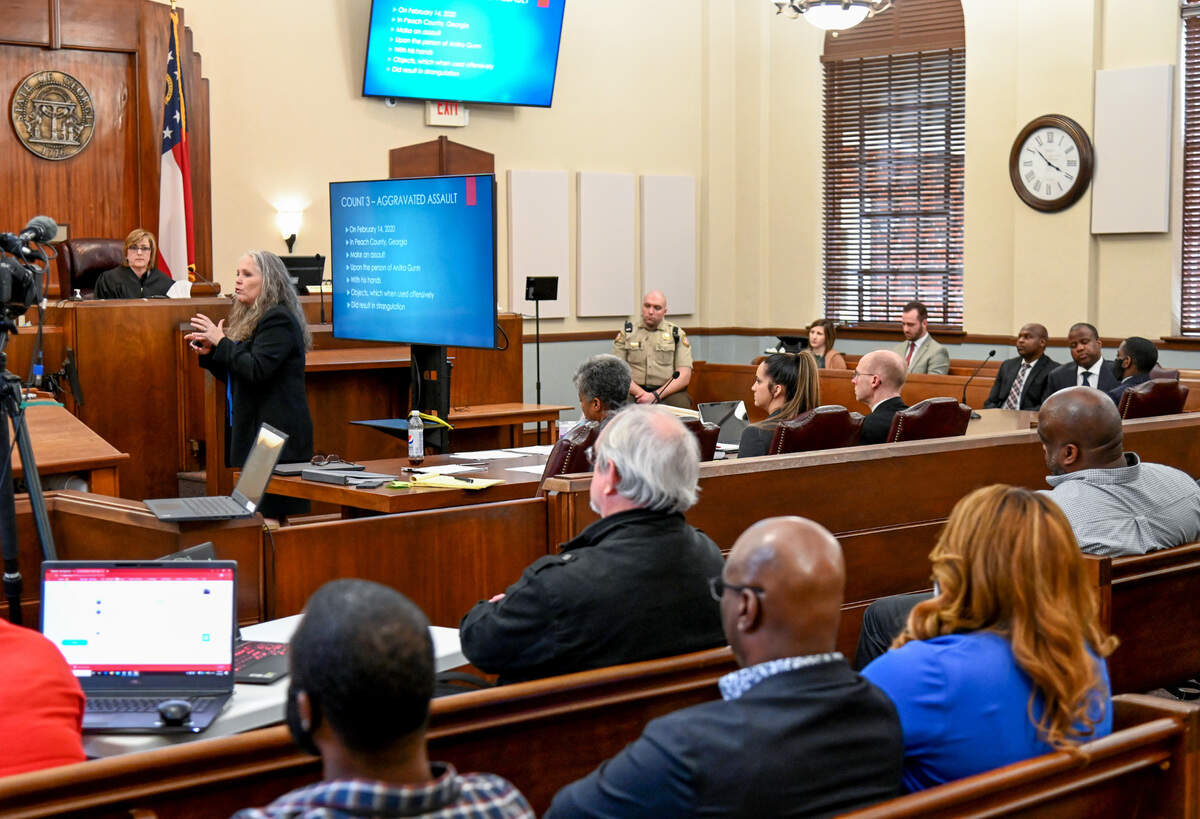
Then Baskin confronted him with cellphone data that showed Little’s phone deep in the very woods where Gunn’s body was tossed.
Little deemed the data “inaccurate.”
“Because if (the data) were accurate, sir,” Baskin said, it “would show you standing next to the body of your soul mate?”
“No, ma’am,” Little replied.
Later on in her cross-examination, Baskin turned her attention to the 1 o’clock hour on the afternoon Gunn disappeared.
Baskin said it was then that Little, back at his aunt’s place with Abron, knew he needed to dispose of Gunn’s body.
Baskin said Little told Abron — still unaware that anything was wrong, just that Gunn was somehow missing now —to take Little’s Toyota and drive alone into town and search for her. Baskin told Little that he then took off in Gunn’s Chevy Cruze and went off-road into the woods.
“You drove it over ditches and trees,” she said, “causing the bumper to fall off, ... and you dumped your soul mate like garbage in the middle of the woods, didn’t you, sir?”
“No, ma’am.”
“And then you drove back ... and you dumped her car just like you dumped her.”
“No, ma’am.”
“So your phone is lying?” Baskin said.
‘Who had your car?’
Little had been on the stand about an hour when Baskin again directed Little’s attention to a critical time frame, the 11 a.m. hour of Feb. 14, 2020 — late on the morning that Gunn was likely killed.
Baskin again mentioned how curious it was that the phone number of Gunn’s male friend and neighbor just happened, as if by magic, to have landed in Little’s phone. It was just too coincidental, the prosecutor said, that Gunn’s male friend was receiving text messages from Gunn’s phone at the same time some unknown person was tooling around the block in Little’s Toyota.
“Who had your car?” Baskin asked.
Little said he had no idea.
Baskin reminded Little that the male friend of Gunn’s had written down the car’s license plate number.
“What was your car doing circling the location of where (the male friend) lived?” Baskin asked.
“I think at that time, I think, (a female friend of Gunn’s) was texting me, and I went looking (for Gunn),” Little said.
No, Baskin said, seizing on Little’s mistake. That female friend, Baskin informed Little, didn’t text Little until 12:35 p.m.
“So again, what were you doing, driving in your car, circling the block?”
“Looking for Anitra,” Little said, his story now changing.
“Why?” Baskin said, “she left you five minutes before.”
“Because I wanted to see,” Little explained, “did she go to her interview.”
Surprised at the answer, Baskin asked, “So when Anitra left, you followed her?”
“I don’t remember when exact ...” Little said.
Baskin cut him off.
“It’s hard,” she said, “isn’t it?”
Little’s timeline had unraveled.
“You just told the jury a few minutes ago that you were actually just hanging out at the house,” Baskin said.
Little explained that he now recalled going out. His admission was pivotal because it put him in the same place as Gunn’s cellphone, circling the block in the neighborhood where she lived.
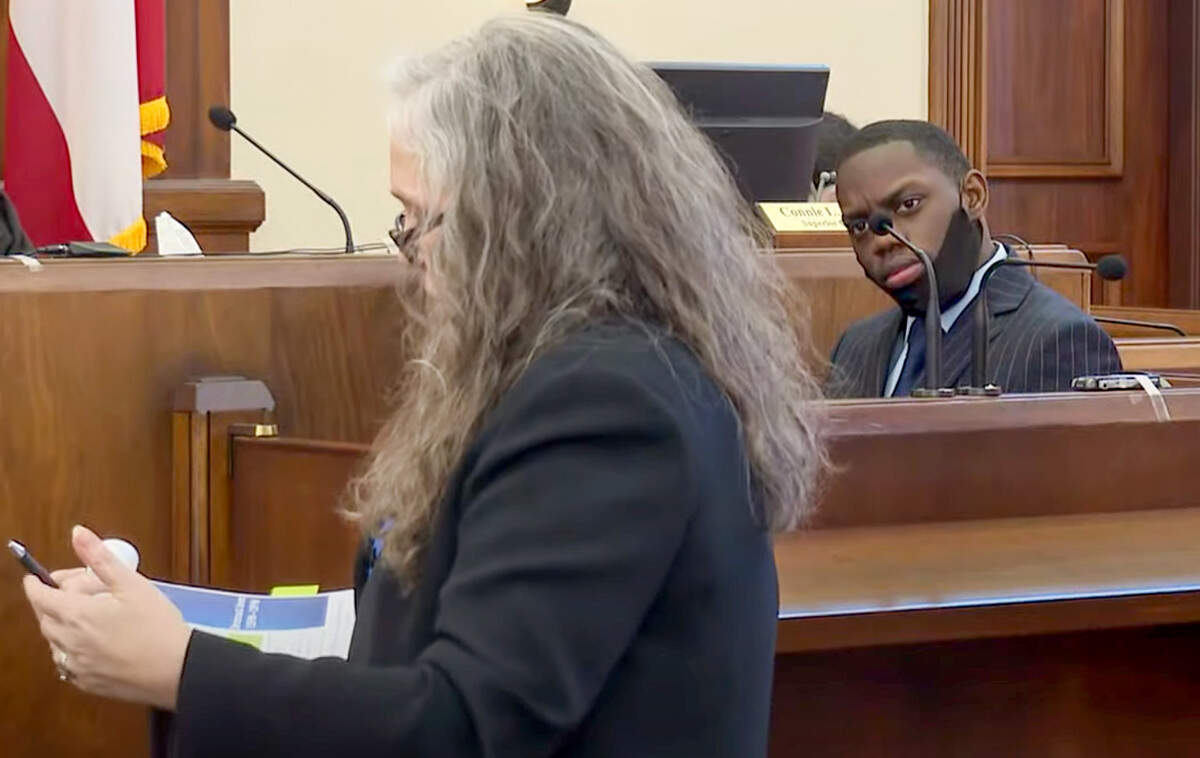
A few minutes later, Baskin looked at Little and paused.
“Mr. Little,” she said, “let’s be straight. It doesn’t make sense does it? Have you ever heard the old saying, ‘The simplest explanation is usually the truth?’”
“No, ma’am,” Little said.
The jury apparently had.
After a brief dinner break, having deliberated for less than two hours, jurors convicted Little of murder.
He was sentenced to life without parole.
Before he was led away, Little hugged his father.
Gunn’s father, seated in the front row, left the courtroom, silent.
Just outside in the lobby there were cries. His heartbreaking wails filled the courthouse.