
Macon witness points out the men he says killed his cousin. Did the jury believe him?
Quincy Emory, deep-voiced, calm and earnest, seemed the perfect eyewitness to a murder.
He had been at the scene — in a living room with his cousin — the night the shooting started.
Emory had recognized one of the suspects, a young man with an assault rifle, before ever seeing his face. The gunman’s voice gave him away. Emory knew him by name.
Emory said the fellow with the rifle kept telling Emory not to look at him. But Emory said he couldn’t help it — he peeked — and the gunman opened fire.
Emory was shot in his left side. He survived.
His cousin did not.
Jackie Dewayne Rouse — shot four times — collapsed face-down in his living room, dead at age 38.
Emory spent more than a week in the hospital. “They split me open,” he would recall, “and took my spleen out.”
This week, Emory took the witness stand in Bibb County Superior Court and gave his version of events of what happened to him and to Rouse the night of Oct. 31, 2017.
That night four years and three months ago, they had been drinking Cuervo, smoking weed. They were celebrating Emory’s 32nd birthday at Rouse’s house on Dennis Street in east Macon, a few blocks west of Thompson Stadium and just south of Shurling Drive.
Rouse was a small-time marijuana dealer who also sold cars and ran a lawn service. For the most part, he only sold pot to people he knew. Emory helped him peddle it, often well into the night.
Late that Halloween, as Emory and Rouse hung out, someone showed up to buy dope.
The customer, Emory said in court this week, was a guy he knew only as “Miami.”
“Miami,” he said, wanted a $5 bag of weed.
But as Emory, now 36, tells it, “Miami” was part of a ruse. Seconds later, a man armed with an assault rifle stepped into the doorway and told the cousins, “Give it up!”
The gunman, along with “Miami,” then robbed the cousins of their cash and weed, Emory testified.
The gunman, Emory recalled, kept saying, “Don’t look at me.”
But Emory did look. “That’s when he shot me.”
Wounded, Emory raced outside and bolted down the street, collapsing at a home a few doors down.
Rouse wasn’t so lucky. Emory said that as he and his cousin began to run, Rouse fell. Emory kept running and didn’t look back. He said he was too frightened to do anything else.
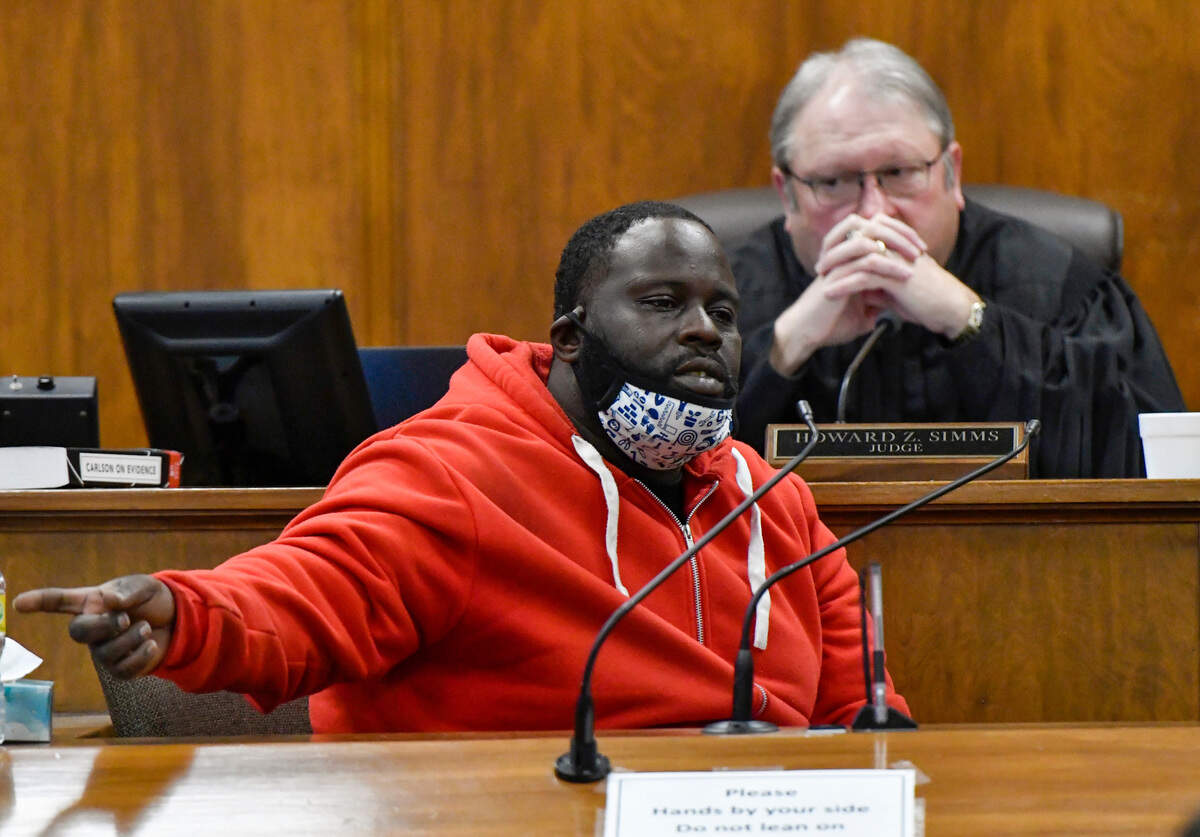
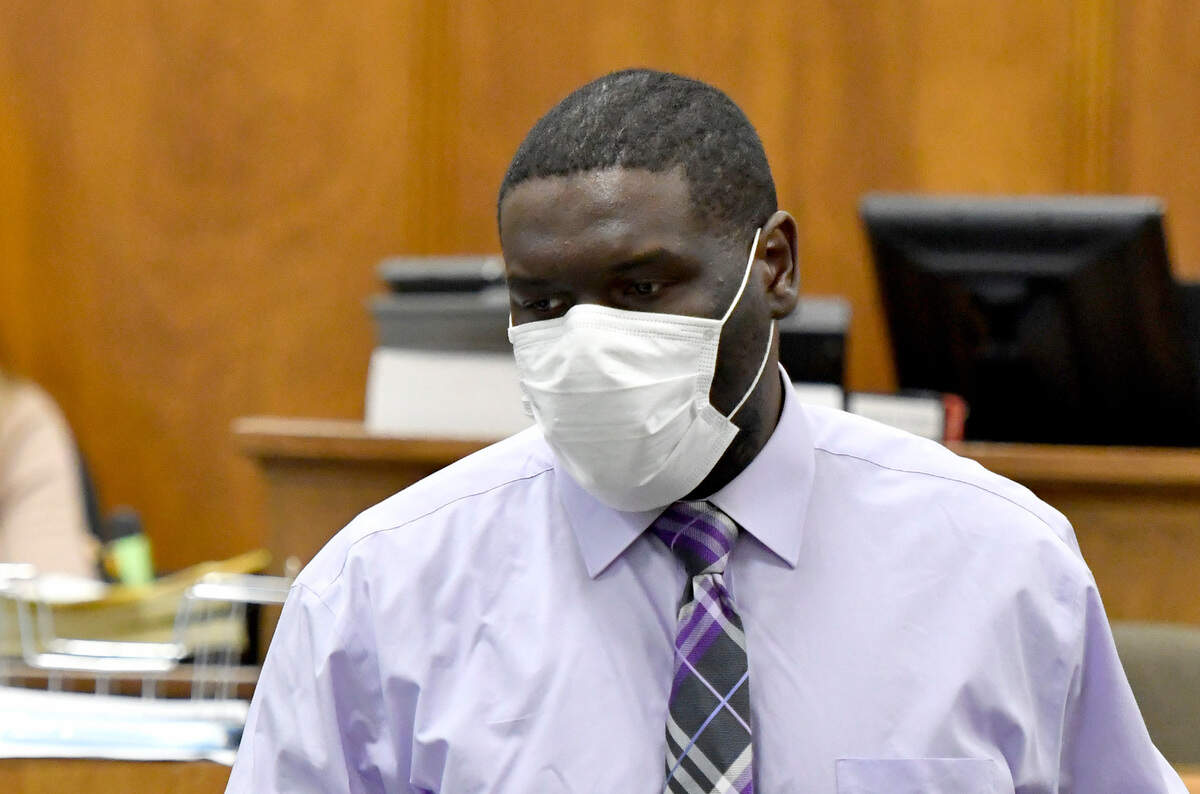
From the witness stand, when a prosecutor asked Emory to point out the man he had identified as “Miami,” Emory aimed a finger at the defense table where Trayvion Lamonte Burney sat dressed in purple shirt and striped tie.
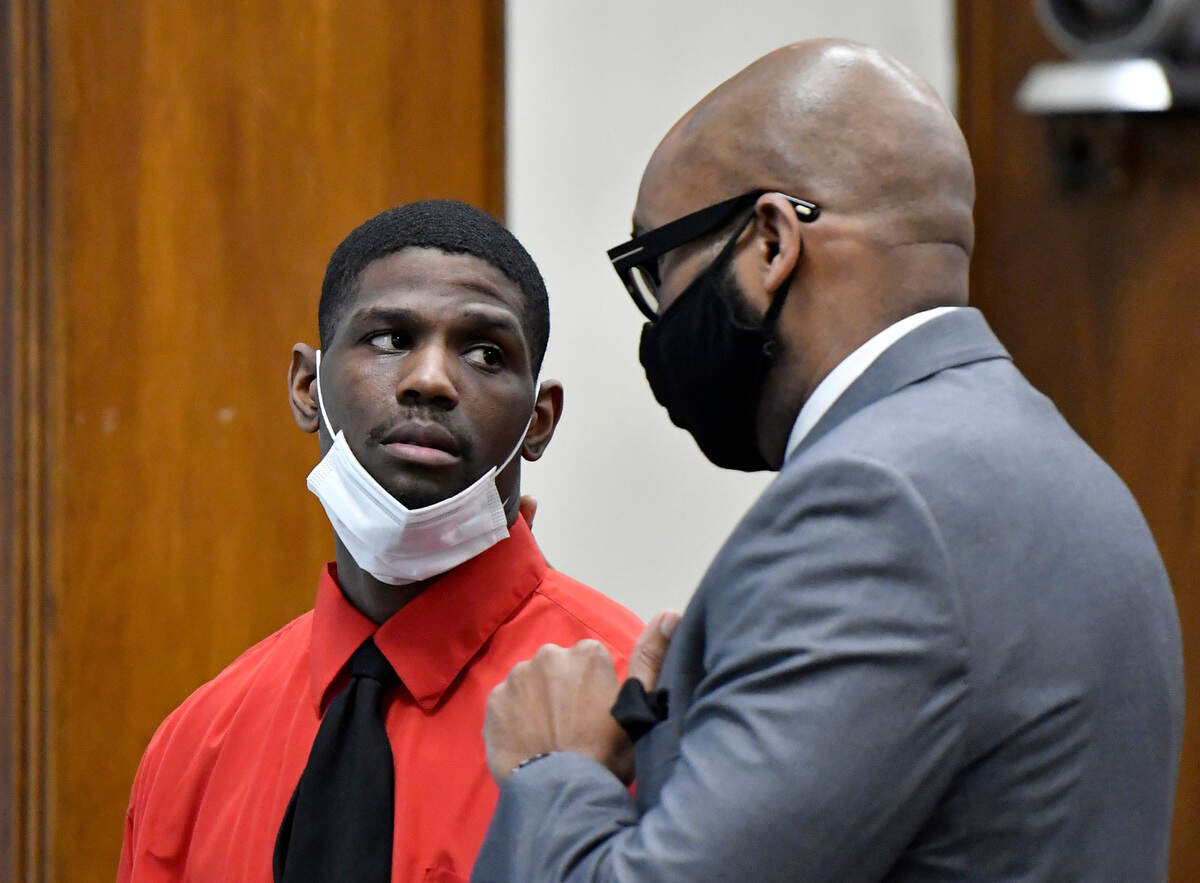
Then he fingered the accused gunman seated to Burney’s left, Anterrio Tremaine Stinson, who had on a red shirt with a black tie.
Trouble was, the version of events he had testified to varied in two very big ways from the accounts he gave investigators in the days after the shooting. Emory had first told the cops that he had no clue who had shot him and gunned down his cousin.
Such reluctance is not uncommon. Ratting out killers, even those who may have tried to murder you, can be a daunting proposition. Fear of retribution, be it from the killers or their associates, can make victims clam up.
Only after a few meetings with the police did Emory come clean, and it was more than a month after the killing that Burney, who turns 28 later this month, and Stinson, now 29, were arrested on murder charges.
The only thing linking them to the crime was Emory’s testimony. No gun was found, nor were any fingerprints or DNA evidence collected. No cellphone pings or other potentially corroborating information placed the accused men at the scene.
‘I really wanted retaliation’
In court on Thursday, the hefty, bearded Emory, in a red sweatshirt with a speckled face mask pulled down over his chin, said he had been shaken and scared, worried the killers might come after him.
There had also been another reason why he hadn’t snitched. He wanted revenge.
Emory hoped to take care of the perpetrators himself.
Street justice, he said, “I really wanted retaliation.”
He testified that he later came to his senses and realized taking the law into his own hands would only end with him in jail. “A revolving door,” as he put it, “the same thing.” More crime, more punishment.
Emory said that all he wanted now was “justice for my cousin.”
Even so, his holding back from the cops and his varying statements early on opened a window for the attorneys representing Stinson and Burney.
This week the two defendants, in jail since December 2017, went on trial together.
Each chose not to testify.
Their lawyers seized on Emory’s inconsistencies. How he hadn’t been forthcoming. How he was adamant that there were only three shots fired when the cops found nine shell casings inside Rouse’s living room.
No, they did not point out that it was certainly possible Emory’s recollection wasn’t precise, that in the blur of a life-and-death moment, his memory had failed. But now the defense had an opening to raise doubts.
The lawyers for Burney and Stinson reminded jurors that Emory, in other testimony, had been deemed untrustworthy by a relative of Rouse’s. One lawyer suggested Emory may have been stealing from Rouse. The lawyer wondered, too, if Emory himself had been in on the robbery and just caught a bullet by mistake.
The other defense attorney told jurors that Emory had said to the cops that the killer fired an AK-47. But it turned out the murder weapon was likely AR-15. “I know it was a long gun,” Emory had testified on cross examination.
Emory also had said that he and his cousin didn’t have guns or keep them around.
So, the lawyers asked, how were you planning to get revenge?
“I could a got one,” Emory said.
In his closing argument, Stinson’s lawyer reminded jurors that Emory was his cousin Rouse’s drug-dealing cohort and that Emory claimed to have owned no gun.
“Is Quincy Emory credible?” attorney Corey T. Bowles said before answering his own question. “Absolutely not. ... A drug dealer without a gun is like a chef without seasoning.”
Bowles then told the jury, “You’re dealing with a witness who has no credibility, and if he’s not credible — case over.”
Prosecutor Shelley Milton, in her closing, acknowledged that the state’s case hinged on Emory., Milton said she wished there had been other evidence for the jury to see, more eyewitnesses.
But Emory, she told the jurors, had done what no one else could.
“It took courage for him to tell us ... courage to get up on that witness stand,” Milton said.
It was true, she went on, his story had changed.
“He was afraid,” Milton said. “Yes, he lied. Can you blame him?”
Deadlocked jury
The jury began deliberating Thursday afternoon.
An hour passed.
At times, raised their voices could be heard booming from the jury room as animated conversations played out.
After a couple of hours, the jury decided to go home and resume its discussions Friday at 9:30 a.m.
After 90 more minutes of deliberation on Friday morning, the jurors reported they were deadlocked 9-3. They weren’t allowed to say which side favored which verdict.
They were sent back and deliberated about 90 more minutes. After a lunch break, they deliberated another hour and reached a verdict.
When they filed back into the courtroom, Judge Howard Z. Simms perused their decision and asked Burney and Stinson to stand. They’d been charged with several crimes, including armed robbery, aggravated assault and gun-possession violations.
“As to each count as to each defendant in the indictment, the jury finds the defendants guilty of all counts,” the judge said.
In the moments after the verdict was read, Stinson, the just-convicted triggerman, took his seat. He stared at the floor and for several seconds shook his head.
Before sentencing the pair, the judge told them, “The actions of you two gentlemen are precisely why ... life has been devalued in this community. It doesn’t mean anything anymore. I’ve told a whole lot of folks over the years ... I can’t do anything about all of these problems.”
Then the judge raised two fingers and added, “But I can take care of two of them today. And that’s you two.”
He sentenced them to life in prison without parole.
This story was originally published February 12, 2022 at 7:00 AM.