
Macon cocaine kingpin convicted in massive narcotics case linked to Mexican cartel
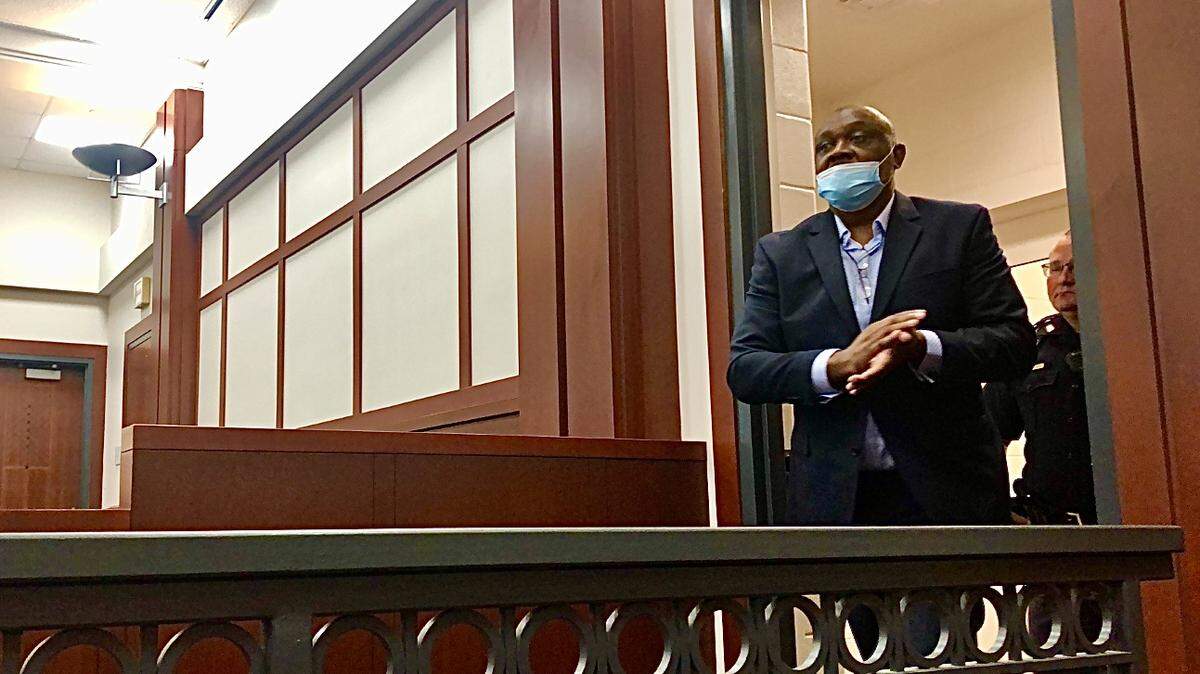
A 53-year-old Macon man who law enforcement authorities in Houston County early last year identified as the head of a cocaine-and-marijuana ring responsible for bringing millions of dollars worth of drugs to Middle Georgia was found guilty Monday after a weeklong trial.
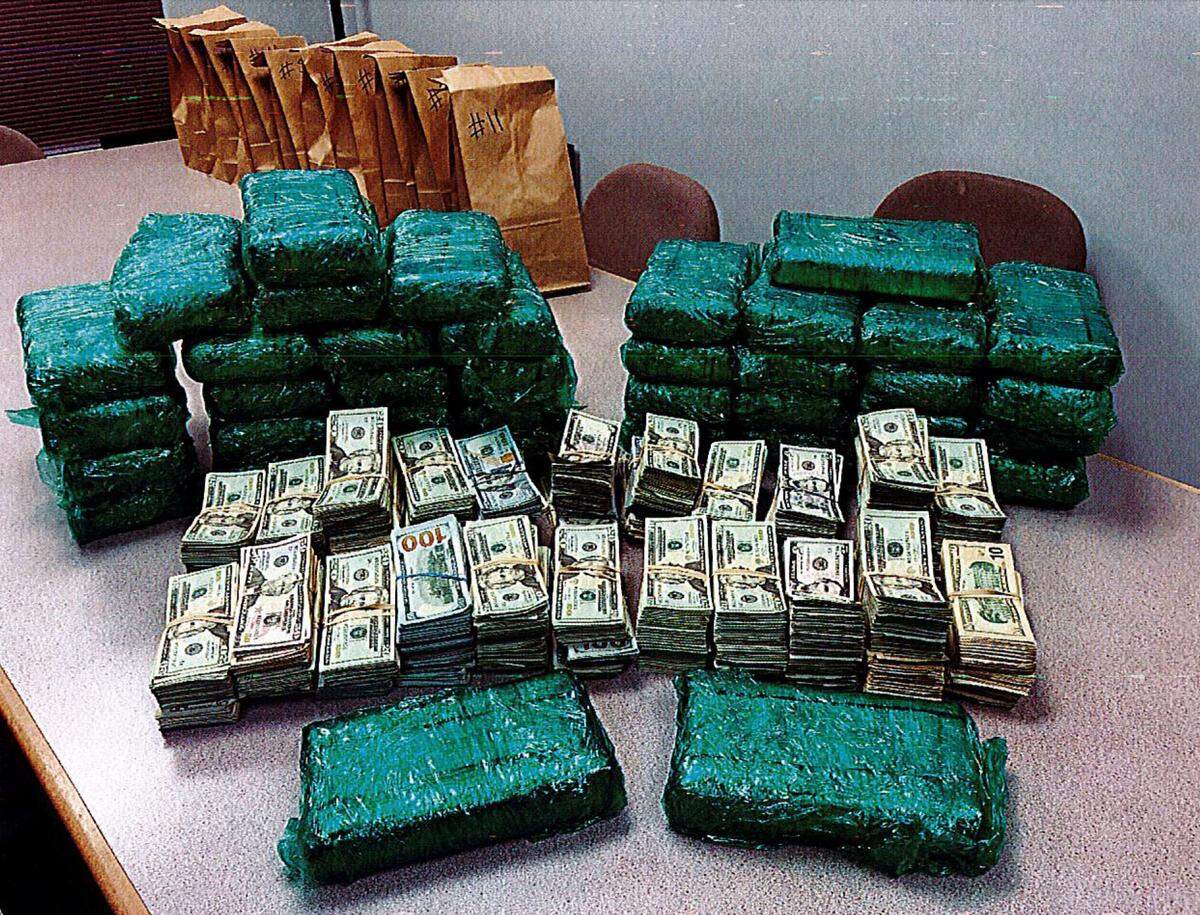
Dexter Lee Williams, who according to testimony which began early last week owned a used-car lot and several rental properties in Bibb County, was arrested in March 2020 at a home in the Providence subdivision off Bass Road. His arrest came after a monthslong probe by Houston narcotics investigators that cops said linked him to a trucked-in shipment of 87 pounds of cocaine worth nearly $4 million.
The shipment was intercepted March 4, 2020, by narcotics agents at a Love’s Travel Stop off Sardis Church Road along Interstate 75 in south Bibb.
In Houston Superior Court last week, Williams’ defense attorney, Wanda S. Jackson, while not denying Williams’ hand in the drug trade, argued that prosecutors had overstepped their bounds, saying that the narcotics-dealing conspiracy charges he faced were improperly brought and imprecise in their scope regarding the venue of the alleged crimes.
Investigators in Houston County in late 2019, in seeking to track down the source supplying a prolific Warner Robins-area dealer, used wiretaps and other surveillance methods to, in essence, climb the ladder of a drug-peddling operation, which they said eventually led to Williams. In all, more than 25,000 telephone conversations and text messages were monitored and helped lead to more than a dozen arrests of alleged drug sellers, whose wares included heroin and methamphetamine.
Williams convicted in previous drug schemes
Williams was no stranger to local and federal drug agents in Middle Georgia. In November 2007, he pleaded guilty to a marijuana-distribution charge that federal prosecutors said was part of a drug ring that had conspired to sell more than 100 kilograms of pot. He was sentenced to 37 months in prison. He was also arrested in 1990 and tabbed by law enforcement officials as the kingpin of a Hancock County crack-cocaine ring with tentacles across the region.
His lawyer in court in recent days argued to jurors that Williams was not part of any Houston County conspiracy, that Williams had only sold drugs to a Macon man whose own connections had dealings in the Perry and Warner Robins areas. Williams’ lawyer said the venue was improper, that Williams had committed no crime in Houston.
“You might be tempted to say he’s not innocent,” Jackson, the defense attorney, said to jurors in her 70-minute closing argument, “but did they prove him guilty?”
Added Jackson: “That’s Bibb County’s (case) to prosecute, not Houston’s.”
Houston prosecutor Greg Winters, however, contended that Williams’ crimes were part of a pattern of criminal activity included in the three counts of violating Georgia’s Racketeer-Influenced and Corrupt Organizations (RICO) law with which Williams was charged.
Winters cited multiple phone calls played for the jury in which Williams, who did not take the stand at trial, could be heard arranging drug deals.
An alleged street-level dealer in the case whose phone was tapped early in the investigation in the fall of 2019 could be heard in a recording played for jurors telling one of his contacts that, for a drug dealer, he had morals. A few anyway, the dealer said, giggling to himself, explaining that if a pregnant woman came to him looking for illicit drugs that he would lecture her not to use but in the end still sell them to her.
A growing operation
Prosecutors have said the network that Williams was at the pinnacle of supplied narcotics to dealers across the region, including some in Butts County and the Jackson area. Some of the drugs were said to have been brought in by courier in luggage flown on commercial airlines into the Atlanta airport.
One official said Monday that Williams’ organization had likely been operating for more than five years.
Prosecutor Winters said Williams had also sought to expand his cocaine-selling operation into the Washington, D.C., and New York City areas, with plans to funnel upward of 20 to 30 kilos of cocaine there a month from a pipeline into the U.S. through a McAllen, Texas, border crossing via the Gulf Cartel.
Jurors in the case deliberated for more than five hours over two days before reaching their decision to convict Williams.
On Monday as their verdict was read, the gray-haired and balding 6-foot-3 Williams — a former star basketball player at Hancock Central High School who later played junior college hoops at Cleveland State in Tennessee — showed no emotion.
He will be sentenced later and faces up to 60 years in prison and stiff fines.
As Williams left the courtroom shortly before noon after being found guilty, he glanced at family members and gave a thumbs-up.
Later outside court, Winters, the assistant DA who handled the case, told The Telegraph that Williams’ drug ring reached from the midstate to Atlanta.
“In my time as a prosecutor, I’ve never seen the amount of illegal drugs that were brought in in one shipment alone,” Winters said, referring to the 39-kilo cocaine seizure that investigators made in March 2020 at the south Macon Love’s. “The street value of that alone is well over $3.5 million.”
The probe was led by Houston sheriff’s Sgt. Matt Moulton. Moulton was instrumental in zeroing in Williams as the drug ring’s top dog.
Moulton’s near-round-the-clock work for weeks at a time lent him an encyclopedic knowledge of the case’s thousands of recorded phone calls. On the witness stand as the state’s key witness, Moulton’s narration of those calls proved crucial in explaining the lingo and underground culture of the drug trade to jurors.
“We can all be grateful for countless hours he spent protecting us all,” Winters said of Moulton in a prepared statement Monday afternoon.
Houston’s Acting District Attorney William M. Kendall mentioned in the same statement that Williams’ drug operation “put money over everything else.”
From the sound of numerous drug-deal calls that were recorded and played in open court, Williams was a smooth, unflappable CEO. He spoke calmly, almost grandfatherly at times, and on at least on occasion advised a dealer he was supplying to let slide an apparent transgression involving a lower-level distributor, saying, “He ain’t worth it.”
Kendall said the ring of dealers who were part of Williams’ network “believed that distributing illegal narcotics ... was nothing more than a business proposition. (Williams) had no concern about how many lives he impacted or devastated.”
This story was originally published November 1, 2021 at 11:59 AM.