
A skeleton, a crushed Cadillac and an unsolved Macon murder mystery: Who is ‘Mr. Bones’?
Editor’s note: A longer version of this article appeared in The Telegraph’s print editions June 23, 2013, under the headline “Searching for Shorty: The Murder of an Unknown Man.” The article was co-written by then-Telegraph journalist Amy Leigh Womack.
All that remained of the dead man were bones and question marks.
In the case file, he went from being known as “Jane Doe” to “Unidentified Dead” to “Bones” and then “Mr. Bones.”
A homicide investigator insisted on the “Mr.” because it sounded more dignified.
It also was accurate.
The dead man’s skeleton, all 5 feet 5 inches of it, had looked like the mummifying frame of a woman. But on closer inspection, the remains were those of a middle-age man.
In the fall of 2007, someone running from the cops in an unrelated case tripped over a skull in an overgrown field west of Mercer University.
The person fleeing eluded the police but, later, could not shake the memory of stumbling over a skeleton. He told some people about it at a neighborhood dive. One of the people listening called a Macon cop. The cop went to the field — more a vacant, weedy expanse along Interstate 75 at the eastern edge of Unionville — and checked it out.
“Sure enough,” a detective said later, “there’s the body. No clothing. No nothing. Bones.”
A skull in an overgrown field
By the time the remains were discovered on Nov. 2, 2007, they had rotted black. They almost looked burned.
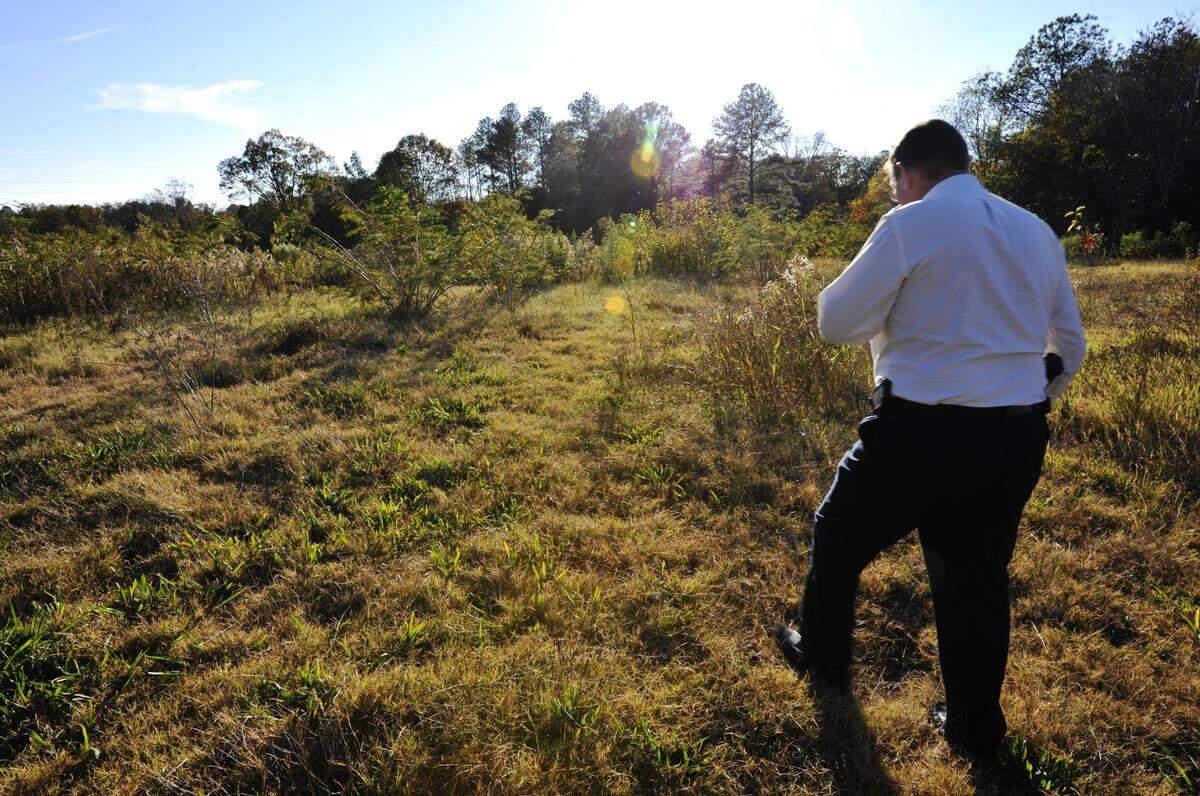
A rib cage rose from a barren spot in the mimosa-choked field. The 6-acre tangle of tall grass and brush was so thick in places that detectives had used a bush ax to carve their way in.
The skull, which the guy running from police had tripped on, was maybe 20 feet from the rest of the skeleton. The skull bore signs of a knife attack. On top of it were more than a dozen marks from the tip of a blade. On the side of the skull was a hole where someone had rammed the knife home.
Whoever had stabbed the man even took the time to clip the victim’s fingernails before leaving him in the field, perhaps thinking the man had scratched his attacker in a struggle. Police found the clippings, which for whatever reason had been tossed on the ground beside him.
Investigators figured the victim had been killed somewhere else, probably several months earlier, and ditched in the weedy field, which lies just across the freeway from a Hilton Garden Inn.
But the time line soon shrank.
Four or five weeks later, early that December, a sobbing woman called 911. A man she knew from an area south of Mercer University Drive had vanished. The last time anyone had seen him was in September. Talk in the neighborhood at the bottom end of Madden Avenue was that her friend was the dead guy in the field.
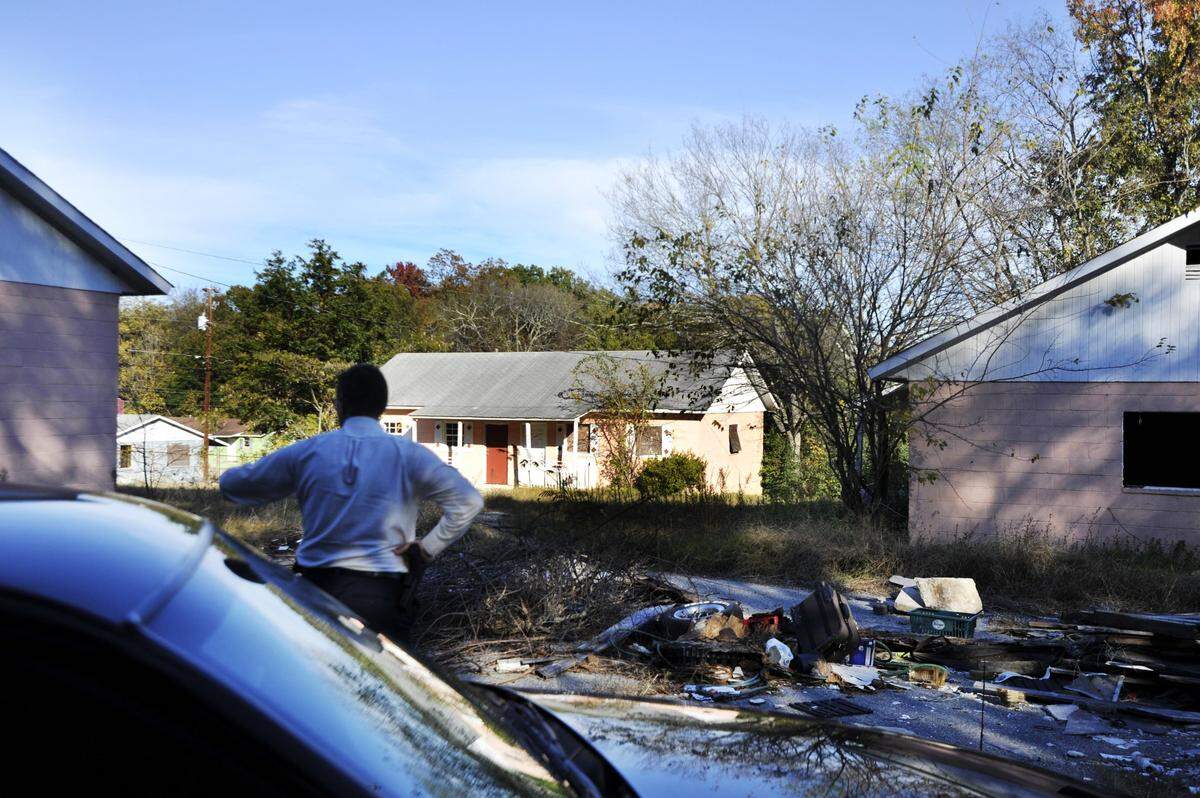
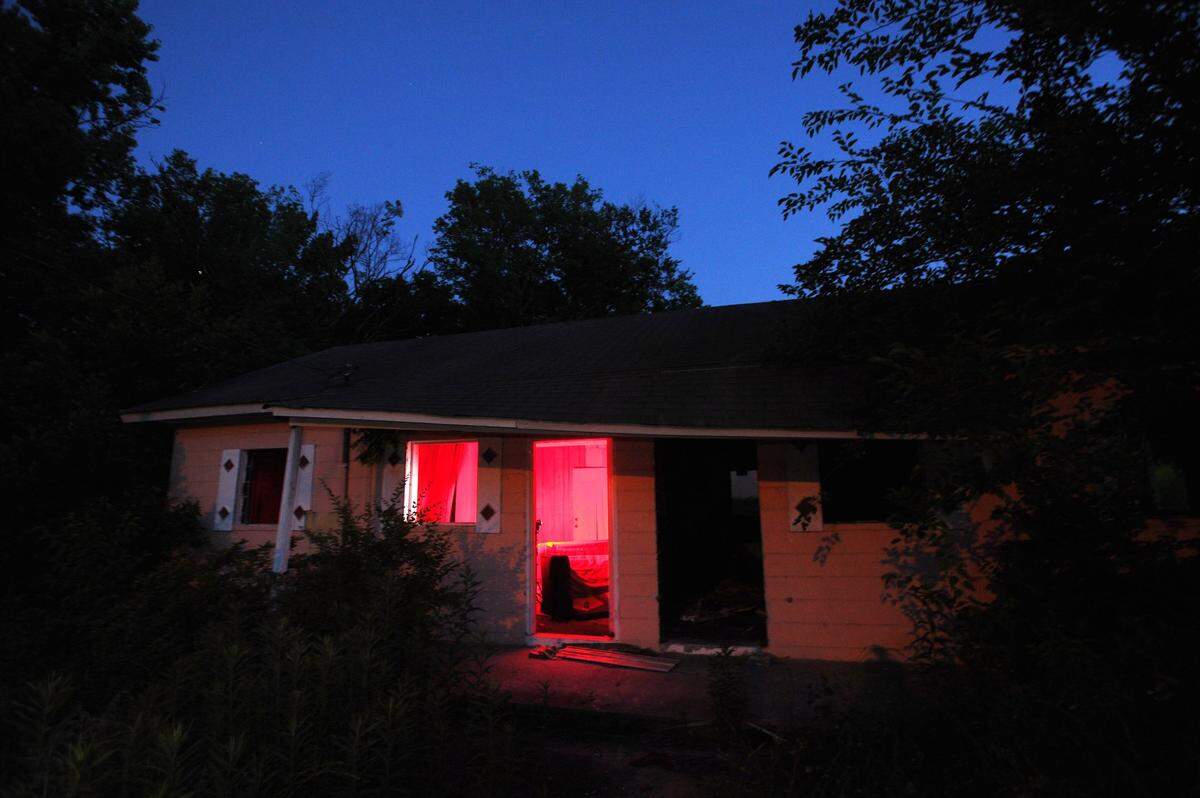
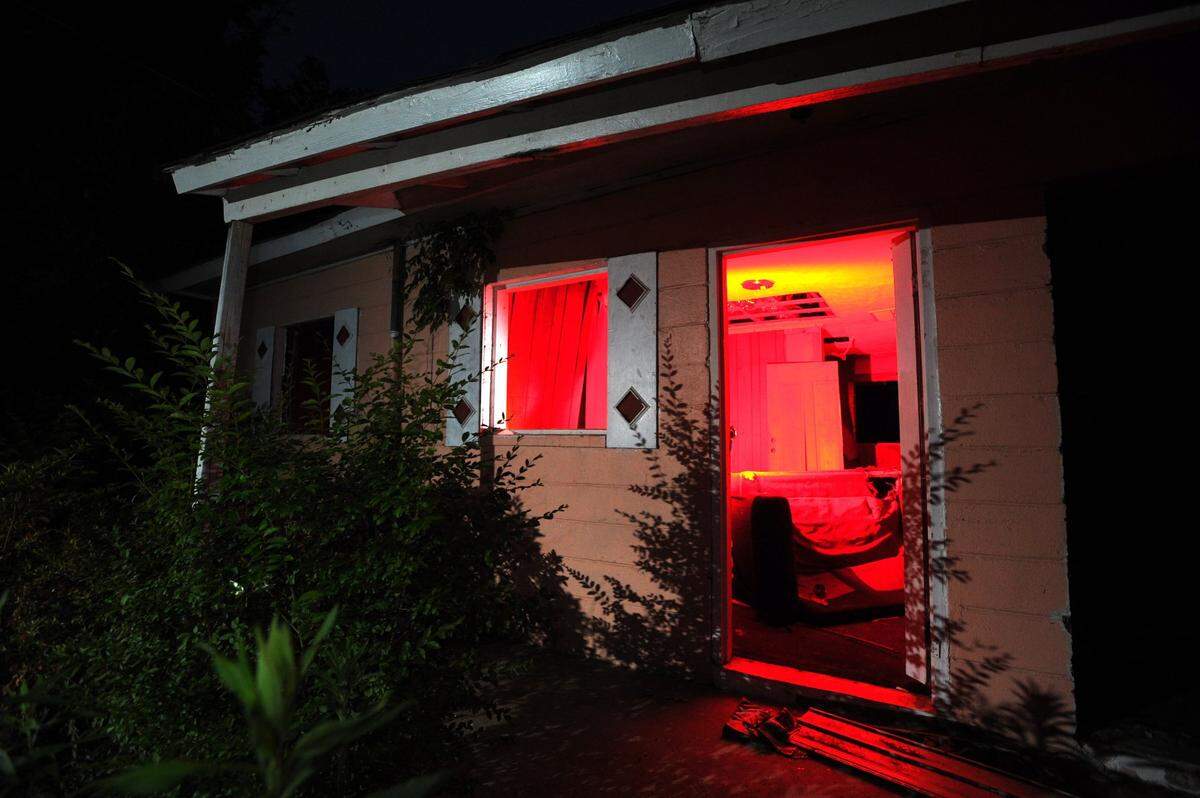
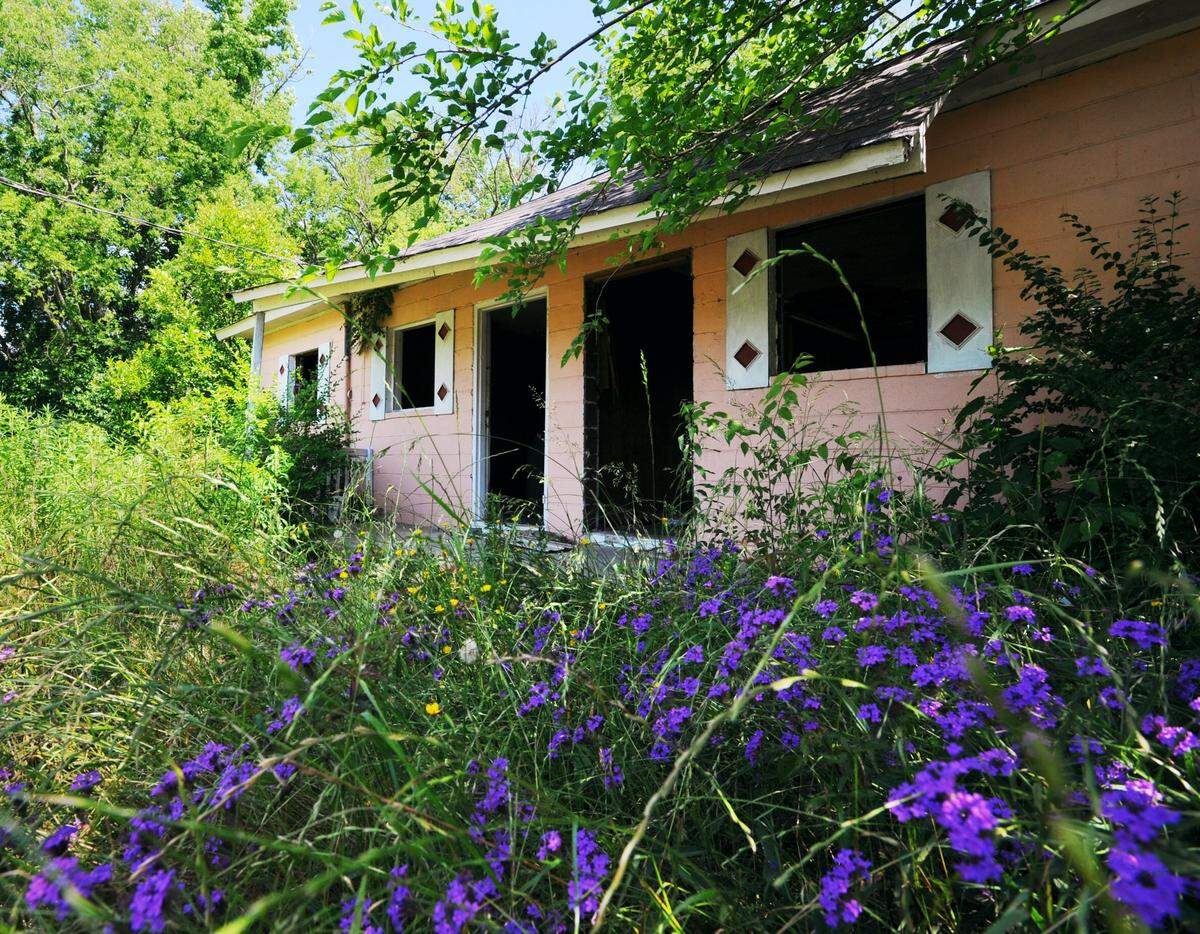
The caller pointed police to a tract of six salmon-colored, cinder-block duplexes. The dwellings sit east of Pio Nono Avenue on Moore Street, behind the old Hamilton Elementary School.
Moore Street dead-ends at a fence overlooking the southbound lanes of I-75, by an on-ramp that swings down from Mercer University Drive. The street and those around it are an unseen wasteland, tucked away, if only barely, from some of the city’s main drags.
The place was an investigator’s nightmare, a mishmash of transients and locals who didn’t always make one another’s formal acquaintance. It was the kind of haunt, not unlike many tattered side pockets of society, where an alias or two might keep you in the shadows.
Many houses there have since been condemned, but the area was well on its way to shattered in late 2007.
‘I never give up’
On the December day in 2007 when detective Jimmy Barbee wheeled into the duplexes, there was a man out back warming his hands over a fire barrel.
Barbee, 64, a Vietnam veteran and homegrown Macon cop, had been working murders since the 1970s. As a boy, he lived close to Tattnall Square Park. He and his buddies rode bicycles in the red-clay gullies not far from the field where the skeleton was found.
As a detective in the 1980s and 1990s, Barbee was such a fixture on the dead-body beat that on the streets he was known to some as “Homicide.”
He may well have investigated more of Macon’s violent deaths than anyone. He has a storyteller’s touch. Around here, folks might say he’s colorful.
As cheery a ring as his four-syllable name has — Jimmy Barbee — his wits run far deeper.
Asked why he had taken up pursuit of some of the city’s coldest cases, he joked, “Because I don’t play golf.”
Then he will add, “Because it’s the right thing to do. Because it’s all I’ve ever done. ... I never give up.”
At the duplexes that December day, Barbee went over to the fellow at the fire barrel.
Barbee told the man how the police had gotten a call saying the dead man in the field across Mercer University Drive might have been killed in one of the nearby apartments.
The guy at the fire barrel didn’t seem surprised.
“Everything that caller told you,” the man said, “was the truth.”
“Whoa,” Barbee thought. “Do what?”
Until then, detectives had no idea where the victim might have been slain.
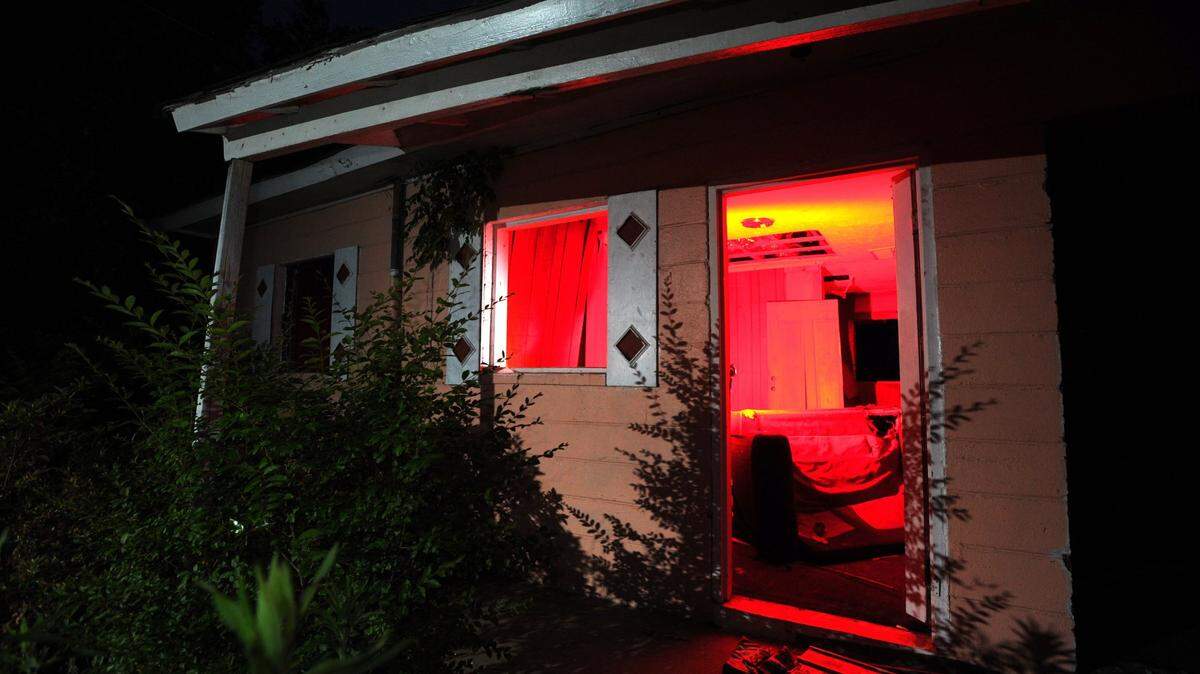
“Happened in this apartment right over here,” the man said, motioning to a vacant duplex in front of his, one with a Tweety Bird sticker on a rear door. “I heard the guy screaming.”
The man showed Barbee where he says a patch of blood-drenched carpet had been cut out of the living-room floor and thrown in a dumpster a month or so earlier.
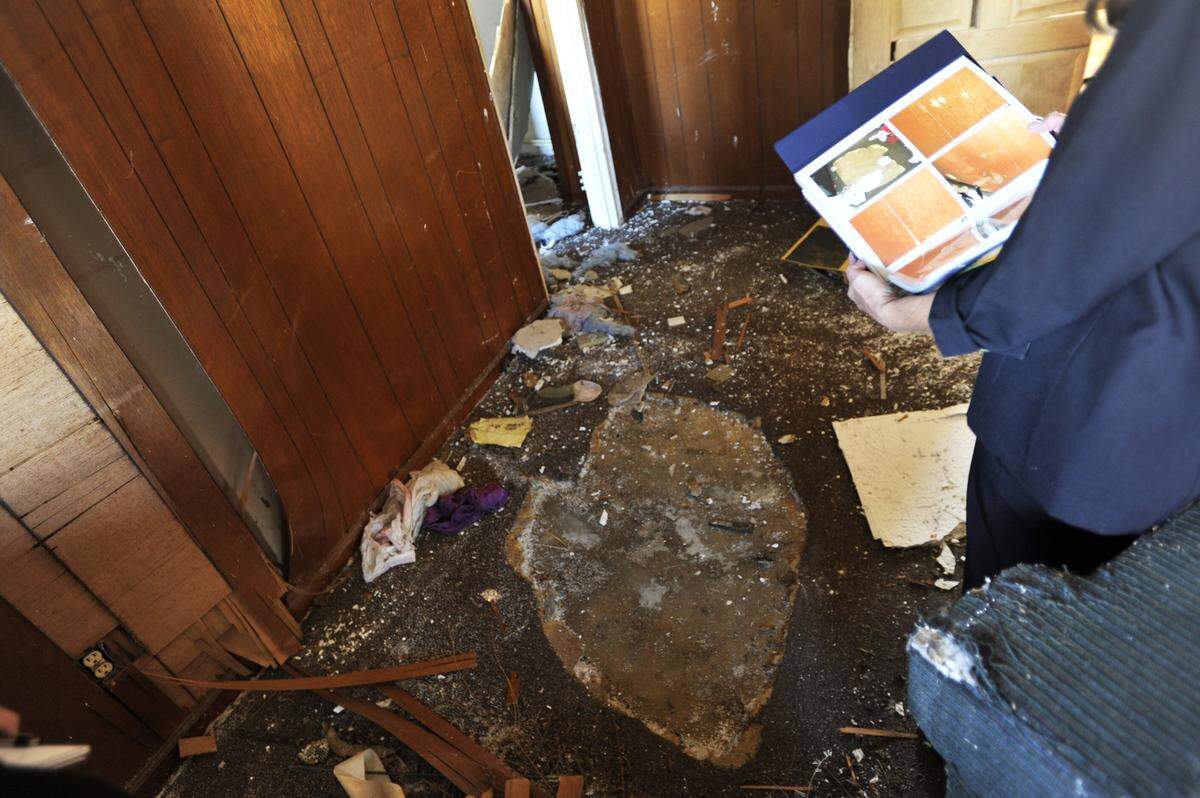
As best detectives can tell, the dead man had been stripped of his clothes and tossed in the trunk of his brown, two-decade-old Cadillac Fleetwood. The spot where his body was dumped is 440 yards from the apartments.
Whoever killed the man collected his clothes and piled them on a walkway outside the duplex. The killer then doused the clothes with gin and set them on fire.
A few days later, the dead man’s Cadillac was driven to a scrap yard and crushed.
Before long, all that was left of the dead man was his skeleton in the field.
His real name had gone up in smoke.
People around the apartments knew him only by his nickname: Shorty.
‘Jesus Saves’
Not a soul the detectives talked to knew where Shorty was from.
He had cruised into the neighborhood months earlier in his ’70s- or ’80s-model barge of a Cadillac.
It had a novelty license plate on front: “Jesus Saves.”
Shorty’s face was oval, his hair thinning and gray. He sported a hint of a mustache.
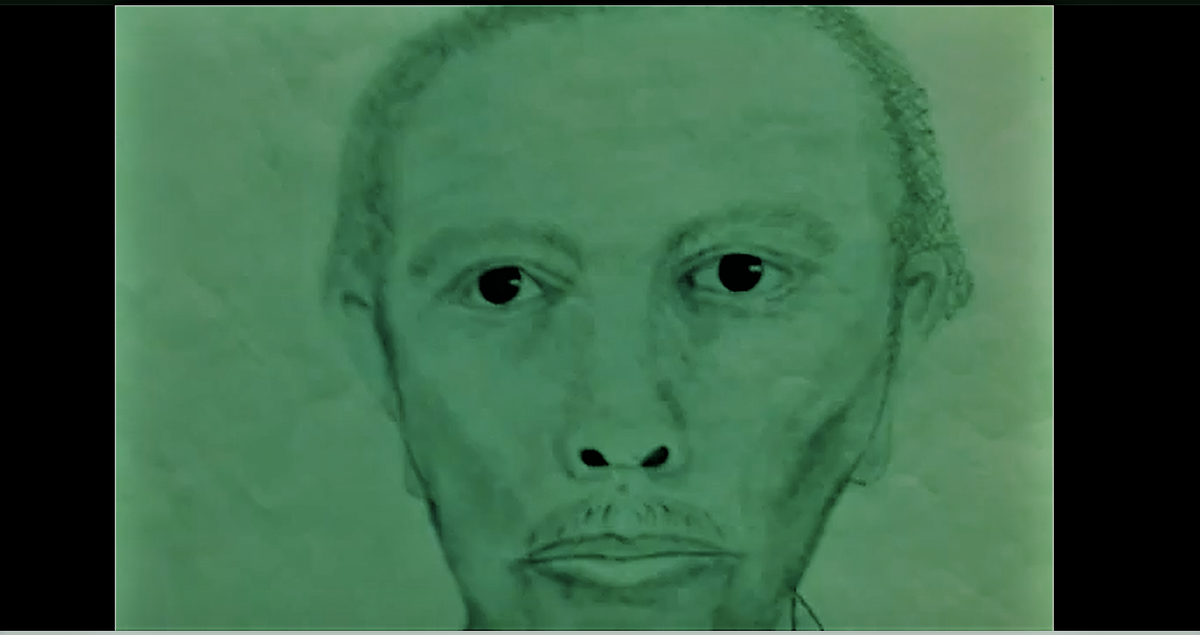
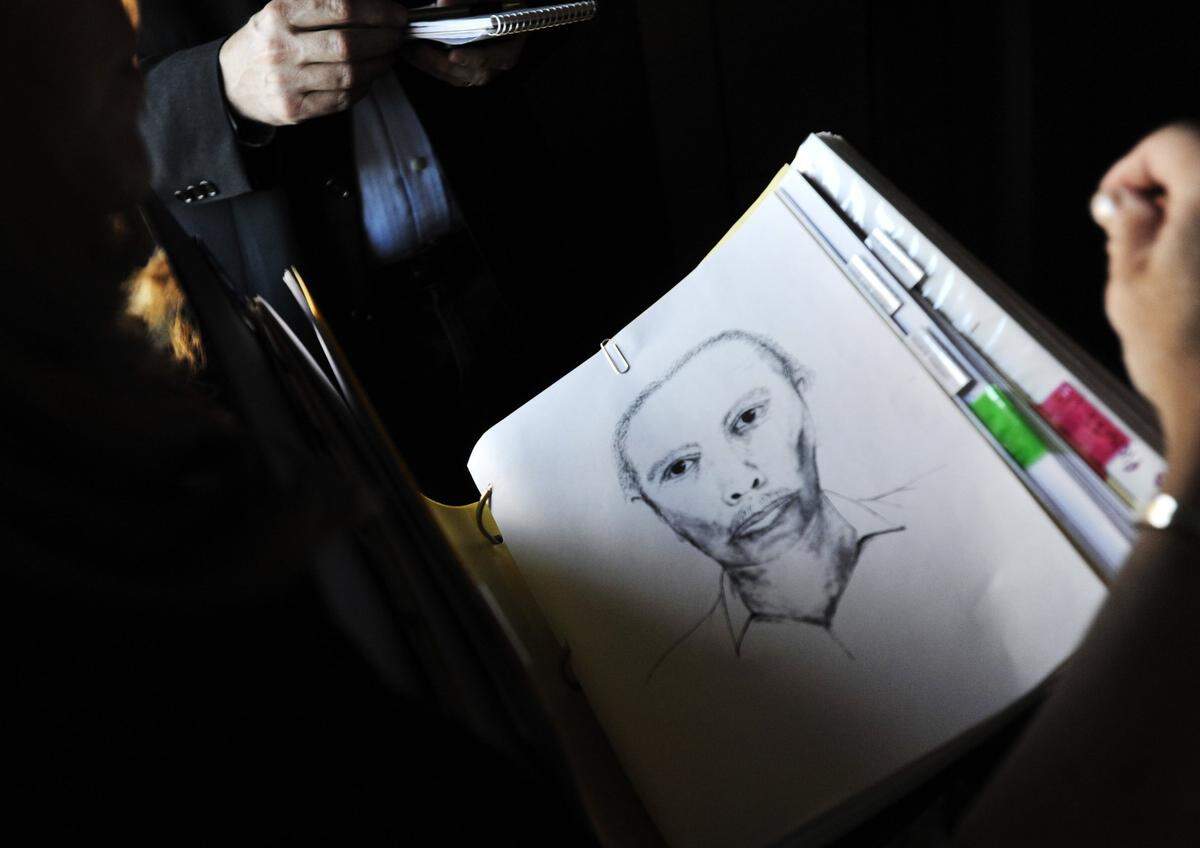
A woman who lived in an apartment near where he parked his car remembered him well enough to describe him to a police sketch artist.
The woman later said the artist got Shorty’s face about right.
She said Shorty’s cheeks weren’t as hollow as they are in the drawing that authorities circulated.
“His face structure was, like, fatter,” the woman told The Telegraph, adding that Shorty was probably in his mid-50s or early 60s.
The woman said Shorty once mentioned that he was from down around Eastman, Dodge County. Or was it Dublin? She couldn’t say for sure. He may have worked in heating and air. Her best recollection of him was that “he was just short,” that he tended to wear jeans, brown boots and long-sleeve shirts.
The woman said he was clean, well-dressed, most likely had a family and might have lived in another city.
Police, meanwhile, struggled to track down Shorty’s real name.
Then another clue surfaced inside the Moore Street duplex where Shorty hung out: blood.
There was a fat drop of it on a newspaper.
The nickel-size drop was dead-center at the top of the Life & Style section of The Telegraph, just above the ampersand.
The date on the newspaper: Sept. 25, 2007.
If police didn’t know who the dead man was, it appeared they had a good idea when he had been killed and, quite possibly, where.
The drop of blood, however, did not match skeleton’s DNA.
It belonged to someone who in the aftermath of the killing went to jail on unrelated charges, somehow who had frequented the duplexes. So the blood drop alone wasn’t enough to link the person to Shorty’s death.
The hunt for ‘Chicken’
Shorty’s Cadillac outlived him by a few days.
Detectives figured that if they could dig up a record of who owned the car, they would unearth Shorty’s real name.
Shorty was known to rent his car to others by the hour for pocket cash, $10 here, $20 there.
Some people were said to have ridden around town in the car after he disappeared.
After talking to some of them, the police learned that the Cadillac had been scrapped, crushed. Cars more than 20 years old didn’t require proof of ownership at crush yards, which further hampered efforts to identify Shorty.
As police hunted for the car, they had mentioned the “Jesus Saves” license plate on its front bumper.
After sifting through salvage receipts in three neighboring counties and coming up empty, Barbee, the detective, joked about the novelty license plate.
“Jesus saves,” he said, “but he don’t save receipts.”
Armed with the artist’s sketch, a best guess at what the victim might have looked like, Barbee showed it to people at the Moore Street duplexes.
“You know who this is?” Barbee asked.
“Yeah,” came the replies, “that’s Shorty.”
The picture aired on local newscasts but produced nary a tip.
Authorities in and around Dodge County struck out, too. There were no missing persons reports for anyone who fit Shorty’s profile.
Barbee scoped out anyone who might have been in Shorty’s orbit and questioned them. One he tracked down was a man nicknamed Chicken.
Word on the street was that Chicken and some other men had been in Shorty’s Cadillac after Shorty vanished. While they were riding, the car got a flat tire on Houston Avenue near Hightower Road.
“When they opened the trunk to get the spare out, there was so much blood in there the guys would not get back in the car,” the detective said.
Chicken told Barbee that he walked nearly three miles home to Unionville.
Chicken didn’t know Shorty’s real name either, but he knew some of the guys who had been tooling around in the Cadillac.
Barbee tracked those guys down and gradually built a time line and a list of Shorty’s acquaintances, one of whom Barbee saw as as a strong suspect.
But none of it panned out enough to make an arrest.
“This,” the detective said a few years before retiring, “was the first case that I’d worked in 41 years where I knew in my own mind ... where it happened, how it happened ... and didn’t know who got killed.”
While a name might not seem like much, a slain person’s identity can mean everything in a murder case. At very least, a name can be a starting point.
But a name, when no one knows it, can be as hidden as a pistol at the bottom of a lake. And a name is not some sliver of trace evidence that detectives can pluck from stray fibers. Dental records are no help when investigators have no idea whose teeth they have.
So identifying the dead is crucial. If nothing else, putting a name with a skeleton helps a prosecutor prevail upon a jury that something bad happened to someone, a person, and this is who he was.
Drawings of the dead
It is more or less an online morgue.
The GBI keeps it open on the internet, a Web page titled, simply enough, “Unidentified Remains” — drawings and clay sculptures, faces of the unknown dead.
They are not gruesome by any stretch, and yet they are difficult to look at. Their gazes and made-up smiles are haunting, cartoonish, their likenesses frozen in a wax museum of the deceased.
Shorty is not among them. At least not yet.
Even today, Shorty’s long-crushed car still might hold the key to identifying him.
Midstate automobile registration records for old Cadillacs like Shorty’s could be combed. Ones that were not renewed the year after he vanished could be culled. It would take weeks of deducing, legwork, but it could bear fruit, providing that Shorty’s Caddy was registered.
Still, such a search might not lead to a murder charge. But it may at least reunite a murder victim with his name.
As of mid-2013, there were suspects in the case. Three or four of them — men who knew Shorty and who, according to a Bibb County prosecutor, may know more about his disappearance than they have let on.
But, the prosecutor said in 2013, the case was nowhere near ready for a courtroom.
That said, people have been sent to prison for murdering the unknown. Such convictions hinge on evidence, proof that someone killed someone else. Convictions are not reliant on whether prosecutors know the dead person’s name. But it certainly helps.
“It doesn’t bother me so much that he’s, well, to be honest it doesn’t bother me that the man’s dead,” Barbee, the now-former detective, said in 2013. “That happens. That’s my line of work. It does bother me that this man is on a shelf in a crime lab in Atlanta and hasn’t been buried in five years because nobody knows who he is.”
Shorty’s death is proof that even in an era of facial-recognition software and DNA databases, you can still die a John Doe’s death. You can be lost and found at the same time.
This story was originally published April 22, 2021 at 11:59 AM.