
Ex-Macon millionaire and convicted wife killer turns 80 soon. His reputation lingers

Editor’s note: For most of the 1970s and early ’80s while he lived in Macon, James Vincent Sullivan seemed to have it all: a thriving business, an extravagant lifestyle. But after after moving to south Florida and then to Atlanta with his second wife, Lita, their marriage fell apart. In early 1987, after Lita filed for divorce, she was murdered by a gunman disguised as a flower deliveryman when she answered the door at her Buckhead condominium. For decades after, Sullivan was suspected of arranging the killing. In March 2006, he was convicted of having her murdered. Sullivan, who turns 80 in April, is serving life without parole at a Georgia prison near Oglethorpe. On the eve of his trial in Fulton County 15 years ago, The Telegraph interviewed people who had known Sullivan during his Macon years. Their recollections were published in a Jan. 22, 2006, front-page version of this story.
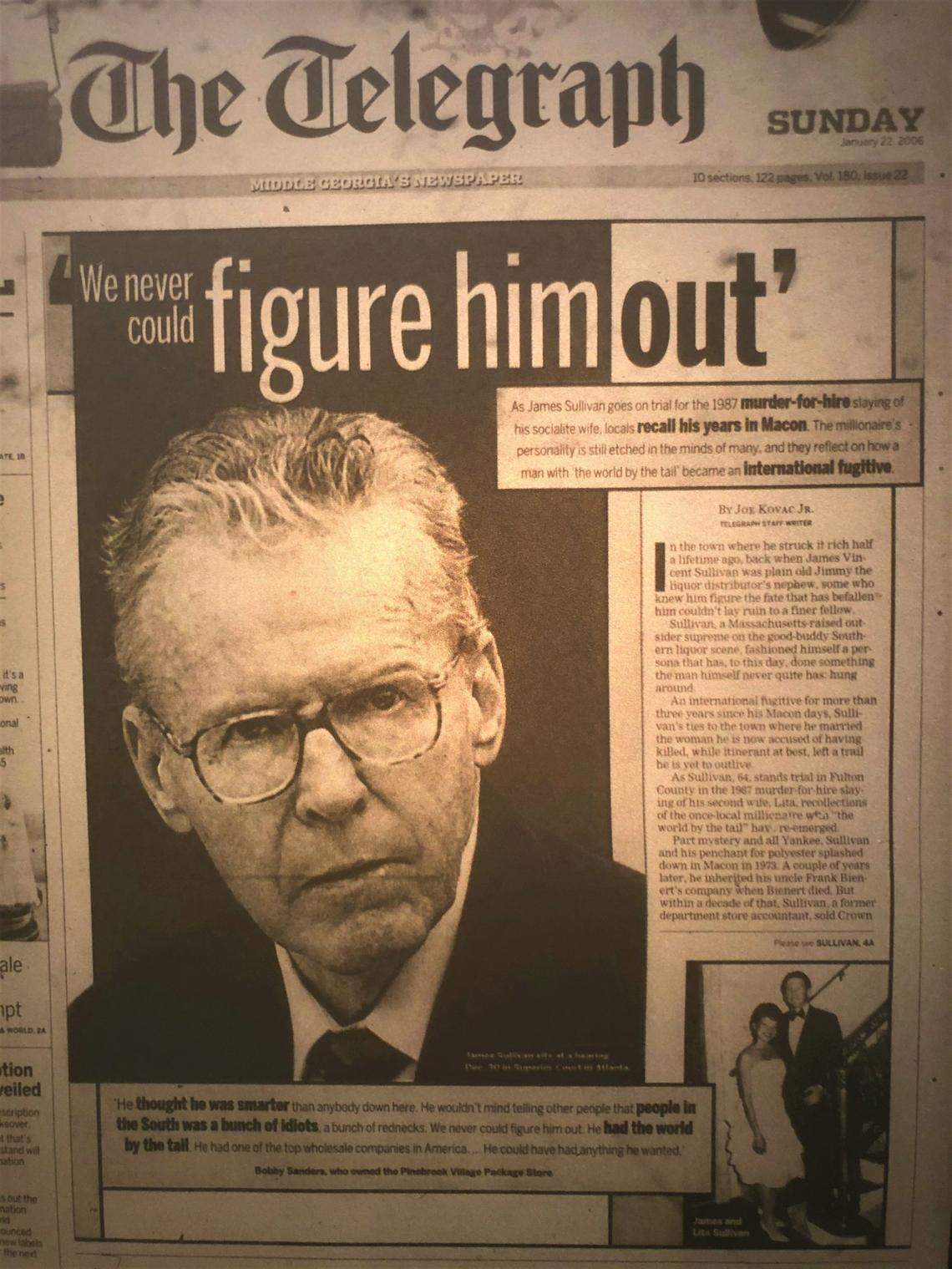
In the town where he struck it rich half a lifetime ago, back when James Vincent Sullivan was plain old Jimmy the liquor distributor’s nephew, some who knew him figure the fate that befell him could not have laid ruin to a finer fellow.
Sullivan, a Massachusetts-raised outsider supreme, had risen to prominence on the good-ol’-boy Southern liquor scene. He fashioned himself a reputation that has to this day done something the vagabond man himself never quite could: hang around.
An international fugitive for more than three years in the wake of his Macon days, Sullivan’s ties to this town, the place where he married the woman he was later accused of having killed, left a trail he has yet to outlive.
As Sullivan, then 64, prepared to stand trial in Fulton County in early 2006 for the 1987 murder-for-hire slaying of his second wife, Lita, recollections of the once-local millionaire with “the world by the tail” re-emerged.
Part mystery and all Yankee, Sullivan and his penchant for polyester had splashed down in Macon in 1973.
A couple of years later, he inherited his uncle Frank Bienert’s liquor distributorship when Bienert died.
But within a decade, Sullivan, a former department store accountant, sold Crown Beverage Inc., which carried the bankable Seagram’s line, for a reported $5 million.
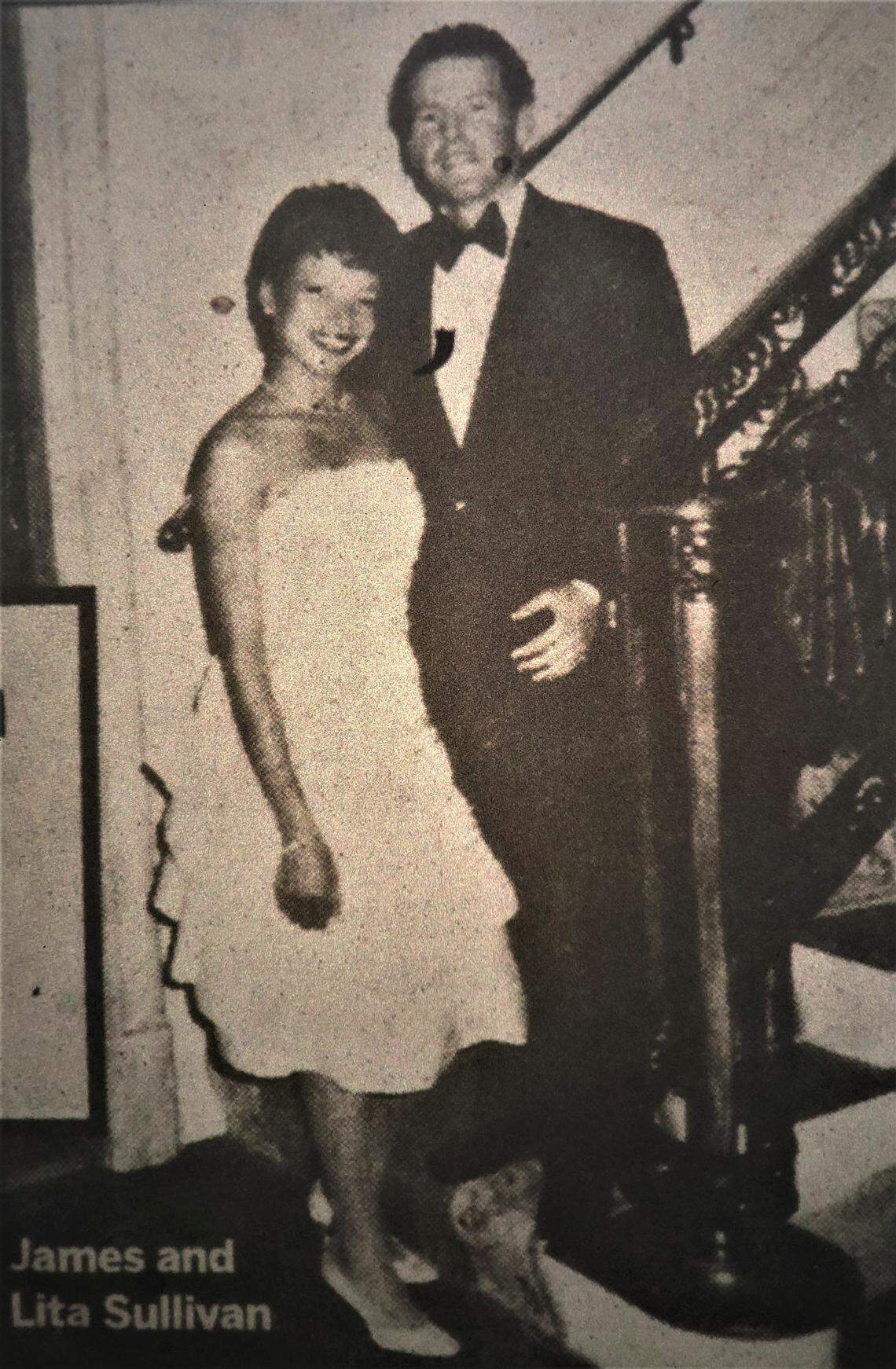
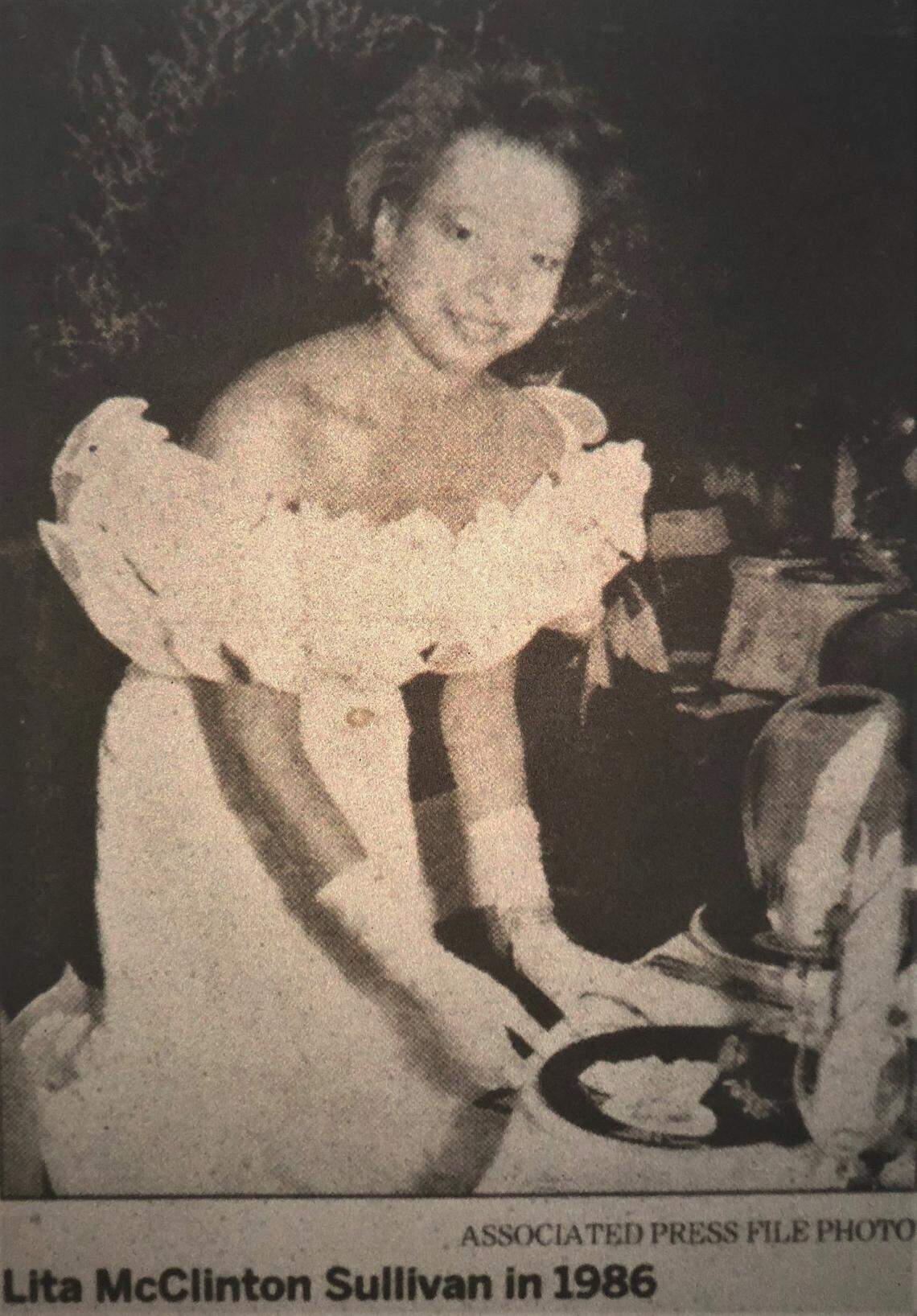
After Sullivan’s first wife, Catherine, divorced him in 1976, he married Lita McClinton, a woman he met while shopping at an Atlanta boutique where she worked.
Upon selling Crown in 1983, James and Lita left Macon and moved to Florida and lived in a Palm Beach mansion. By some accounts, Lita didn’t like the life there and in the mid-’80s moved away to a townhouse the couple owned in Atlanta.
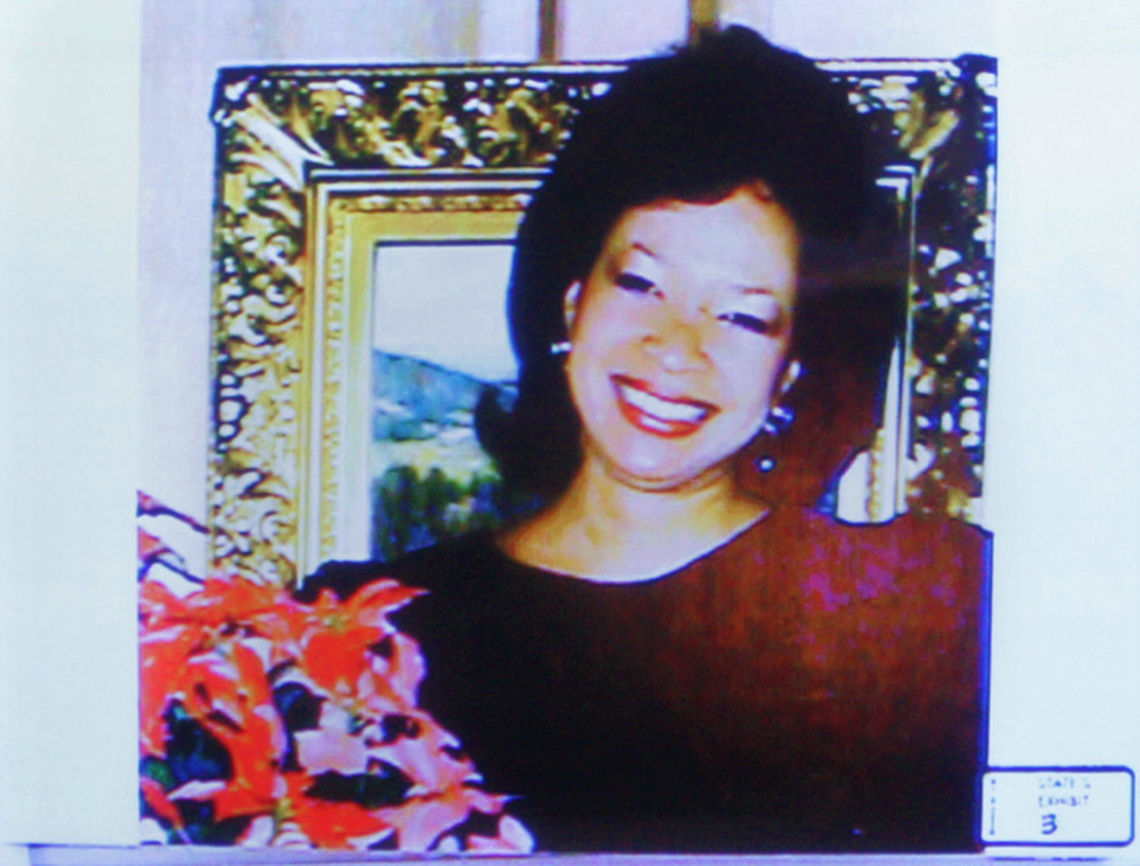
The Sullivans were in the midst of a divorce in early 1987 when Lita was shot and killed at her front door by someone who had posed as a flower deliveryman.
Sullivan, in the two decades following Lita’s death — in Macon at least — became a character who locals could not forget, something of a rich man’s Anjette Lyles. They ate in her restaurant; they drank his gin.
‘Nobody liked him’
Gerald Neal, who worked for Sullivan at Crown Beverage for about three months in the mid-1970s, remembered being hired to help Sullivan smooth things over with local retailers.
Neal, when interviewed for this article in 2006, said liquor store owners had grown weary of Sullivan’s practice of “selling off the dock” to friends and others, thereby draining the potential sales of the very vendors he was licensed to supply.
Neal and some liquor store owners at the time say it got so bad that stores began taking Seagram’s products off their shelves, selling them only when customers requested them.
Neal said Sullivan “asked me what I thought he ought to do and I told him, I said, ‘You need to rent the Macon Auditorium down there and invite everybody you do business with and tell them what a no-good, rotten SOB you’ve been.’ ... He said he would never do that, that it was his business and he could do what he wanted to.
“Nobody liked him,” Neal went on. “I don’t know of anybody in Macon, Georgia, ... anybody that came in contact with him that cared for him. There’s just no way to describe the man.”
Neal recalled Sullivan as a “good bull shooter” who sported out-of-style polyester suits and drove fast.
“If you got around him talking, you would think that he was the greatest thing that ever was about being smart about things,” Neal recalled. “His business could have been at least 50 percent better than what it was had he acted like a human being. But he chose to go the other way.”
‘Didn’t like his air’
Sullivan’s notoriety as a Boston boy turned multimillionaire turned “America’s Most Wanted” murder suspect has long since hit home in his native Massachusetts.
In December 2005, a newspaper column in Worcester’s Sunday Telegram referred to Sullivan as “persona non grata” at his alma mater, Holy Cross, noting that a former college president who, five weeks after Lita Sullivan’s 1987 death, “attended a party in Florida hosted by Mr. Sullivan for Holy Cross alumni ... was unavailable for comment — permanently.”
In 1998, a time when, according to the authorities, Sullivan had fled the country for Central America and, later, to Thailand to avoid prosecution in Lita’s slaying, the Boston Globe ran a profile of Sullivan.

The newspaper noted how, a few years earlier, “when Sullivan’s father died ... the millionaire son spoke at the funeral at Sacred Heart Church in Quincy. The sight unnerved a close family friend. ‘Imagine that,’ the friend said. ‘Satan himself on the altar.’‘‘
In his prime, Sullivan had reddish, sandy-blond hair and bore some resemblance to singer Jerry Lee Lewis. He was 5 foot 10, but his long face and low-slung jawline lent him the distinguished look of a man 3 or 4 inches taller.
A 1992 article in Atlanta Magazine mentioned his “nasal, clipped” Boston accent and quoted Lita Sullivan’s mother, JoAnn McClinton, recalling the man who’d courted her daughter: “We just didn’t like his air. ... He had horn-rimmed glasses [and wore] either green or red polyester knit pants.”
By some accounts, Lita, who’d once had fashion-design aspirations, dressed up her man, perhaps helping him move in social scenes in Macon, Atlanta and, later, Palm Beach.
Edwina Barnes of Macon remembered her former neighbor in this city’s upscale Shirley Hills neighborhood as “a nice-looking man,” adding that “he just could not have been nicer when I did fund-raisers. He always supplied the liquor and everything. He was always very, very nice to us. Always a very pleasant person.”
Barnes also knew of Sullivan from his days in Palm Beach, where Barnes also had a home.
“He was always nice to invite us to the parties,” Barnes recalled in 2006, “and you just never, ever saw this other side that we’re assuming that he has. But he could not have been nicer to us.”
That said, Barnes spoke of how the brusque Sullivan “certainly did have kind of a stronger personality than most people in the South.”
‘The world by the tail’
Bobby Sanders, who owned the Pinebrook Village Package Store on Forsyth Road and had dealings with Sullivan on a weekly basis for more than two years, figured Sullivan “could have gotten along, he just didn’t, I guess, want to.”
“He alienated everybody and he was such a miser,” Sanders said in 2006, telling of a time when he said Sullivan sold him bottles of “bad wine” that Sullivan had been reimbursed for and was “supposed to take to the dump.”
On its website, the television show “America’s Most Wanted” once described Sullivan as someone who is “frugal but likes to entertain the lifestyle of a millionaire,” a man who “police say ... may steal condiments.”
“He thought he was smarter than anybody down here,” Sanders said. “He wouldn’t mind telling other people that people in the South was a bunch of idiots, a bunch of rednecks. We never could figure him out. He had the world by the tail. He had one of the top wholesale companies in America. ... He could have had anything he wanted.”
Sanders added, “I actually told him this when he came to my store, ‘Let me tell you one damn thing, you go right out behind my store here at the [Idle Hour] country club and you sell those folks liquor and they could give a s--- about you because you are not a Macon blue blood. You will never be a Macon blue blood. They are nice, but you’ll never be accepted in the Macon blue-blood crowd.’ ‘‘
Nick Block of Macon, who owned two Thunderbird liquor stores here, recalled in 2006 that Sullivan’s so-called “off-the-dock” sales didn’t do much for Sullivan’s business reputation.
Said Block: “I had a friend and his daughter was getting ready to get married, and they called me and said, ‘Nick, you gonna give us a good price on some booze and wine?’ I said, ‘Sure.’ And my wife mentioned to me about a week before the wedding, ‘Have you gotten an order out of Mrs. XYZ?’ And I said, ‘No.’ And we go to the reception and all the wine and all the liquor there came out of Crown Beverage company, so you didn’t have to be a Phi Beta Kappa to figure what happened.”
Block remembered Sullivan as “very intelligent.”
“He took me out to lunch [at Shoney’s — “really impressed me”] one day with the idea of healing the rift between us,” Block said, “and he promised he wasn’t gonna sell anything off his dock or out the back door, and that very afternoon he sells a couple of cases of liquor to a dentist. Truth wasn’t his long suit.”
The years wore on Sullivan
With Macon three decades behind him, what pertinent truths there were to be had about Sullivan played out in an Atlanta courthouse, no doubt conjuring memories of his Macon years.
For no full picture of Sullivan would be complete without mention of the place where he rose to riches. One of his slain wife’s best friends still lived in Macon in early 2006, as did many of the people who knew James and Lita Sullivan as a couple.
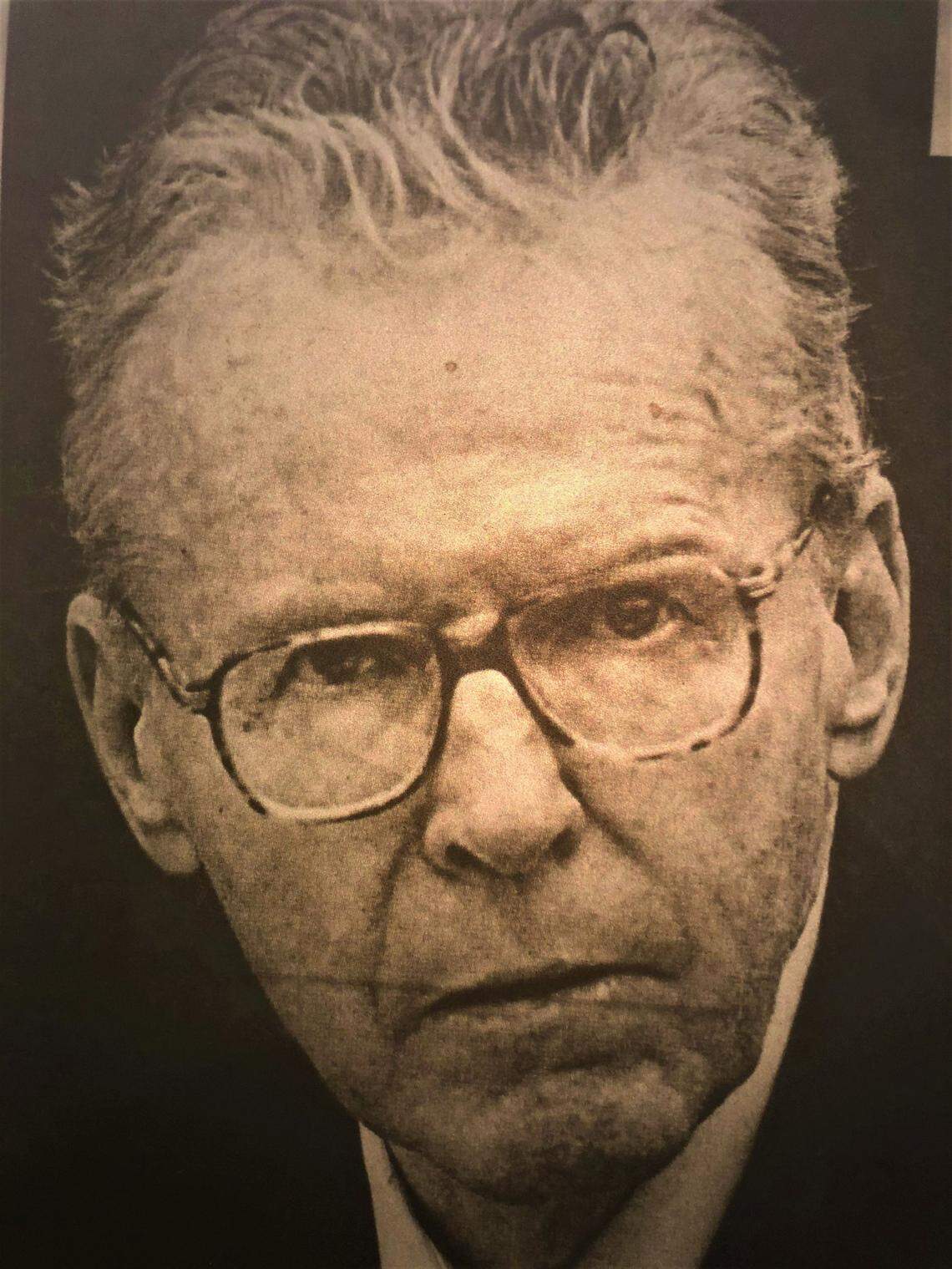
Sullivan, of course, didn’t look the same anymore. The years and his time behind bars since his arrest in Thailand in 2002 had worn on him.
.JPG "SOCIALITE SLAYING (1).JPG")
The once disheveled Northerner who skewed debonair down South had, with his sagging features, taken on the carriage of a man who had long since resigned to slouch.
The gold-buttoned navy blazer he wore in court earlier in the weeks leading up to his trial wasn’t pressed, and had it been his 150-or-so-pound frame wouldn’t have come close to filling it. There was a blankness about him that would not have been out of place at a wake.
When he stood to greet prospective jurors on the first day of proceedings at his trial, Sullivan faced his peers without expression.
He had listened again and again while a judge read the charges against him to one group of potential jurors after another. He had heard over and over how his life was on the line, that the death penalty may be in order, though in the end it was not.
At a table to his right, prosecutors also stood. They gave their names. Then one of Sullivan’s attorneys, Ed Garland, took the floor.
“First let me introduce you to James Sullivan,” Garland told would-be jurors, gesturing to his client.
“Good morning,” Sullivan said with a nod.
“Good morning,” the people replied.

The Sullivan Case: A Timeline
1973 — James Sullivan moves to Macon to manage his uncle Frank Bienert’s liquor distribution company, Crown Beverage Inc.
1975 — Bienert dies, leaving Sullivan control of the company. Two months later, Sullivan’s first wife, Catherine, files for divorce.
1976 — Four days after Christmas, Sullivan marries Lita McClinton of Atlanta. The couple soon moves into a home on Nottingham Drive in Macon’s affluent Shirley Hills neighborhood.
1983 — Sullivan sells Crown Beverage for a reported $5 million and buys and renovates a $2 million mansion in Palm Beach.
1984 — Sullivan buys a Buckhead condo, and the couple splits time between Florida and Georgia.
1985 — In August, Lita Sullivan moves into the Buckhead residence and later files for divorce.
1987 — Jan. 16, shortly after 8 a.m., a gunman believed to have been pretending to deliver pink roses to Lita Sullivan shot her when she answered her door. The Sullivans’ divorce case was still ongoing. James Sullivan was later named a suspect in Lita’s death. Sullivan remarried in September to a woman he’d reportedly been seeing for two years.
1992 — In late November after federal prosecutors contend Sullivan used long-distance calls to arrange Lita’s death, a judge ruled that they failed to make their case.
1998 — In April, acting on a tip, authorities arrest Phillip Harwood, then 49, at his North Carolina home and contend he is the gunman who shot and killed Lita Sullivan. Later the same week, a warrant for Sullivan’s arrest is issued, charging that he arranged Lita’s death. Sullivan disappears.
1999 — In February, Fox TV’s “America’s Most Wanted” airs. Authorities say Sullivan, again divorced, is out of the country, possibly living in Central America.
2002 — Sullivan is arrested at a beachside condo in Thailand.
2004 — Sullivan, after prosecutors here announce they will seek the death penalty against him, is extradited to Georgia.
2005 — The buried remains of Sullivan’s uncle, Frank Bienert, are exhumed in his home state of Massachusetts after authorities suspect that Bienert, who died and left his fortune to Sullivan, may have been poisoned. An autopsy shows Bienert died of natural causes.
2006 — In March, a Fulton county jury convicted Sullivan of murder and he was sentenced to life without parole.
This story was originally published March 17, 2021 at 11:46 AM.