
Macon is known for mayhem and murder. But is that reputation fair?
On a February morning 82 years ago, a headline on the front page of The Telegraph blared: “Sweeping Criminal And Social Reform Is Urged For Macon.”
The year was 1937. Locals were struggling for answers to the city’s crime woes. A Sunday meeting convened in the auditorium at First Baptist Church in downtown Macon, a city still in the grips of the Depression. Killings here had been stirring concern for more than a decade. In 1928, when 22 people were slain, the per capita homicide toll here ranked sixth highest in the country behind the likes of Memphis and Atlanta.
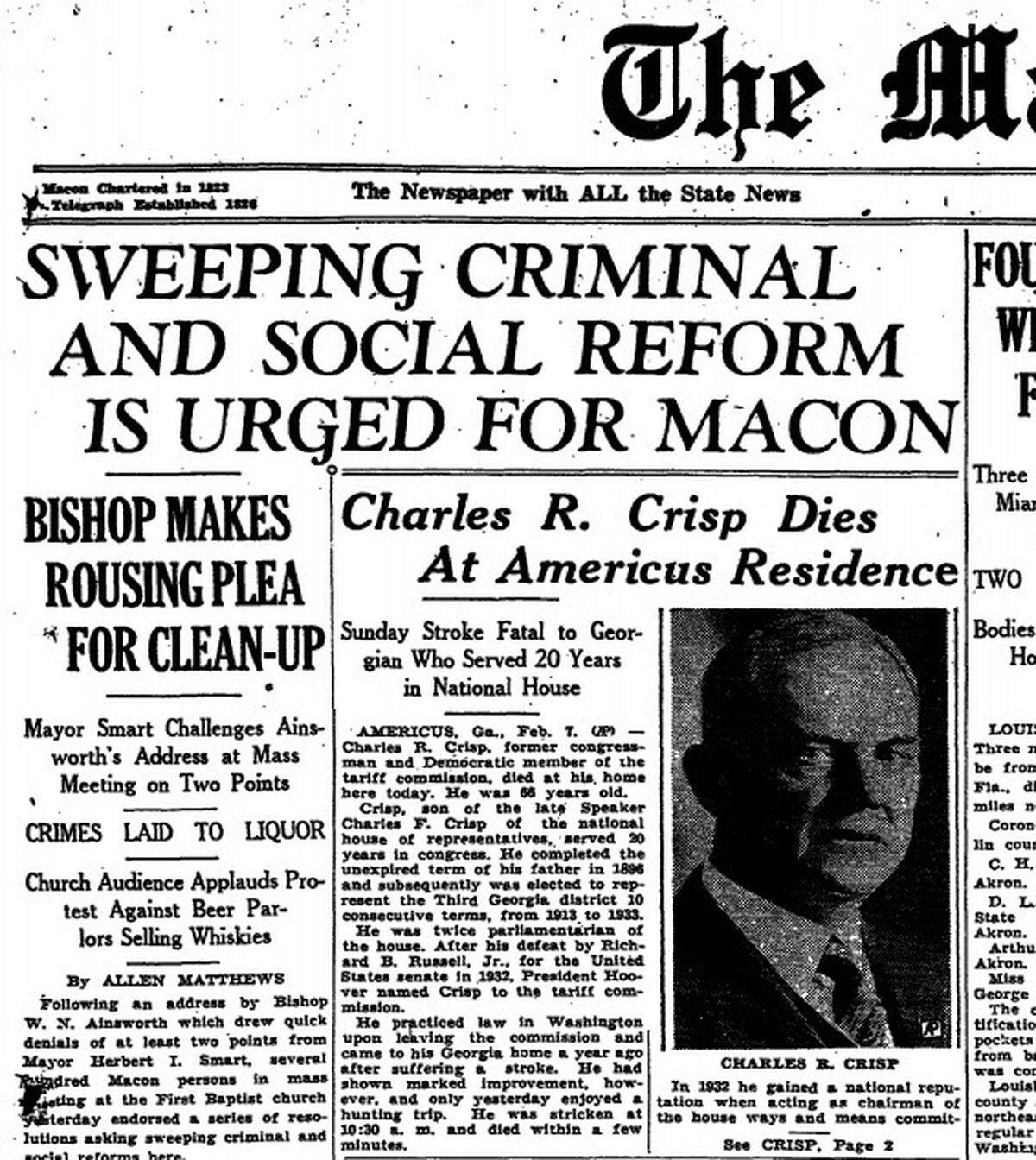
The city’s homicide rate in 1934, according to a widely distributed survey, was deemed the worst in America: 81.2 homicides per 100,000 people. In 1935, when Macon had roughly half as many residents as it does today, the city dropped to second place nationally when statistics were posted the following year. Still there had been 31 slayings.
At that First Baptist Church meeting in early 1937, Bishop W.N. Ainsworth, leader of the South Georgia Methodist Conference, said he believed Macon’s murder toll was a direct result of drinking “alcoholic liquors.”
“Macon,” Ainsworth said, “had the infamous distinction a year ago of standing at the top of the list of American cities in crime of this sort. It will be noted that this shameful pre-eminence was reached the next year after beer saloons were licensed in the city.”
Whatever ills were responsible, Macon has, at least regionally, long had a reputation as a crime-troubled town.
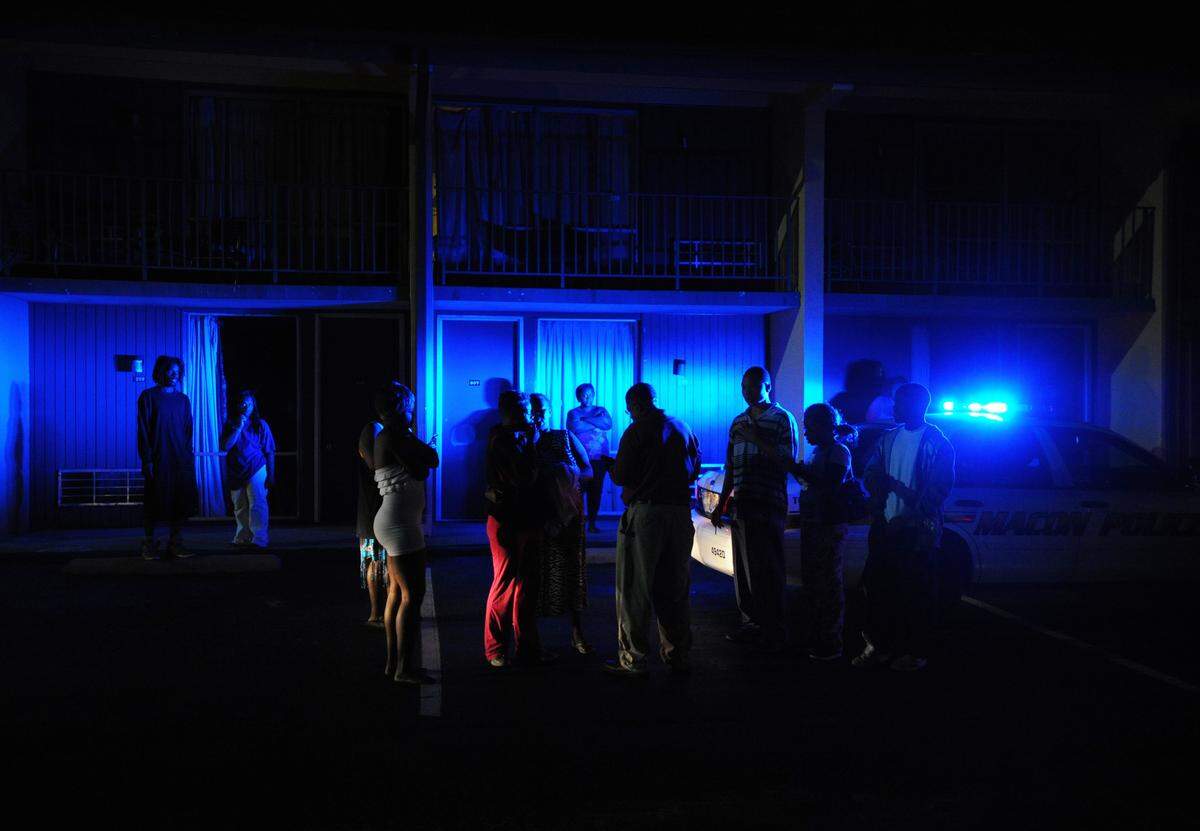
Seven decades later, on the heels of last year’s near-record homicide toll (there were 41 slayings, two shy of the 43 killings countywide in 1992), public awareness of violent crime here has perhaps never been higher. Surveys consistently rank crime as a leading concern.
Asked recently about the modern-day perception of Macon as it relates to crime, former Mayor C. Jack Ellis told a Telegraph reporter that people “think it’s a very violent place and it’s a place that’s out of control.”
He added: “I’m beginning to believe it myself — even though it may just be a few of the people who are violent.”
Ellis’ brother, Arthur Ellis, was shot in the abdomen and killed in January 1993 during an argument at an all-night poker game on Eveline Avenue. The man who shot him pleaded guilty to manslaughter. The man’s lawyer said the dispute arose when the man caught Ellis cheating at cards.
Today, as the former mayor noted, it is not uncommon to see online commenters on Facebook refer to the city as “MaconGa,” a reference combining “Macon” and Georgia’s abbreviation, “Ga.,” to suggest it is some Third World war zone. Other commenters have taken to calling the city “Little Chicago.”
Said Ellis: “We’ve become the butt of a joke: Don’t go to Macon unless you want to get murdered or shot or carjacked. Of course, it’s not that bad. … It’s a nice place to live. But I’m left scratching my head sometimes, saying, ‘How are we going to fix this?’ … It will affect all of us if people won’t want to move here. They’ll go to Houston County, to Jones County, and they’ll continue to talk bad about us.”
As the crime and the killings keep coming, he said, with them come “the constant PR job that we have to do.”
Macon businessman Jim Daws, whose Sierra Development firm is behind a series of lofts that have changed the face of the city’s apartment-complex landscape, recently spoke to a reporter about the perception of crime here when it comes to people who don’t live here.
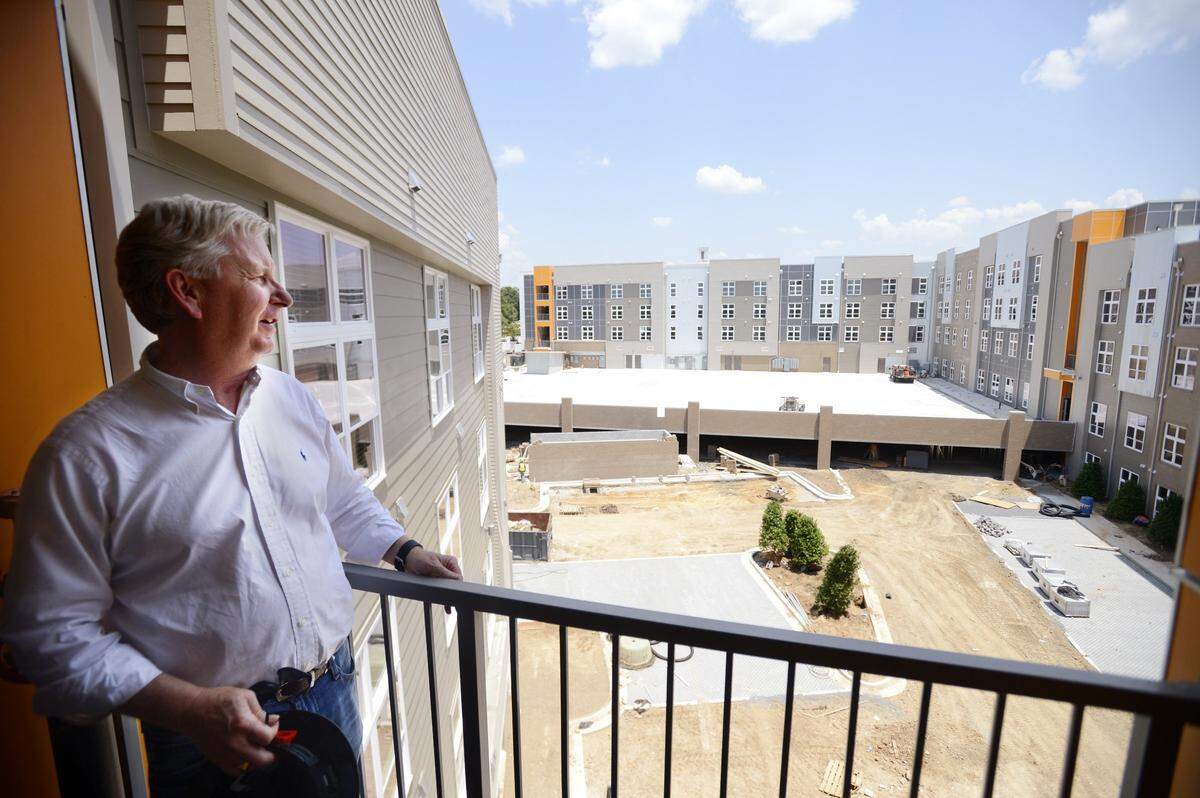
In dealings with financiers who are frequently from out of state or in Atlanta, Daws said it is Macon’s “dynamic growth,” not its crime, that he hears about.
“They’ll say they hardly recognize the place,” Daws said, adding that there’s “nothing really from that negative perspective.”
Josh Rogers, president and CEO of NewTown Macon, said the perception of the city when it comes to crime has generated “no specific feedback from projects or new businesses one way or the other.”
As far as crime and Macon’s reputation as a haven for it, Rogers said, “I don’t think that reputation is fair. I don’t think we deserve a reputation as high-crime or that that reputation inhibits new economic development.”
Longtime state Sen. David Lucas said Macon isn’t necessarily viewed by outsiders as a murder capital.
“You hate to say it, but the crime is where it is,” Lucas said, adding that more people around the state “talk about the city of Macon being broke — not the crime problem.”
Crime rates and news of killings can’t be discounted as possible turnoffs to prospective companies, said Stephen Adams, executive director of the Macon-Bibb County Industrial Authority. The Authority, at least in part, is charged with attracting new jobs and promoting the city.
“We have to be realistic about the challenges,”Adams said. “It’s something that as we’re working with new prospects, they get down to very deep detail with our community and sometimes they may actually know our communities better than we do.”
The city’s crime reputation, he admits, is something newcomers have on occasion heard about before arriving, but “what we have found when they get here is, they’ll say, ‘This is not what I was expecting. This is great.’ … They are pleasantly surprised.”
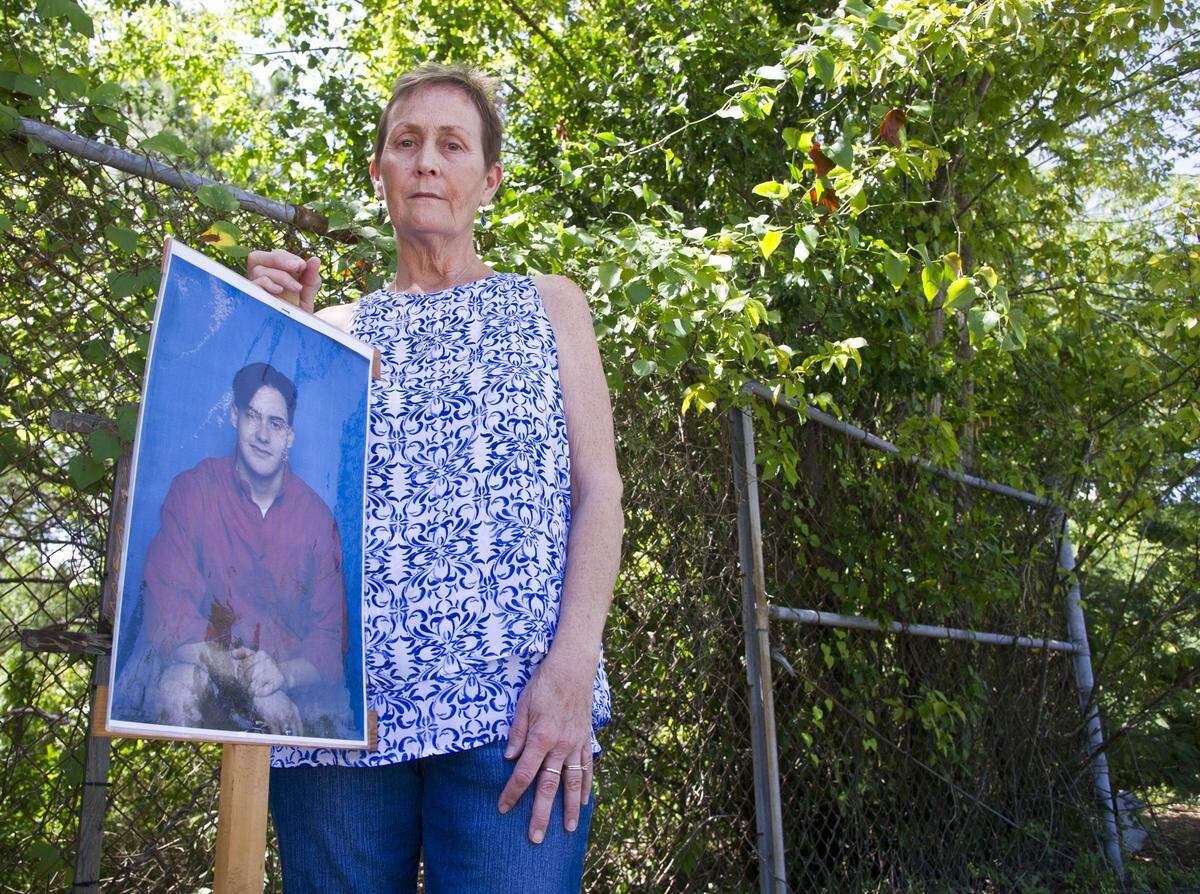
Dee Dee Wrigley, who for the most part grew up in neighboring Houston County, has lived in southern Bibb County for more than a decade and a half. In January 1995, her 19-year-old son, J.J. Andrews, was shot and killed along Montpelier Avenue at the northern edge of the Mercer University campus. His slaying has remained a mystery. His killer has never been caught.
Wrigley told a reporter for this article that sometimes when she talks to old friends, they’ll ask where she lives.
“Macon,” she’ll say.
Invariably they’ll reply, “Ewww. … That’s a bad place.”
Wrigley said, “Anybody you run into just has a bad vibe about it. … Over the holidays, I posted some things online showing the (Christmas) lights and stuff downtown, and they’re like, ‘Is it safe to go down there? … Aren’t you afraid to go down there at night?’ I’m like, ‘Well, there’s areas you’re not gonna go in, of course,’ but I felt perfectly safe with the Christmas lights.”
On weekends, her thoughts more often than not turn to the bad that might happen. Maybe it’s because her son was killed in the wee hours of a Saturday.
“You wait till Friday night,” she said, “and then it starts, it seems like, ‘OK, it’s Friday night. How many are gonna get killed tonight?’ ”
Dan Patel has owned a Fastee Food convenience store on Macon’s west side for about 15 years. The corner gas mart sits across Log Cabin Drive from the new Filmore Thomas Park.
Patel, who came to the U.S. from India around the turn of the century, thinks people perceive crime here as on the rise.
But he more than perceives it. He has twice been robbed at gunpoint. He worries about bandits sneaking up when he is closing at night and also when he opens the store in the morning.
Patel has tried to sell the store, but says that because it is in what potential buyers consider a high-crime neighborhood, he has found no takers. So every morning, fearful or not, he opens for business.
“There is,” he said, speaking in his native Gujarati, “no other choice.”
Bibb County Superior Court Judge Howard Z. Simms presides over much of the violent crime that makes its way into the justice system here. Simms, a former prosecutor and district attorney, grew up in Macon and knows intimately its all-too-frequent bloodshed.
In a recent interview, the judge said, “I’ve not had anybody who’s involved with locating a business here tell me, ‘We’re not coming there because of (violence).’ But that’s just the general perception of the people in the general area, that (Macon) has a violent crime problem. More so than any of the communities around it.”
Simms recalled that around Halloween, someone on Facebook posted a picture of a haunted house and the price of admission with a caption referring to a couple of the main thoroughfares here: “I’ll walk down Pio Nono and Eisenhower and die for free.”
The judge is locally renowned for his pull-no-punches scoldings of wrongdoers. Four years ago as he sent a woman to prison in a rape case that involved the molestation of two girls — one 6, the other 8 — Simms told the woman, “I don’t know that I have ever said a curse word from this bench, but you may be the vilest bitch that I have ever met.”
At a sentencing last year, Simms told a pair of gang members convicted of murder, “This city is bleeding to death, and it’s bleeding to death because of people like the two of you.”
Simms says the widely held view of Macon as a land of rampant lawbreakers is sometimes overblown.
“I’ve had people from adjacent counties, people who are otherwise reasonable, intelligent people who I’ve known for a long time, who will tell me — and they’re absolutely sincere — that there are only certain places in Macon that they’ll come,” he said.
“They have the perception that it’s just covered up with violent crime. The perception is exaggerated, obviously, but it is an issue. … It’s not as bad as people think that it is, but it’s a problem. … They’re afraid that if they pull off the interstate in Macon, all of a sudden they’ve got a target on their back. Well that’s not true. But that’s the reputation.”
Sociology and criminology professor Scott Bonn wrote in Time magazine in January 2016, referring to people’s fascination with high-profile crime stories: “The public is drawn to true crime because it triggers the most basic and powerful emotion in all of us — fear.”
The same may hold for the long-unfolding saga of Macon as a place to be wary of.
“You have one bad act and from it grows a mythology,” Judge Simms said. “When you have several bad acts, the mythology gets to be more and more powerful until you’ve got a mythologized version of the city. It’s not as bad as the mythology makes it out to be. But Macon has an issue and has to deal with it somehow, some way. But it’s not the old West all the time.”
This story was originally published February 21, 2019 at 7:00 AM.