
Death of a gangster: Trial offers glimpse of life and death on crime-shaken streets
Early on a gray April afternoon last year, a 40-year-old man named Calvin “Cut” Stapleton darted from behind a trash dumpster and shot rival gang leader Andre “Gangster Dre” Taylor in the back of the head.
Taylor, who died the next day, had been a top dog in the 500-strong Westside Gangster Crips, authorities said.
According to cops who knew him, Taylor, at age 39, was so at home — you might even say revered — on his turf below Montpelier Avenue near the old Colonial bakery, that he was rarely known to carry a gun. Others close to him, who had guns, had his back.
Then again, guns and convicted felons do not mix. Get caught with a pistol and back to jail you go. Since 1994 when Taylor was in his mid-teens, he had been arrested 16 times in Bibb County for a variety of reasons, alleged drug dealing especially. He spent four years in state prison in the early 2000s for aggravated assault and cocaine trafficking.
A retired Macon gang cop and former expert on the city’s vice scene, Carl Fletcher, who came to know Taylor in the middle 1990s, described Taylor’s crew as a “dope-selling enterprise.”
“He thought he could get away with everything,” Fletcher told The Telegraph recently, “that the law couldn’t touch him. But we touched him several times. … He loved the fact that he was the man. He liked his notoriety.”
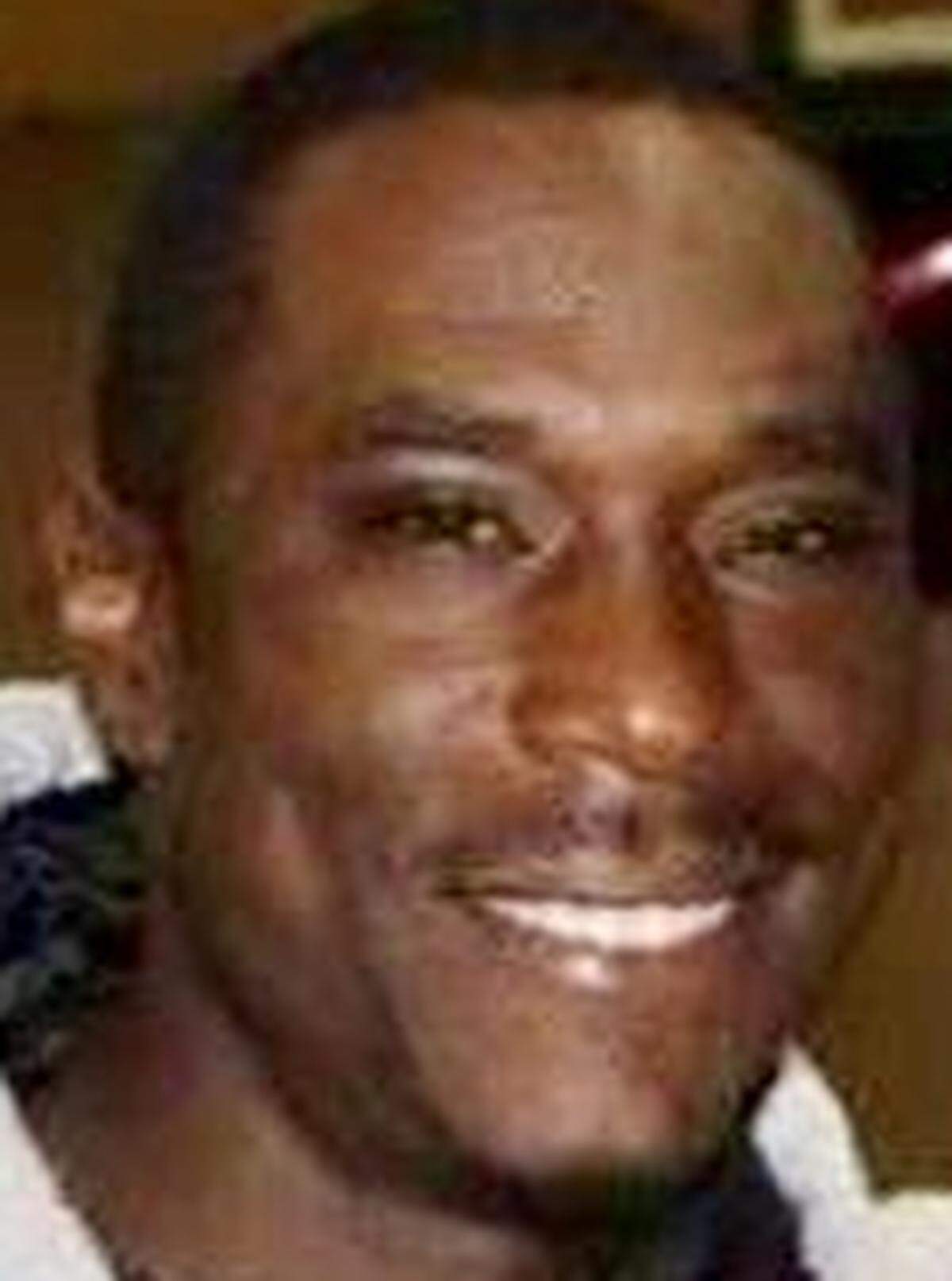
Taylor and his associates defended territory in parts of Unionville to the west of Pio Nono Avenue. They were watchful of rivals passing through along Montpelier, where Taylor and a few fellow Crips were hanging out at M&M Grocery the day Taylor was killed.
Montpelier runs westerly across central Macon from the northern tip of Mercer University’s campus. The street loosely serves as a line of demarcation. Mafia gangsters keep mostly to the north toward Napier Avenue, while Crips hang to the south.
Keeping an eye out for trouble there makes sense. The place where Taylor was killed, the corner of Pansy and Montpelier avenues, is a hotbed for violent crime.
In the past four and a half years, 25 homicides have happened within a 1.2-mile radius of that spot. Though not all of them have been gang-related, the killings account for roughly a fifth of the county’s slayings since January 2014.
The gang mix around Unionville also includes some of Stapleton’s boys, the Gangster Disciples — a 300-or-so-member Folk crowd, who have also taken root in other parts of town.
Members of Macon gangs, in their day to day travels, do not necessarily stick to strict geographical bounds. Stapleton was staying at his mother’s place on Bailey Avenue, just north of Montpelier and a few blocks west of the M&M. He once lived on Lowe Street toward the bottom end of Unionville. His place there was raided in 2002 during a cocaine bust. Cops found $2,555 cash and about three times that much worth of crack.
On April 2, 2017, the night before he shot and killed Taylor, Stapleton visited a dive on Blossom Avenue in the heart of Unionville’s north side. Taylor, who had known Stapleton since they were teens, was also there.
At Stapleton’s murder trial last week, where he was convicted of murder and sentenced to life without parole, varying accounts emerged about what happened at that neighborhood bootleg house.
Stapleton took the stand and said Taylor and his crew got mad and beat Stapleton with a stick, possibly part of a tree branch, when Stapleton tried to buy a beer and was 50 cents short. Word on the street, however, was that the fuss was over an insult aimed at Stapleton’s girlfriend.
Whatever the reason, Stapleton went to the hospital for a broken arm.
By noon the next day, investigators would later learn, Stapleton was set on revenge, on the prowl, hunting Taylor.
Taylor saw Stapleton first.
It was a little past noon on April 3.
Taylor had gone to M&M Grocery and was drinking coffee. He and some of his guys caught wind that Stapleton was coming for Taylor.
Taylor spotted the Stapleton plodding up Montpelier past the old bakery. Stapleton was also known on the street as “Turtle,” a nickname that may refer to his slouched posture and sad-eyed, sleepy face.
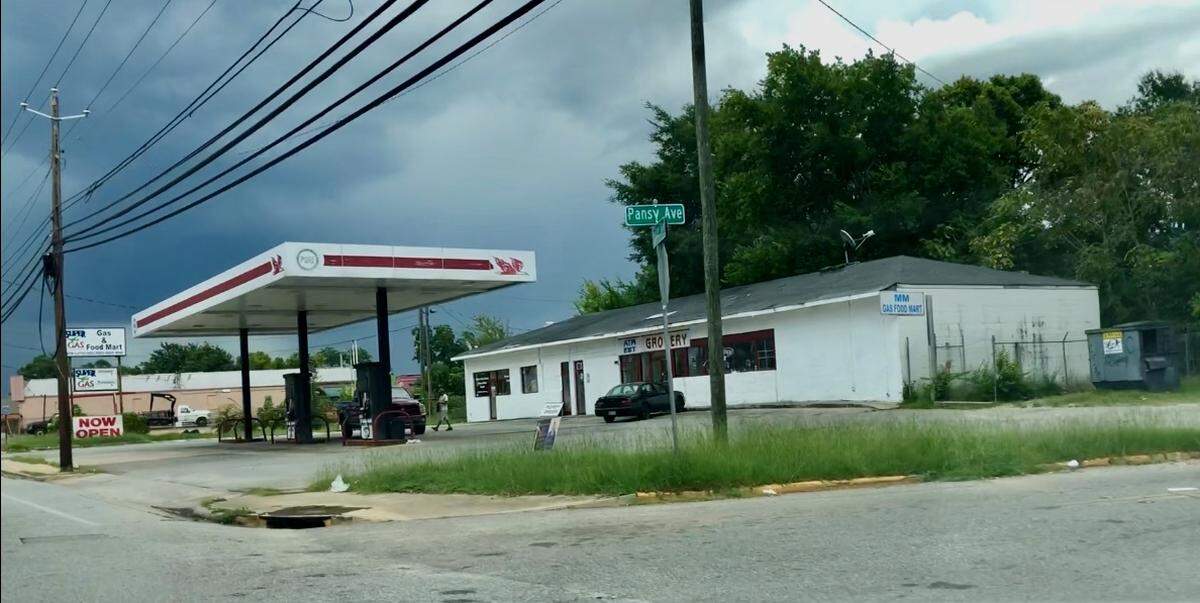
Surveillance footage from the M&M that was played for jurors showed Taylor hustle out toward Stapleton to shoo him off. Taylor apparently didn’t know whether Stapleton was armed.
For the next few minutes, the two jostled across the M&M parking lot, a slow dance of adversaries, shuffling past the gas pumps toward the corner where Pansy Avenue intersects Montpelier. No weapons could be seen. (One of Taylor’s fellow Crips testified at Stapleton’s trial and said Taylor “always tried to keep it peaceful.”)
The two men then disappeared behind a trash dumpster at the corner of the lot. Soon a silver Honda Civic wheeled up, and Taylor walked over to greet it, turning his back on Stapleton who was still by the dumpster.
Before long, Taylor walked back toward Stapleton and then returned to the car, leaning in the passenger’s window.
Stapleton pounced.
Gun drawn, he slipped up behind Taylor, whose back was still turned, and shot him in the back of the head with a 9mm pistol.
Taylor, mortally wounded with $1,800 cash in his pockets, collapsed at the edge of Pansy.
Stapleton dashed away across Montpelier. He turned himself in that night.
On the witness stand in court on Wednesday, Stapleton testified that Taylor had threatened him, that “I feared for my life,” and that Taylor had told someone in the Honda that day to run over Stapleton if Stapleton tried to leave.
Stapleton has run afoul of the law for much of his life. His troubled ties to the neighborhood date back to the early 1980s.
In 1983, his late father, James, was caught selling marijuana to an undercover cop on Pansy Avenue.
Stapleton himself has been jailed here 23 times since 1995.
After his 2002 arrest for dealing crack, he was convicted of armed robbery and sent to prison until 2011.
Stapleton was married briefly in 2015. His ex-wife wrote in a divorce filing that he walked out after three months, that his “lies, deceit, pain, threats (and) death threats” were too much to bear.
Stapleton’s stepdad was in court as a spectator the first day of his trial. When asked by a reporter why his stepson, Stapleton, had gone astray, why Stapleton had clung to gang life, the stepfather replied, “I don’t know that culture.”
To some degree, Stapleton and the man he murdered, Taylor, were outliers in the local gang scene. They were on the cusp of middle age with seemingly few prospects.
“Some outgrow it in their 30s and 40s,” Fletcher, the retired gang cop, said. “At some point they realize they haven’t gotten anything out of the past 15 years of their lives. They realize it’s time to get out, that ‘I’ve got no job, no savings, no house.’ But what kind of job can they get?”
Taylor did, however, have a successful son, Quintez Cephus, a standout athlete at Stratford Academy who earned a football scholarship to the University of Wisconsin where he was turning heads as a wide receiver.
In an interview a few months after his father’s death, Cephus told the Wisconsin State Journal newspaper that he recalled “a lot of bad situations” when he was growing up. Cephus said his earliest memories of his dad were from visiting him in prison.
“But when he came home, (my siblings and I) spent a lot of time with him,” Cephus told the newspaper. “We were with him almost every day. He was a person who loved to be with his kids.”
Cephus described Taylor as “powerful,” someone who “taught me the way to live.”
In Macon, he said, “it’s life on the edges.”
“My father always had the mirrors in his car adjusted so he could see behind him, see everywhere around him,” Cephus went on, “because he always knew if somebody had a chance, somebody would do what they did to him. He always told me he could be here today and gone tomorrow.”
Taylor’s prison stint had stemmed from his involvement in a drug-trafficking ring, which was busted in a Drug Enforcement Administration-led sting in August 2001. More than 10 people were arrested. Cops said the group controlled as much as half the crack and powder cocaine that flowed into a large swath of central Macon.
The late Charles Dudley, a Macon city councilman at the time, told The Telegraph, naively perhaps, that the bust was “tremendous … progress” toward cleaning up the streets.
In the moments before Stapleton was sentenced on Wednesday, he spoke briefly on his own behalf.
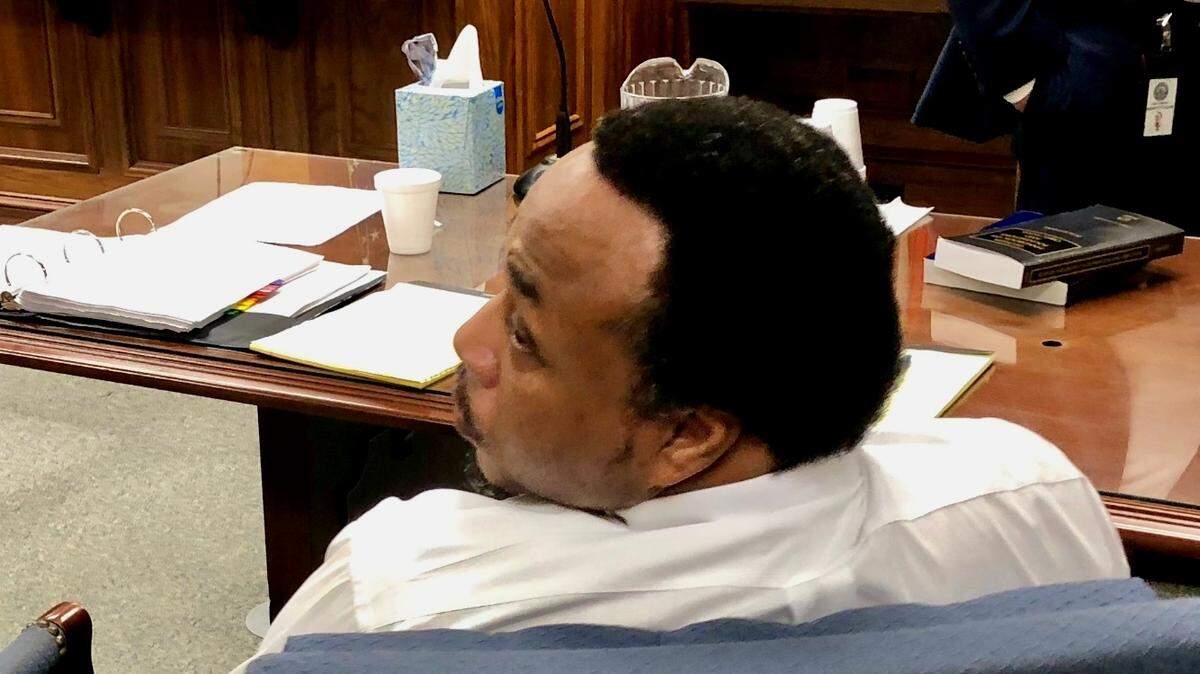
Prosecutor John Regan had just argued that Stapleton deserved to be sent away forever for his “cold-blooded execution” of Taylor.
Stapleton, both hands jammed in his pockets, turned and glanced at some of Taylor’s relatives seated behind him in court.
“First of all, I apologize to the family. … As far as for the charge,” he said, turning back to the judge, “I did feel in danger, sir.”
Life without parole, Stapleton said, was “too harsh.”
Judge Bryant Culpepper said, no, that “the brutality” of Taylor’s death merited such punishment.
“I could sit here and talk all day long about gangs and about the destruction of gangs … how it’s killed not only people, but killed this community in so many different ways,” Culpepper said.
“There’s no easy answer to try to fix all this. All I can do is say to those who would follow after you to look at you as an example of what can happen to somebody. … I’m sorry for you. I’m sorry for your family.”
The judge wasn’t done. He offered a solution, admittedly a remedy too late for Stapleton and Taylor, but advice nonetheless to others — should they choose to heed it.
“You did this,” the judge went on, “you chose to handle this in a horrible way. That guy grew up with you. You knew him. Y’all could have been friends. Y’all could have turned this thing around. You could have gone back to your crowd and said, ‘Look, we’re tired of all this mess. Let’s get along with each other.’ He could have done the same thing. He’s no angel. … But nobody deserves to die like he did.”
This story was originally published August 12, 2018 at 12:00 AM.