
A woman strangled. A dead parrot. A fingerprint. Sensational 1960 murder still fascinates.
A version of this story appeared in print editions of The Telegraph in February 2010.
‘A Strange Tribe of People’
More than half a century after the murder of Mary Burge, one of Macon’s most curious criminal episodes remains a quirk-laden mystery. Chapter 1 of 4:
On a breezy Thursday afternoon in May 1960, a man whose wife had been strangled to death barely 12 hours earlier welcomed a young newspaper reporter into his room at Macon Hospital. The patient, Chester A. Burge, had undergone hernia surgery two days before. Burge, 56, a Prohibition-era whiskey runner turned real-estate man who preferred being chauffeured in his Cadillac, had long yearned for the social limelight.
Now here he and his family were becoming the worst kind of front-page news: the kind that got people talking and knowing their business. The kind, too, where, when a reporter showed up at his sixth-floor hospital room after his wife of 30 years had been found throttled at daybreak, neatly tucked under the covers in her antique, four-poster bed, Burge saw fit to talk.
Burge said he had first gotten word of Mary Burge’s death shortly before noon while listening to the radio in his hospital room.
“The nurse had finished bathing me. ... The nurse wasn’t even listening to the news. I think I screamed. ... My God, I kept hoping she’d only been beaten up,” Burge said.
That afternoon when the Telegraph reporter dropped in, the radio was on again. When a newscast began, Burge turned it up. According to the reporter’s account in the next morning’s editions, he shut his eyes and listened, “his chest moving quickly with his rapid breathing.”
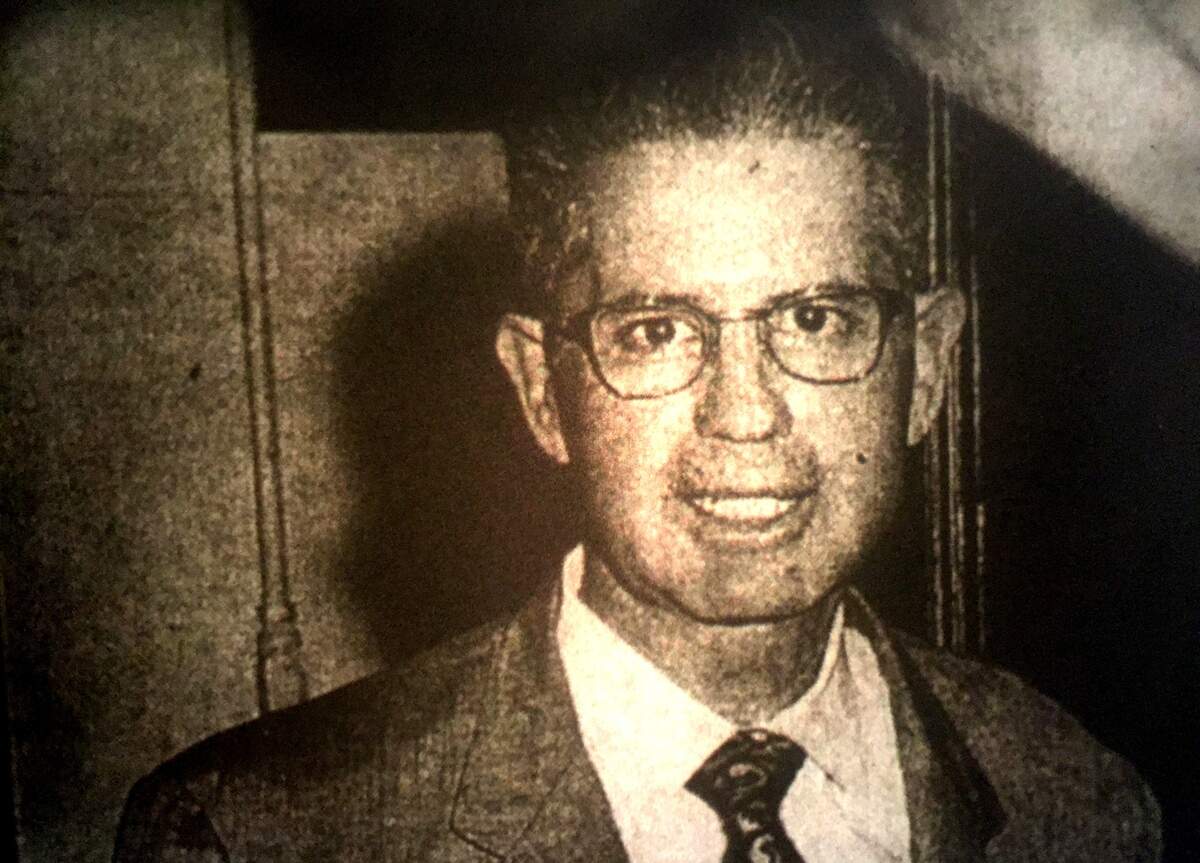
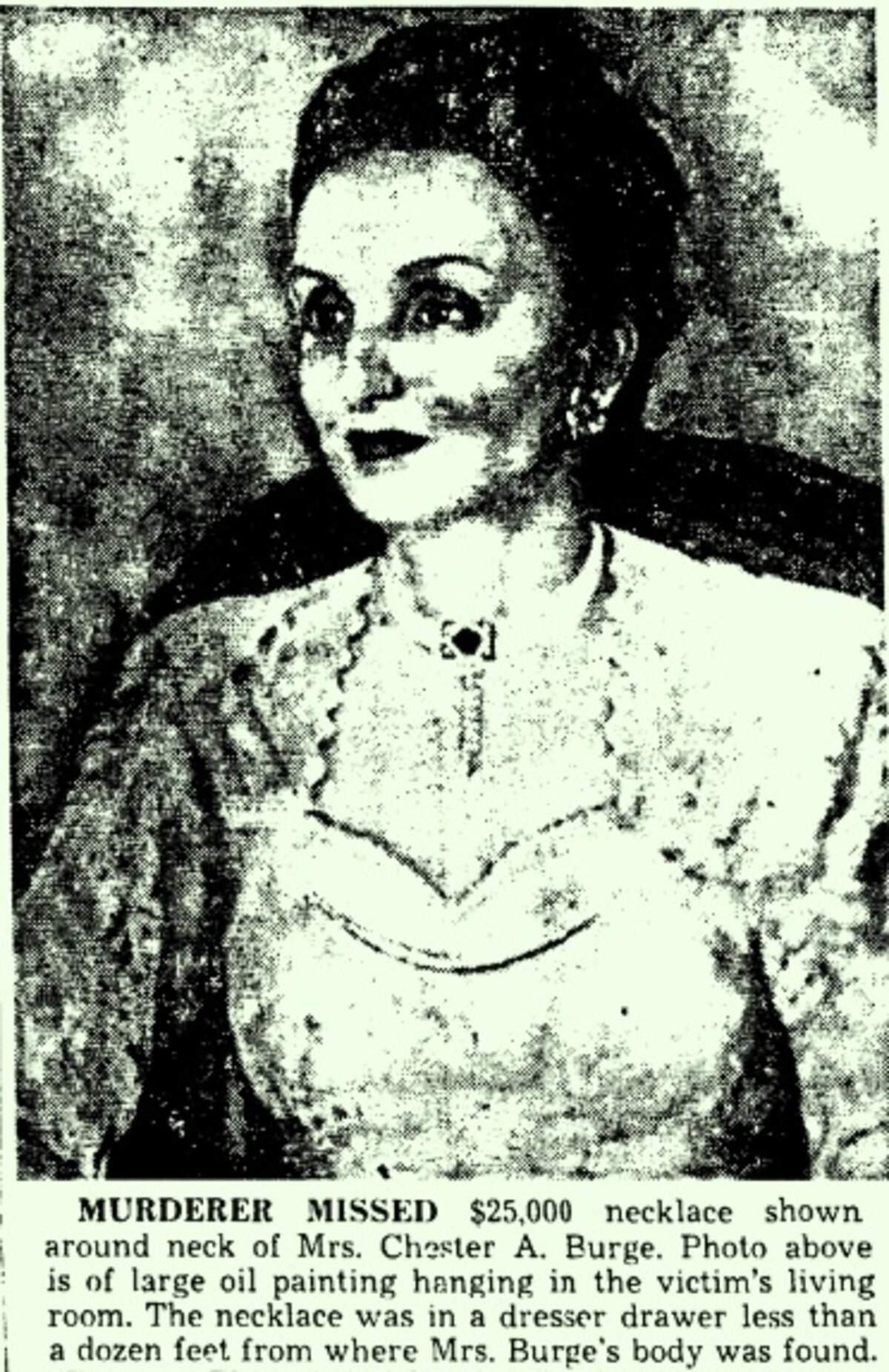
“To think we’re living in the 20th century,” Burge said. “They (the killers) must have been fiends. ... She was a beautiful woman, a wonderful hostess. She liked to help people. She was a very charitable woman. She liked to help people who were too proud to ask for help. There was a portrait of her in the drawing room. Go look at the portrait.”
Hours earlier, Burge had been driven home, to the crime scene, in an ambulance. He was carried on a stretcher to inspect the place and tell detectives if anything had been stolen.
“I wanted to go home as soon as I heard,” Burge told the reporter. “She had a quarter of a million dollars in jewelry hidden in back of drawer, but they didn’t find that.”
As for the sight of his slain spouse, lifeless on their bed in her nightclothes, dead at age 55, he said, “It was hideous to look at. Brutal. I never saw anything so horrible. The fiends almost tore her finger off trying to get a ring. My God, I can’t believe it.”
‘A rather pretty woman’
The murder of Mary E. Burge harkens to a time when Macon, then a city of 69,000, was on the move. It was 1960.
Plans for a north-south interstate, I-75, were underway. “Ben-Hur” played at the Bibb Theater. “Charko Steaks” were on the menu at Len Berg’s. A Wesleyan girl won Miss Georgia. Perry Mason himself, the actor Raymond Burr, celebrated his 43rd birthday at the Hotel Dempsey.
And oddly enough, that April, less than a month before Mary Burge’s murder, Ku Klux Klansmen rallied outside a big, white house at 1011 Nottingham Drive. The home, in the Shirley Hills neighborhood, sat on a hilltop at Jackson Springs Road, just across the Ocmulgee River from downtown.
The Burges made their money on rental properties and selling mortgages. They ran their real estate company out of their home. The Klan was angry that some property the Burge’s owned between Broadway and Houston Avenue had been rented to black people. The next month, when Mary Burge turned up dead, early speculation — which authorities soon discounted — was that there might be a Klan connection.
Mary Burge, the former Mary Kennington, had sharp, regal features and a distinguished nose and chin. Born in Twiggs County in 1904, she was a member Christ Episcopal Church on Walnut Street when she died. She was slender like her husband. In the portrait Chester Burge spoke of from his hospital room, she has on a $25,000 necklace. The newspaper described her as “slight, attractive, gray-haired,” between 110 and 120 pounds.
A former business associate and travel companion of Chester Burge’s named Fritz Phillips, recalls meeting Burge the winter before Mary’s death. Phillips, then 28 and Ivy League-educated, managed the Philadelphia Sheraton hotel. He says he met Chester Burge through a “rich uncle.” Phillips remembers Mary as “a rather pretty woman,” but one who was “over-made-up.”
“The reason I say over-made-up is because she was done-up by hairdressers and cosmeticians and she didn’t need to be,” says Phillips, 78, who lives outside Trenton, New Jersey. “She was a rather nice-looking, just a simple person. But Chester wanted her done. ... So that (he) could claim that his wife was getting the first-class treatment. You could still the shine on the varnish, if you know what I mean. It was a most unattractive sort of situation for what I considered a very nice-looking lady. ... She always sort of came off a little more like Lady Chatterley.”
Phillips would figure prominently in the murder investigation and the ensuing trial. He recalls the Burge couple’s relationship, both in private and in business endeavors, as “absolutely conflicting.”
“They just weren’t a pair that should ever have been together, except that was their strength,” Phillips says. “He just wanted to be in charge and he wanted to be a social top dog and he never was going to be.” Phillips’ ties to Chester Burge would, in part, later lend the case a lascivious element. Phillips, who says he is gay, says Chester led a double life that would come later come to light as a potential motive in Mary’s slaying. Phillips recalls that he himself “was in the closet.”
“And, no,” Phillips added, “we did not have relations. But — there’s a but in here — I thought it was to my advantage, because he was so intent that I sleep with him (to play along). ... And I thought, well, if it means that much to him, and then occasionally he would insist I give him a (sexual favors) because of medical reasons or all those stupid little reasons. That’s as far as we ever went. Everybody knew that it was a great deal more, but that wasn’t really the truth. The truth is that I didn’t find him particularly appealing in any way, and at the time I was in the closet, as I say, and all of that could never have come out.”
Phillips says Chester Burge “told me flat-out that he was a homosexual, as though I sort of hadn’t guessed it. ... And I said, ‘Well you better, you know, get over it.’”
‘Hands around her throat’
The thinking was that Mary Burge, after visiting her husband at Macon Hospital the night of May 11, was strangled to death sometime around midnight. About 9 o’clock the next morning, a maid back at her house noticed her in bed, not moving, and called for help.
A Telegraph reporter described the scene in and around the Burge house that day, noting “valuable silver and antiques in perfect order throughout the big two-story dwelling. A few children loafed on the lawn. ... A stairway from the front hall leads to the second floor, and ten doorways open from the upstairs hall. ... The bedroom, in which she (Mary Burge) was found dead ... is at the far end of the hallway from the staircase. It is a corner bedroom with three windows, light blue walls and gray carpet.” There were no signs of forced entry.
Investigators told the newspaper that Mary’s killer “apparently caught her with both hands by the throat from behind. ... A bone in her throat was fractured and deep pressure damage was found in the tissues. She had a cut on her left hand, bruises and a cut on her face, bruises on her back, and fingernail marks on her throat ... apparently were made by Mrs. Burge herself, trying to unloose the hands around her throat.”
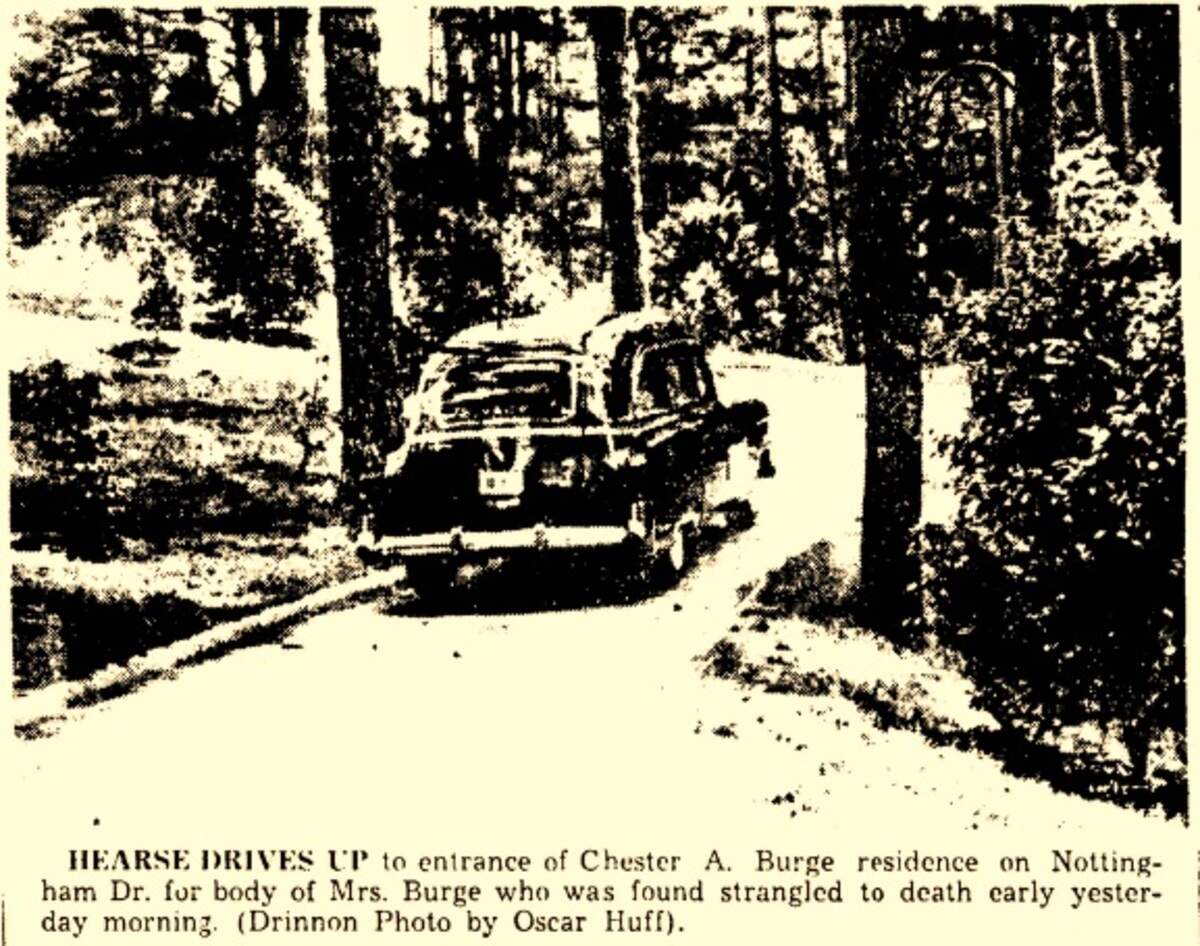
News of Mary’s death first hit the paper on the morning of Friday, May 13. Soon after, the family chauffeur and butler, Louis Roosevelt Johnson, 34, was jailed for questioning. In 1948, Johnson had been convicted of second-degree murder for killing his wife in Detroit. He had been paroled in 1957. Johnson would figure into Chester Burge’s sex life as well, in connection with sodomy charge that would, months later, be levied against Burge. Though the police were by then undoubtedly sifting through Chester’s personal life, none of that surfaced publicly. At least early on.
Mary’s funeral was May 14 at Christ Episcopal. Chester, taken there by ambulance, also attended a graveside service. Days later, with Chester still in the hospital, the reporter who’d scored the first interview with him, paid Chester another visit. The reporter was a 24-year-old Yale graduate named Hal Gulliver, who went on to become editorial-page editor at the Atlanta Constitution. When Gulliver visited Burge on May 18, 1960, Burge was again listening to the radio.
“I didn’t deceive Burge in pretending that I was on his side or anything,” Gulliver, 73, says now. “A lot of people in the midst of even the most terrible things, they really, in their hearts, are convinced that they’re actually all right. That they haven’t really done anything wrong, and that their story, even though it’s not a true story, is gonna be compelling and that people are gonna believe what they say. A guy like Burge was like that. ... He was full of his own personality.”
While Gulliver was in the hospital room, a news update on the murder investigation aired. It said the authorities were awaiting crime-lab results. Burge switched off the radio.
“That’s what they said last night,” he told Gulliver. “I waited all day today for them to say what the laboratory reports said and now they say it’ll be tomorrow. I know the detectives are working hard. They were at my house all day today. I wish to God they’d find out something.”
They already had.
A fingerprint.
It belonged to Chester Burge.
Chapter 2
Mary and Chester Burge had a pet parrot. But, you might say — and some no doubt did — it wasn’t talking. It was dead.
The Burge bird and its fate — it had been found dead the same day Mary was — became gossip-mill fodder.
On May 15, 1960, the Sunday after the slaying, a front-page headline in The Telegraph and New blared: “Loud Squawking Silenced ... Was Burge Parrot Poisoned To Death?” The accompanying article noted that “portions of the parrot’s body” had been sent away for crime-lab analysis. The article went on to mention that the bird, later said by his attending veterinarian to have been a “good talker,” was known “to have screeched and made loud noises when people approached” the Burge residence.
“Detectives think the death of the parrot may indicate ‘premeditation’ on the part of the killer,” the write-up said. “The detectives said the fact that the parrot died mysteriously ... may mean the murderer also killed the parrot to keep his presence a secret.”
The bird clue proved to be a dead end. A newspaper piece published three days later explained how Mary had taken the bird to the vet hours before she was killed: “One of the parrot’s big tail feathers had been pulled out and excessive bleeding from that apparently caused its death.”
Veterinarian Herman Westmoreland was quoted saying, “For some reason this parrot was bad about pulling out its own feathers, especially yellow ones. I had treated it several times in the past three years for this.”
‘Terrible business’
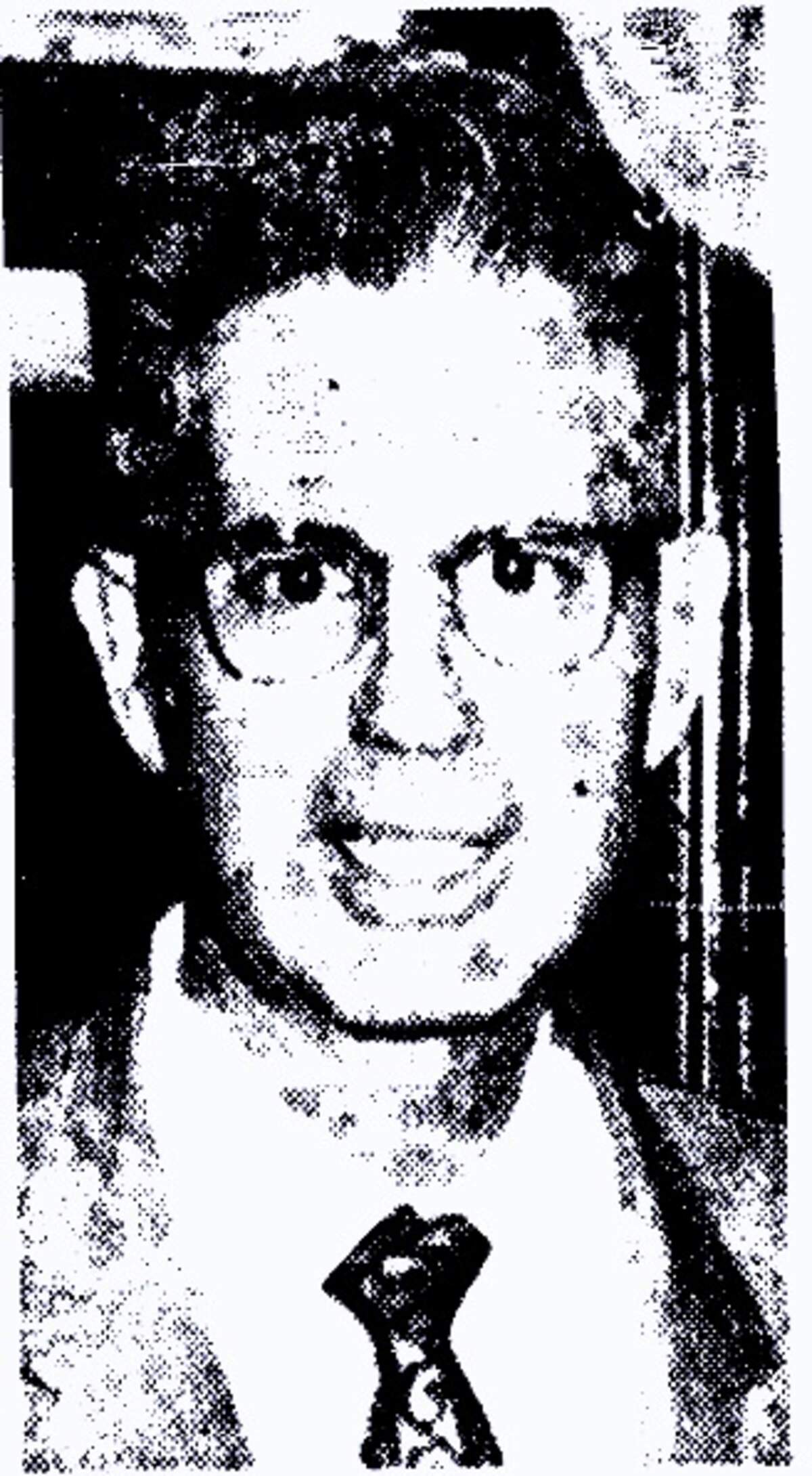
Dressed up, Chester Burge looked a little like a less-nerdy Orville Redenbacher, with a better coif and snazzier glasses. He wore his hair swept back, styled, but as if he might have just stepped in from a stiff breeze.
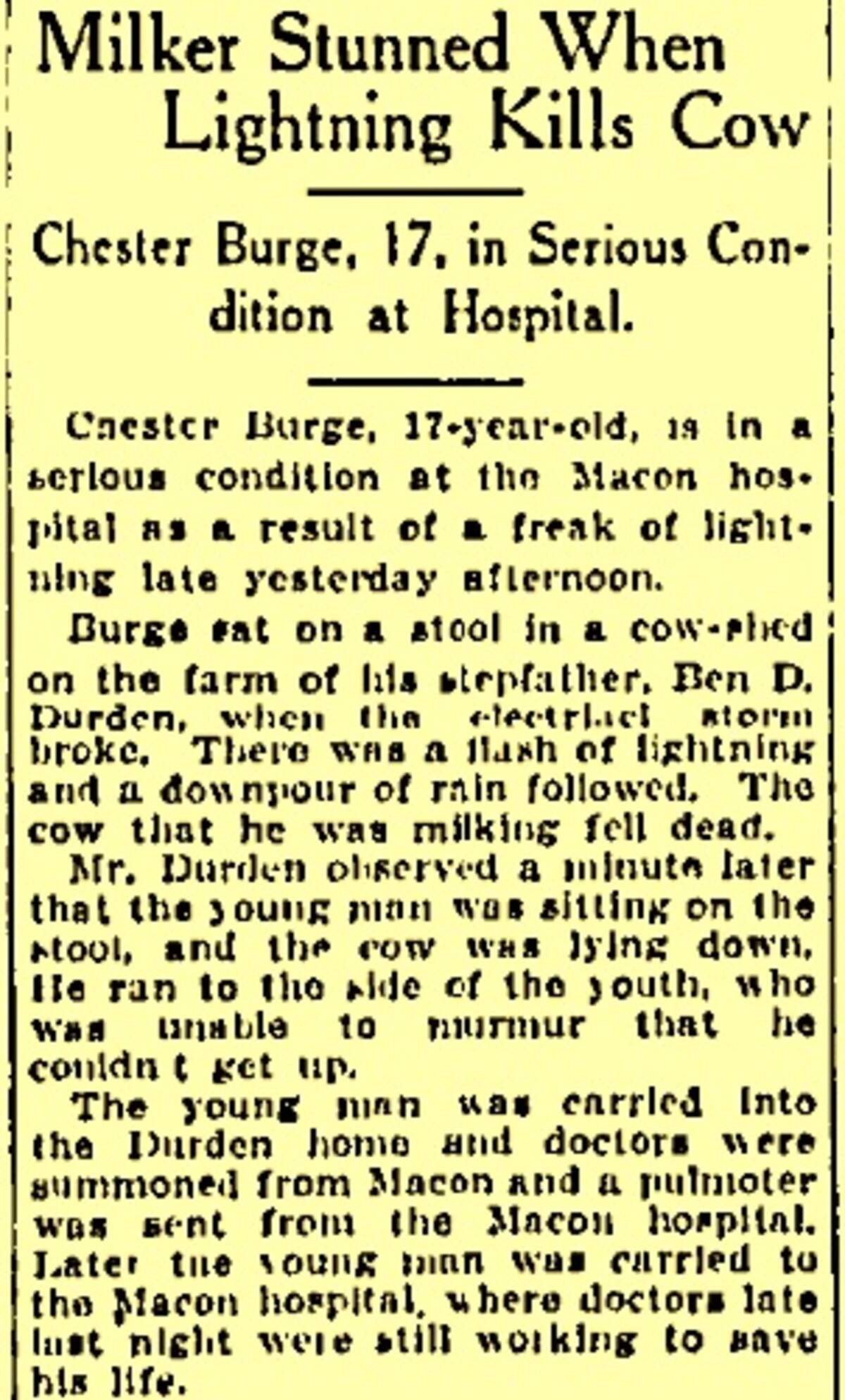
Half a lifetime earlier, he had been operator of the Cackle Hill Poultry Farm on Jeffersonville Road in east Macon. He later ran a filling station nearby. Before that, in 1921, when he was 17, he was struck by lightning while milking a cow on his stepfather’s farm. The cow died and Chester almost did. A decade later, he found trouble, and in 1932 was sentenced to serve a year and a day in federal prison for illegally selling whiskey. He was arrested twice before that on state prohibition charges.
By 1960, Chester and his wife were running a real-estate venture out of their Shirley Hills home. They were well-to-do. Their son, John Lee, was a professor at Auburn University. A week after Mary’s body was discovered, the following Thursday, Chester offered a $5,000 reward. He called news crews to his hospital room. It was there that the first hint of on-the-record animosity between Burge and investigators emerged.
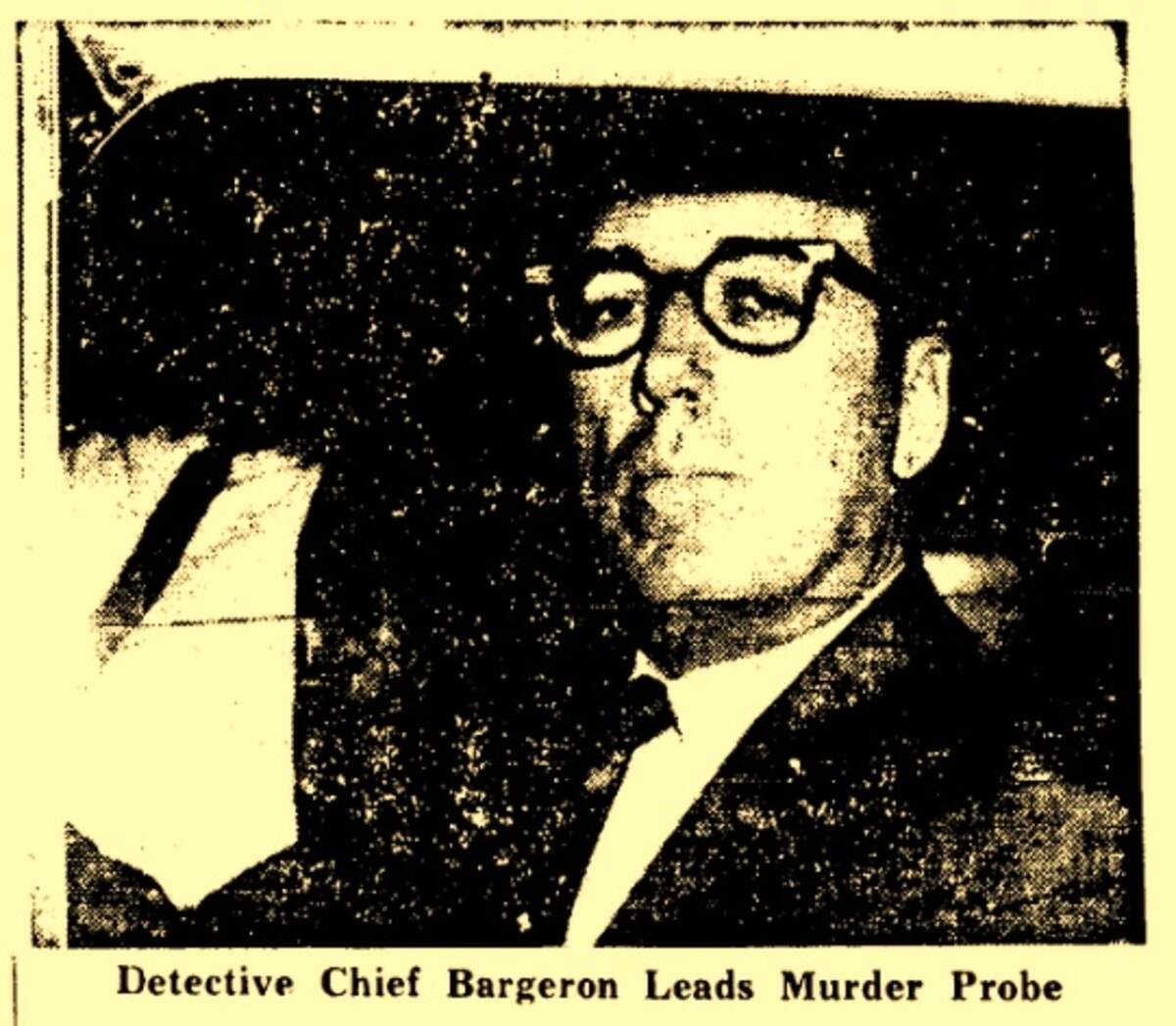
Burge said he had hoped to have the sheriff and the city’s chief of detectives, W.H. Bargeron, in attendance. According to The Telegraph, Bargeron, in declining the invite, made it known that “a reward offer was no concern of his.” Burge, it would appear, had concerns of his own. At the reward-announcement press gathering, he said, “I had hoped to go on a trip to Europe very soon. But I’m not sure now whether I’ll be able to go or not since all this terrible business has come up.”
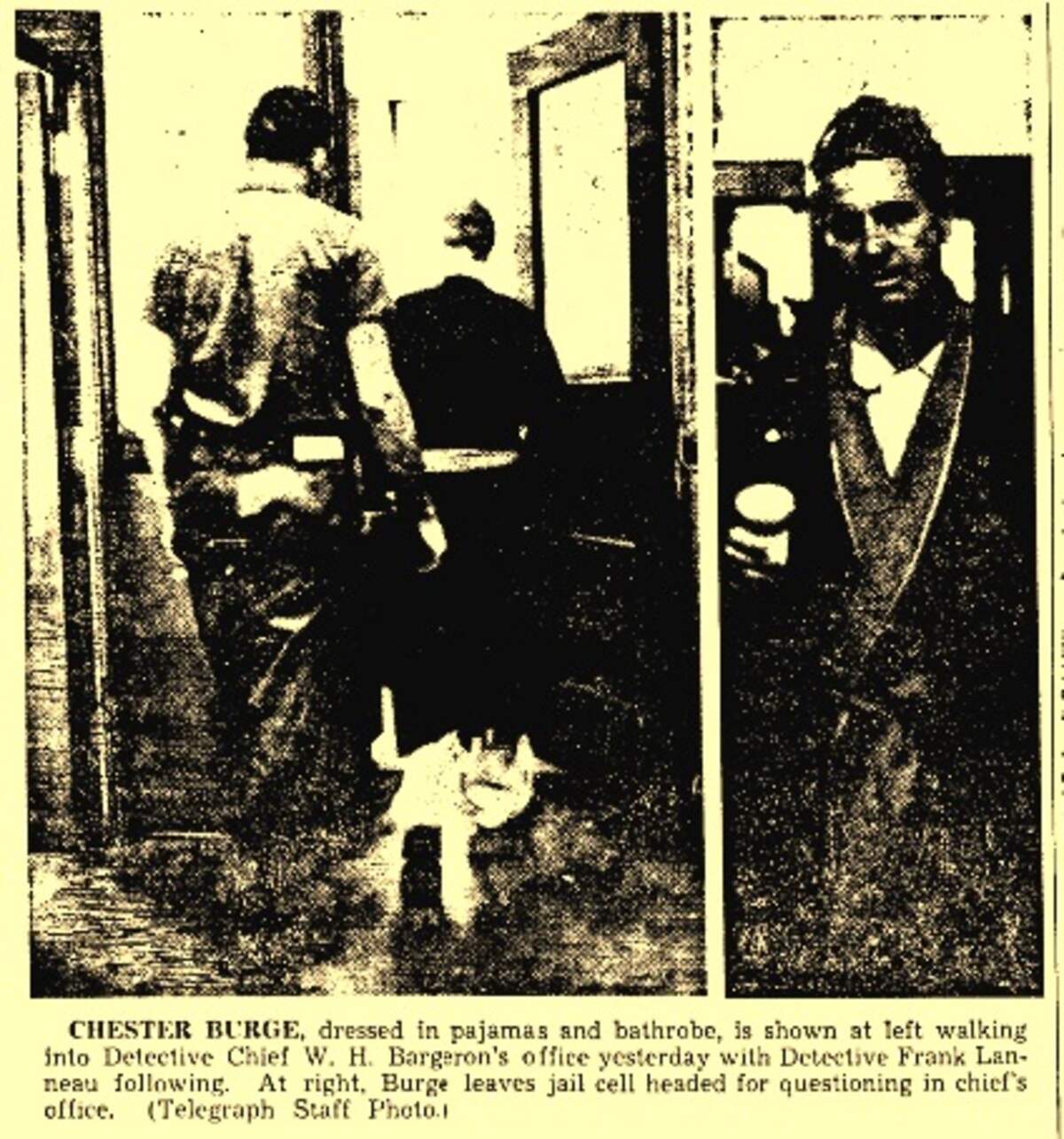
He also mentioned how he hoped to be leaving the hospital the next day and head home for bed rest. He was, indeed, dismissed from the hospital the next day. In pajamas and a bath robe, he was rolled away in a wheelchair, bound for a four-hour round of police interrogation.
And, after that, a cell in the city jail, where he would remain until trial that November.
‘Murder was premeditated’
Formal murder charges were not made against Burge until the end of May.
“We do know and can prove that he was in his home on the night of the murder,” detective Bargeron told The Telegraph. “He could have been there 45 minutes ... or an hour ... or up to two hours.”
Bargeron went on to say that Burge had, in fact, been in the upstairs bedroom where his slain wife’s body was found. The detective declined to say how he knew that, but a fingerprint — Chester Burge’s fingerprint — had turned up on a closet door in the Burge bedroom. It was a door that a handyman claimed to have scrubbed clean the day Chester was admitted to the hospital. The presence of the fresh fingerprint, according to investigators, ruined Chester’s alibi that he had been in the hospital all along. That same day, May 31, nearly three weeks into the investigation, Chester, for the second time since his arrest, refused to take a lie-detector test.
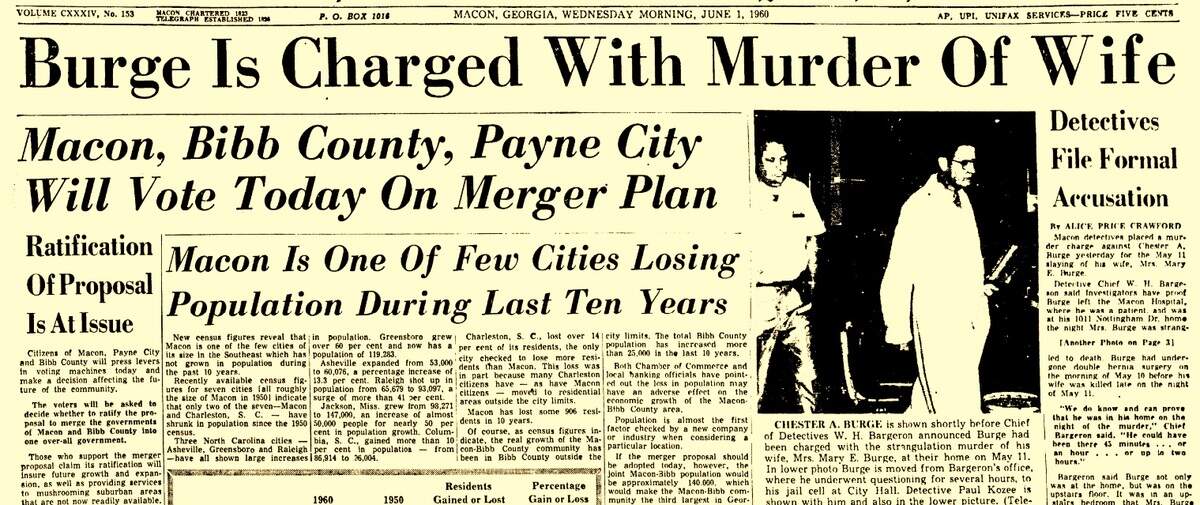
“In my opinion,” Bargeron said, “Mrs. Burge’s murder was premeditated and was planned a long time in advance.”
The newspaper also reported that “acquaintances of the couple said there was considerable disagreement between Mr. and Mrs. Burge on both business and personal affairs.” Police would not discuss how Chester, seen as frail and bed-bound in the days after his hernia operation and Mary’s death, might have traveled from the hospital to his house and back. Two Burge-family employees — Johnson, the chauffeur, and another man, a former driver — were being held at the time “for questioning but not in connection with a murder charge,” Bargeron said.
A week earlier, on May 24, at the request of Burge’s attorney, T. Arnold Jacobs, Burge was admitted to the psychiatric wing of the city hospital for a mental evaluation. Bargeron said the exam was akin to those given to Anjette Lyles several months earlier before she was declared insane prior to her scheduled electric-chair execution. Detectives disputed talk that they had performed a “drug-induced hypnosis” on Chester. Jacobs, Burge’s lawyer, said, “If he’s getting truth serum, I don’t know anything about it.”
Chapter 3
It was November 1960. John F. Kennedy was elected president on the second day of Chester Burge’s murder trial.
White voters in the city’s Upper City precinct cast their ballots in the doownstairs in the lobby of the Bibb County Courthouse. Black voters cast theirs on the ground floor.
The day before, in his opening argument, lead defense attorney Charles Adams motioned to his client, who was dressed in a dark-brown suit. Adams said Chester “has personality traits that make him most obnoxious, arrogant, moody and difficult to understand,” but that he was not guilty of killing his wife. During jury selection, Adams had asked potential jurors whether they “would be able to try the defendant impartially if the defendant’s demeanor or personality is obnoxious.”
Newspaper coverage of the trial’s first day noted that “Burge is also accused of sodomy with his Negro chauffeur.” Jurors heard nothing of that development and that case was set to be heard later. Adams, appearing to try and head off any unflattering testimony that might arise, presented a first-day front that offered up his client as an oddball, a misfit. But a killer? No way.
“We believe that lack of evidence on the part of the state will result in bringing into evidence every weakness in this man’s personality,” Adams said. He said the Burges had money and had a troubled marriage. “A strange tribe of people,” he termed them. “Many strange and unusual people probably frequented their home to obtain loans.”
Prosecutor William M. West said the crime scene had been made to look like a robbery and that Mary had been strangled to death and beaten.
Election Day was the first full day of testimony. Burge, who according to the newspaper wore a “neat business suit, blue this time,” watched as prosecutors hauled his bedroom-closet door into the courtroom. At one point, one of his attorneys, by accident, nearly knocked the thing over. A detective testified Chester’s fingerprint had been found on the door, which Burge chauffeur Johnson testified he had throughly washed on May 10 after Burge was admitted to the hospital. However, in a statement to police over the summer, Johnson said he hadn’t necessarily given the door “a good washing job.”
The state’s case came down to that, and, in fact, hinged on a fingerprint on the closet door of the man, Chester Burge, who had lived in the house it came from. That and whether a hired hand had or hadn’t scrubbed it clean while Chester was away having surgery.
‘An unnatural relationship’
On the third day in court, Wednesday, Nov. 9, a distant cousin of Chester’s from Florida, told how Chester and Fritz Phillips stayed with her family on a business trip to Tampa about 10 months earlier.
The cousin, Olivia Kyle, testified that Burge had told her that he was “very much in love with Fritz” and that he intended to leave his wife and live with Phillips. Kyle said Chester needed his wife to sign off on a business deal, the purchase of a Tampa motel for about $40,000. Mary Burge had no interest in funding it, Kyle said, adding that Mary showed up in Florida and threatened to “write to New Jersey and ruin (Phillips) socially.” Kyle said Mary spoke of “an unnatural relationship” between the two men.
Of the strain that Chester’s fondness of him may have put on the Burge marriage, Phillips, now 78 and living in his native New Jersey, says, “I never knew.” He says the Burges were “a mess.”
“Back in those days, I was certain that (Chester) had paid somebody to (kill Mary),” Phillips says. “I see him as this very, very dark — I’ll just use the word — evil person.”
He recalls a face-to-face exchange he and Chester had after Burge’s arrest. Phillips had returned home to New Jersey well before the slaying, but police visited him there and hooked him up to a polygraph. “This is inconclusive. ... All it proves is that you did it,” Phillips recalls a detective saying, trying to strong-arm him. When he went back down to Macon, cops asked if he would mind confronting the jailed Burge. He says he agreed. “What choice did I have?”
“I said (to Chester), ‘Why did you murder her?’ He looked at me with a great deal of love and affection in his eyes. And then he said, ‘Why did youuuu do it?’ And I said, ‘You gotta be crazy!’”
Says Phillips: “We all knew he did it, one way or another. Let’s not get into the technicalities. Who caused her murder? Chester. And he’d been working on it for years.”
‘Get the hell out of Macon’
Though it appears to have never been reported, Phillips says Chester confided in him that he was considering a trip to Switzerland. It was the European trip Chester had spoke of during the hospital-room reward announcement in May. Chester had wanted to undergo a lobotomy “so that he would no longer be a homosexual,” Phillips says.
Chester, he says, even discussed the procedure with noted psychiatrist Dr. Corbett H. Thigpen. Thigpen, a Macon native then in his early 40s, practiced at the Medical College of Georgia in Augusta. Thigpen, an accomplished magician, Eagle Scout and Mercer University graduate, had co-authored “The Three Faces Eve” three years earlier. The book, about a psychiatric patient with multiple personalities, was made into a movie the same year it came out.
Phillips says Mary Burge was livid that she wasn’t invited to the Augusta consult. Phillips says that he, however, spoke privately with Thigpen. Thigpen, Phillips says, told him “this (lobotomy) is going to cause a great deal of consternation with their marriage, with Chester and Mary, and the best thing that I can do is, if I sincerely care about any of them, is to get the hell out of Macon.”
“So,” recalls Phillips, who at first liked the idea of a free trip to Switzerland, “I said, ‘Good plan.’”
Chapter 4
The fourth day of the trial, Chester Burge’s mother testified against him. The courtroom was packed. Sara Frances Durden, 77, said her son was “mean” and had beaten his wife and threatened to kill her. Durden lived with the couple, though she was, at her son’s behest, staying with a friend in Perry the week of the murder.
She said he had not told her he was going in the hospital. Durden said the Burge couple’s fusses heated up after Fritz Phillips’ first visit in October 1959, about a year earlier.
There was also testimony that day that Chester wanted to buy the Lanier Hotel in Macon for Phillips to oversee.
“(Chester) was always throwing it it up to her, that he loved Fritz more than he did her. It liked to have killed (Mary),” Durden testified.
She added that she also once heard Mary, with whom she was quite close, scream and then explain that “Chester’s in here beating me to make me do things I don’t want to do.”
‘Money and lust’
Dr. Milton Hatcher, the surgeon who operated on Chester’s hernia, testified that it might be have been possible for someone to “get up, drive across town, walk upstairs, fight with his wife, lift her body from the floor to the bed, and then return.” Possible, he clarified, “but unusual and not probable.”
Burge’s grown son, John Lee Burge, an Auburn University professor took the stand and, according to a newspaper account, said his father “had expressed affection for Fritz Phillips and that the feeling between Burge and his wife grew steadily worse after Phillips and Burge began exchanging visits.”
The case went to the jury the next evening, a Friday. Before it did, the prosecutor, in closing remarks, pointed to the closet-door fingerprint of Chester Burge, which was “indelibly indelibly inscribed by the laws of nature.”
West said there may well have been an accomplice and that “we will continue to investigate.” He said Chester’s motives “were greed for money and lust.”
According to The Telegraph, “the state contended that the (fingerprint-containing) closet door, behind which liquor and money were kept, had been superficially jimmied in an attempt to fake a robbery.” The paper further reported that Adams, closing for the defense, “attacked the state’s contention that Johnson (the chauffeur) had throughly washed the hall closet door. ‘If Louis can wash woodwork as good as the state claims, he’ll never have trouble find a job,’ the attorney said.”
Adams said Chester had little to gain from Mary’s death. The defense had paraded in witnesses, nurses and others, who were certain that seen Chester in his bed on the night in question. One nurse said she had given him a shot at 12:30 a.m. Adams also harped on the plausibility of Chester making the trip home. “How did he go? By helicopter? By taxi?”
‘I am not guilty’
Adams deflected Chester’s mother’s remarks.
“Maybe Mary and Chester thrived on moody, spontaneous arguments,” Adams suggested.
At one point, the counselor turned to his client and said, “You may have been a sorry husband, Chester.”
In a manuever no longer allowed, Chester himself took the stand to make what was known as unsworn statement. The Telegraph reported that Chester “told the jury that he and his wife had never enjoyed complete marital happiness ‘or the social prestige we both wanted.’ ... Burge’s voice broke as he was completing his statement. ... ‘We fussed and fought all the time. ... We found all of our common interest in business and financial matters.’”
Of his mother’s claims, Chester said he knew she had “no malice in her heart toward me.”
He also said disprecancies in his statements to detectives resulted from “the shock of my wife’s death or the inability of the officers to quote me. ... I do not know who killed my wife or how she was killed. I was in the Macon Hospital and I did not leave the Macon Hospital. Her death was a greater loss to me than to anyone else. Whatever you may think of me, I am not guilty of the murder of my wife, Mary.”
He even commented on the presence of his fingerprint at the crime scene: “My prints ought to be there. I have lived in that house 12 years.”
The next morning, just after 11 a.m., after about four hours of jury deliberation over Friday night and Saturday, the verdict was read: “not guilty.”
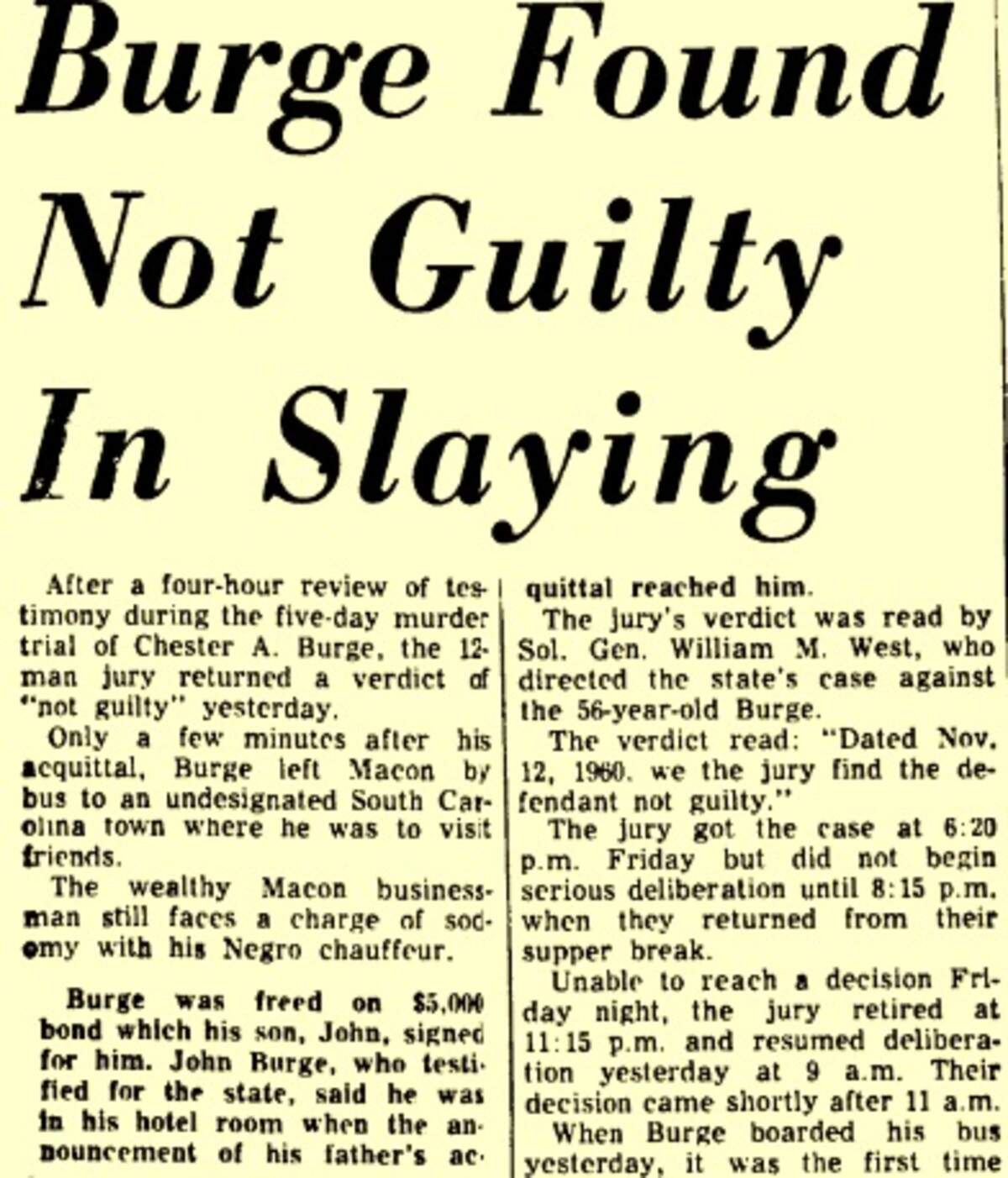
A couple of hours later, Chester hopped a bus. He said he was headed to visit friends in South Carolina.
Today, local prosecutors still recall the inscription on a plaque that Burge’s lead attorney, Adams, used to keep on his desk beneath a newspaper clipping of Burge’s acquittal: “Never before have so few been paid so much to refute so little.”
‘Body was aflame’
Chester was a free man, but he didn’t live that way for long.
He died on Oct. 8, 1963, two days after an early-morning explosion and fire gutted his oceanfront home in Palm Beach, Florida. He was 59.
A report in the Macon News said the “top part of (Chester’s) body was aflame when he was found.
A patrolman said he at first thought it was a fireman whose jacket was burning … but he discovered that Burge apparently was entirely nude when he ran from the house.”
The cause of the fire was never determined.
To identify Chester Burge as the victim, early newspaper accounts of the blast said the authorities used various forensic-matching techniques. Among them: fingerprints and surgical scars.
‘He got his due’
Before his death, Chester had remarried in a ceremony in Camden, South Carolina. He and his new bride, a 75-year-old widow from Minnesota, were wed on April 5, 1961, five months after his murder acquittal and 11 months after Mary was slain.
In December 1960, a month after the murder trial, Chester had been convicted in a sodomy case that involved him and his chauffeur. Chester was sentenced to serve a five-to-10-year prison term, but he was released on bond while the case was appealed. The conviction was later overturned.
Raymond A. Cummings, 78, of Macon, is one of the few jurors who served on Burge’s murder case who is still alive. He said last month that al he remembered about the case was that “it was the biggest thing in Macon at the time. … We acquitted him, and he went and got killed in a fire.”
Another juror, William R. Couch, 78, of Macon, says, “As I remember, there just wasn’t enough evidence to convict him. … I remember he was burnt up down in Florida. He got his due anyway.”
Editor’s note:Descriptions and observations in this story, when not directly attributed, come from information published in The Macon Telegraph and The Macon News in the 1920s, ’30s and ’60s. Other details were gleaned from photographs and interviews.
This story was originally published March 1, 2018 at 3:52 PM with the headline "A woman strangled. A dead parrot. A fingerprint. Sensational 1960 murder still fascinates.."