
Q&A with Jonathan Clark
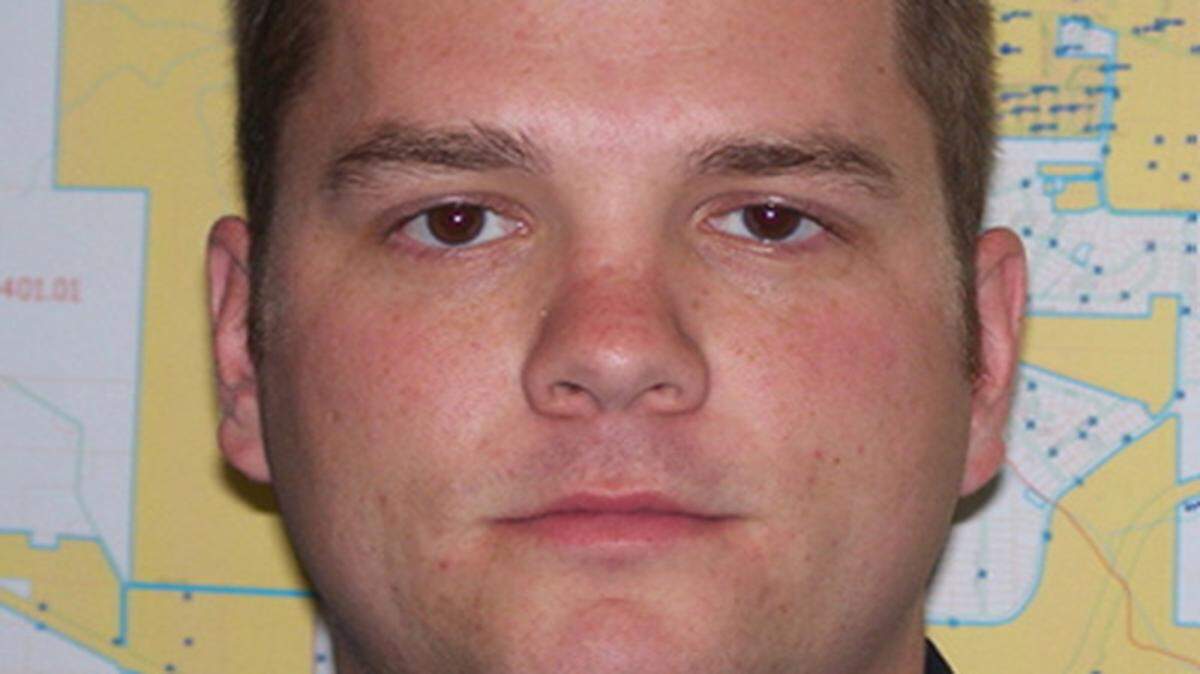
Residence: Byron
Occupation: Firefighter, Warner Robins Fire Department
Q: Did you want to be a firefighter as a kid?
A: No. Oddly enough, I was going to school in criminal justice and dropped out. A buddy talked me into volunteering with a fire department and after one training session I fell in love with it. It took me three years to get on at Warner Robins and now I've dedicated myself to the profession. This is where I'll be from now on.
Q: You're doing well and have gotten quite an honor. What was it?
A: I was named Georgia Rookie Firefighter of the Year for 2015 by the Georgia Firefighters Association. It's a huge honor and a little embarrassing.
Q: How did it come about?
A: Our department does a rookie and a firefighter of the year award. I was lucky enough to get rookie of the year here then it went up to the state association.
Q: How do they pick? What do you do to win?
A: I'm not sure of all the criteria. I just know I come to work and do my job the best I can. Somebody saw something and nominated me. None of us look for accolades, but sure -- it's nice to get a "thank you." To my knowledge, the only technical criteria is you have to be in your three-year rookie phase.
Q: Why did you fall in love with firefighting?
A: Maybe it's in my blood. My dad was a firefighter. To me, I enjoy the challenge of something different every day or sometimes every hour or minute. You get called on something that sounds the same, like a car accident or brush fire, but it's never the same. I like preparing for the unknown then dealing with it.
Q: Isn't that the very thing most people hate?
A: Maybe. But the thing I fear most and the worst thing in the world for a firefighter -- the most dangerous thing -- is becoming complacent and letting it become routine, going on auto-pilot.
Q: How long have you been at WRFD and why do you like it so much?
A: Three years. I saw there was a real sense of order here. There's respect among everybody and the chance to learn more by getting more training. I enjoy learning and coming back and sharing things I learned with others. I've also found out how highly regarded our department is around the state.
Q: You don't seem like you complain a lot.
A: I try not to. Everybody gets to the point of frustration, but I guess complaining isn't one of my attributes. I try not to make it one, anyway.
Q: What do you see in your future?
A: Moving through the ranks. The next step is full firefighter after rookie, but then engineer, lieutenant, maybe a chief. I have 35 or so years to go, so we'll see. They'll probably have to kick me out to get me to leave. I'd like to go through the ranks but wouldn't mind being a firefighter for the rest of my career.
Q: You were grand marshal in the Christmas parade. Did you enjoy that?
A: Oh yeah, it was fun. I got to have my wife, Brittany, and kids on the float with me.
Q: Since it is Christmas and you're a firefighter, what's the bottom-line safety rule this time of year?
A: Don't overload outlets or extension cords. Don't let your tree get dry and make sure you're safe with your fireplace. Get it checked regularly. And personally, I don't leave Christmas lights on when I'm away or asleep. I just can't see that being a good idea.
Q: What's your most memorable experience? When did you go, "Yep, I'm a firefighter?"
A: Probably my first "hot" house fire. We arrived on scene, pulled lines in and it put us on the ground right away, it was that hot. No matter how much water we poured on, it was hot. I burned my ear. I'd been on other calls and different fires but that's the one I thought, "I'm a firefighter. This can really hurt you if you don't watch out."
Q: What's the biggest reward?
A: Seeing the face of someone you helped. You don't get in this to make a lot of money. You get in it to help people.
Q: What's the biggest downside?
A: I don't even know how to say this. There's not a good way. One of my worst-ever calls involved a two-year-old child. We lost them; they died. I gave them CPR and it was the worst thing ever losing them. That aspect of death gets to you. All the guys help you and make sure you're OK, but it gets to you.
Answers may have been edited for length and clarity. Compiled by Michael W. Pannell. Contact him at mwpannell@gmail.com.
This story was originally published January 5, 2016 at 12:50 PM with the headline "Q&A with Jonathan Clark ."