Trump’s DOJ pulls out of lawsuit that accused Houston County of suppressing Black voters
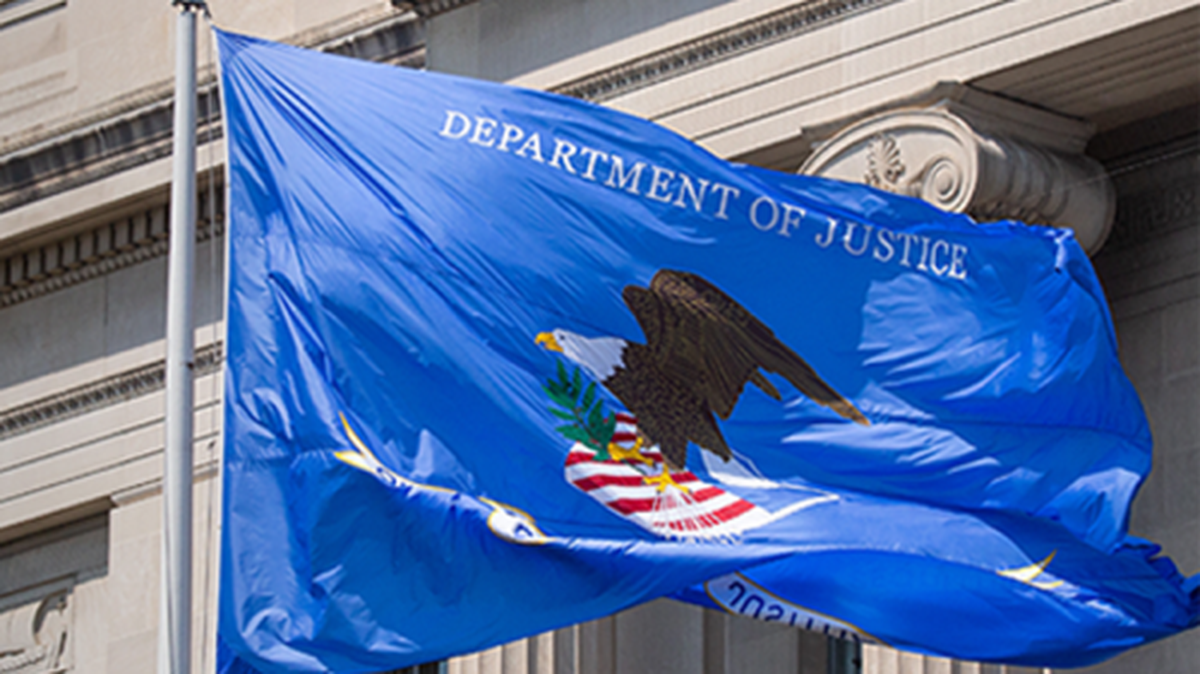
President Donald Trump’s Department of Justice has pulled out of a lawsuit that accused Houston County of violating its Black residents’ civil rights through its election system, court records show.
Houston County and its commissioners, Dan Perdue, Shane Gottwals, Gail Robinson, Tal Talton and Mark Byrd were sued by former President Joe Biden’s DOJ in January before Trump took office for allegedly creating an election method that diluted the voting strength of its Black residents, which violated the Voting Rights Act. But the DOJ pulled back its own complaint on March 17 with no explanation.
The case against Houston County was one of two lawsuits that were dropped, in which Biden’s DOJ alleged racial discrimination in elections. Texas faced a similar lawsuit, but a DOJ attorney announced at the beginning of the trial that the case would be dismissed, according to NPR.
The case against Houston County remains ongoing because two Black voters, Michael Jones and Courtney Driver, joined the lawsuit in March and are still suing. Jones and Driver sued the Board of Elections and its chair, Pamela Morgan.
Jones and Driver have asked the judge to declare that Houston County violated the Voting Rights Act and prohibit it from conducting future elections until the county complies with the Voting Rights Act.
Why was Houston County sued?
The DOJ had conducted an investigation into Houston County for multiple years, according to Bryan Tyson, the county’s attorney. The county was accused of conducting an election system that did not benefit Black candidates or voters, despite the growing Black population, its lawsuit said.
About 105,000 of Houston County’s nearly 172,000 residents are active registered voters, according to the DOJ. About 55% are white and 30% are Black, and white voters cast their ballots at higher rates than Black voters, the DOJ said.
The county’s current election system has seen Black-preferred commission candidates lose despite the support of the growing Black population in the county, the lawsuit said. Houston Porter, elected in 1980, is the only Black Houston County commission candidate to have won since Reconstruction. The DOJ, Jones and Driver previously said in their suits they believed Black voters would have better opportunity to elect preferred candidates if the county was redistricted.
Considering Houston County has geographically and socially distinct Black and white communities, the DOJ proposed crafting a district that included neighborhoods in the northern and eastern portions of Warner Robins, apartment complexes along Carl Vinson Parkway and racially diverse neighborhoods in southern Warner Robins.
Driver and Jones also proposed changes to how the community could vote for their preferred candidates. They suggested:
- Cumulative voting, which allows voters to cast multiple votes
- Limited voting, in which voters are given a selection of candidates and voters choose to vote for some of them
- Ranked-choice voting, which allows voters to rank candidates in order of preference
The DOJ indicated that Houston County had a history of discrimination against Black people that has affected their education, health and employment and, as a result, hindered their ability “to participate effectively in the political process,” the DOJ said in its complaint.
But, to Jones and Driver, the history of discrimination spanned all over Georgia, their complaint states.
Houston County’s responses
Tyson said Houston County would do its own investigation into the allegations to determine if the evidence supports it. He further said that, if he finds that they agree with the DOJ, they would “take appropriate action.”
However, Tyson requested to dismiss the allegations as the DOJ did not sue the correct party, court records show.
“Houston County and the individual members of the Board do not administer the elections in Houston County and did not adopt the countywide method of election,” Tyson said in the request. “Enjoining them cannot change the current method of election of commissioners as DOJ seeks.”
The election method adopted by Houston County was created by the Georgia General Assembly, Tyson said.
Tyson responded to Driver and Jones’ complaint in court records by saying private individuals can’t enforce the Voting Rights Act that Houston County allegedly violated, and it would be up to the DOJ. Tyson said in a request for dismissal that “the Supreme Court has not decided that such a right exists.” Tyson also said Driver and Jones didn’t specify where they live in Houston County.
“As a result, they have not shown they have an interest that could be addressed by this lawsuit,” Tyson said.
What now?
The judge assigned to this case must decide whether to enforce the Voting Rights Act, as requested by Driver and Jones, or dismiss the case. There has been no hearing scheduled nor an opinion from the judge filed before publication.