
Where there’s a wheel, there’s a way: Wheelchair couple celebrates golden anniversary
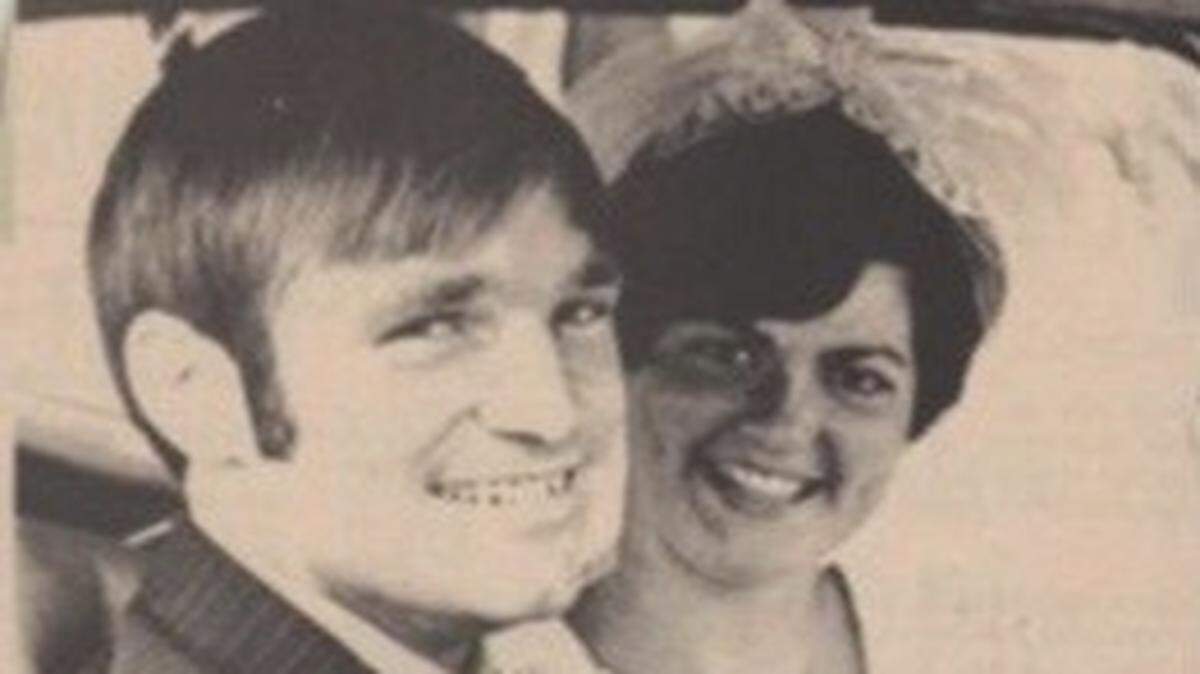
It was a late summer wedding, on a Saturday so hot you could fry an egg on the hood of a Camaro over on Green Street.
Ernie Hodge and Mary Pat Van Osdol said their vows at Sacred Heart Catholic Church on Aug. 29, 1970 and then turned every wheel they owned toward Daytona Beach, Florida, for their honeymoon.
When they pulled into the parking lot at the Holiday Inn, Ernie opened his car door and reached into the backseat for his wheelchair. He spotted the newspaper rack and rubbed his eyes in disbelief. On the front page of the local paper was a photograph and story from their wedding.
Even today – with their 50th wedding anniversary approaching – it all seems like something from a fairy tale.
“We didn’t even know the photo had been taken,’’ Ernie said.
“It was in newspapers all over the country,’’ Mary Pat said.
The local paper in Warner Robins covered the wedding. Mary Pat and Ernie are both paralyzed from the chest down and several members of the wedding party and guests were in wheelchairs.
The story made the rounds on the wire services, giving the bride and groom a measure of fame – at least until the next news cycle. The article also appeared in Mary Pat’s hometown newspaper in Warsaw, Indiana.
August is a big month for Ernie. He turned 72 on Aug. 5. His golden wedding anniversary is two days before the end of the month. And he selected Aug. 22 as the date for another milestone.
On Saturday, he will be at the Courtyard by Marriott in Warner Robins from 2 to 5 p.m. for his book launch of “The Will to Win.’’ It is the story of Ernie’s life, as told to author Terry Scarborough. An electronic version of the book will be available for download, and everyone attending the “meet and greet” will receive an autographed copy of the cover.
Ernie chose Aug. 22 because it’s the anniversary of the accident that broke his neck, left him paralyzed and changed his trajectory. If his inspirational story is worthy of a book, can a movie be far behind?
Ernie was a sophomore when the doors first opened at Northside High School in 1963. He walked to school from his home on Edna Place.
He was a scrawny, but scrappy, 5-foot-9 and 150 pounds and a three-sport standout for the Eagles. He dreamed of playing shortstop or third base in the big leagues.
“I was prepared to go out and conquer the world after high school,’’ he said.
He had been accepted at Georgia Tech, where he planned to major in aerospace engineering and try out for the baseball team as a walk-on.
After graduating from Northside in 1966, he got a summer job working construction. He was injured when part of the roof of an air freight terminal at Robins Air Force Base collapsed. He fell 40 feet.
It was two weeks after his 18th birthday and just before the start of his freshman year at Georgia Tech.
“The doctor told me I broke my neck, but you know how it is when you’re 18,’’ Ernie said. “I was at the Macon Hospital, and I got out of there with the idea it was no big deal. Let me get some exercise, and I’ll be ready to go.’’
The injury left him in a wheelchair, paralyzed from his chest down. He could move his arms but had limited use of his hands. He was sent for rehabilitation at Warm Springs, made famous by President Franklin D. Roosevelt. FDR had been a frequent visitor there with other polio patients.
“I had the idea they would put me in this special water and my body would start moving again,’’ he said. “I thought I would be walking out of there in a few weeks.’’
Still in denial, reality set in when he began talking with other spinal cord patients about the same age. Some had been in car and motorcycle wrecks. Others had been in gun accidents.
“I asked one guy when were they going to put us in the water,’’ Ernie said. “He laughed and said they don’t put people with spinal cord injuries in the water. He had been in a wheelchair for 10 years.’’
At the time, the campus at Georgia Tech was not handicap accessible. He enrolled at the University of Illinois, which had special programs for handicapped students. He learned to be independent. He was mainstreamed.
“Physically, I couldn’t even hold a pen but I still wanted to be an aerospace engineer,’’ Ernie said. “It’s all I ever wanted to do since I was a kid. I had to squeeze the pen between my fingers to write, and I had no grip. I was competing against all these other whipper-snapper engineers, and it wasn’t easy.’’
He met Mary Pat at Illinois. She had transferred there after two years at Marian College in Indianapolis. She contracted polio when she was 7 years old in 1954, the year before the polio vaccine was introduced.
They both participated in wheelchair sports. They traveled and competed all over the country. Mary Pat set several national records in track and field.
She later excelled in education, becoming one of the first wheelchair-using teachers in the nation. Ernie later got his Masters at the University of Florida and worked for more than 40 years as an engineer at General Electric, Lockheed and Westinghouse before running his own business for 15 years.
They adopted their daughter, Melissa, when she was 3 weeks old and living in Florida. Melissa, now 34, lives in Kennesaw and is national director of residential services for First Key Homes.
“When she was a child, we couldn’t take her and do things like Disney World, but we did it anyway,’’ Ernie said. “We decided we were not going to hold her back. She knew we couldn’t go on any of the rides with her, so she learned to be independent and find some friends to ride with her.’’
Their marriage has been unique. Mary Pat laughed and said some people have asked if they ever race each other in their wheelchairs.
“We both have certain things to offer, and we are dependent on each other,’’ Ernie said. “We have made it work, even though it has been physically hard. We are good together. We know how to make things happen.’’
Ed Grisamore teaches journalism at Stratford Academy in Macon. His column appears on Sundays in The Telegraph.