
More A's: Georgia hospitals' safety ratings rise
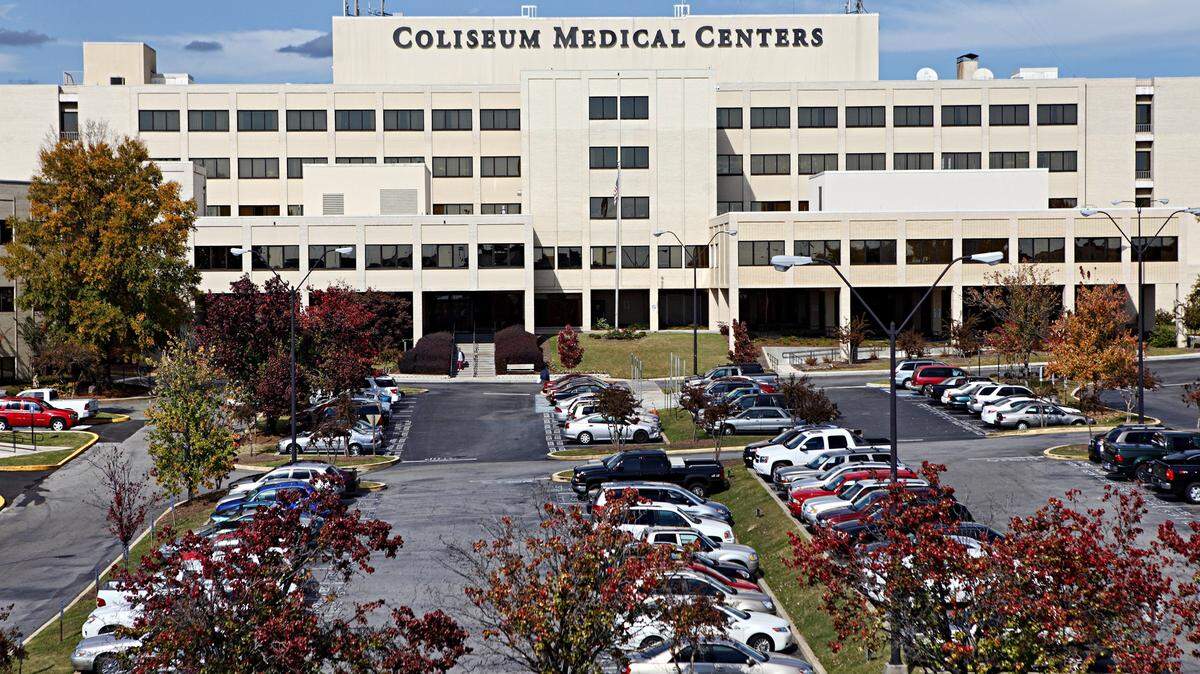
One-third of Georgia hospitals earned an "A" grade on patient safety in recently published ratings that saw Middle Georgia hospitals receive a mixed bag of scores.
The 34.8 percent of hospitals in the state getting the top grade was up from the 27.5 percent that the Leapfrog Group gave "A's" in its spring safety rankings. It puts Georgia at No. 10 among states with the highest percentage of top-performing hospitals.
The twice-a-year hospital rankings from Leapfrog join a growing mound of information on the quality of care that has emerged in recent years. Another rating organization, Healthgrades, has recently released a guide on which Atlanta-area hospitals are best for certain health conditions, such as heart attacks and knee replacements.
Leapfrog, which was founded by employers, assigns "A" through "F" grades to more than 2,500 U.S. hospitals based on how they prevent medical errors, injuries, accidents, and infections. New research estimates up to 440,000 Americans are dying annually from preventable hospital errors, according to Leapfrog, a nonprofit organization based in Washington, D.C.
The hospital scores are calculated by top patient safety experts, using publicly available data such as that from Medicare and the CDC.
Leapfrog said last week that nationally, 133 hospitals have earned straight "A's" since the ratings debuted in 2012.
"Hospitals from across the country, with 100 beds to over 750 beds, nonprofit and for-profit alike, received this top honor," Leah Binder, president and CEO of the Leapfrog Group, said in a statement. "No matter how large or small, no matter what kind of community they serve, all hospitals have the potential to give their patients this high level of safe care."
Scoring an "A" grade were 24 hospitals across Georgia, including in metro Atlanta, Macon, Perry, Dublin, Augusta, Savannah, Tifton, Moultrie, Albany and Rome.
"Improving from 24th to 10th in the nation in the percentage of hospitals scoring an 'A' is a tremendous achievement for the entire Georgia hospital community," Kevin Bloye, a Georgia Hospital Association vice president, said in a statement Tuesday.
"It underscores the relentless commitment that hospitals in the state have in making patient care as safe as it can be,'' Bloye said. "While we're pleased with the progress that hospitals are making in providing high-quality care, when choosing a health care provider, patients should utilize not only this study, but several informational resources highlighting quality care."
Once again, Maine claimed the No. 1 spot in the Leapfrog state rankings, with the highest percentage of "A" hospitals (69 percent of the 16 scored hospitals in the state).
There were no "A" grade hospitals in Alaska, North Dakota, New Mexico, Vermont, Wyoming or the District of Columbia
MIDDLE GEORGIA SCORES
Seven Middle Georgia hospitals rated by Leapfrog received grades ranging from "A" through "C."
In Macon, both Coliseum Medical Centers and Coliseum Northside Hospital earned an "A" for the fall 2015 ratings. Those hospitals' administrators said they were proud of the team effort it took to get the high score.
"I think some people think the care is not as good as at a bigger hospital like Coliseum (Medical Centers) or Navicent Health," Coliseum Northside CEO Steve Daugherty said about the 103-bed hospital on Charter Boulevard. "I think this validates the great work our physicians and staff do to provide quality and safe health care for our patients in Macon."
Another Macon hospital, the Medical Center, Navicent Health, received a "C" after scoring below average in areas such as death from serious but treatable complications; accidental cuts or tears during medical procedures; and serious breathing problems after surgery.
Navicent fared above average in preventing collapsed lungs and blood clots.
"At Navicent Health, excellent patient outcomes are our chief priority," Christopher Hendry, interim chief medical officer, said in a statement. "As a testament to our ongoing commitment to patient safety and quality, we were recently chosen as one of 100 Safe Care Hospitals in the U.S. for the second consecutive year, recently redesignated as a Magnet Hospital for nursing excellence, and awarded the Society of Thoracic Surgeons' prestigious 3 Star Rating."
After earning a "B" in the spring, Oconee Regional Medical Center in Milledgeville saw its score slip to a "C." The hospital scored slightly lower than average for patients suffering from a collapsed lung and patients developing serious breathing issues after surgery.
A statement from Oconee Regional said some of the data used in the study is not current for the hospital that participates in the National Health Safety Network. Oconee Regional has recently received safety awards from the Georgia Hospital Association.
"We also have a Quality Improvement Plan where we measure ourselves against national benchmarks, and we have three and four star ratings in patient safety," the statement said.
At Houston Healthcare, its Perry Hospital garnered an "A" while Houston Medical Center in Warner Robins scored a "B."
The lone category in which the Houston Medical Center scored below average was the rate of having a surgical wound split open. The report did not have data available from that hospital about patients suffering serious breathing problems after surgery.
Perry scored well in preventing a collapsed lung and limiting accidental cuts and tears during a procedure. The hospital scored below average in the blood clot category. The report said the hospital had 4.8 patients out of 1,000 suffer a clot during surgery compared to an average of 4.18 patients at hospitals rated by Leapfrog.
In Dublin, Fairview Park Hospital also scored an "A" after rating above average in five of six categories. The hospital was rated average in the area of death from serious but treatable complications.
DIFFERENT APPROACHES
Not all hospitals are graded by Leapfrog. Critical access hospitals and pediatric facilities are excluded because of insufficient data.
Beth Stephens of Georgia Watch, a consumer advocacy organization, said Tuesday that the Leapfrog ratings are "a decision-making tool for consumers."
The state's No. 10 ranking, she said, "is something Georgia should be proud of."
Meanwhile, a new guide from Healthgrades lists several hospitals in the metro Atlanta area as top performers for five health conditions.
The Denver-based company said 11 percent of metro Atlanta patients receive care in hospitals that have unexpectedly high mortality or complication rates.
Healthgrades, analyzing Medicare data, said that nationally from 2012 through 2014, patients treated at hospitals receiving 5 stars had, on average, a 71 percent lower risk of dying and a 65 percent lower risk of experiencing a complication during their hospital stay than if they were treated at a hospital receiving a 1-star rating (statistically significantly worse-than-expected outcomes.)
The Leapfrog and Healthgrades measures are part of the national push to give consumers more information on cost and quality of care.
But more information has not always meant more clarity. A study published in March found that Leapfrog, Healthgrades and two other popular national rating systems used by consumers to judge hospitals frequently come to very different conclusions about which hospitals are the best -- or the worst.
Ratings systems use data from different sources and employ different methodologies to analyze it, said Stephens of Georgia Watch. The emphasis of the ratings can vary as well, she said.
A consumer who's shopping for a hospital may want to consult multiple sources of information, she said.
Overall, Stephens said, "I think we see hospitals taking these scores seriously."
And more consumers are paying attention, she said.
"I think it is driving (hospital) improvement and will continue to drive improvement."
Telegraph writer Stanley Dunlap contributed to this report.
This story was originally published November 5, 2015 at 6:06 PM.