
New Georgia study plots peak times for deer-vehicle collisions
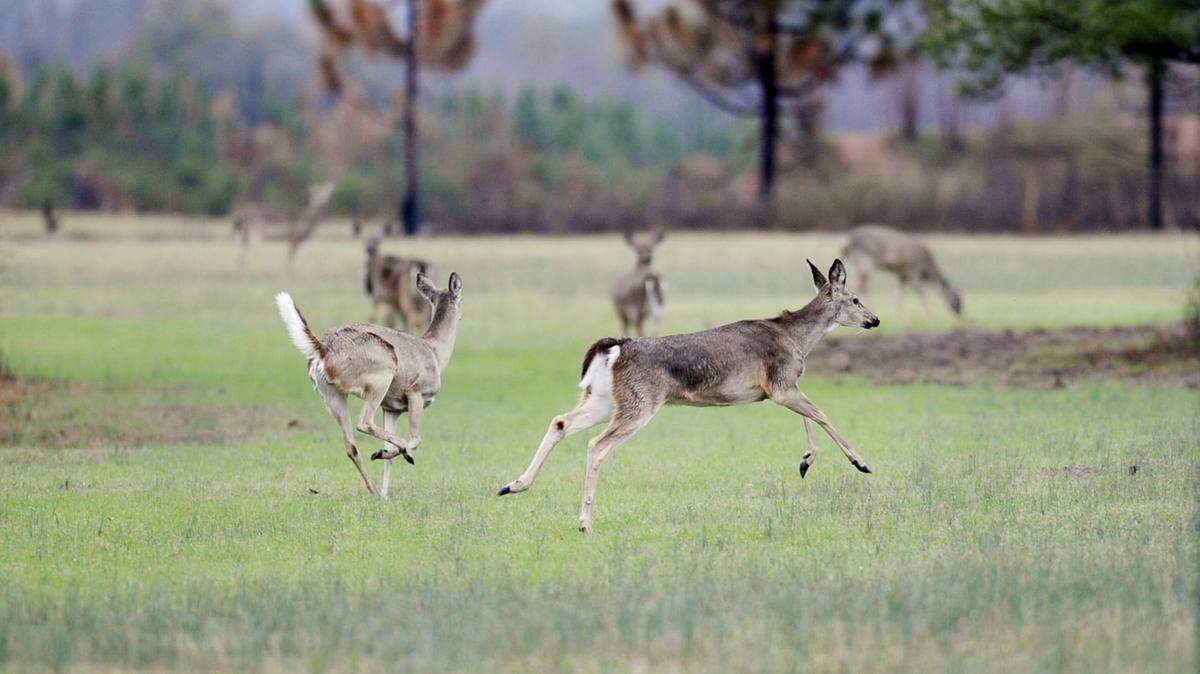
Business is beginning to pick up at Middle Georgia automobile body shops as seasonal deer collisions are on the rise.
Shane Dukes of Shane's Body Shop in Dublin says he is already seeing an increase in the number of customers.
"I had three cars totaled out last week," Dukes said Friday. "My business definitely increases. Sometimes I can hardly keep up with it."
A total of 45,811 deer-vehicle collisions were reported across Georgia between 2005 and 2012.
A new study by the University of Georgia assessed available deer breeding information with reported accidents to calculate peak times for deer to be on the move.
During rutting season, white-tailed deer search for mates and travel much more than other times of the year.
"Depending on your location in Georgia, peak rut may occur anywhere from October to December," James Stickles, the lead researcher on the project, said in a news release.
The Georgia Department of Natural Resources is using a new map created by UGA's Warnell School of Forestry and Natural Resources to alert hunters of peak rut dates.
Georgia's Department of Transportation also is considering using the information for more focused motorist warnings for each region, according to a DNR news release.
In Laurens County where Shane's Body Shop is located, the peak time is expected to be Nov. 3-9.
Harrison's Body Shop on Clinton Road in Macon already has been a little busier, although Bibb County peaks with Laurens County.
"Now we can warn drivers in a more relevant timeframe than in the past," said Stickles, who now serves as assistant deer coordinator for the Florida Fish and Wildlife Conservation Commission.
Bob Warren, a UGA researcher who also worked on the study, said deer are mostly active from dusk to dawn, which is when the accident risk is greater.
Crashes are more prevalent in the early mornings and late evenings when there are more cars on the road.
When he drives at night, Warren watches his speed and scans both sides of the road.
"Deer are rarely alone," Warren said in the release. "If a motorist sees one deer, look for the second one. In many instances, it's the second deer that crosses the road and gets hit."
Visit www.georgiawildlife.com/rut-map to see peak weeks for deer-vehicle collisions in all of Georgia's 159 counties.
To contact writer Liz Fabian, call 744-4303 and follow her on Twitter @liz_lines.
Peak rut times in Middle Georgia counties
Oct. 13-19, Ben Hill and Telfair
Oct. 27-Nov. 2, Baldwin, Jasper, Monroe, Putnam, Washington and Wilkinson
Nov. 3-9, Bibb, Bleckley, Crawford, Dodge, Dooly, Houston, Jeff Davis, Jones, Lamar, Laurens, Macon, Peach, Pulaski, Twiggs and Upson
Nov. 17-23, Crisp
This story was originally published October 20, 2015 at 10:22 PM with the headline "New Georgia study plots peak times for deer-vehicle collisions ."