
Just in case: Midstate colleges prepare for shooting incidents
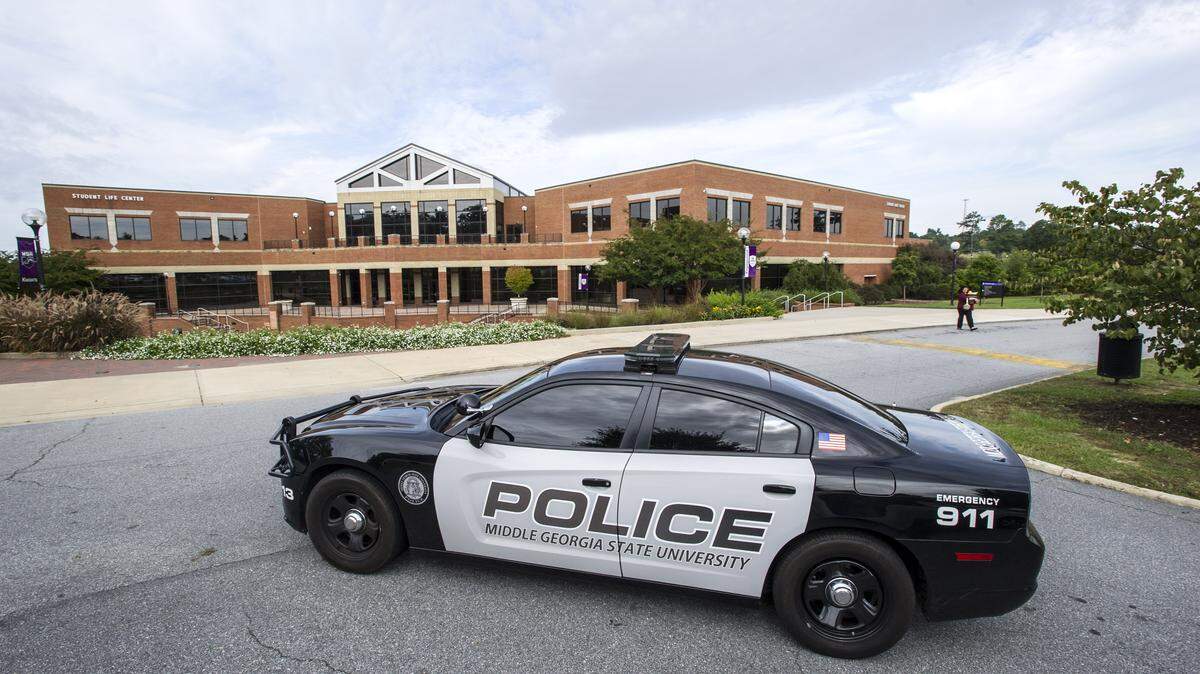
Separate shootings Friday that left two college students dead has renewed concerns over campus security across the nation and in Middle Georgia.
The first, at Northern Arizona University’s Flagstaff campus, resulted in one death and the hospitalization of three others. The second was at Texas Southern University outside a student housing complex. In that incident, one student was killed and another wounded.
Friday’s shootings come just days after multiple people died at the hands of a gunman on a college campus last week. On Oct. 1, a gunman opened fire during a class at Umpqua Community College in Roseburg, Oregon, killing nine people and severely injuring several others.
With the reality of the times, Middle Georgia colleges and universities are taking measures to prepare for the possibility of similar events here.
In Georgia, public institutions of higher learning such as Middle Georgia State University and Fort Valley State University are required by the University System of Georgia to develop a master emergency plan. The plans address emergencies that may be encountered on campus, including the scenario of an active shooter. Private colleges such as Mercer University also have developed similar emergency preparedness plans.
The plans cover educating students ahead of time, how authorities respond and the notification of parents. MGSU features the plan on its website, and Mercer includes it in the student handbook.
During freshman orientation at MGSU and FVSU, an active shooter training segment includes a 14-minute film that teaches students three principles: plan, prepare and react. It also includes advice from authorities and features dramatizations of how to respond.
“They want the students to understand ... don’t just sit there and be a victim,” said Middle Georgia State’s campus Police Chief Shawn Douglas. “You need to have a game plan, because that’s what ends up happening.
“Either (would-be victims) take charge and barricade the door, lock the door, or ... they just really, I hate to say it, cower in a corner and give up,” he said. “And that’s what we don’t want.”
Students are told in training that an active shooter isn’t going to stop until becoming engaged by students or, preferably, the police, Douglas said.
“But if comes down to it and there are no other options, know that you will be a victim if you don’t react,” he said.
A simple step of preparedness offered in the video is adding the campus police numbers in phone contact lists. Because campus police are familiar with the buildings and campus layout, these officers likely will know best how to respond. If students don’t know the campus police number, the video encourages them to call 911.
MGSU also offers active shooter training each semester for students who missed orientation or transfer in later, Douglas said. FVSU, meanwhile, takes the training into student dormitories on campus, said FVSU campus Police Chief Kenneth Morgan.
Mercer also offers a video created by the city of Houston, Texas and the U.S. Department of Homeland Security that teaches similar principles but classifies them as run, hide or fight. The video can be viewed on the university’s website. MGSU also has a page about active shooters and also features its video on its website.
MGSU uses the MGA Knight Alert system to communicate directly with students, faculty and staff by sending voice messages to multiple numbers, text messages to mobile phones and through email. Parents can be added to this system by students. FVSU and Mercer use similar mass notification systems.
Parents have the ability to opt in to the Mercer campus alerts system that uses emails and texts.
“Additionally, we would use all additional communication tools at our disposal, such as website and social media, to communicate with the public in a manner appropriate to a given emergency situation on campus,” Kyle Sears, Mercer’s director of media relations, said.
MGSU’s plan includes the setup of a staging area for parents and other community members where updates would be provided.
Campus police at MGSU, FVSU and Mercer are certified law enforcement offices and must participate in a minimum of 20 hours of training annually to maintain certification through the Georgia Peace Officer Standards and Training Council.
MGSU sent its officers to active shooter training where they experienced live fire. Some FVSU officers have additional training. Mercer campus police rehearse emergency protocols, including for an active shooter incident, and they conduct periodic table-top exercises with local law enforcement.
Campus police also use other techniques in an effort to protect students, from officers being visible on campus and monitoring security cameras to using parking decals to identify vehicles that aren’t normally on campus.
MGSU requires students on all its campuses to carry student identification cards that must be produced if requested by police, faculty or staff. Faculty and staff are encouraged to engage students and ask for an ID when students are found in places they shouldn’t be. MGSU has added security that includes required ID badges at its Eastman campus because of the aircraft housed there.
FVSU has an advantage that most colleges and universities don’t. The main campus is gated and has informational security booths set up at each of its four entrances. While those at the booths are not law enforcement officers, they have security training and are in radio contact with campus police officers.
The police chiefs said such shootings can happen anywhere, from campuses and movie theaters to restaurants and shopping malls.
“In all honesty, it’s a touchy subject to all parents and students and community (members),” said Morgan at Fort Valley State. “We tell everybody to be cognizant of their surroundings.
“As soon as you notice something that doesn’t look right, doesn’t feel right, doesn’t seem right, don’t hesitate to let us know. ... That could help us prevent something from happening.”
To contact writer Becky Purser, call 256-9559, or find her on Twitter@becpurser.
This story was originally published October 9, 2015 at 7:51 PM.