
Fifty years down, 50 to go. What’s inside Macon’s Fourth of July time capsule?
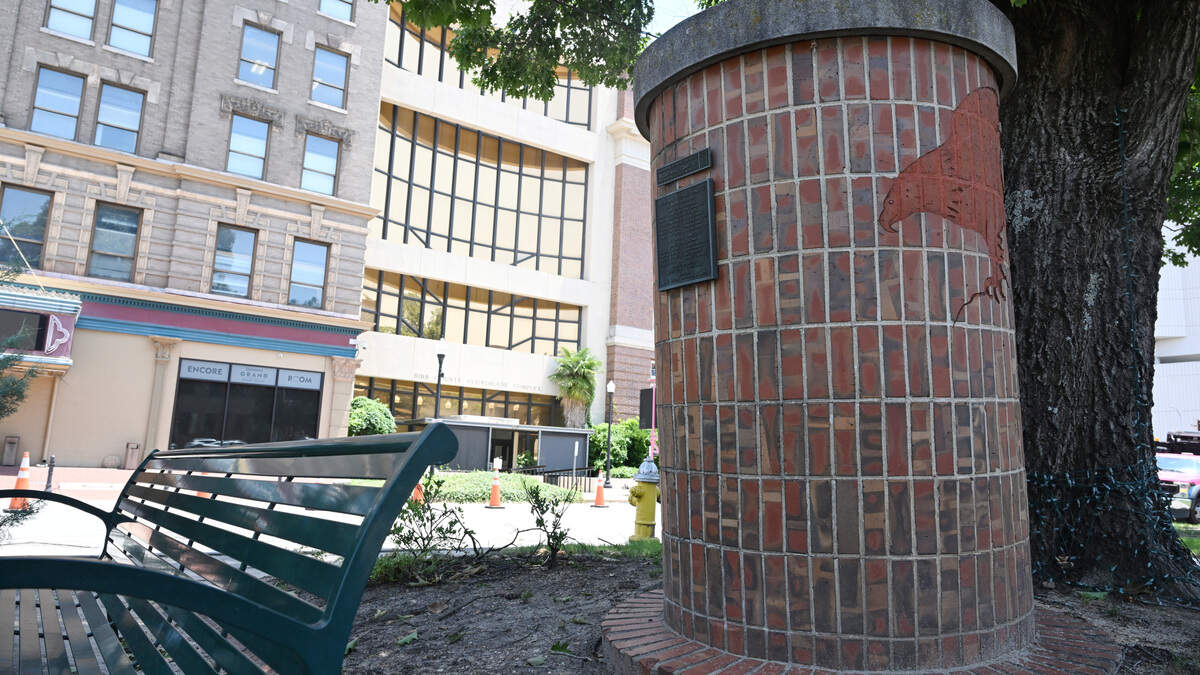
Those walking down Mulberry Street in downtown Macon may not look twice at the wide brick cylinder sticking out of the ground at a slight angle among benches and trees. However, what is inside the structure was specifically chosen to celebrate American independence, honor the country’s past and educate Macon’s future residents.
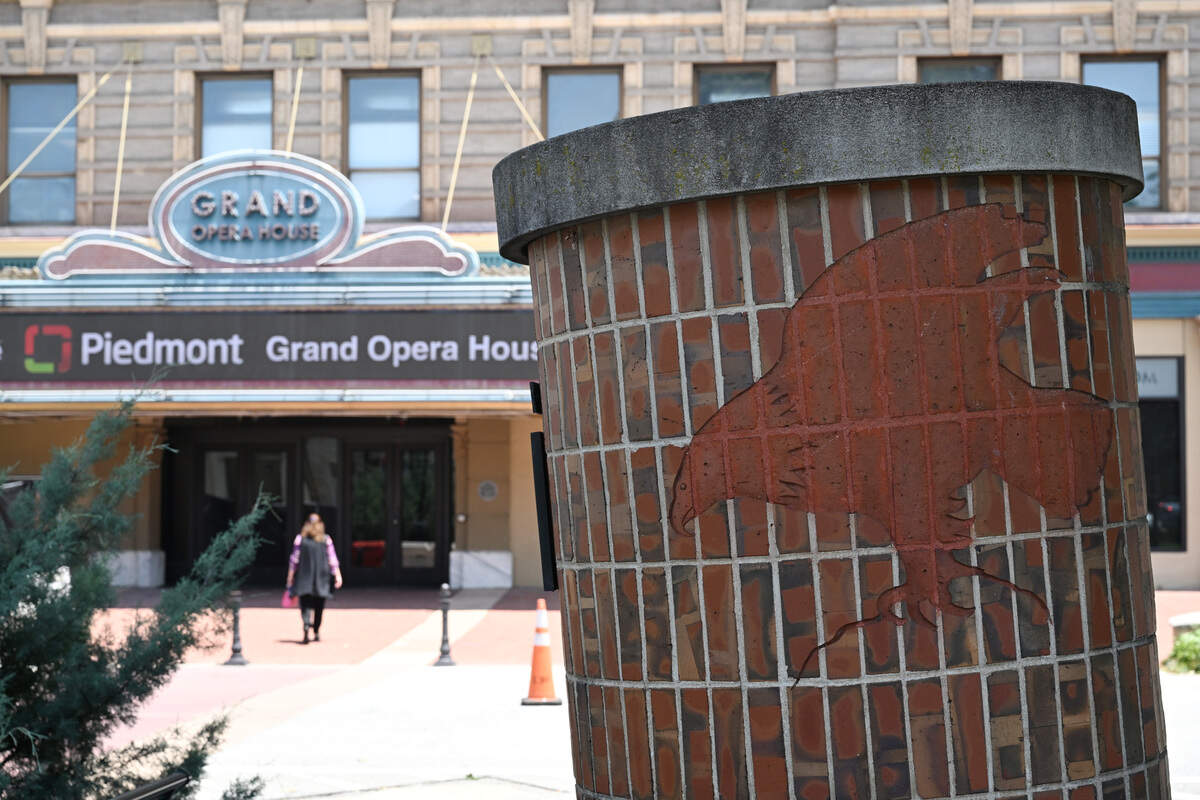
In 1976, the Macon-Bibb County Bicentennial Committee had the idea for an above-ground time capsule to celebrate the United States’ 200th birthday, filled with items that embodied the era. As America’s 250th birthday approaches this month, the capsule sits outside the Piedmont Grand Opera House at its halfway point, with explicit instructions not to be opened before the nation’s tricentennial in 2076.
‘Everything about life in Macon’
The first mention of the time capsule appeared in The Macon Telegraph in May 1967, listing it as a part of Macon’s larger festivities led by the Macon-Bibb County Bicentennial Committee. The Telegraph credited time capsule committee chairman Gary Clark with the original idea “based on similar activities planned across the country.”
The capsule is about 6 feet high and features mostly brick with large eagles sandblasted on the side. Members of the Middle Georgia chapter of the American Institute of Architects designed the capsule, while the Home Builders Association of Macon built the structure, according to the plaque on the side. The capsule’s design is unique in that it sits above ground, while most time capsules tend to be buried or inside of buildings, according to reporting from The Telegraph.
The contents required more community input than its outer shell. The Telegraph published a coupon with a story on the capsule in its June 6, 1976, paper that readers could cut out, write down their suggestions and mail to the committee’s post office box.
“We have some ideas, of course, but a lot of people can come up with more ideas than just a handful,” said bicentennial committee member Betty Jordan in an article for The Telegraph.
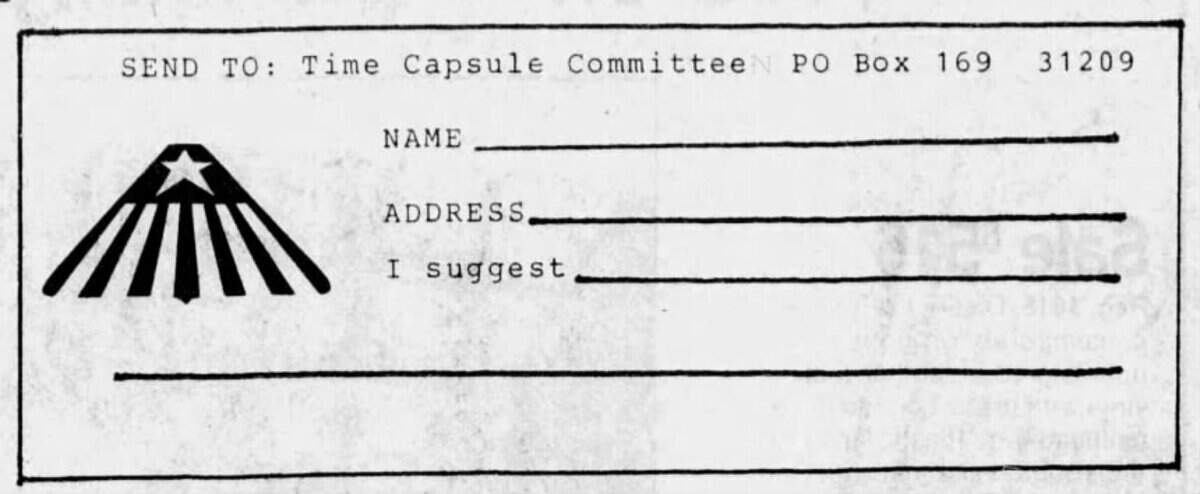
The committee received ideas from across Macon and Middle Georgia. Suggested items included a set of Bbicentennial coins, a telephone, different versions of the Bible and a Georgia state income tax return.
“A list of ideas drawn up by a local high school class included such items as a pack of cigarettes, a fashion magazine, a dressed mannequin, 1976 Olympics pictures, copies of ‘Jaws’ and ‘The Exorcist’…” wrote Macon news writer Lee Ann Schlatter.
The Telegraph reported that the committee held a dedication ceremony for the capsule on July 4. It was attended by around 200 people. Despite its relevance to the Fourth of July holiday, the time capsule was not complete until December 1976 and the committee welcomed suggestions on what to include until its completion date.
There is no written record of everything in the capsule, but days before the vault was sealed, the Grand Opera House displayed the included items as an exhibit. Artifacts that made the cut included “fashion magazines, electric bills, college catalogs, coins, restaurant menus, records stamps, an income tax return, newspapers, bank statements, books, poems, paintings.”
“Everything about life in Macon — from a hospital bill for a mother giving birth to an estimate for funeral costs — will be included for future discoverers,” wrote Telegraph staff writer Cathy Coleman.
Bicentennial time capsules in Middle Georgia
Macon’s bicentennial time capsule was not the only one in Middle Georgia at the time. The city of Perry simultaneously worked on its own time capsule, which was buried in the front yard of city hall on July 4 and features items from Perry residents.
The time capsule in Perry was spearheaded by then-Mayor James O. McKinley, who took specific precautions to protect the contents of the vault.
“Perry mayor James O. McKinley is filing copies of [the] plans in the Houston County Courthouse, the state archives in Atlanta and the National Archives in Washington, D.C. He also plans to send copies to archives in London and Cairo,” wrote Jan Ackerman for The Telegraph.
Closing the vault
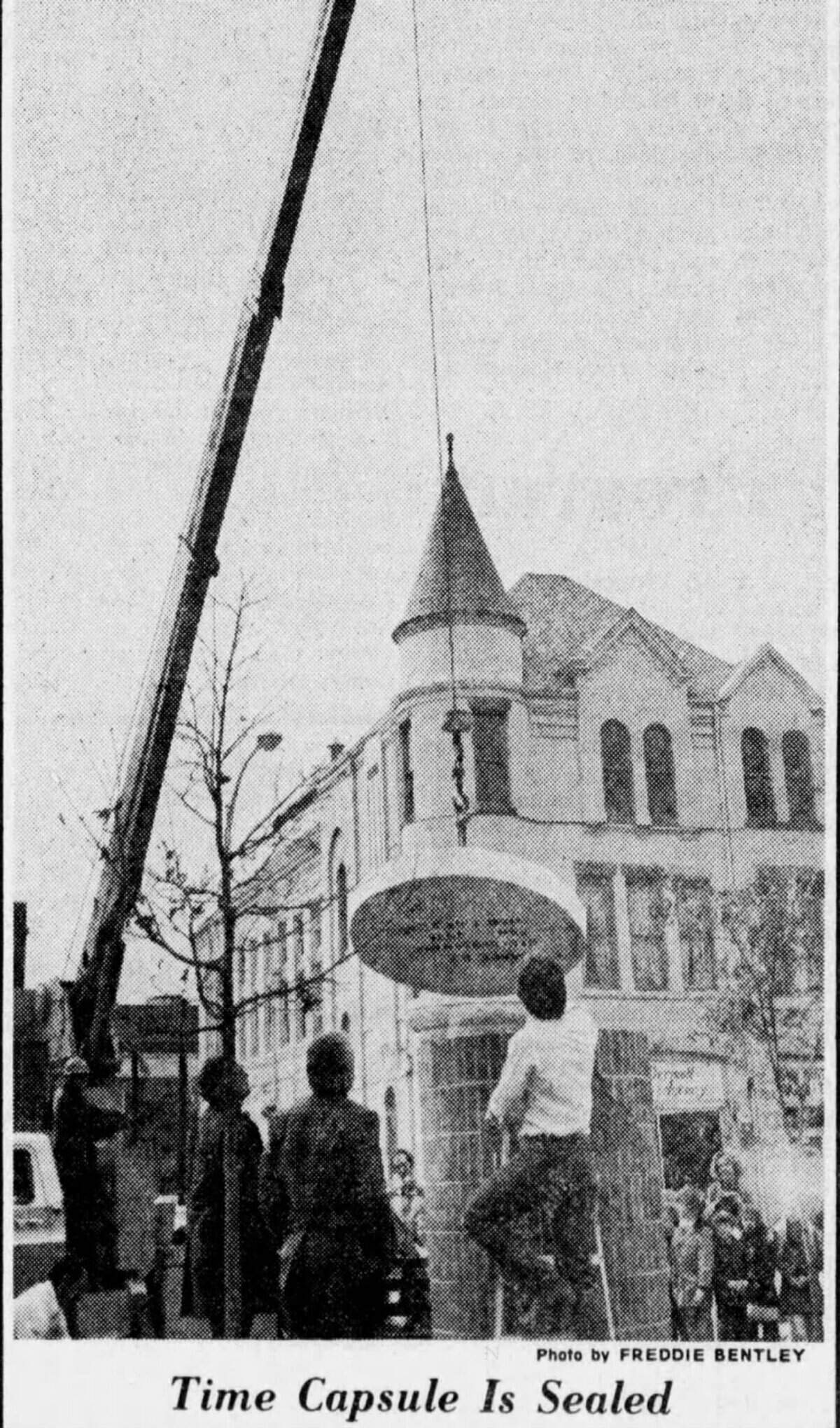
On Dec. 10, 1976, a crowd gathered on Mulberry Street to watch a crane place the concrete lid on the Macon time capsule, which The Telegraph described as “shielded inside a 175-pound stainless steel container, swathed in insulation and [placed] inside the brick cylindrical capsule.”
“Some 150 persons watched the ceremony in front of the Grand Opera House and listened to speakers who expressed, almost unanimously, their hope that citizens who open the capsule in 2076 will be living in peace and freedom.”
Five decades later, the brick cylinder sits in the same place. There are still decades to go before the contents of the capsule will be unveiled and future Maconites will be able to uncover what the city and country viewed as most important a century before their time.