
This Tuskegee Airman was a Fort Valley native. He inspired generations of service
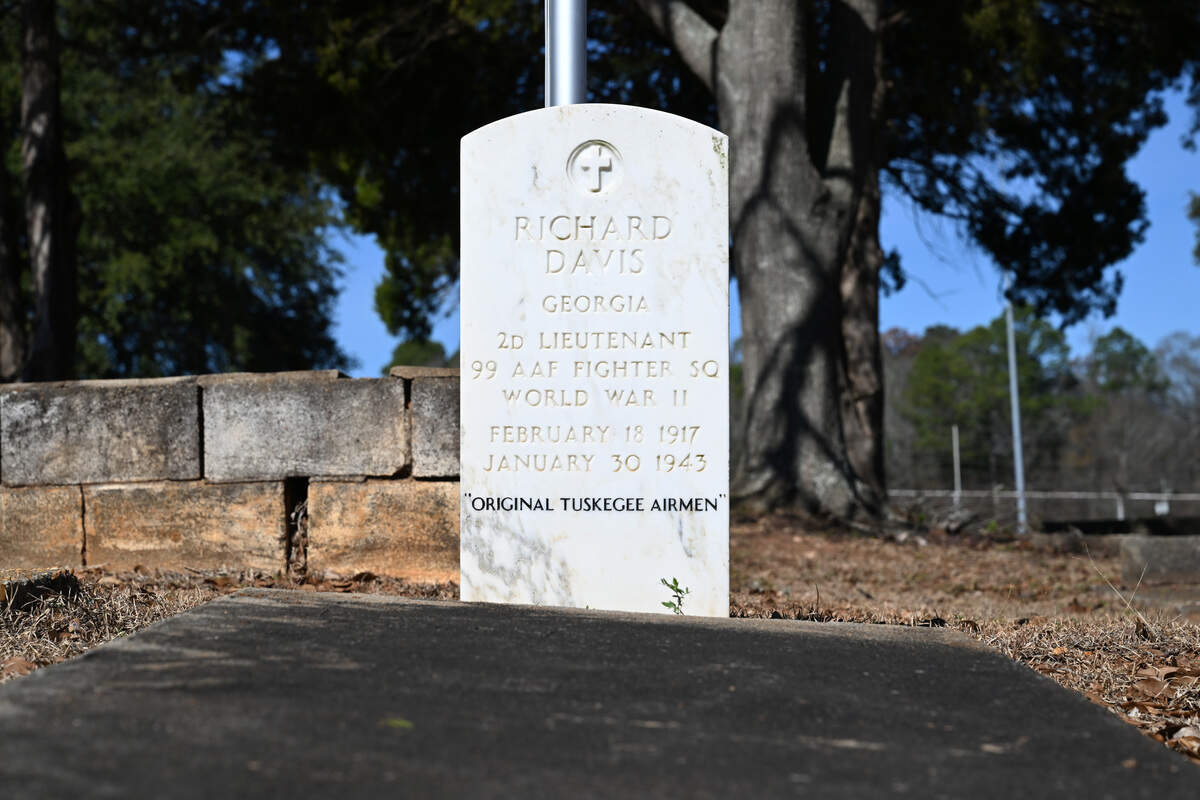
Tucked behind the Blue Bird school bus plant and a tangle of fast food restaurants and gas stations off I-75 in Fort Valley, the grave still stands as straight and tall as a soldier marching to war.
Even with its gleaming white surface and the Stars and Stripes billowing on a pole over it, it still doesn’t quite capture the weight of its occupant’s life.
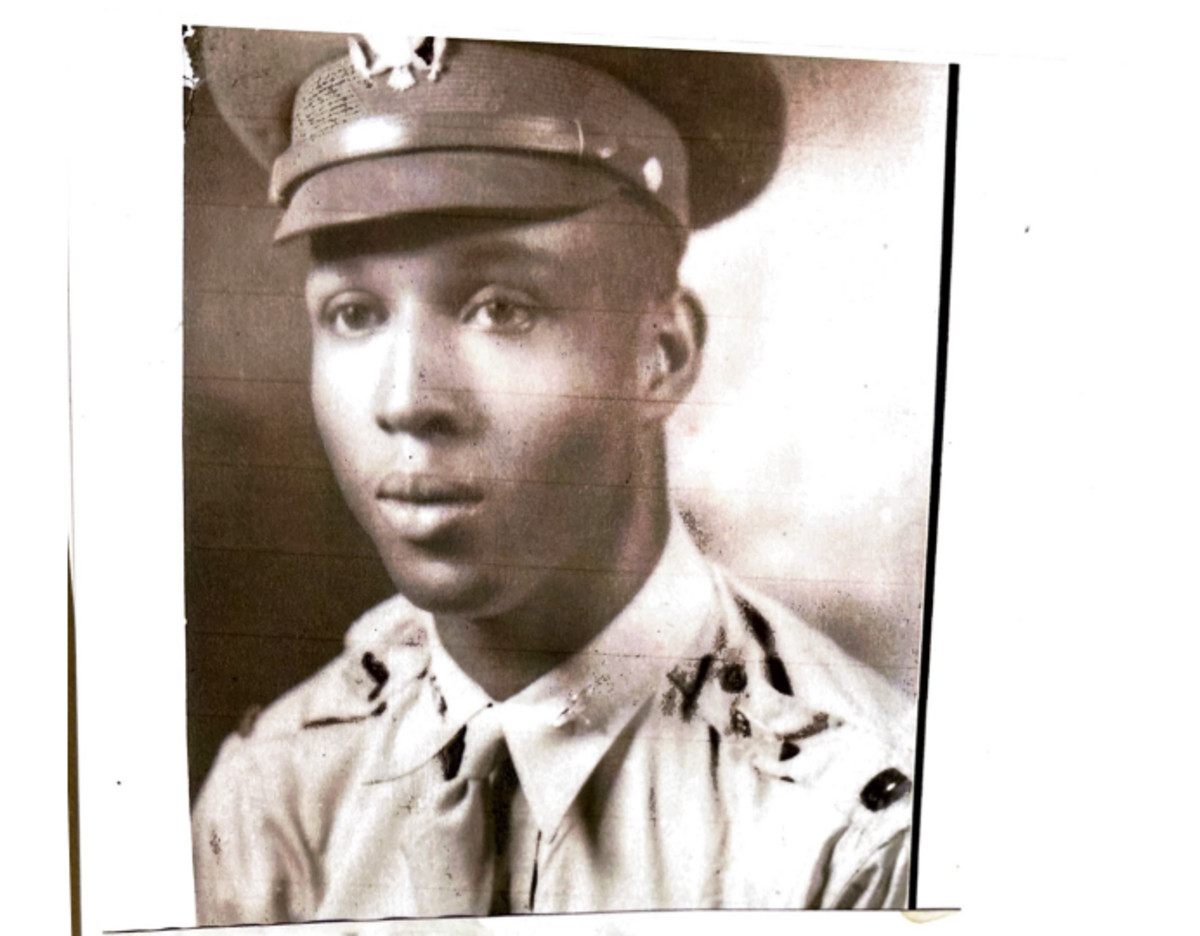
Richard Davis, the man buried there, was one of the original Tuskegee Airmen, a group of men who became the first Black U.S. military pilots in the early 1940s.
Davis, who died in an aviation accident in January 1943, shaped U.S. history, his family said, and launched a legacy of service that generations of his family have continued.
From Fort Valley to Tuskegee
Richard Davis had dreamed of the sky since he was a child.
Born on February 18, 1917, Richard Davis had a “country fried” childhood in Fort Valley, as his sister, Willie Maude Lumpkin, described it.
To a farm boy in a small town in Georgia, the sky felt boundless. When he wasn’t busy taking care of his siblings or doing chores, he could often be found looking up.
“He just always had a fascination with flying planes,” said Charlie James Davis Jr., Richard Davis’ nephew through his younger brother, CJ Davis. “He did exactly what he wanted to do.”
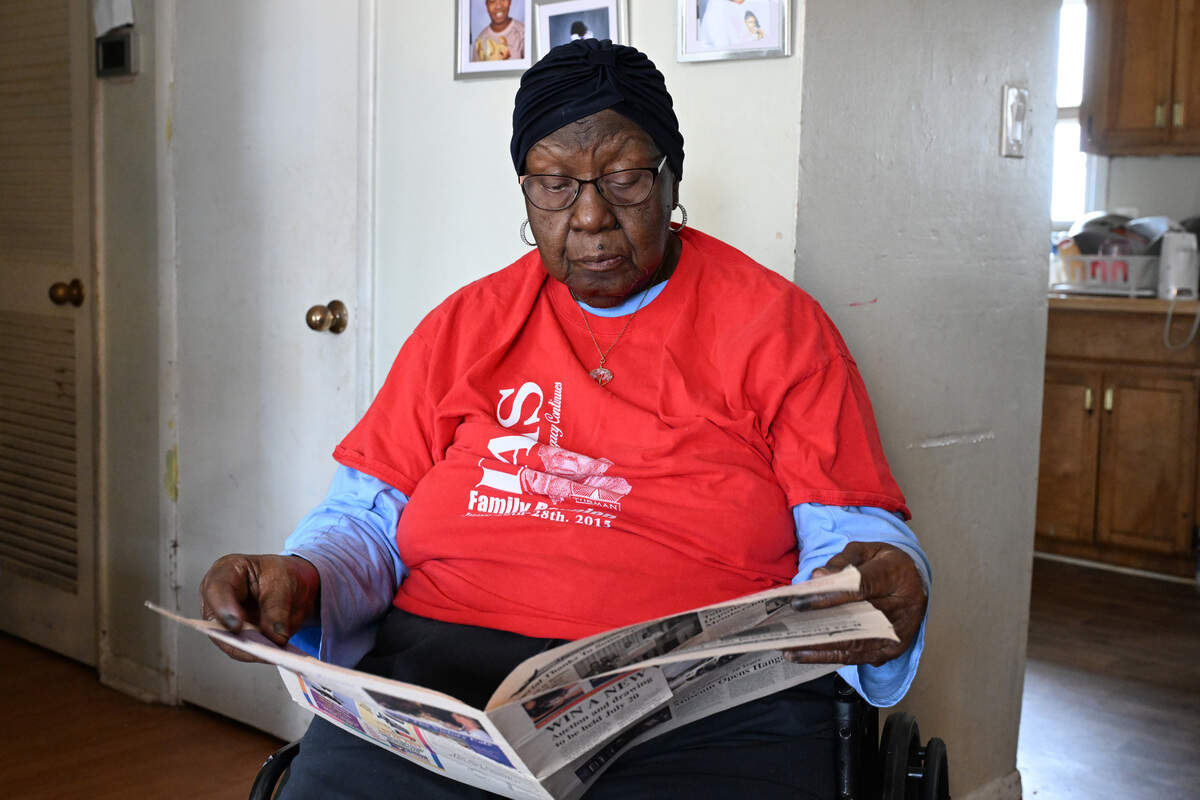
The Davises were a large family. All 17 children were born and raised in a small farmhouse where they spent their days caring for their animals, picking peaches and shaking dirt off peanuts.
Lumpkin said Richard Davis was talkative and “big-headed” like the rest of her brothers, dreaming big and occasionally being too boastful for their own goods.
With so many mouths to feed, Lumpkin said, older children took on raising the younger ones and managing household chores. Richard Davis started working for a neighboring family, the Tabors, around this time to make some money, eventually spending most of his time at their house instead of his own.
“They raised him,” Lumpkin said. “Fed him and clothed him and everything.”
In addition to dreaming of flying, Richard Davis wanted to go to college, family members said. The Tabors encouraged him to attend Hampton Institute in West Virginia — now known as Hampton University — putting him on a path that would eventually combine his two ambitions.
After finishing college, Richard Davis obtained his pilot’s license. While getting his license, he learned about crop dusting and eventually got a job as a flight instructor for Robertson Aircraft Corp. in Missouri, where he taught others to fly planes for agricultural purposes, family members and documents said.
When the U.S. Army Air Forces announced a program to train Black men to be military pilots, Richard Davis was among the first groups of aviation cadets to head to Tuskegee Army Air Field. His family said he was eager to join.
The program produced the group now known as the Tuskegee Airmen — a cadre of pilots, mechanics, bombardiers, crew chiefs and other support staff who were the first Black military airmen.
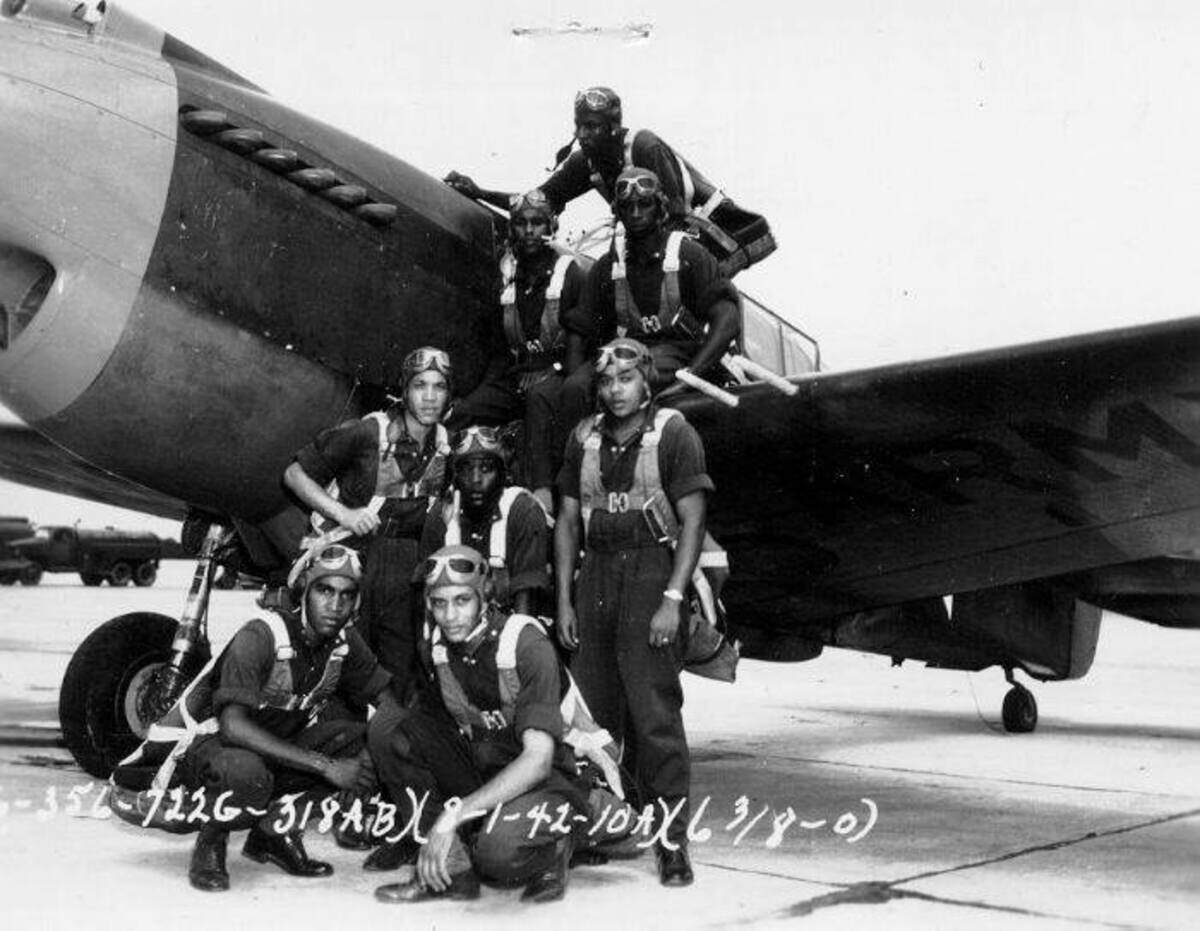
Despite the challenging course work and experimental nature of the program, Lumpkin said, Richard Davis excelled and eventually convinced his younger brother, Moses Davis, to leave Fort Valley when he graduated from high school and follow him into the program as a mechanic.
Lumpkin said that even as he became more engrossed in his courses and duties in Tuskegee, family remained important to him. On slower days at the airfield, Richard Davis would fly from Tuskegee to Fort Valley, tilting his wings towards the ground as he passed overhead so his family would always know it was him.
Lumpkin and Richard Davis’ mother Elberta Benjamin Davis died in childbirth in November 1939. Even though Richard Davis couldn’t come home, he flew his plane over his childhood home as his siblings stood outside so they knew he was thinking of them, all the way up in the bright vastness of the sky.
“My grandmother would talk about how he would bring it down low enough to wave to them while he was flying the plane,” said Chena Perkins, Richard Davis’ great niece through his younger sister. “They were proud of their big brother.”
Richard Davis completed his training at Tuskegee in August 1942 as part of the fifth class of African American Army Corps Pilots, according to the Tuskegee Airmen National Historic Site.
However, he died just a few months later.
On January 30, 1943, Richard Davis was piloting a plane that went down during a routine flight, according to a contemporary report from the Associated Negro Press, a Chicago-based news service that wrote about news impacting Black Americans until 1964.
Perkins said Moses Davis was on duty at the time of the crash and identified his brother by a faded scar on his abdomen from a long-passed appendectomy. His family brought him home to Fort Valley and buried him beside his mother in Goodwill Cemetery, off what’s now U.S. 341.
To honor his service, the family placed a gleaming white military headstone at his grave, etched with the words “Original Tuskegee Airman” for all to see.
Richard Davis inspired his family’s military service long after his death
Despite his death at just 25 years old, Richard Davis’ legacy lived on as he inspired generations of Davis descendants to embark on military service.
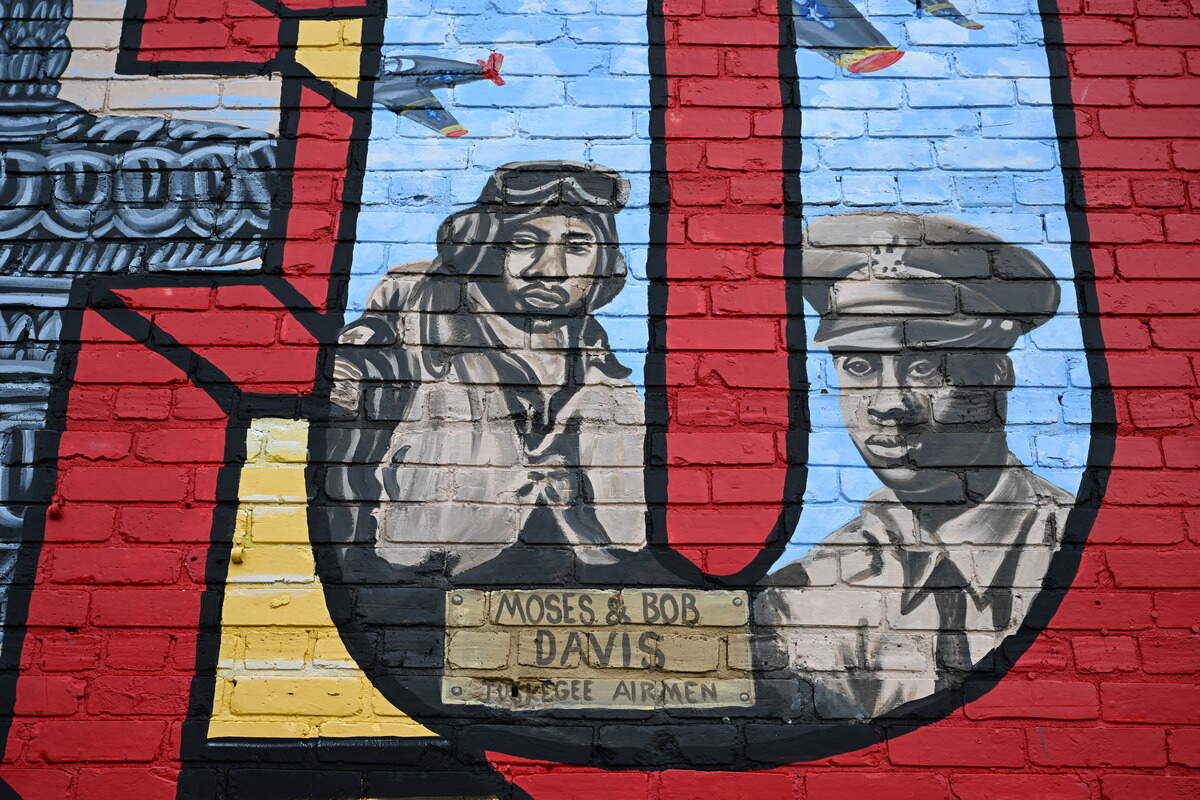
Moses Davis stayed in the Army even after his brother died, attending events honoring the Tuskegee airmen until his death in 2010, according to family members and his obituary.
CJ Davis, another of Richard Davis’ younger brothers, was awarded a Silver Star for his service in the Korean War as a U.S. Marine.
According to the citation for the award, CJ Davis braved enemy fire, while injured, after his commanding officer was mortally wounded. He covered his comrades while they escaped until a grenade exploded near his hand and knocked his gun from his grip. He still refused to evacuate until all of his wounded comrades could be moved to safety. Afterward, in spite of his injuries, he walked himself back to the main line of defense.
Charlie James Davis Jr., CJ’s son, is a Gulf War veteran, and countless other relatives have served the U.S. in a variety of conflicts and military branches.
“We’ve served in every branch and every war,” said Leonard Smith, one of Richard Davis’ nephews.
Charlie James Davis Jr. credits Richard Davis for kicking off his family’s legacy of service. He said Richard demonstrated how military service could bring them purpose and allow them to achieve their goals while honoring their country.
“(Richard Davis) did a lot to excel in the things that he wanted to do,” Charles James Davis Jr. said. “And I think that rubs off on us.”
Perkins said her family has taken care to keep the stories of Richard Davis, Moses Davis and everyone else who has served, alive. The family has held annual family reunions since the 1980s, and relatives make it a point to swap stories and pass down knowledge from generation to generation.
Perkins said the family even has an informal research committee. The committee, which she is a part of, is made up of relatives who work to record stories, save photos and documents, and do further research into their family’s history.
Remembering Richard Davis’ story is even more important as the Tuskegee Airmen fade out of living memory, Perkins said, and as the federal government attacks programs focused on diversity, equity and inclusion in the military, even purging articles and photos from government websites documenting service by people of color.
“For them to be able to go on and accomplish things, and to be able to have something to take pride in, was important for them,” Perkins said. “And it was important for them to make sure we take pride in it as well.”
Charlie James Davis Jr. echoed a similar sentiment, saying that it’s vital that people keep talking about Richard Davis, Moses Davis and other Tuskegee Airmen because they represent an important chapter in U.S. history.
“It’s part of history, that’s the bottom line,” Charlie James Davis Jr. said. “You can’t, as much as some people want to, erase it.”