
This group seeks to preserve Macon’s Black history. How they’re saving stories, archives
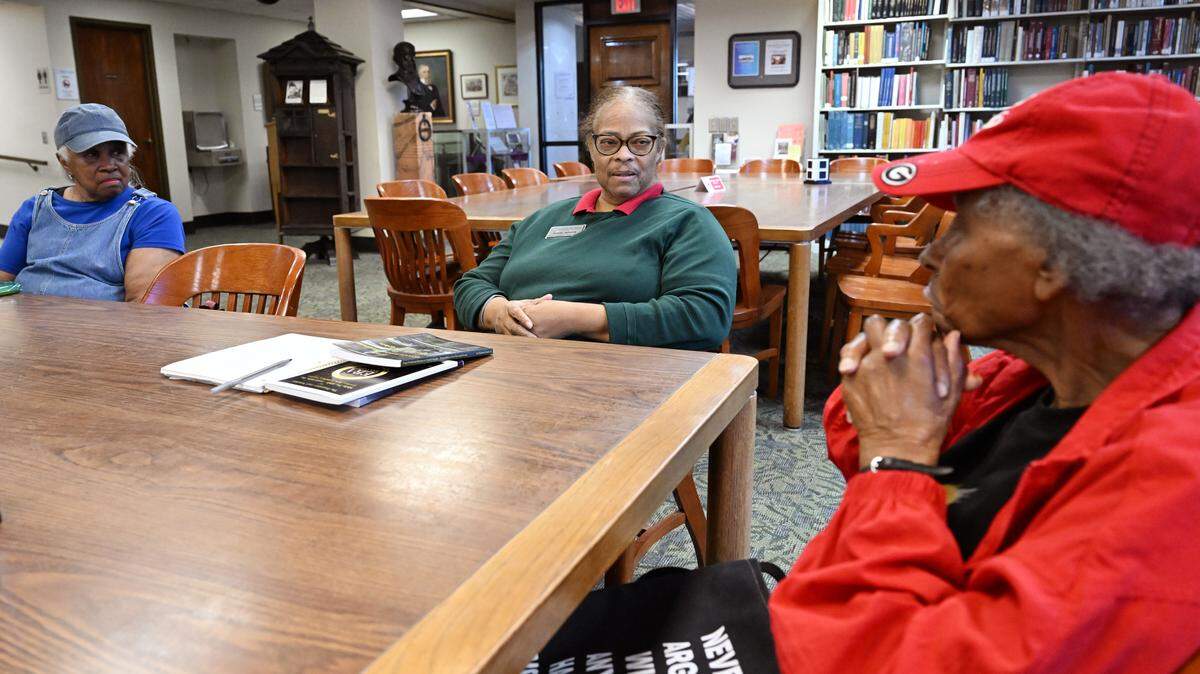
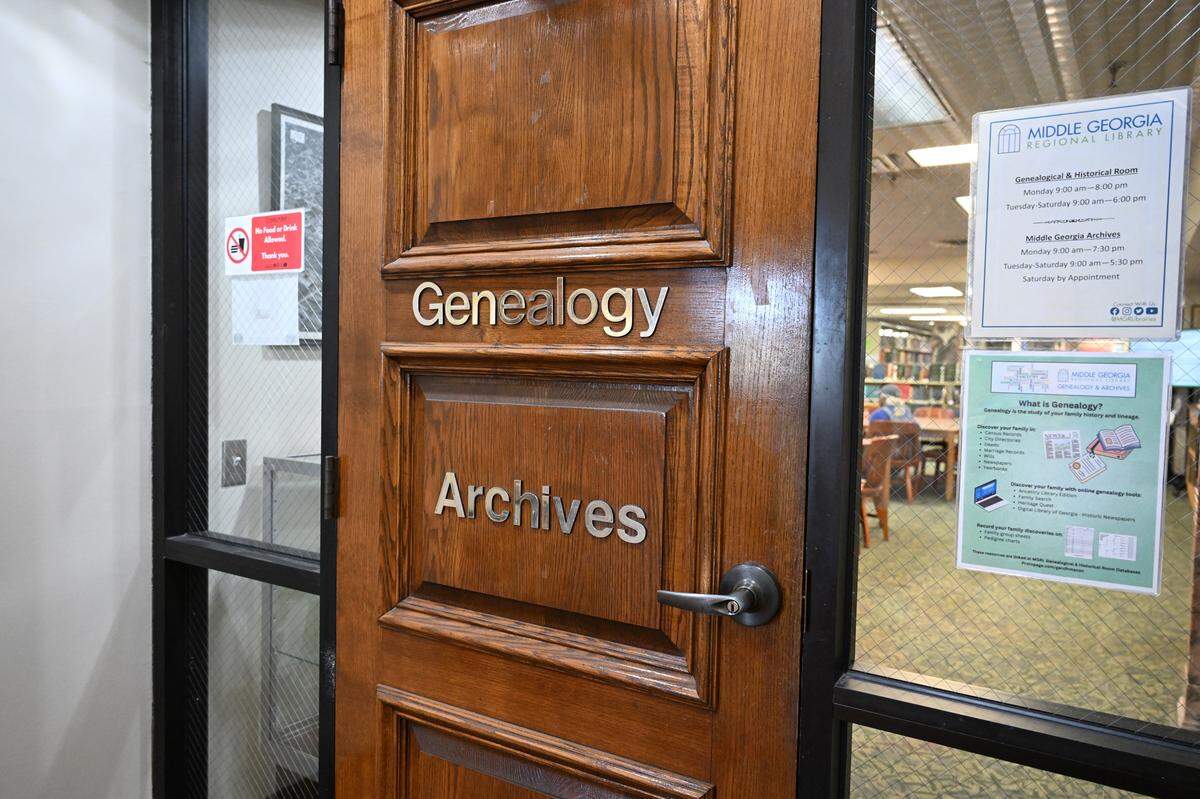
In the Genealogical and Historical Room on the first floor of the Washington Memorial Library, the African American History Committee meets once a month to race against time and discuss Black history.
Names, funeral programs, church bulletins, photos and even the stories that spilled out on front porches after dinner are the kinds of irreplaceable pieces of Black Macon’s past that Muriel Jackson, head of the Genealogical and Historical Room and Middle Georgia Archives at the library, is trying to save.
Jackson said she formed the committee in 2023 after realizing that as elderly community members passed away or moved into nursing homes, their important stories and personal belongings were often lost.
“I realized we needed to gather as much as we could, especially in the way of items,” she said. “An elderly member would pass, and families would clean up their house and the majority of what they had would be thrown away or packed away because no one felt it was of importance.”
The committee does not follow a formal structure, Jackson said. Some sessions feature guest speakers such as Macon native and author Harold Michael Harvey, while others invite attendees to participate in show-and-tell, sharing family heirlooms, recipes or stories.
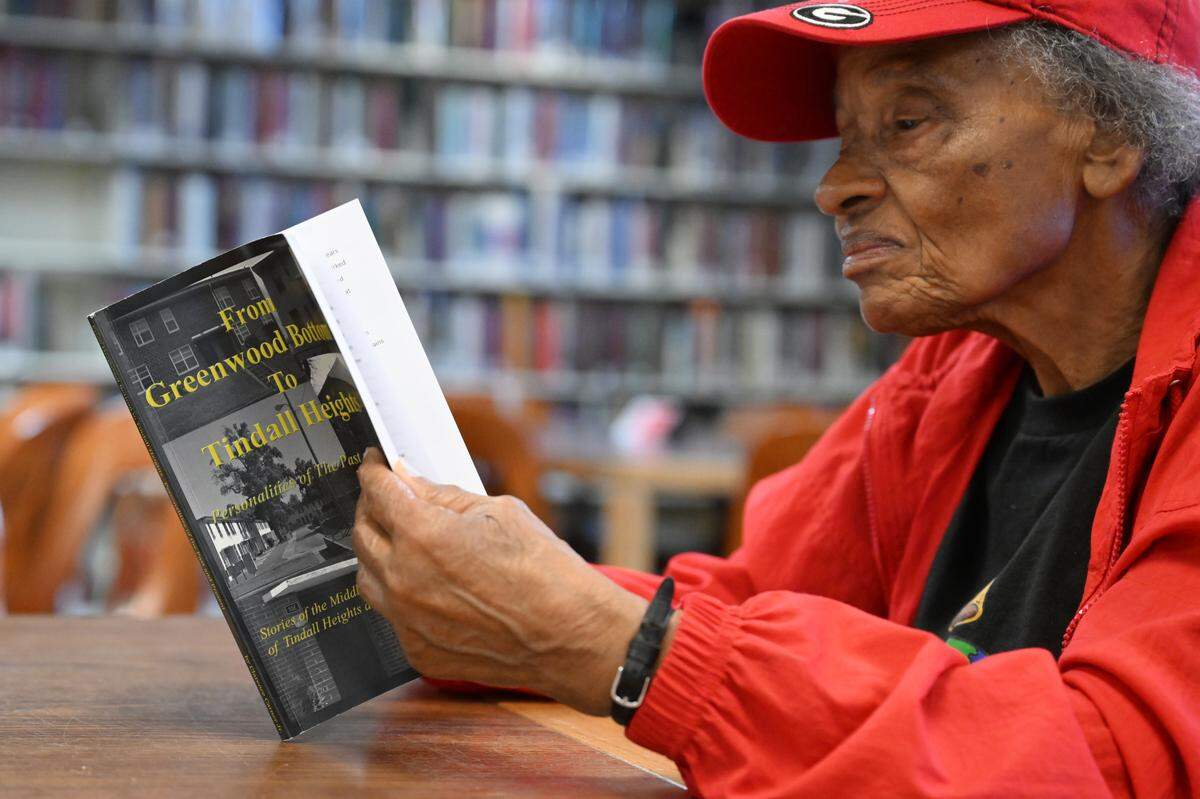
Discussions include the city’s schools, churches, organizations and groups, media, military and neighborhoods. Jackson encourages residents to bring items to be scanned and added to the library’s collection, where they will become part of a publicly accessible database.
Jackson estimates that of roughly 700 collections in the Middle Georgia Archives, only about 15% contain substantial documentation about African Americans — a number she is determined to change.
“You really just need to be able to say this existed. And this is what they did to prove that African Americans here had culture,” she said, pointing to archived materials from local Black sororities and fraternities, and more books coming out on Black Macon and Middle Georgia history.
Grant money expands efforts
With a recent $500,000 grant from the Mellow Foundation, the library is working to ensure memories don’t disappear in a cardboard box or landfill.
The funds will expand the upstairs Memory Lab, where residents can convert physical media — including VHS tapes, film negatives and slides — into digital formats, Jackson said.
Jackson said she hopes funds will allow them to create an audio lab to record oral stories, which Black people heavily relied on because they were often not allowed to read or write, she said.
Jackson emphasized the memory lab isn’t just for the African-American History Committee because “our lives are interwoven here, and you can’t really separate one without the other.”
What is the history committee uncovering?
Members of the African-American History Committee share one common goal: collecting, preserving and expanding knowledge of Black history in Macon.
Among the regular attendees is Barbara Tolliver Rodgers, no stranger to the library’s genealogy department and the granddaughter of Andrew D. Tolliver, a former slave who purchased more than 200 acres in north Macon between 1894 and 1907.
“We have taken in a lot of pictures and also documentation,” the 86-year-old said, adding that she was excited to learn about all the people in Summerville who were in the military.
Rodgers has a “historical room” at her house, documenting all family records, including her great-great-grandfather’s affidavit of freedom papers which reads, “I am a free boy.” She said she brought the documents to the library to be scanned.
The committee’s work also includes ambitious, multi-year projects. One recent effort highlighted Black seamstresses in Macon, Augusta and Savannah, women who sustained households and clothed entire communities yet were difficult to identify in original documents.
Jackson said the women were too busy as seamstresses to create their own records. Still, she noticed a trend where they were remembered reverently: at least two had obituaries published in the Macon paper by the white families they worked for.
The committee’s current project centers on recovering the origins of East Macon, but not the modern neighborhoods anchored by the Macon Coliseum, Jackson said. This includes tracing the roots of the Rosa Jackson Center, which began as an open-air school for children with tuberculosis, and documenting Black leisure spaces created during segregation and the Shirley Hills community.
“Everything on that side of the river, whether it’s dealing with the African Americans or whites really is not recorded in Macon history,” Jackson said. “It doesn’t really get the recognition it deserves.”
Jackson said one of the committee’s most important aspects is highlighting the opportunities Black communities had, even during times of struggle, and correcting perceptions that have developed over time.
“You keep hearing that we were underprivileged: African Americans didn’t have anything, while whites had Baconsfield (Park), but as we got into this (project), I discovered there were a number of recreational parks set up by individuals in our communities,” Jackson said, mentioning Sawyer Lake near Swift Creek in East Macon.
“They weren’t always as nice as we thought they should be, but we had something. Now, it’s important to recover those names before everyone who enjoyed them is gone.”
Still, Jackson and Rodgers said the work starts at home. They see the committee as one link in a chain where family stories can be backed up for the future.
“I would like them to preserve first is their family history, because some of the family history is getting lost and the children don’t even know it,” Rodgers said. “That’s important to me. Then, you work your way from your family to the churches and schools.”