
‘We got power.’ Macon Black Pages on 35 years of uplifting businesses, next chapter

For 35 years, the Macon-Middle Georgia Black Pages and Resource Guide has done more than list businesses.
It has mapped a community, served as an economic compass and pointed residents toward Black-owned establishments since 1991. From barbershops to bookstores, churches to cleaning services, its pages have traced the economic and cultural backbone of Black Middle Georgia one listing at a time.
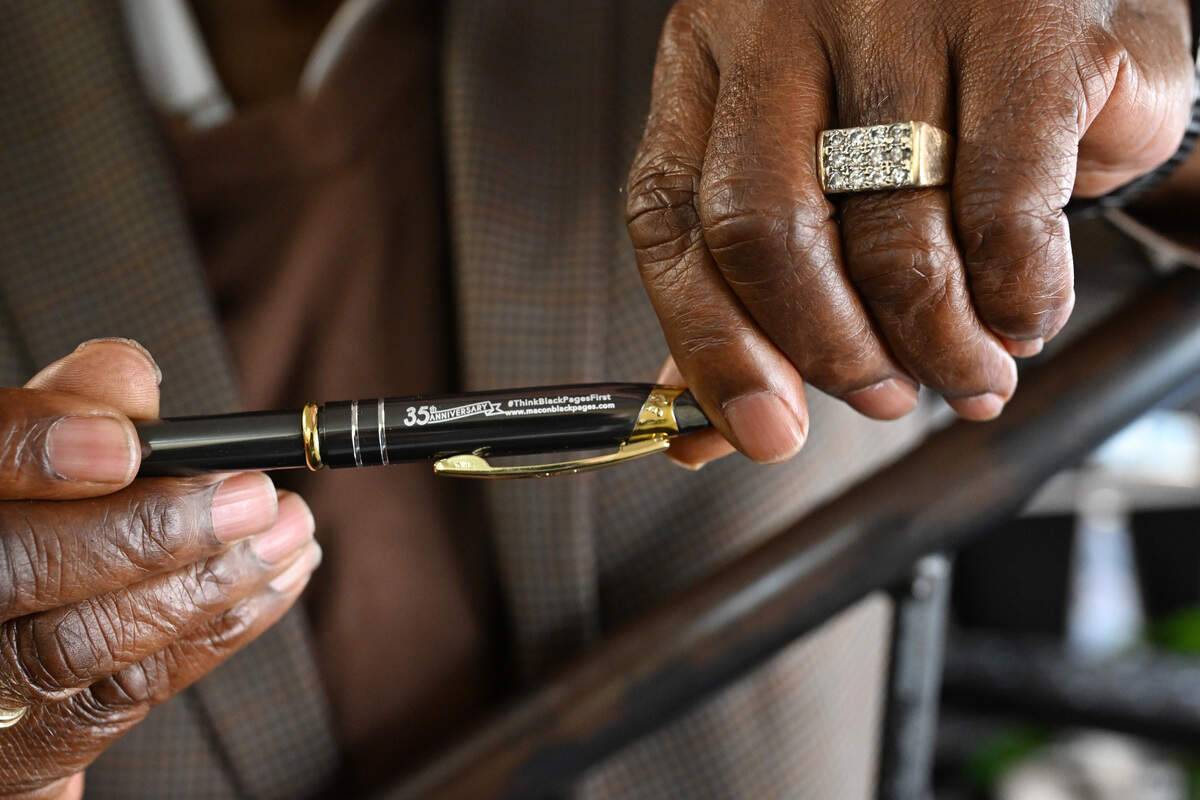
Marking its 35th anniversary, the Black Pages has given founder and publisher Alex Habersham reason to celebrate both endurance and purpose, even as the publication prepares for its final print edition and shift into a digital-only platform.
With more than 70 awards and decades of entrepreneurship under his belt, Habersham has spent time this anniversary season reflecting on what three and a half decades of the Black Pages has meant — and what comes next.
The publication, printed almost annually and featuring more than 1,000 Black businesses in its directory, includes local advertising ranging from food to student scholarship opportunities, as well as coverage of community events, memorial tributes, messages from community leaders and themed editorial content.

This year’s edition carries the theme “35 Years Strong: Honoring Our Past, Empowering Our Future,” a phrase Habersham said reflects longevity and responsibility.
Habersham said the theme recognizes the milestone of 35 years, pays tribute to Black businesses that have previously shaped the community and highlights the impact of Black consumer spending.
“We want to try to be a meaningful and an effective resource for the community, particularly since journalism from the African American perspective is very important,” Habersham said. “It’s even more crucial in today’s society with all ... the political news trying to sway our opinions and impressions, and trying to hide who we are.”
The power of a dollar
Even though Black Georgians are among the state’s largest minority groups, they have owned a disproportionately small share of private businesses, according to the Georgia Minority Supplier Development Council.
A 2022 state study found they comprised about 33% of the population but owned only about 5% of private businesses statewide.
Habersham, who also founded the Central Georgia Coalition of Black Businesses, has long argued that intentional spending in the Black community can create ripple effects — increasing employment, strengthening nonprofits and reinforcing institutions that serve the community.
“I’m a real stickler for the utilization of resources that already exist in our community,” Habersham said. “If we could get everybody conscientious, we could generate a 30% difference in our community instantly. We got power, you know, just dormant
“A lot of changes are happening in our community because of the influence and power of billionaires,” he added. “When you consider how much money we control, that means we have that same kind of power — if we use it to uplift and improve our community.”
That philosophy has shaped the directory since its earliest editions. Beyond listings, the Black Pages has highlighted local mentors, civic leaders and entrepreneurs, and used annual themes to spotlight issues affecting the Black community, Habersham said.
At the Tubman Museum, where Black history is celebrated year-round, Executive Director Harold Young said the publication has functioned as a steady pillar of the local Black economy.
“Unfortunately, some of these companies don’t have the means of using big marketing dollars,” Young said. “Having the Black Pages targeting the African American community is really significant and expands the reach of businesses.”
A bridge for Black businesses
For Portia Smith, founder of Imagine Me Creative Book Publishing in Warner Robins, the Black Pages expanded her company’s visibility and helped bridge the gap between her mission and the community.
In 2019, Smith launched her publishing company after turning family affirmations following her husband’s death into a children’s book. Now, she produces literature that highlights diverse storytelling and Black children as protagonists.
“Often times, kids won’t see … characters that look like us. So I think it’s really important to have that representation in our community, and even in other minority communities, too,” she said.
She learned about the Black Pages through an entrepreneurship program with NewTown Macon and decided to purchase a listing after connecting with its core vision.
“It highlighted Black-owned businesses. It highlighted ways to keep the community connected,” Smith said.
Since then, she said, new clients — some out of state — have reached out about publishing services and manuscript consultations.
Smith said representation remains central to her work and to the directory’s broader impact.
“It’s very important to show children who are minorities that they can be anything they want to be — an author, a publisher,” she said. “We see teachers and doctors and lawyers, which are good, but there are other jobs out there, too.”
For small businesses like Smith’s, the listing can mean new customers. For long-standing institutions, it has meant sustained partnership.
Young said the Tubman Museum has relied on the Black Pages as a marketing partner for years, using the publication to promote events such as the Pan-African Festival and exhibit openings. Young called the long-standing collaboration “groundbreaking,” noting the museum is marking its 41st anniversary this year.
“It’s really phenomenal that entities like this could work together, iron sharpening iron and all of us lifting each other up together as we celebrate these years of existence,” he said. “It’s good to be around that long and people still think that you’re vibrant.”
As the Black Pages prepares to leave print behind, Habersham said he hopes the publication will continue that mission: strengthening businesses and reminding residents of the economic power they already hold.
Turning the page
The directory Black Pages will release a final commemorative 2026-27 edition in June before transitioning to a fully digital platform, Habersham said.
Habersham sees the shift not as a farewell to print, but as an expansion of reach.
Digital tools will allow the Black Pages to update listings and content more frequently, and offer features without waiting for an annual print cycle, he said.
“It gives us a lot more flexibility and a lot more outreach,” Habersham said. “With the power of cell phones, people can just go to the app and find a business right there in their hand.”
But the core idea remains unchanged: helping a community build itself in its own marketplace.
To mark the transition, Habersham is offering a congratulatory section in the anniversary edition. For $100, supporters can purchase space featuring their name and photo. He expects the final print run to become a keepsake.