
Georgia changed review process for data centers. What does it mean for Middle GA?
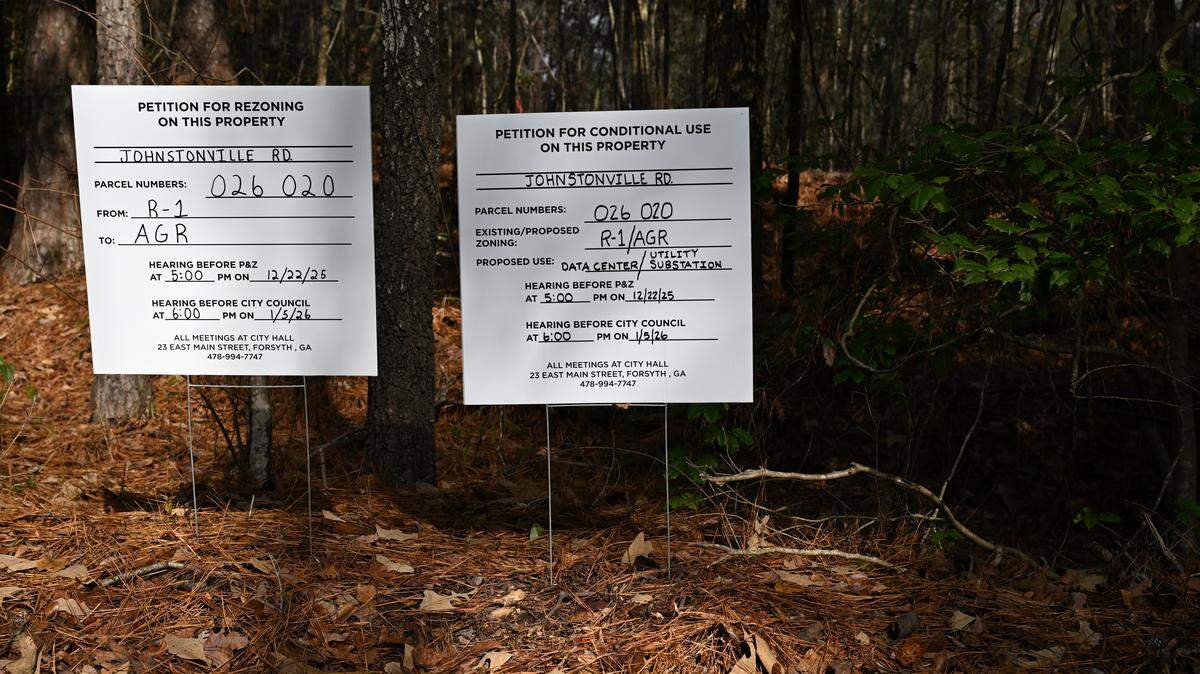
A 12-million-square-foot data center proposed in Forsyth may be the first data center to undergo a revised Development of Regional Impact review process following a months-long pause on the reports.
DRI reports, which examine large-scale projects whose impacts may ripple beyond the locality where they are constructed, were paused for data center projects from July to November.
The Georgia Department of Community Affairs — which oversees DRIs and their review processes alongside regional commissions around the state — told The Atlanta Journal-Constitution in July that the department had been inundated with data center projects from around the state and wanted time to assess how data centers should be examined during the DRI process.
The pause ended in November after the department adopted new rules for data centers at its quarterly meeting in Savannah.
Now, the data center proposed in Forsyth — which, if approved and built according to current plans, could be the largest in Georgia — comes on the heels of the revised review process, raising questions about how the process has changed and what that means for the proposed development.
How has the review process for data centers changed?
Greg Boike — director of planning and public administration for the Middle Georgia Regional Commission, which reviews projects under the direction of the DCA — said DRI reports give public entities the chance to give input on the project and how it will affect them.
DRI reports typically take around 30 days to produce and release, Boike said. The process is triggered when a large project files paperwork and the DCA determines it must meet the requirements for a DRI report.
According to the MGRC’s website, there are a variety of benchmarks projects can meet to be considered a DRI based on what kind of project it is. These include a project’s square footage, acreage, or even the number of beds or fuel pumps.
Prior to the pause on DRI reviews by the DCA, data centers didn’t fit neatly into any of the existing project types and were most often placed in the “other” category, Boike said. Under MGRC’s rules, a development that is categorized as “other” is considered a DRI when it has more than 1,000 parking spaces or a traffic study shows it would generate more than 5,000 daily trips.
When DCA board members met in November and ended the pause on DRI reviews for data centers, they also created a new category of DRIs called “technological centers.” The new category applies to all regional commissions that perform DRI reviews, and includes data centers as well as other projects that house servers and computer equipment.
However, Boike said the new category isn’t likely to change much about the review process. The most notable change was the DCA requiring DRI reviews on technological facilities to consult with regional water planning councils.
How does this affect the proposed data center in Forsyth?
Boike said the proposed data center completed its paperwork asking for a DRI review prior to the DCA creating the technological facilities category. As a result, it is categorized as “other.”
According to paperwork filed by the project’s developer, Trammell Crow Co., the project is worth around $8.4 billion and will generate $222.4 million in tax revenue annually. It will be around 12 million square feet when completed, and use an estimated 1.5 million gallons of water each day. The paperwork also shows the developer anticipates that it will have an impact on nearby wetlands.
Boike said that even though the development is not classified as a technological facility, the review will be the same as it would be if the project were under that designation. Entities that may be affected — including governments, utility boards and waste management services — will be given the opportunity to comment on the report.
The report will then go to the City of Forsyth, Boike said, which will meet Jan. 5 to decide whether to approve the project.
This story was originally published December 19, 2025 at 4:50 PM.