Thanksgiving week weather could cause ‘delays and disruptions.’ What to expect in GA
An astounding “81.8 million people will travel at least 50 miles from home” during the week of Thanksgiving, according to AAA. This is compared to last year’s 80.2 million and 78.2 million in 2023.
In fact, AAA stated that Thanksgiving is the busiest travel holiday all year, even compared to Christmas and the Fourth of July.
Of course, traveling during the holidays can be hectic, but weather impacts add another layer of difficulty — and this year, it looks like storms may impact Thanksgiving travel. Here’s what to know:
What the weather experts predict for Thanksgiving week
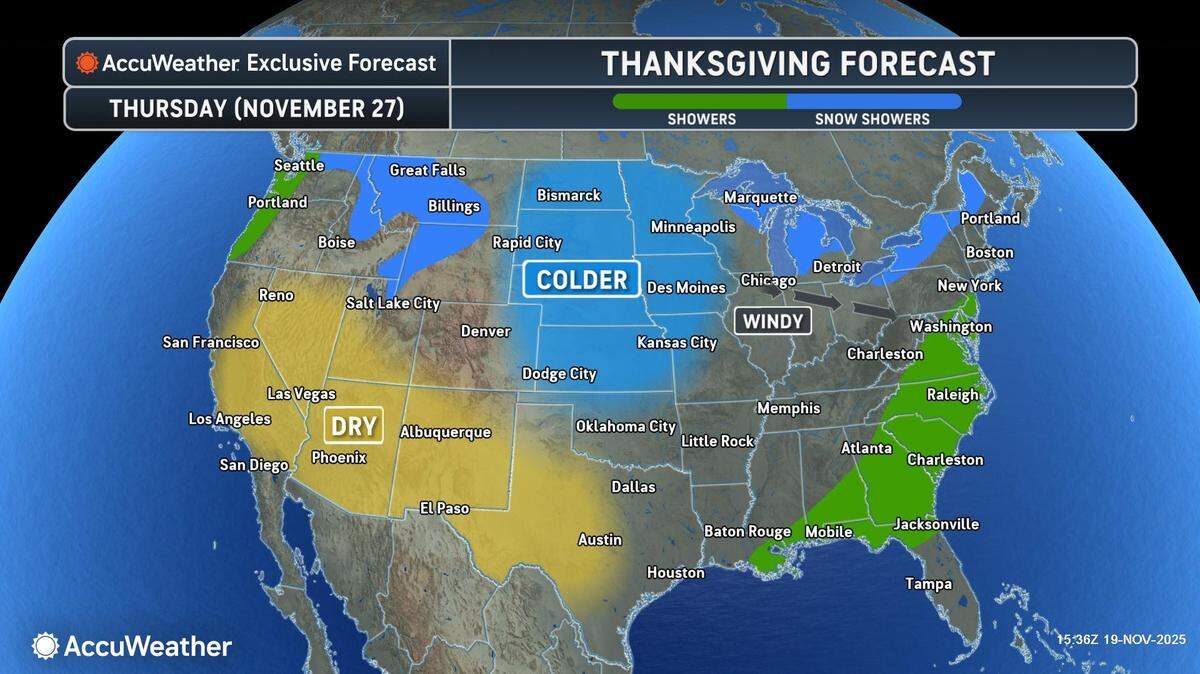
According to AccuWeather meteorologists, storms could sweep across the country, causing some troubles with airports and roads.
“Storms, snow, gusty winds and fog could cause flight delays and cancellations during some of the busiest travel days of the year. Delays and disruptions can quickly ripple across the country during busy holiday travel periods, especially if weather disrupts operations at major hubs like Dallas, Minneapolis, Chicago, Atlanta or New York,” said AccuWeather long-range expert Paul Pastelok.
The storms are expected to arrive Tuesday, with thunderstorms continuing into Wednesday.
So, what about Georgia specifically? Here’s what else to know:
What will the weather be like in GA on Thanksgiving?
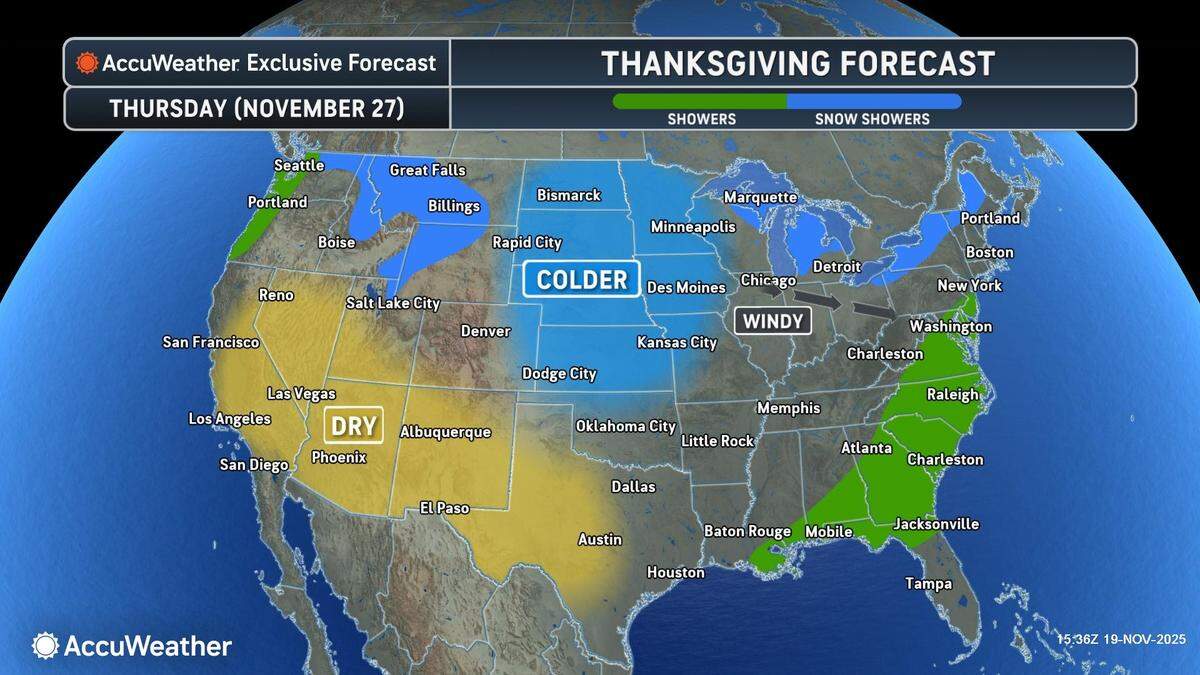
According to Pastelok, most of Georgia will see showers during the day, creating slick conditions on the road, but what about local conditions?
Locally, The Weather Channel predicts much of the same, but mostly clear on Thanksgiving Day in Macon with highs around 61 degrees.
In Columbus, Thanksgiving Day looks sunny with highs around 61.
Safety tips
Here are some safety tips from AAA while driving in rainy or stormy weather:
- Turn your headlights on so you can see and be seen by other drivers.
- Slow down. New tires can still lose some contact with the roadway, even at speeds as low as 35 mph.
- Increase your following distance. Wet roads require more time to slow down and stop.
- Do not use cruise control. The chance of losing control of the vehicle increases when used on wet roads.
- Avoid hydroplaning by driving in the tracks of the vehicle in front of you and letting off the accelerator when approaching puddles. Also avoid hard braking or sharp turns.
- Never drive through standing water. It may be deeper than you think and concealing potholes, downed power lines, or other hazards that could damage your vehicle.
Do you have more questions? Let me know in the comments or email me at cmadden@mcclatchy.com