
East Macon gets long-awaited new park honoring Muscogee Nation
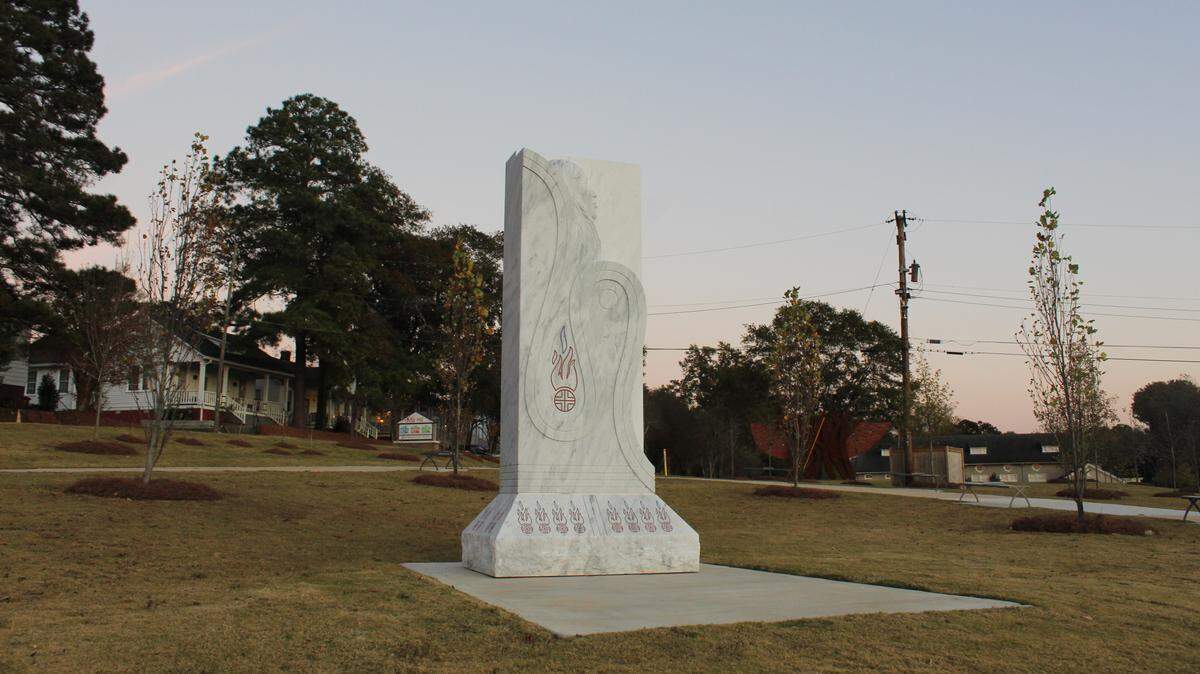
Muscogee spirits live within a grassy new park between downtown and east Macon that pays homage to the tribe forced out of Macon over two centuries ago, according to an indigenous artist and team involved in the park’s creation.
Bicentennial Park at 271 Clinton St. sits in Mill Hill, a historically Black and low-income neighborhood across from the Marriott hotel on Coliseum Drive. Local residents say it was a long-awaited improvement for the area.
The park features a walking path with large sculptures resembling aspects of nature and reconciliation, said Kenneth Johnson, a Muscogee and Seminole artist.
“You’re gonna matter for that next step as the next generation comes in, as the people who come back to Oklahoma say, ‘Did you take care of the land for us?’” Johnson told locals and Macon-Bibb County officials Thursday at the park’s unveiling, then teared up.
Bicentennial Park was named in honor of Macon’s incorporation in 1823, over 200 years ago. The Muscogee people lived there for thousands of years prior before they were pushed out of Georgia and resettled in Oklahoma in the 1830s.
Johnson’s piece features male and female stickball warriors facing each other at the park. The sport has been played as a form of battle.
“Stickball is important because it shows you’re alive, you’re fighting, you’re dueling for a ball that has medicine on it, it’s considered alive,” Johnson told a crowd of east Macon locals Thursday night.
A blue area on the flame of his sculpture “represents the spirits that are here,” he said. “If those spirits were able to be here in the physical, this would be an immense gathering.”
‘It’s taken too long’
Sisters who are longtime residents of Macon’s east side attended the park’s opening and said they were happy to see more green space in their community.
Edna Gilbert, 72, who lives near Gray Highway and Fort Hill Street, recalled what east Macon was like before the area became blighted.
“It was homes, businesses, grocery stores, beauty shops, churches,” Gilbert said of the area’s past.
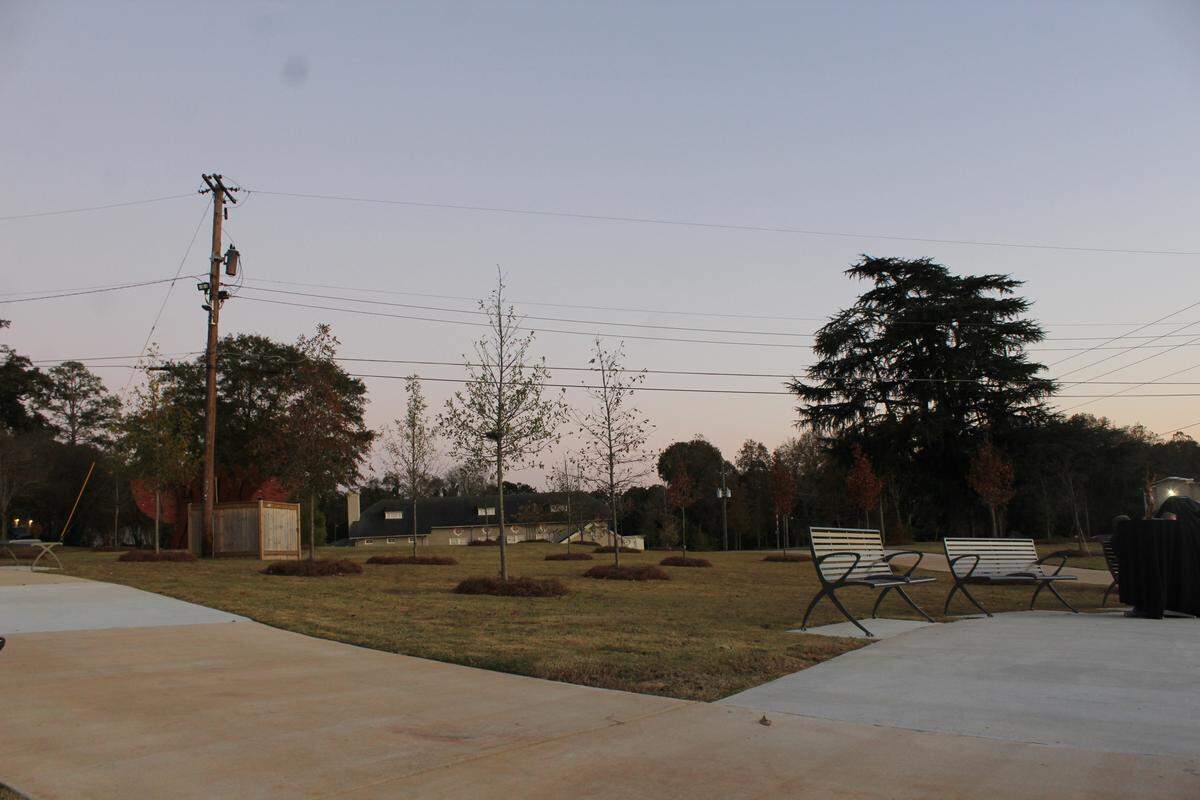
“It’s taken too long” to get to a park a few blocks away from her east Macon home, she said. “You got to go to the north side. The north side is gonna be in Monroe County.”
The median annual household income in north Macon neighborhoods, including Idle Hour and Wesleyan Hills, is over $100,000, compared to over $17,000 in Mill Hill, where the park is located, according to the 2023 U.S. Census American Community Survey, the most recent comprehensive data.
Cherry King, Gilbert’s sister, said the new park is “good to see” but that the area is still underserved.
“I haven’t seen much change,” King said of east Macon.