US government won’t be dismissed from lawsuit over child’s death at Robins Air Force Base
The Air Force has been dismissed from a lawsuit filed by the family of a teenager who died after a wall collapsed on him at Robins Air Force Base, but the U.S. government wasn’t able to successfully argue that it also should be removed from the case, court records from Wednesday show.
Camalle and Timberly Stone, the father and mother of 14-year-old Gabriel Stone, who died after a wall collapsed on him at the Robins Air Force Base, sued the Air Force, the U.S. government, and unnamed government officials. The defendants asked a federal judge to dismiss the case, and Judge Marc Treadwell agreed to remove the Air Force and unnamed government officials because they had immunity.
But not the federal government.
Treadwell found that the family sufficiently alleged the facts of the case, court records from Wednesday show, so the U.S. still could be negligent in the case.
The stone family agreed to the case being dismissed against the Air Force and government officials. The Stones also intend to amend their lawsuit to specify their claims against the U.S., they said in court records.
Wall that pinned teenager wasn’t inspected for stability, judge says
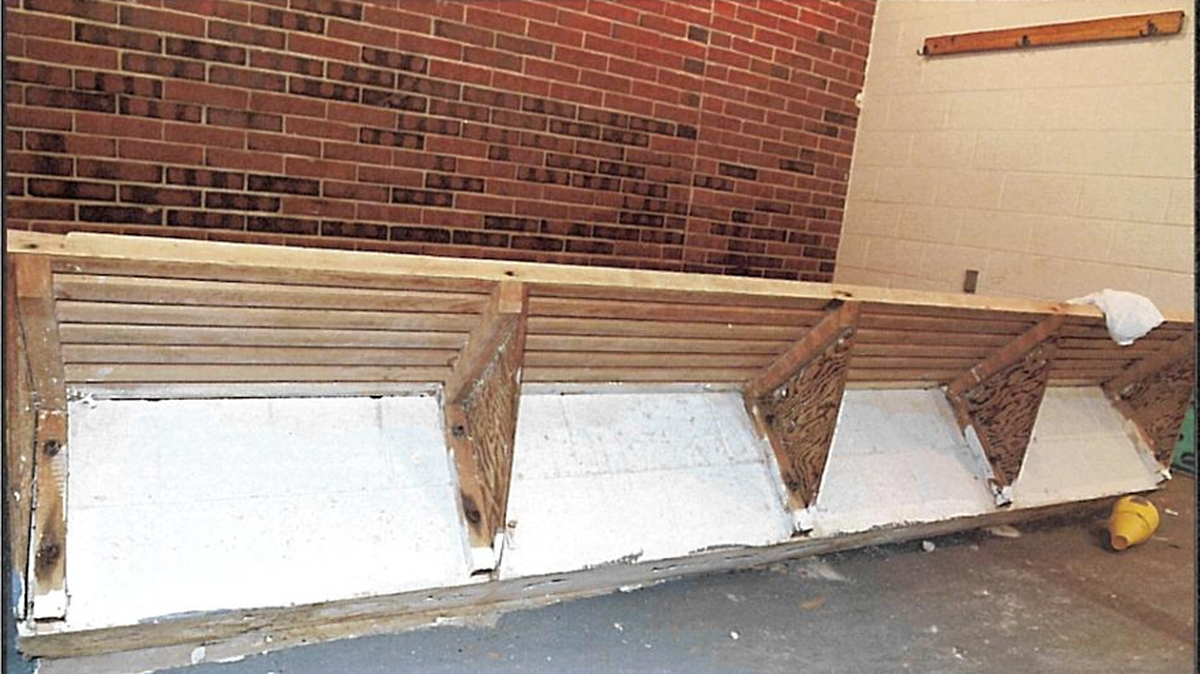
Gabriel Stone died on July 22, 2024, after he and three other people climbed a partition wall in the men’s bathroom at a pool on the base’s property. The wall gave in and pinned the teenager to the floor. The wall, which consisted of 93 cinder blocks, was not supported horizontally or vertically — even though standard building codes required the wall to be supported when the wall was built in 1969, according to a federal investigation into the incident.
The wall was never inspected for stability or compliance with building codes and had not been modified since its construction “despite a 1982 project to update pool facilities on Robins Air Force Base,” Treadwell said in court records.
An unstable cinderblock wall was identified in the women’s bathhouse in June 2018 and was repaired, but there had been no maintenance records for the wall in the men’s house.
The Stone family argued that the Air Force was obligated to ensure the wall was built in accordance with the building codes, as well as ensure that inspections and repairs were conducted, according to court records.
The U.S. argued that, even though multiple inspection programs apply to the bathhouse, those inspections are not designed “to identify potential structural or safety issues with the partition wall,” according to court records.
“In fact, no preventive maintenance practices, according to the exhibits filed by the United States, exist for concrete masonry unit walls such as the wall in this case,” Treadwell said in court documents.
The government further argued that they must be considered immune to the lawsuit, considering the rules in their policy on inspections and maintenance of the bathrooms are discretionary, not mandatory. Though Treadwell acknowledged that the language in the policy would indicate Air Force officials’ roles as discretionary, those immunities apply to social, economic or political policy, according to the Federal Tort Claims Act, Treadwell said.
“The Court cannot assume that the decision not to address a known hazard to children is one grounded in social, economic or political policy,” Treadwell said. “Thus, whether the discretionary function applies cannot be resolved.”