10 issues identified for people held at Macon jail. Mayor speaks on planned fixes
AI-generated summary reviewed by our newsroom.
- Audit identified 10 key issues in Bibb County Jail, including court delays.
- Mayor Miller stated local officials have begun addressing and correcting issues.
- Concerns include mental health access, arraignment delays, and case backlogs.
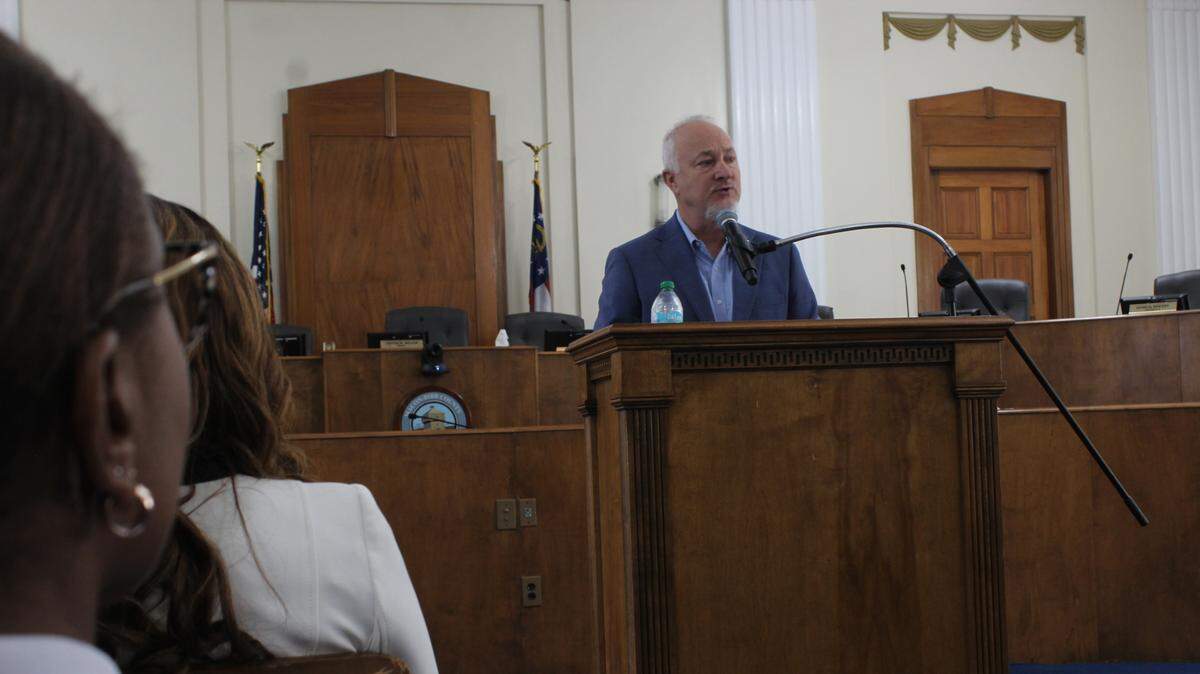
Mayor Lester Miller says Macon-Bibb County is already taking important steps to deal with 10 issues identified in case management and resources for people held at the Bibb County Jail.
An audit conducted by the Macon Justice and Wellness Task Force revealed delays in court hearings and case progress, as well as limited resources for those who are homeless or suffer from a mental health problem, are among the biggest issues inside the Bibb County Jail. However, those issues, 10 in total, are already being addressed and even corrected, Miller and Macon Violence Prevention Coordinator Jeremy Grissom said Thursday.
Jailed suspects await their first court date ‘for quite awhile’
The members of the task force reviewed the case of every person held at the jail and evaluated court processes during the 30-day audit to identify the biggest issues contributing to safety problems at the jail. The task force also listened to the complaints from inmates, their families and the community, and found that most of those incarcerated who are “sitting in the jail for quite a while ... (haven’t) been indicted or arraigned” within a reasonable amount of time, Miller said.
Before the task force was developed, there were 1,018 people detained at the jail, which was 52 more than its capacity, according to Miller. As of Thursday, between 925 and 950 were housed at the jail. The drop was due to the county’s bond review process, which has reduced the bond needed for certain people to be released. Those released have been placed on an ankle monitor and have been assessed to not be a community risk.
“What we want to do is to make sure we have a better staffing to inmate ratio by decreasing the amount people at the jail at the time,” Miller said.
Officials are also set to review inmates’ bonds every 90 days to see if those still at the jail can be considered for release and ankle monitors.
“It may be that the person can’t even make (a) low bond,” Miller said. “Perhaps they shouldn’t be sitting there in jail just because the bond is too high (or) if they’re not a true risk ... to the community.”
Miller also said a policy has been created to resolve miscommunication issues between the Bibb County Sheriff’s Office and the Georgia Department of Corrections, which caused a “substantial delay” for people being transferred from the state GDC. The county saw delays of 30 to 40 days, but a policy has been created requiring that this process not take more than 30 days, Miller said.
How cases will be handled in the future
The task force also discovered through its audit that it takes the Macon Judicial Circuit District Attorney’s Office a year to prosecute people at the jail on average per inmate. Typically, an indictment and an arraignment can be made within 45 to 60 days of their arrest, according to Miller.
It’s common for people to “lose contact with the charges” because of how long the process takes, Miller said.
“You may change addresses, change phone numbers, change jobs,” Miller said. “You didn’t have a lawyer when you got out since you got out so early, and basically you get a court notice, and you don’t show up for court for one of those reasons, and you get a bench warrant, which compounds the problem. Or you show up for court, and then when you get there ... for your arraignment after an indictment, you haven’t been interviewed (by a public defender) or you haven’t gotten your own lawyer. So that creates another delay.”
People facing serious felony charges, such as murder, have to be indicted within 90 days or they can be released from jail while they wait for developments on their case, Miller said. The Macon-area district attorney’s office has a backlog of cases that has persisted since 2020, Miller said. Prosecutors are trying to catch up.
More serious cases often get delayed due to disputes in the lead-up to trial.
“It can be conflicts between lawyers,” Miller said. “It could be, you know, witnesses available. It could be waiting on a lab report. But sometimes a drug report takes a year. Sometimes ballistic reports take that long ... We can only control what we can control.
“But the arraignments, I think a lot of times, if you have the prosecutor, the defense and the defendant all with the same information early on, then you get a quicker resolution to the case,” Miller said.
In an effort to combat the backlogs, they’re going to build a “safety net” so they can make the case management process a lot smoother, Miller said.
Judges will also participate in addressing the case management issues by addressing the people at the Bibb County Jail with probation holds. They will hold hearings twice a month “to reconsider people getting out of jail if the prosecutor doesn’t have the evidence to suggest (their probation) should be revoked,” Miller said.
They will also address those inmates on out-of-county holds by lowering their bonds, often to just $1, so they could bond out and address their charges in their respective jurisdiction, according to Miller.
New in-reach program for homelessness, mental health issues
Those who are homeless and held on minor charges or outstanding bonds have limited in-reach programs that could connect them with housing or social services. The same goes for those with mental health-related issues, who are often waiting for an average of 40 days to undergo mental health evaluations or placement in treatment facilities.
Miller said that jail officials must know the inmate’s mental health challenges “early in the equation,” so they can separate them from the general population, considering their additional needs for resources.
The county wants to have a dedicated facility to house those with mental health-related issues, Miller said. Officials are starting off with 13 beds and are planning to include two additional beds for them so they could have “more one-on-one, more treatment,” according to Miller.
“It also works well with our in-reach program, so you can make sure when they do get out, they don’t reoffend by addressing those systemic issues that they may have,” Miller said. “A lot of folks that get incarcerated over there have mental health issues, and we have to figure out, since they’re going to be in jail, how we address them in the best manner before they get out of jail. But eventually they will get out of jail.”
The same in-reach program will be available for those incarcerated experiencing homeless, Miller said.
Jail staff will also be accompanied by mental health professionals at River Edge Behavioral Health in order to speak with the people incarcerated who have court, check if they’re taking their medication and help them understand why they need to go to court, Miller said. Before, jail staff declined to bring inmates to their court hearings, but by introducing mental health professionals, cases can move forward.
“I just want to make sure that we all the people in this task force is working in collaboration with each other,” said Miller. “Each of us brings something to the table to try come up with the best system we have.”