Historic Macon house outside the Ocmulgee Mounds will be rejuvenated. Here’s why
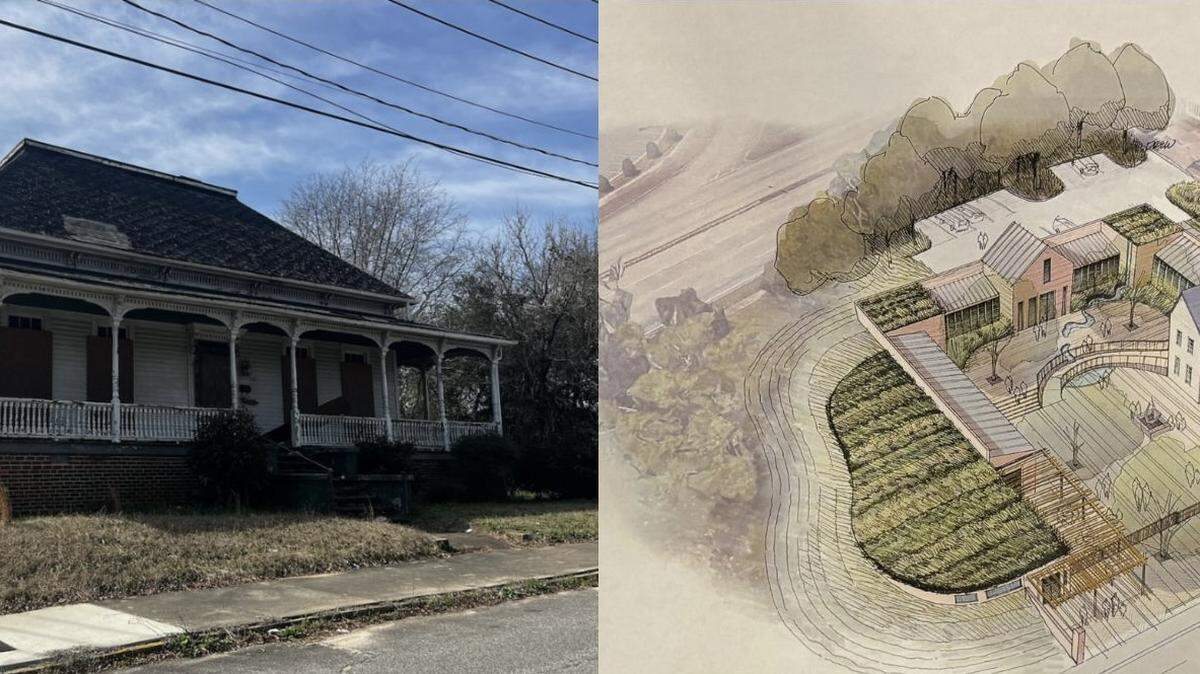
Macon’s Urban Development Authority received a $310,000 grant from the National Park Service Friday to “restore and rejuvenate” the DeWitt-McCrary House on Hydrolia Street, according to a news release from Macon-Bibb County.
The restored historic house will be the site of the new Muscogee Cultural Center, which will serve as a museum and meeting space for the Muscogee (Creek) Nation, according to Alex Morrison, executive director of Macon-Bibb’s Urban Development Authority.
The house is located outside the Ocmulgee Mounds National Historical Park, and the Urban Development Authority will work alongside the Muscogee (Creek) Nation and the Ocmulgee National Park and Preserve Initiative for this project.
“We’re grateful for our Congressional delegation’s consistent support in preparing middle Georgia to be home to the country’s 64th National Park and Preserve,” said Seth Clark, the executive director of the Ocmulgee National Park and Preserve Initiative and the mayor pro tempore for Macon.
“This investment will further strengthen the partnership between middle Georgia and the Muscogee (Creek) Nation by allowing us to develop a space where they can tell their own story, while also finding opportunities to steward these lands outside of the park gates.”
The grant from the National Park Service will re-stabilize the house through masonry, siding, roof, door and window repairs, along with electrical improvements and HVAC improvements, according to the release. The transformation into a museum will require additional funding that will be spearheaded by the National Park and Preserve Initiative, according to Morrison.
“We hope to have the work begin over the summer,” Morrison said in an email. “It should take about 6 months for stabilization with the rest of the work taking longer.”
The plans include exhibit rooms with interactive audio and visual aspects, a conference center, offices, a cafe and kitchen, a gift shop and a porch.
In addition to preserving a “historic treasure,” as described in the press release, renovating existing buildings can also provide a more sustainable alternative to site redevelopment, according to the federal Environmental Protection Agency.
“Renovating existing buildings, historic or otherwise, is an important approach in reducing greenhouse gas emissions in the buildings sectors,” the EPA’s website reads. “This is because new construction is a carbon-intensive part of a building’s life-cycle, since the clearing of land or demolition of existing structures, as well as the production and transport of materials, requires and produces carbon emissions.”
The project is funded in part by a grant from the Historic Preservation Fund, which is administered by the National Park Service within Department of the Interior, according to the release.
“This is a great chance to rejuvenate one of Macon’s oldest buildings and will be one of the two capstone projects for the revitalization of Mill Hill East Macon Arts Village,” Morrison said. “It will serve as a direct connection between our past and our future, linking our history to where we are going as a community.”
The other capstone project is Bicentennial Park, which will have a ribbon cutting in late April.
This story was originally published April 1, 2025 at 2:03 PM.