
Macon woman wanted to build free houses for homeless. Recent laws won’t let her.
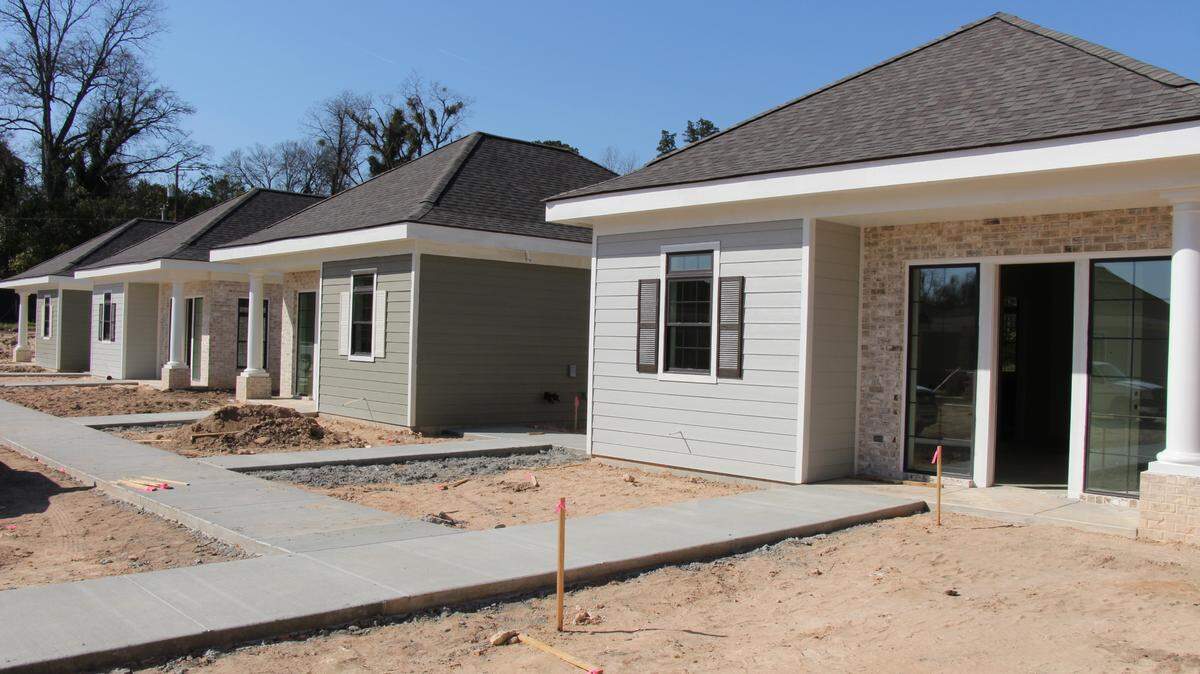
A Macon business owner wanted to create more independent housing for local homeless people, but recent zoning laws make it nearly impossible, according to her and local officials.
Linda Poole, owner of Lavish Independent Living referral services, said she wanted to build individual homes different from most local shelters. Residents would live there permanently or long-term, and in separate houses rather than having several beds in one building.
“While they’re living there, we would help them with finances, find jobs, things like that,” Poole said. “Another business owner and a woman said they were going to help too.”
Before she could apply to start the conditional use application process, she learned the project was basically impossible.
Poole did not understand what was standing in her way. The answer is new rezoning regulations.
No more homeless shelters can be built in Macon unless they already existed before zoning regulations were updated in September 2024. There also is an exception for shelters owned by or run in partnership with Macon-Bibb County, according to Jeffrey Ruggieri, executive director of the Planning and Zoning Commission.
“Bibb County is not subject to zoning laws. They can do what they want,” Ruggieri said.
Homeless shelters are not labeled as a housing use under Chapter 4B of the 2024 Comprehensive Land Development Resolution, and therefore, they cannot be made.
Poole said the project would not be a shelter, but rather separate houses. Either way, the zoning code classifies something such as her idea as a shelter, and “a homeless shelter is not allowed in Macon-Bibb County, that’s the answer,” Ruggieri said.
Poole said the independent housing project would at least offer financial aid and connect residents with career resources, but Ruggieri said that sort of assistance does not fall under permitted facilities’ uses.
The project could only work if it offered medical, elderly or personal care, which are permitted housing uses under zoning code. Financial or career assistance does not suffice.
“Personal care is grooming, eating, bathing, dressing, toileting,” Ruggieri said.
What shelters already exist?
A similar program already exists at the Tiny Cottages of Macon, which provides 10 tiny homes of permanent supportive housing for homeless people who have a documented mental health or substance use disability.
There are at least four homeless shelters in Macon, including Brookdale Resource Center, Hello House, Salvation Army, and the Daybreak Resource Center.
The existing shelters have various different criteria for residents. Hello House and Daybreak are low-barrier shelters, which means there are minimal standards to apply. Generally, there are not strict sobriety rules, a person cannot be a sex offender and identification or a social security number may be required, according to Rev. Jake Hall, executive director of United to End Homelessness, an initiative by United Way of Central Georgia.
“Housing is the first treatment that’s available to folks, and so we have low-barrier shelters within our network here that can take someone even if they don’t have their ID,” Hall said.
Brookdale and Salvation Army have higher barriers. Salvation Army has some spiritually-driven criteria and programs for veterans, families and individuals that work for the company.
“Their aim has both physical and spiritual aspects,” Hall said.
Brookdale serves children and families in a 90-day program.
“It has no sectarian connection whatsoever,” Hall said. “Jesus doesn’t guard the front door or the back door.”