How a downtown Macon hotel that witnessed the end of the Civil War became a parking lot
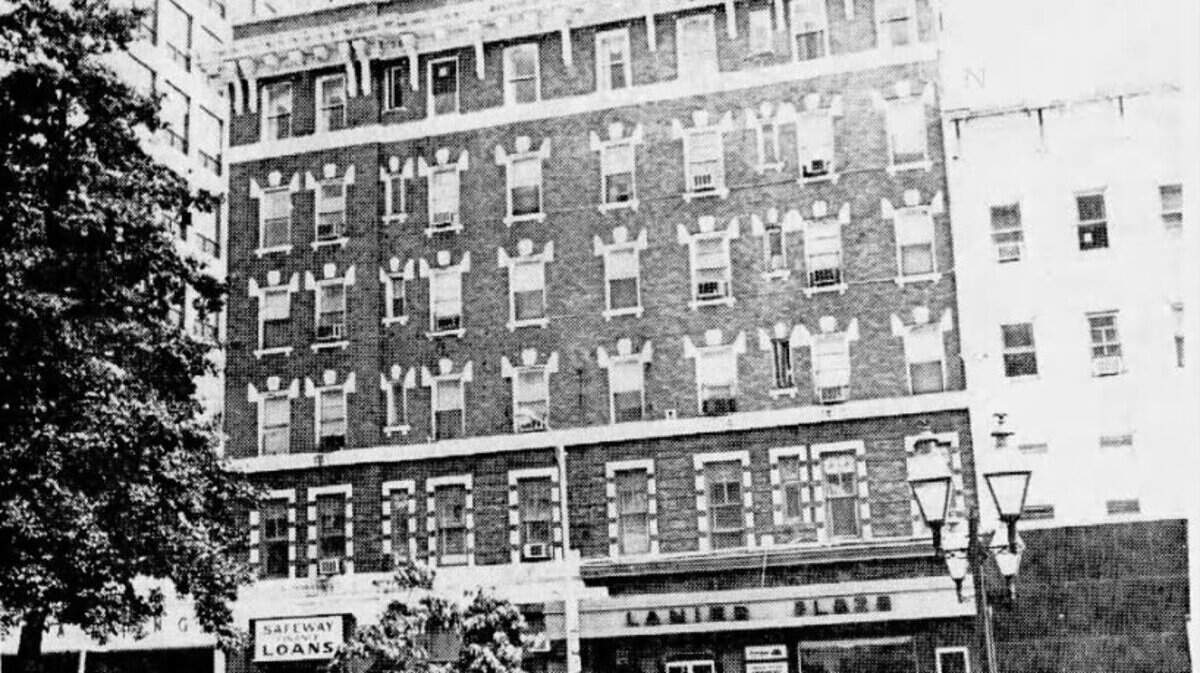
Days before the Civil War ended in 1865, the man responsible for its culmination, Major General James Wilson of the Union Army, took over Macon from the Confederate Army and briefly established its headquarters at the Lanier House in Macon.
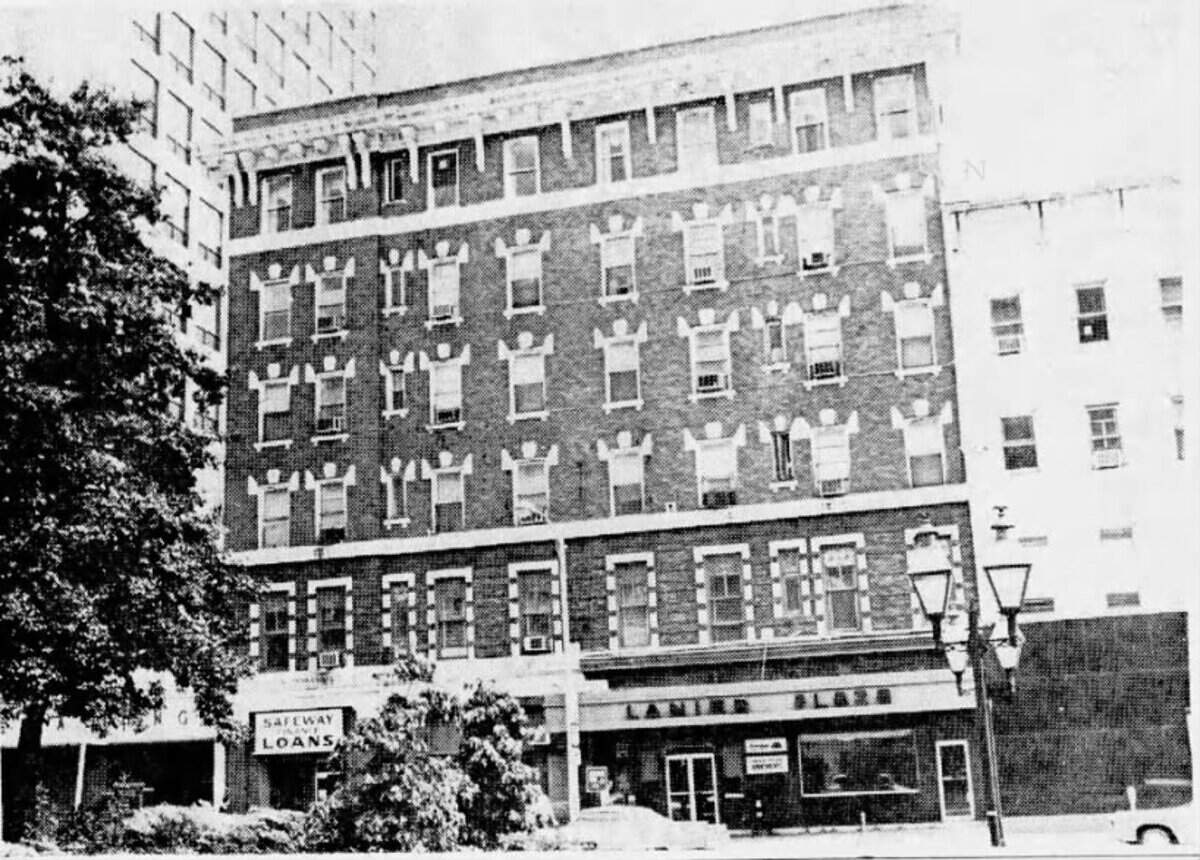
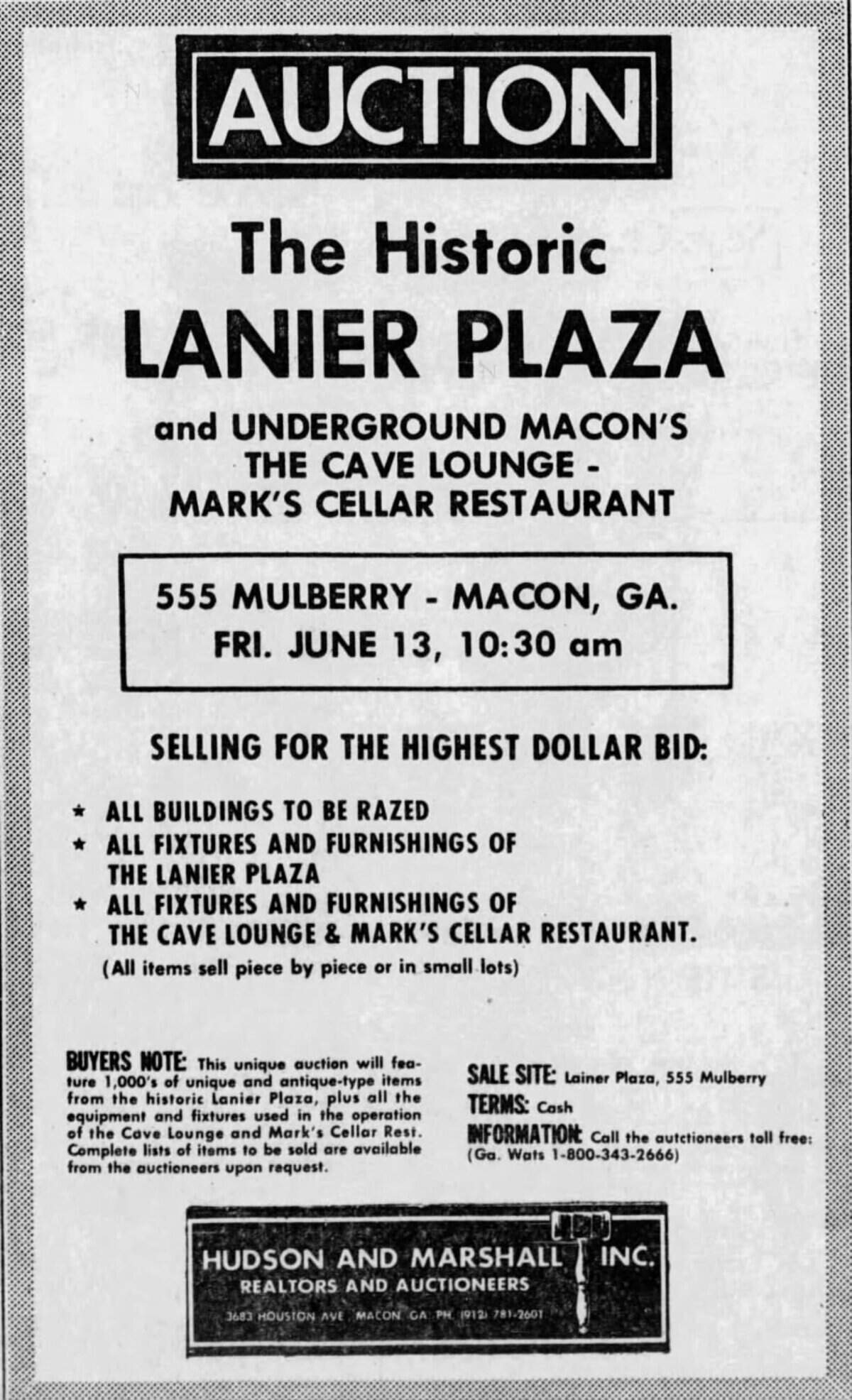
Close to 160 years later, locals and visitors traversing through Mulberry Street can no longer witness the historic hotel’s glitz and glamour. An informational plaque memorializes the building’s importance before and after the Civil War, but what stands in front of it now is a parking garage nestled between two office buildings. A demolition company began destroying the hotel sometime around Aug. 25, 1975, with the garage opening some months later.
But the historical Lanier House was completely gone by Aug. 31, 1975.
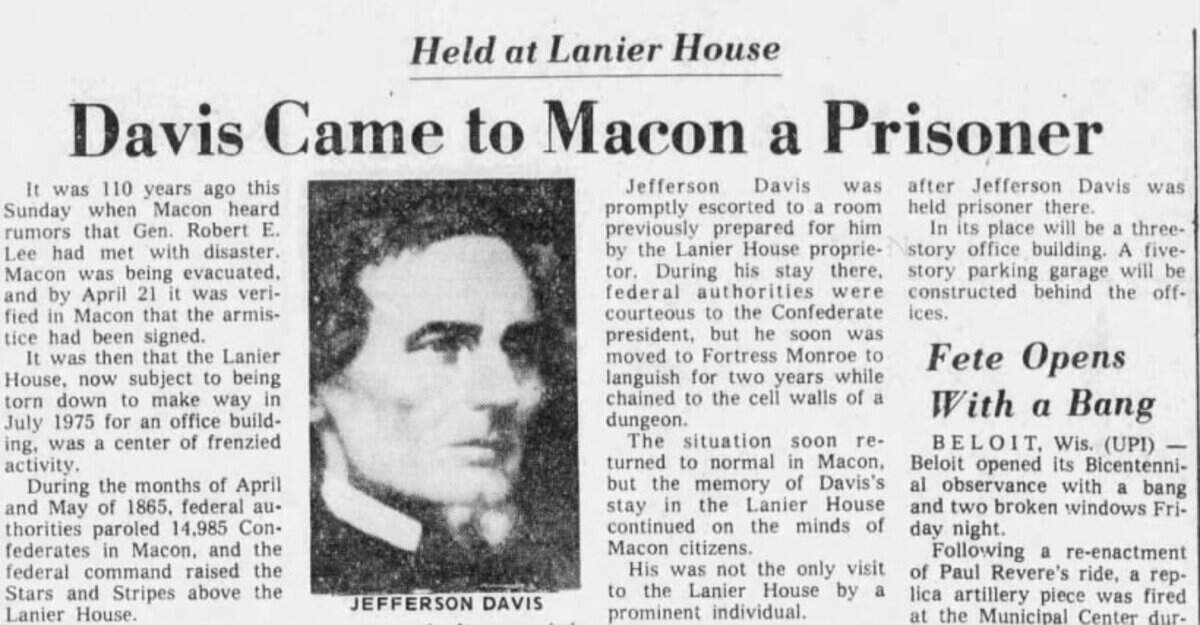
When President Davis ‘came to Macon a prisoner’
The Lanier House opened on June 12, 1850, run by famed poet Sidney Lanier’s family. It stretched 135 feet through Mulberry Street, was four stories tall and had two stores, a barber shop and a “bathing room,” according to Georgia Civil War Heritage Trails.
During the Civil War, Macon was under Confederate rule, and the hotel served as a transportation and supply center. According to Georgia Civil War Heritage Trails, then-President Jefferson Davis spoke from the balcony on the second floor in 1863 before a reception held in his honor. They also said that Eliza Frances Andrews kept a diary about her life at the hotel after the Union Army took over Washington, where she’s from. Her diary was turned into a memoir called The War-Time Journal of a Georgia Girl.
But Wilson occupied Macon on April 20, 1865, and he temporarily set up his headquarters at the hotel.
Davis arrived in Washington, where the Georgia Historical Commission claimed he had last performed his duties as president before heading to Mississippi to negotiate peace. But the Union Army captured Davis and other Confederates near their camp in Irwinville, 106 miles south of Macon, and were “specifically brought to the hotel for an interview with Wilson,” the Georgia Civil War Heritage Trails said.
Both men reportedly had a cordial conversation, with Wilson explaining in a letter that Davis was “cheerful and talkative” but divorced from reality.
Davis and other Confederates then headed north, sent under guard by train to Atlanta and Augusta, then by boat to Savannah before boarding a ship steaming north, the Georgia Civil War Heritage Trails said. The Confederate president was then imprisoned at Fort Monroe, Virginia, for two years and the Confederacy rule dissipated.
From one owner to another
Although locals heard rumors that the Lanier House would be renovated, a man named H.R. Brown, one of the men who owned the hotel under George Byington & Co., debunked the rumors in 1886 by telling reporters that the hotel would instead be closed to the public as “boarders naturally sought other houses” once they came to visit Macon. Because of this, they closed it but kept the possibility of renovation open.
“It is the purpose of the company to place the hotel in the hands of the best hotel man that can be found,” Brown said.
Then in 1900, commissioners Roland Ellis and Merrel Callaway announced that more than two-thirds of capitol stock for The Lanier House Company, which owned “the most desirable hotel property in the city of Macon and Central Georgia,” was raised. Bids for the stock started at $7,000, of which $500 would have to be given to the circuit court in cash.
Maconites shared gossip in The Telegraph that year as to the future of the Lanier House as a result of the sale. They mentioned that there were plans to build a “new and very large hotel, to be run on an elaborate scale,” or enlarge and remodel the already-existing hotel to make it take the whole block between the current location and Third Street.
That sale ended with a long-time manager of the Lanier House, J. A. Newcomb, buying 700 shares of the capital stock. As Maconites predicted, Newcomb aimed to remodel the hotel and expand it to cover the whole block. He also wanted to allocate $20,000 — half of the money in furniture and the other half in renovating the building.
“My motto will be to give the public what they have been wanting,” said Newcomb. “A first-class hotel and everything looking to perfect service and comfort of the guests, down to the smallest detail.”
After the Lanier House was handed to multiple other owners, the establishment’s owner in 1963, Charles Adams of Macon-Lanier Corp., turned the hotel into an apartment complex after he noticed a nationwide trend of hotel-style private apartments. He aimed to change the situation for senior citizens “who wish to maintain a residence downtown but who don’t wish to be plagued by the usual problem of homeowners.”
‘It has been a total flop’
However, the owner of the Lanier House in 1975, Thomas Standard, announced on April 26 that the building would be demolished as it “is just too old.”
“It is no longer feasible to keep operating it,” said Standard. “It is too costly.”
The announcement was met with immediate protest from preservation groups in Macon, but not from businessmen who worked downtown, who saw it as an opportunity to add parking spaces to reduce struggles to find parking near their jobs. It also meant that the 50 or so residents of the Lanier House, ranging from middle-aged to senior citizens, would have to look elsewhere for a place to live.
However, Standard offered the Middle Georgia Historical Society to buy the hotel for $500,000 and stop it from being demolished. If not the society, a private buyer could also buy it for $500,000, but Standard warned that, if they chose to renovate the hotel, the cost would “run into the millions.”
The society was given 45 days to pull off this task.
Even though the Middle Georgia Historical Society clung to the hope of keeping the building alive, the Macon-Bibb County Planning and Zoning Commission approved, at the request of Standard, to have a parking garage replace the hotel. Only nine residents were left of the 50 that were there in April.
Before the hotel was slated to be demolished, Maconites took to The Telegraph to argue against demolishing the historical site.
“What happened to all that planning for the revitalization of downtown Macon?” Howard Minter said. “It has been a total flop.”
He argued that, by destroying the hotel to make way for a parking lot, people are “allowing the desecration of potentially beautiful buildings.”
“We are, in short, watching while a city falls apart,” Minter wrote.
Archived articles from The Telegraph were used in this report.
This story was originally published December 27, 2024 at 10:19 AM.